
Jeep Claims to Have Gotten Rid of the Worst Thing About Turbochargers

The technology debuted on a Jeep Grand Cherokee prototype during Roadkill Nights.

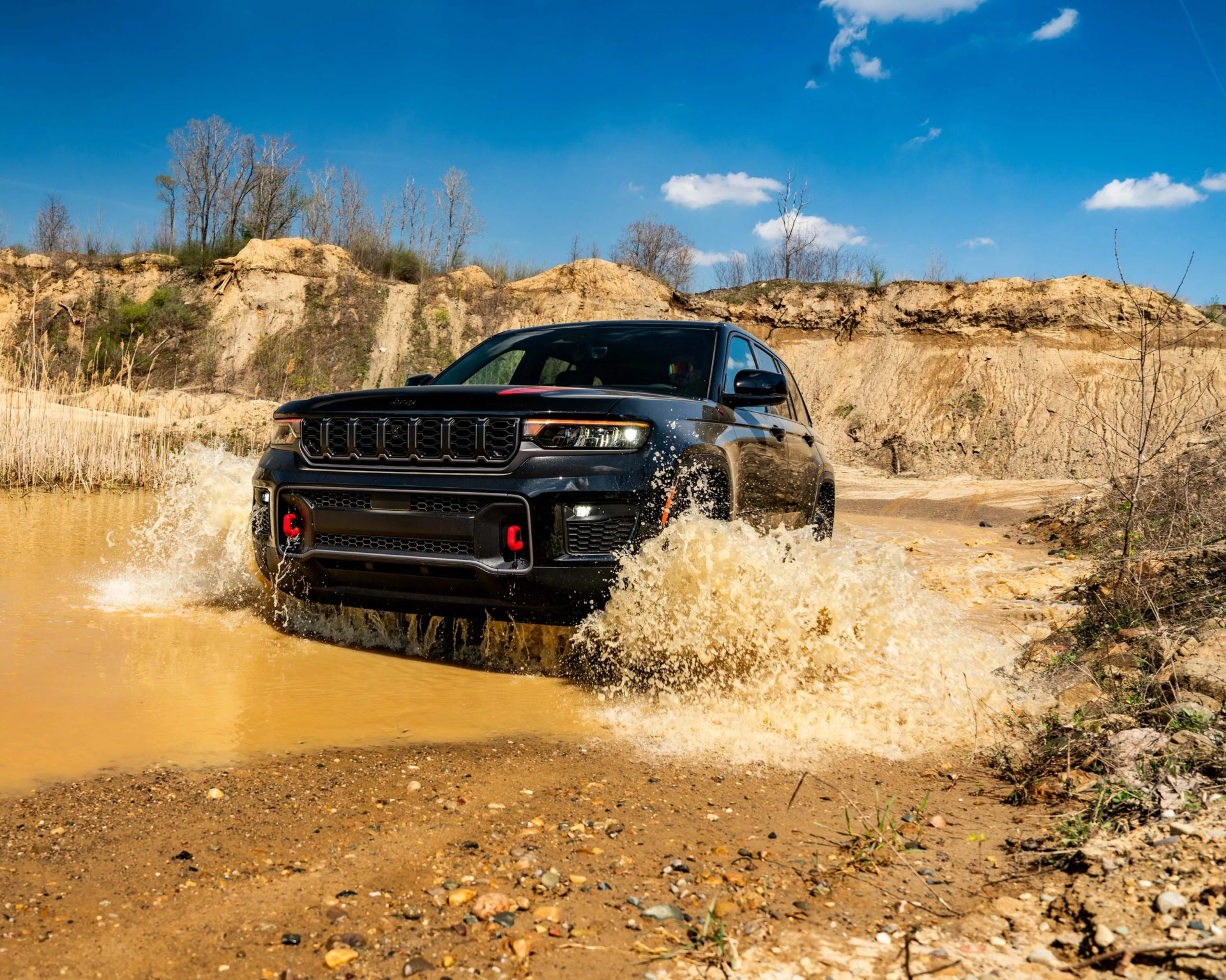
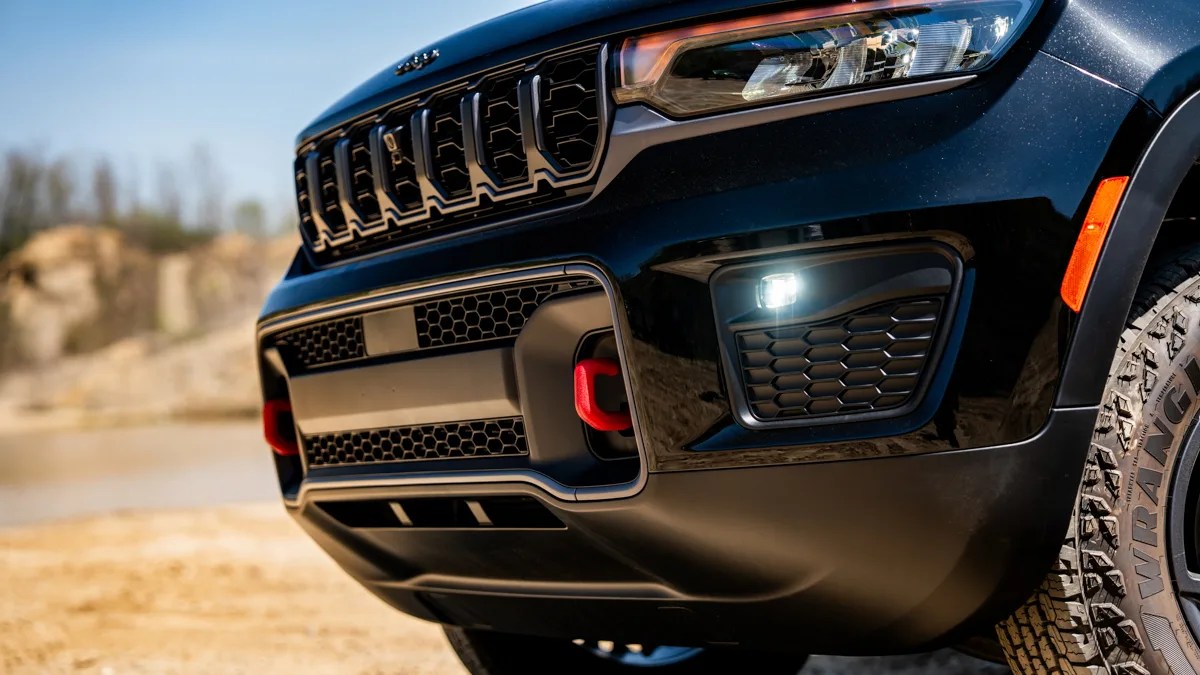
Front close-up of a black Jeep SUV showing the grille, headlight, red tow hook, and rugged tire.Jeep

Jeep and its performance division, SRT, are apparently on an automotive innovation kick. The pair revealed a new turbocharging system that eliminates one of the most annoying things about it. During the annual Roadkill Nights, preceding the iconic Woodward Dream Cruise, Jeep showcased one of its latest technological feats.

According to the press materials, engineers eliminated turbo lag on the company’s venerable turbocharged Hurricane inline-six. The system, dubbed “eBoost,” debuted at the event on a Grand Cherokee test mule.

What is turbo lag?
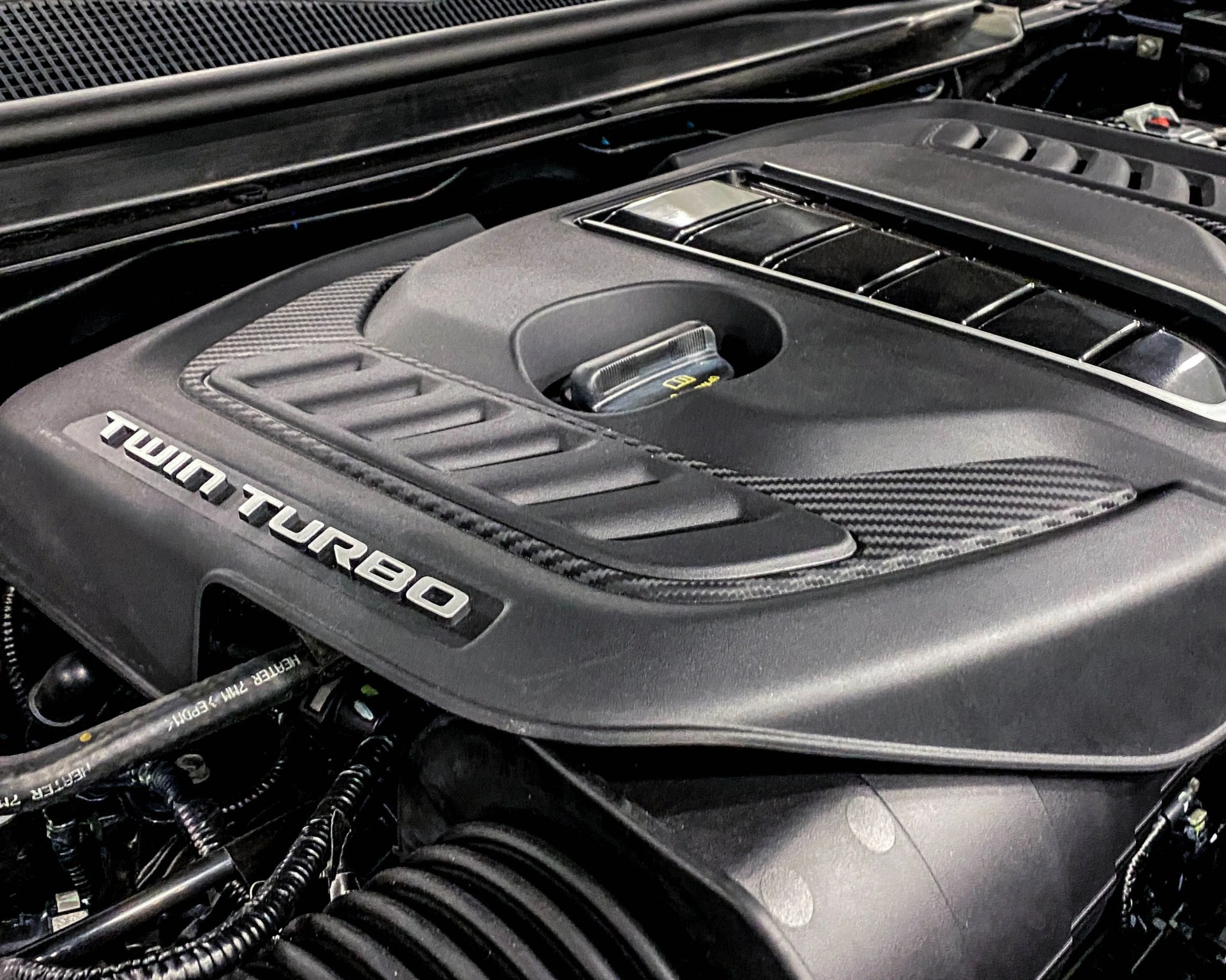
Black engine cover with "Twin Turbo" lettering and carbon fiber accents inside a car engine bay.
Mopar’s next-gen Hurricane Inline-Six may just get some much needed boost assist.
Jeep

If you’ve heard of “turbo lag” but aren’t quite sure what it means, picture this. You’re driving a modern automobile with a turbocharged engine.

You’re cruising around town and normal speeds with the engine lazily spinning at idle speed or below the engine’s initial power band. Suddenly, you need to accelerate.

The transmission recognizes the call for more power, downshifts a gear or two. The engine speed quickens, but the pace does not.
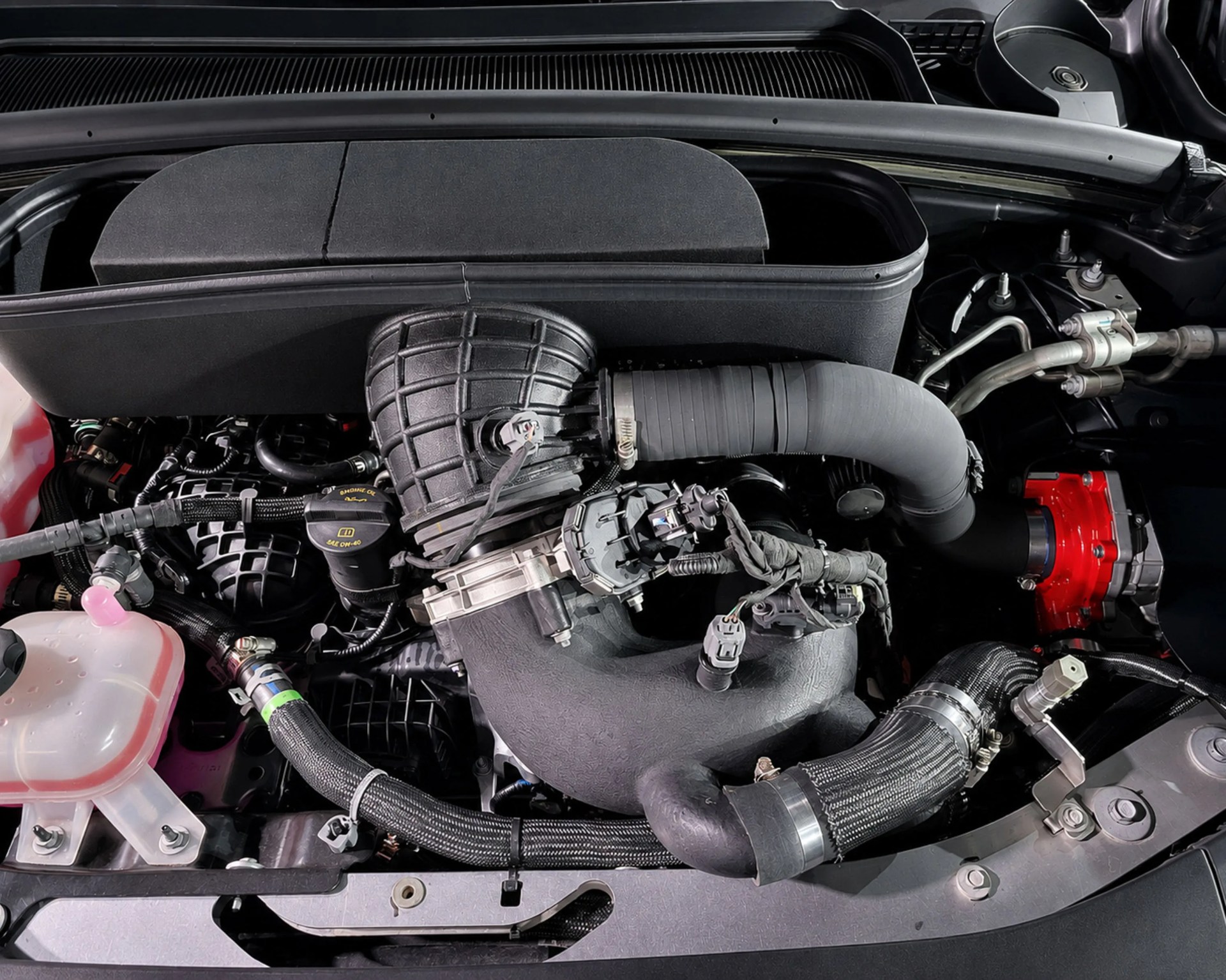
Close-up of a car engine compartment showing black air intake tubing, wiring, and a translucent coolant reservoir with pink fluid.
SRT’s new eBoost Air system supposedly eliminated all of the Hurricane I6’s turbo lag.
Jeep

Well, until a few seconds later. Then, there’s a massive surge of power that finally accelerates the vehicle as the engine works through its rev range. That brief delay is called turbo lag.

It basically describes the hesitation in power delivery that’s typical of turbocharged engines (this doesn’t really happen with superchargers; I’ll explain in a minute). That’s because turbochargers run off of engine exhaust gas pressure to “spin.” This spinning process then forces more air and fuel into the combustion chamber, resulting in significantly more power.

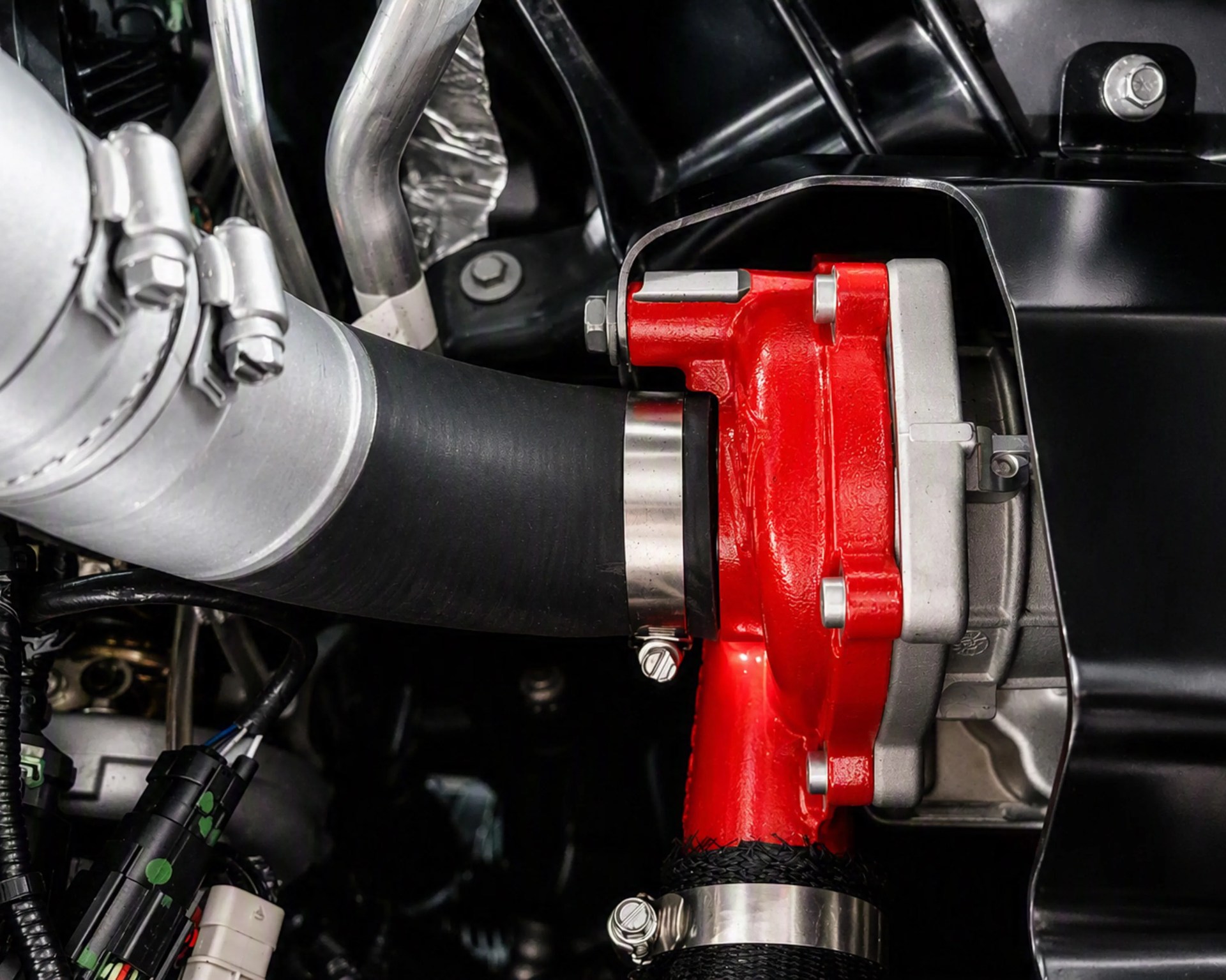
Close-up of a red metal engine component connected to black and silver hoses with metal clamps.
The system consists of a small electric motor-driven turbine that provides extra exhaust pressure at low engine speeds.
Jeep

In a naturally aspirated engine (no turbocharger), this forced feeding does not happen. Because the turbo has to wait for the engine to pump out exhaust gases, that momentary delay in acceleration is known as turbo lag.

Additionally, the larger the turbo, the more lag there will be. This doesn’t happen on supercharged engines, as the “blower” is driven by an auxiliary belt via the engine’s main crankshaft.

Now, Stellantis and the geniuses at SRT claim to have completely gotten rid of that delay.

Stellantis says no to turbo lag

Many automakers have claimed to eliminate turbo lag with their own innovations. Some have mounted sequentially sized turbochargers in succession (twin-turbocharging).

The smaller turbocharger handles the lower engine speeds. Under acceleration, valves then switch the exhaust flow to a larger turbo at higher engine speeds. The result is a more progressive and linear power delivery.

Other OEMs have also created electrically assisted turbochargers and more. Stellantis apparently has another trick up its sleeve.

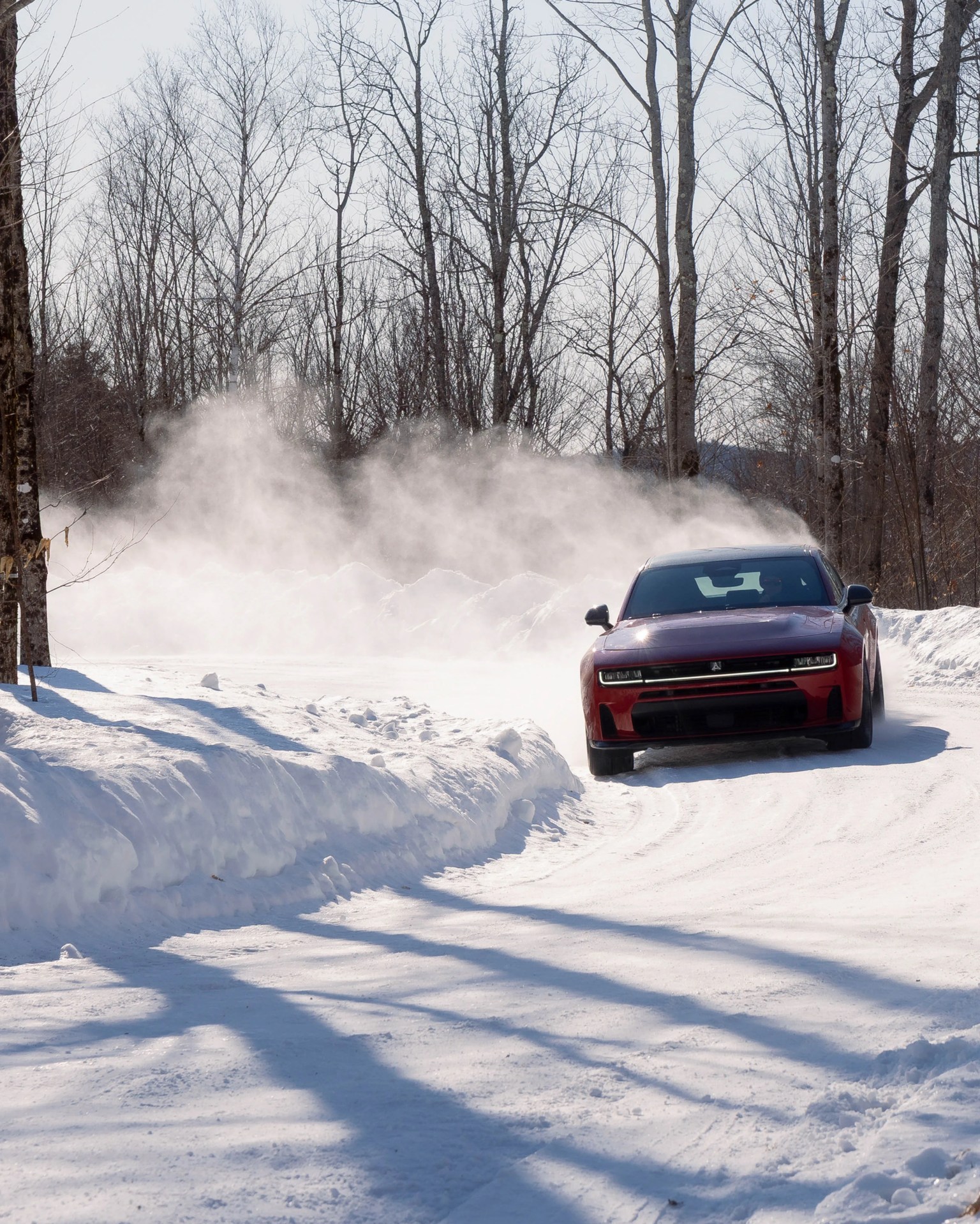
Red car drifting on a snow-covered road with snow and trees in the background.
It’s new on the Hurricane Inline-Six, meaning all the Stellantis vehicles using the engine could stand to benefit from eBoost Air.
Dodge

According to the technical descriptions, the new SRT-modified Hurricane inline-six with its innovative “eBoost” system does exactly that.

Essentially, it comprises f a small electric motor, additional tubing and some valves to control and provide additional intake pressure. It’s similar to a conventional turbocharger.

But instead of waiting for the engine to pump out exhaust pressure, the e-motor spools up the turbo before a valve closes and transitions to the exhaust-pressure supply.

So what does this ultimately mean?

Black Jeep SUV splashing through muddy water in a rugged outdoor setting with dry trees and blue sky.
Could this be a sign that the next-gen Grand Cherokee SRT is sticking with the I6?
Jeep

While Jeep, SRT and Stellantis said that eBoost is currently in its prototype stages, there’s a high chance it’ll make its way into the next-gen Hurricane. This means it could appear on everything from the Grand Cherokee SRT to the current Dodge Charger SIXPACK and Ram 1500 TRX.

Additionally, SRT has prided itself on the fact that its team developed the system in just weeks. Obviously, some thorough testing needs to be done before it can be put into production.

With high-performance models on the way, we wouldn’t be surprised to see this technology in those new models. This is especially true since a more potent Charger SRT and Grand Cherokee are in the pipeline.

Want to stay up to date on the latest product news and releases? Add Gear Patrol as a preferred source to ensure our independent journalism makes it to the top of your Google search results.

add as a preferred source on google
, ,