
An Iconic American Knifemaking Brand Resurrects One of Its Most Unique Folders

Plucked from the brand’s vault, this quirky knife was originally introduced in 2005, but its origins date back decades further.

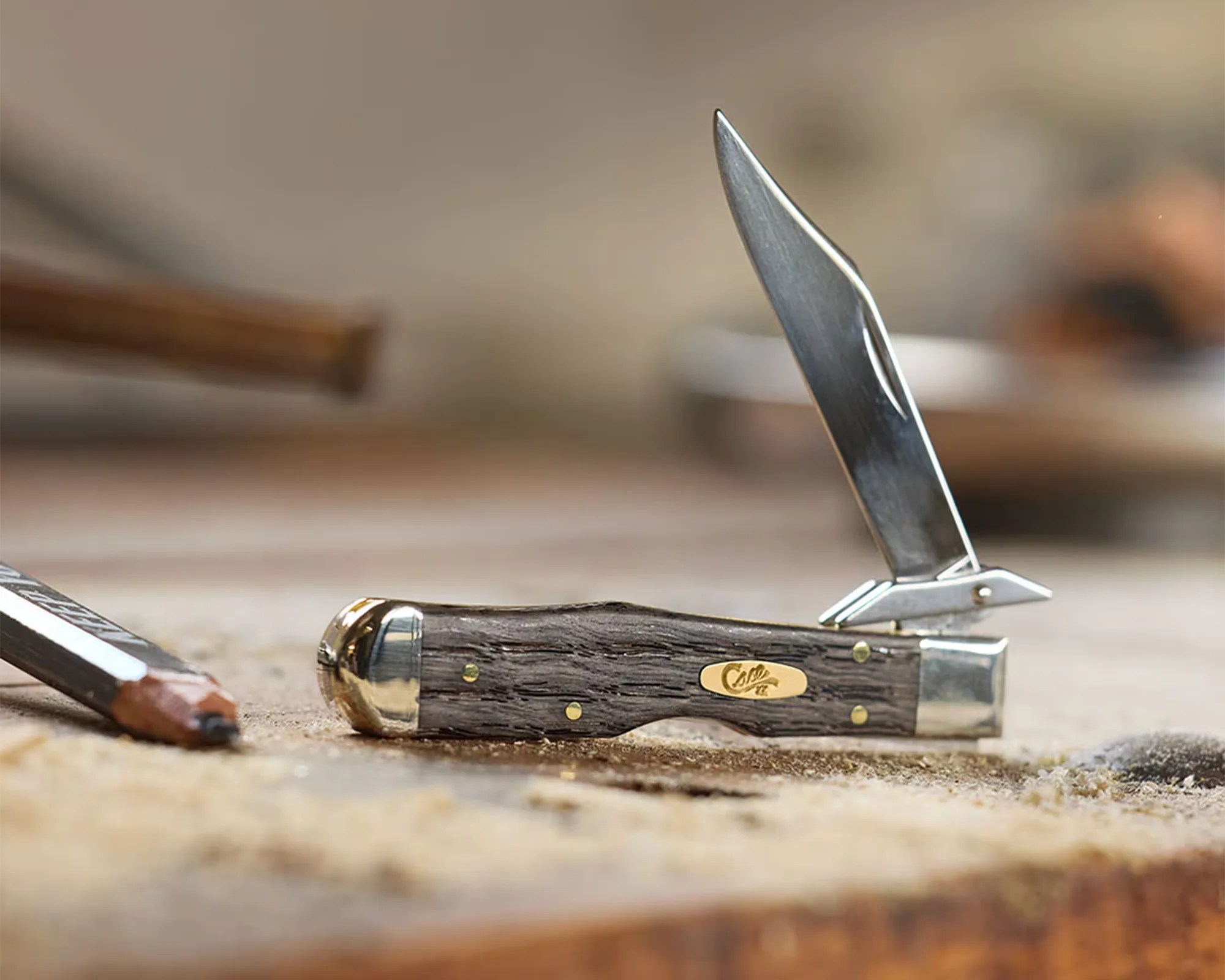
Folding pocket knife with dark wood handle, brass rivets, and partially open metal blade on a sandy surface.Case

If you buy from a link, we may earn a commission. Learn more

If you take a gander at the majority of swords from the late Middle Ages, you may notice some trendy features not found in the eras before, especially among dueling weapons. One particular development — the crossguard — emerged as armor became more advanced and rendered large, unwieldy shields unnecessary.

Crossguards — transverse metal bars between swords’ blades and hilts — were especially useful for blocking and parrying incoming attacks. Over time (courtesy of the increased prevalence of gunpowder), swords also fell out of fashion and knives became more common — not so much for battle (although there are fighting knives), but as tools.

While many fixed-blade knives (especially old-school ones) retain crossguards as safety features to protect the user’s hands and fingers, they aren’t well-suited to folding technology.

Yet Case, one of America’s oldest and most storied knifemaking brands, innovated a means to have the best of both worlds. Now, that design quirk returns in the 2026 Case Vault Release, the Case Cheetah Cub.
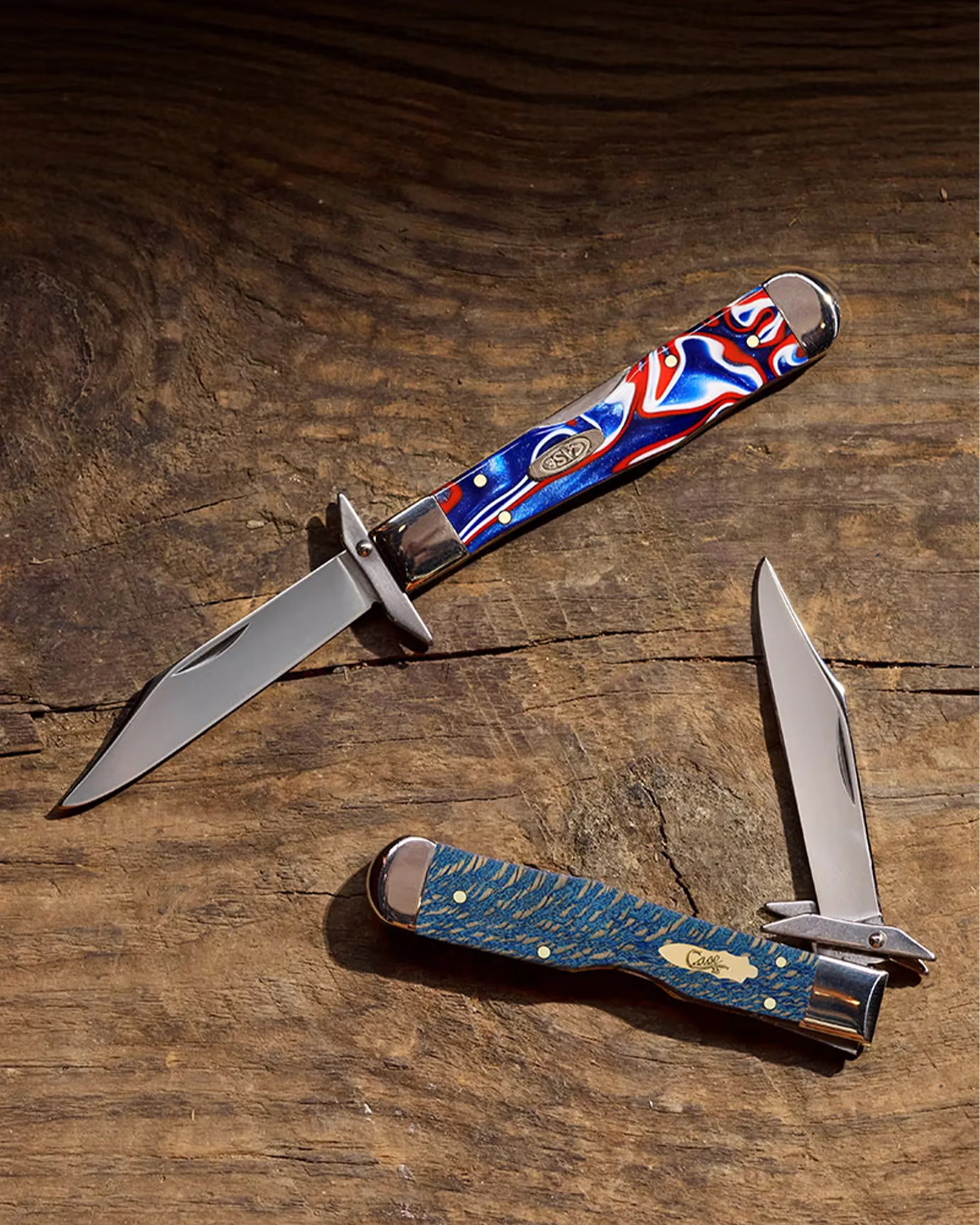
Two folding pocket knives with open blades on a wooden surface, one with a red, white, and blue handle and the other with a blue textured handle.
The Cheetah Cub (above) is a smaller version of the Cheetah, which dates back decades further.
Case

Big cat, little cat

The Cheetah Cub was originally introduced back in 2005, more than 20 years ago. However, its origins actually date back decades longer. This is because the Cheetah Cub is a smaller version of another knife, aptly called the Cheetah.

Functionally, the two knives are the same. They only differ in size. The cub is much smaller, with a 3.5-inch handle, as opposed to the original’s 4.375-inch handle. It also has a smaller blade measuring 2.58 inches, making it legal to carry in many more places, especially those with stringent blade-length laws.
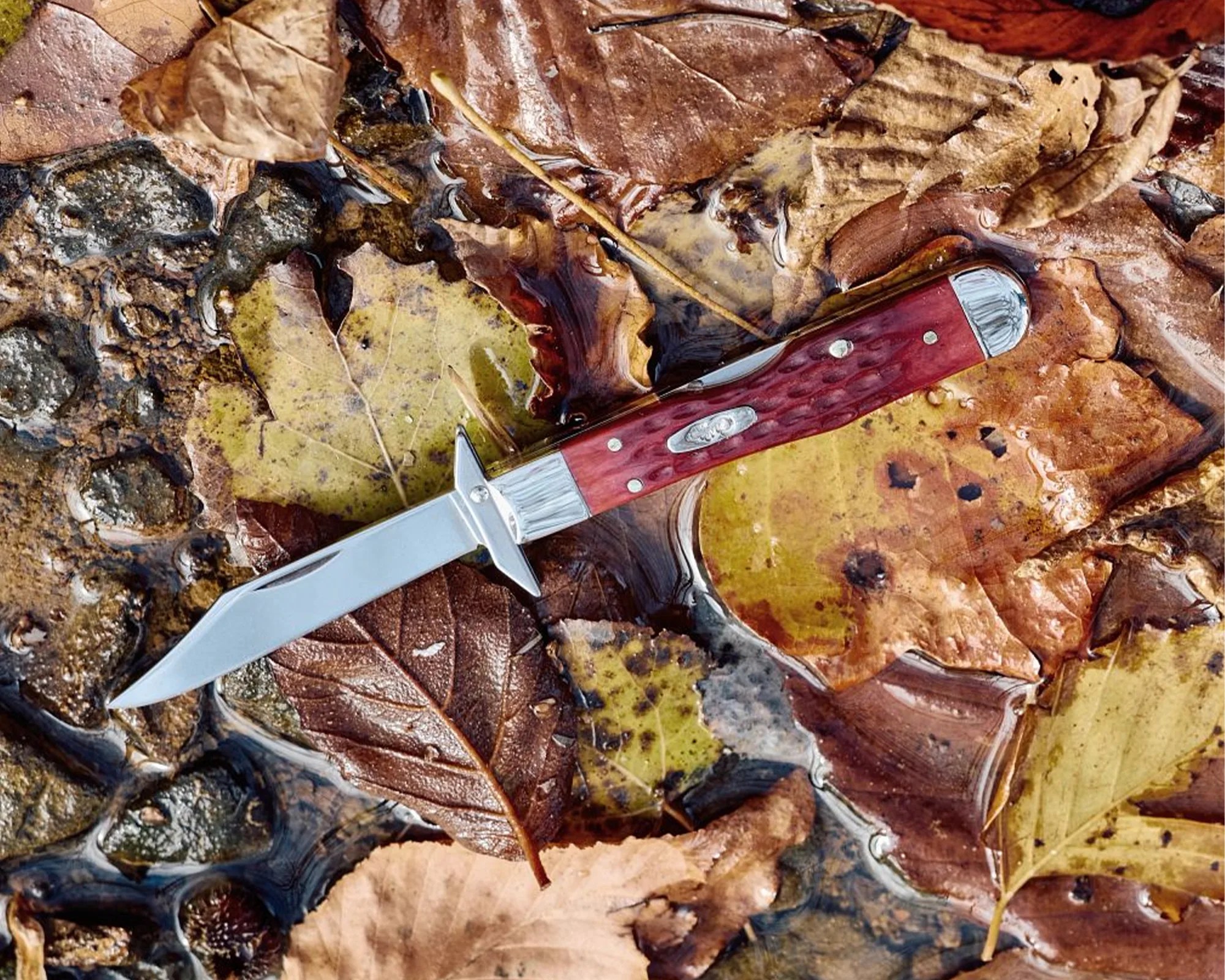
Folding pocket knife with a red textured handle and a silver blade resting on wet autumn leaves.
Many handle materials have been announced for this special vault release, including Dark Red Bone, seen here.
Case

This modern take is available with a blade crafted from either Case’s signature Tru-Sharp surgical stainless steel or classic 1095 carbon steel, depending on the configuration you choose. The blade sports a classic clip point shape and a nail nick deployment.

It also retains its classic, dependable back lock mechanism. And it lacks a pocket clip, which is common among more classic, old-school pocket knives (see Buck’s 110 Folding Hunter for reference).

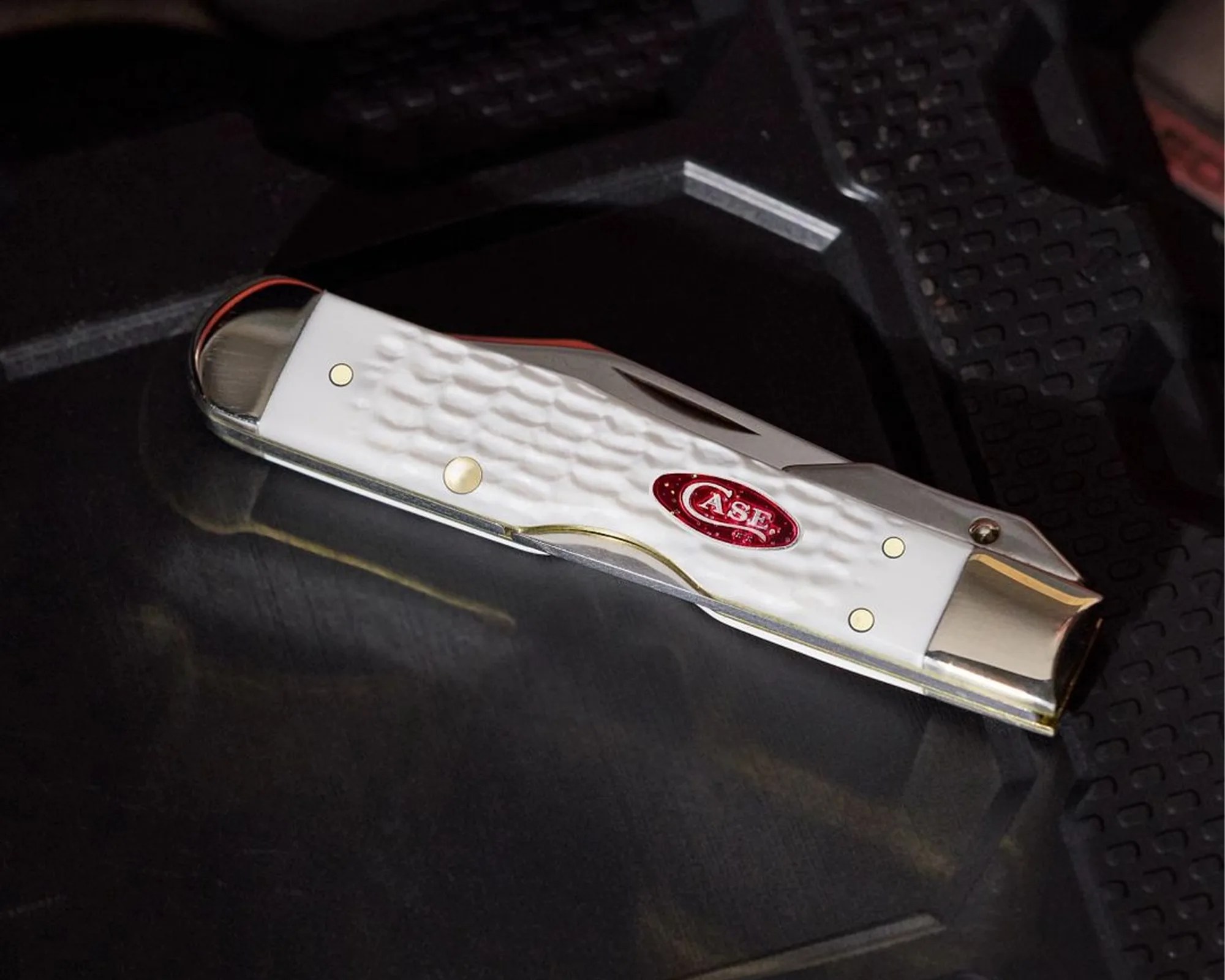
White folding pocket knife with textured handle and red Case logo on a dark surface.
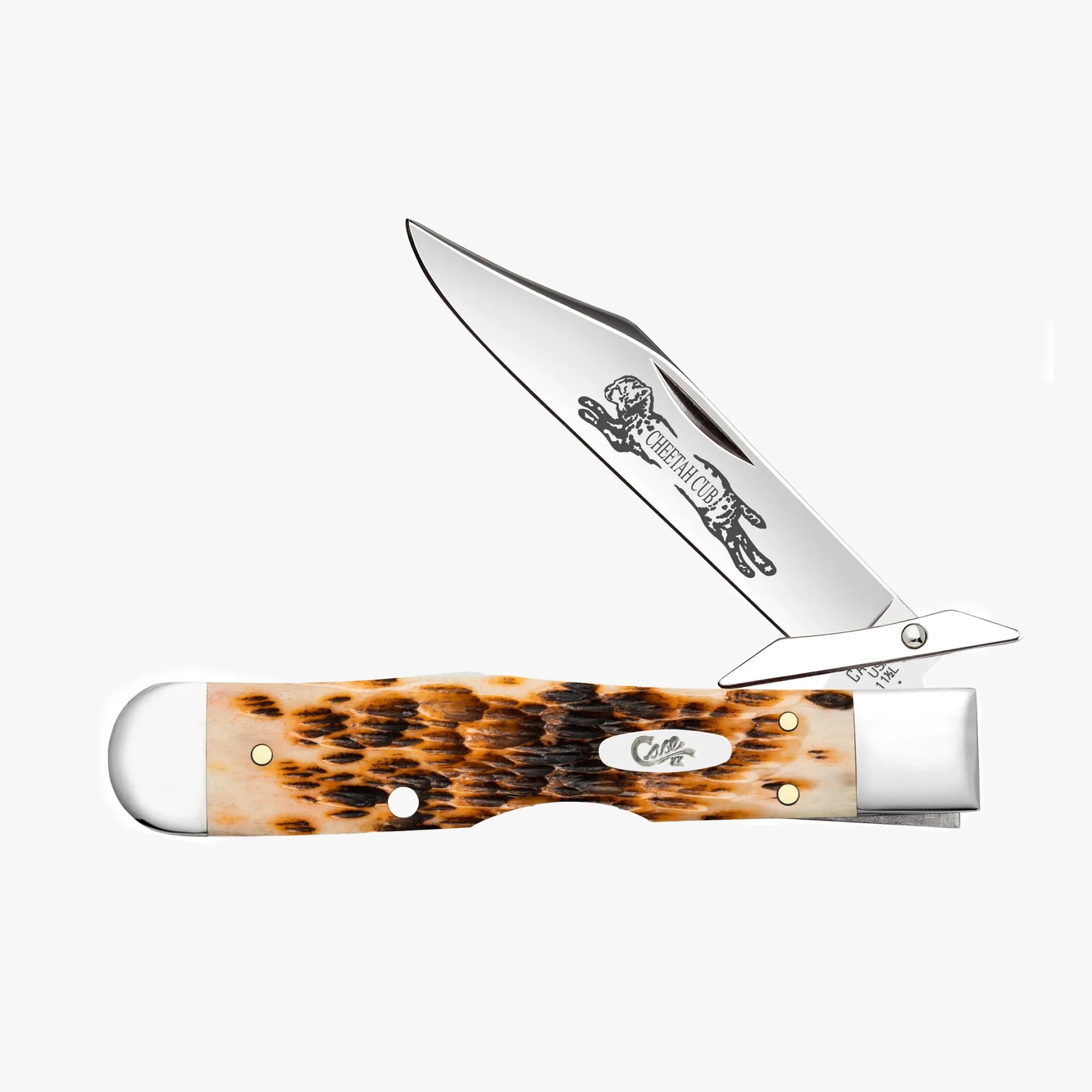
The knife’s signature “swing guard” folds along with the blade for easier storage and transport.
Case

En garde!

All of that is well and good, but it skirts the obvious question: What’s that got to do with a crossbar? Well, the Cheetah had a unique design quirk the brand calls a Swing Guard.

When deployed, the knife looks like a tiny sword, crossguard and all. However, when the lock is released and the knife folds back into the handle, the Swing Guard also pivots, allowing it to fold alongside the blade. This is easily the most unique feature of this knife.

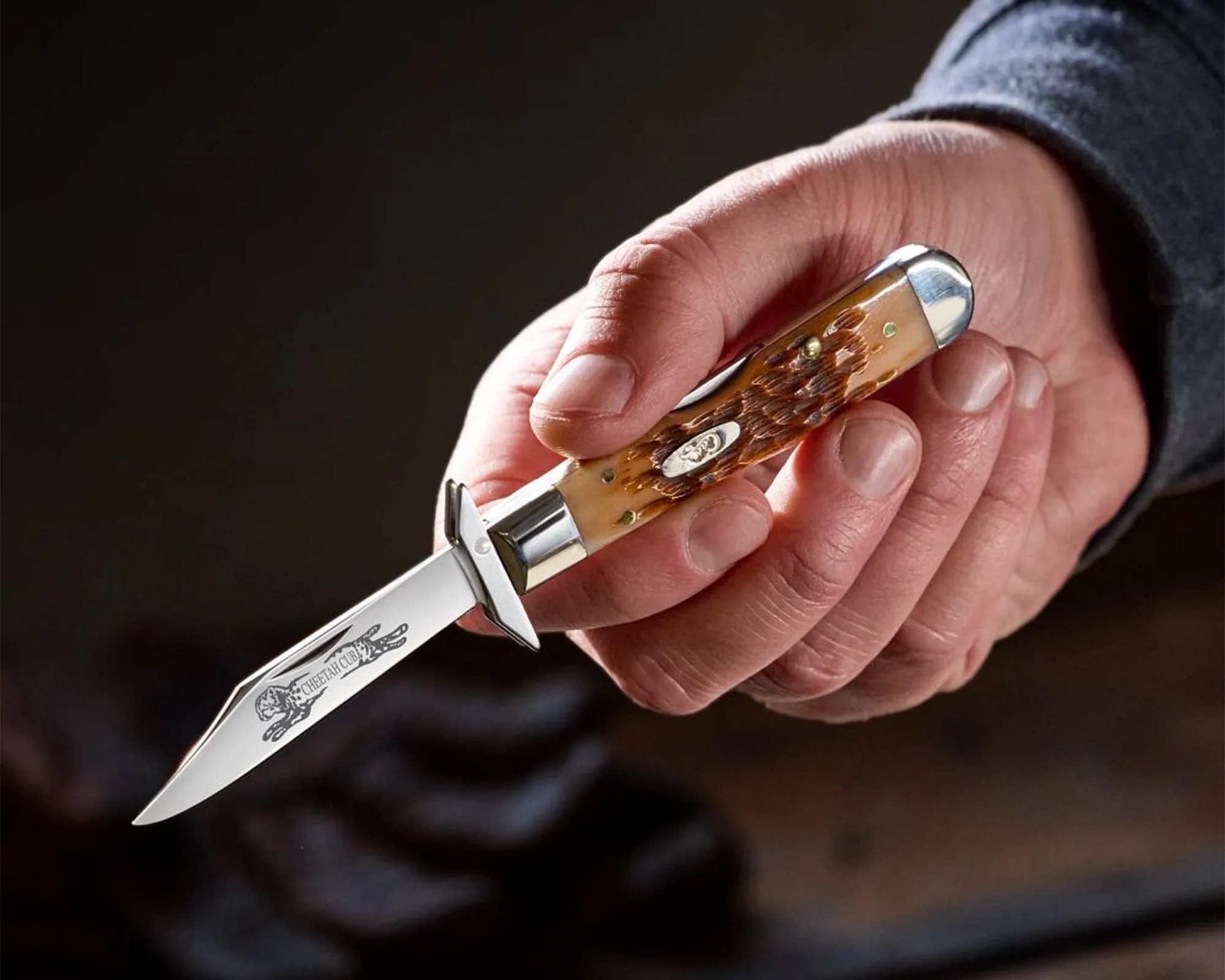
Hand holding a folding pocket knife with a polished blade engraved with a cheetah and a brown textured handle.
This knife has a 2.73-inch blade and a 3.5-inch handle, making it positively compact.
Case

It also acts as a safety feature, though unlike crossguards before it. The transverse protrusions act like a finger guard, preventing the user’s digits from creeping up the blade where they might get cut, offering a more secure grip and a lower risk of accidents. It’s actually quite handy, especially when tougher cutting tasks are in order.

The other unique feature is the wealth of handle material options. There are a whopping 17 different materials that will be applied to this knife over the course of the year, including classics like bone and horn, as well as modern options like G-10. There’s even a special Abalone one.

Obviously, that adds a level of collectability to this vault release. But it also means you can pick out the one that’s perfect for your tastes and budget (although they’re likely all pretty affordable, relatively speaking).

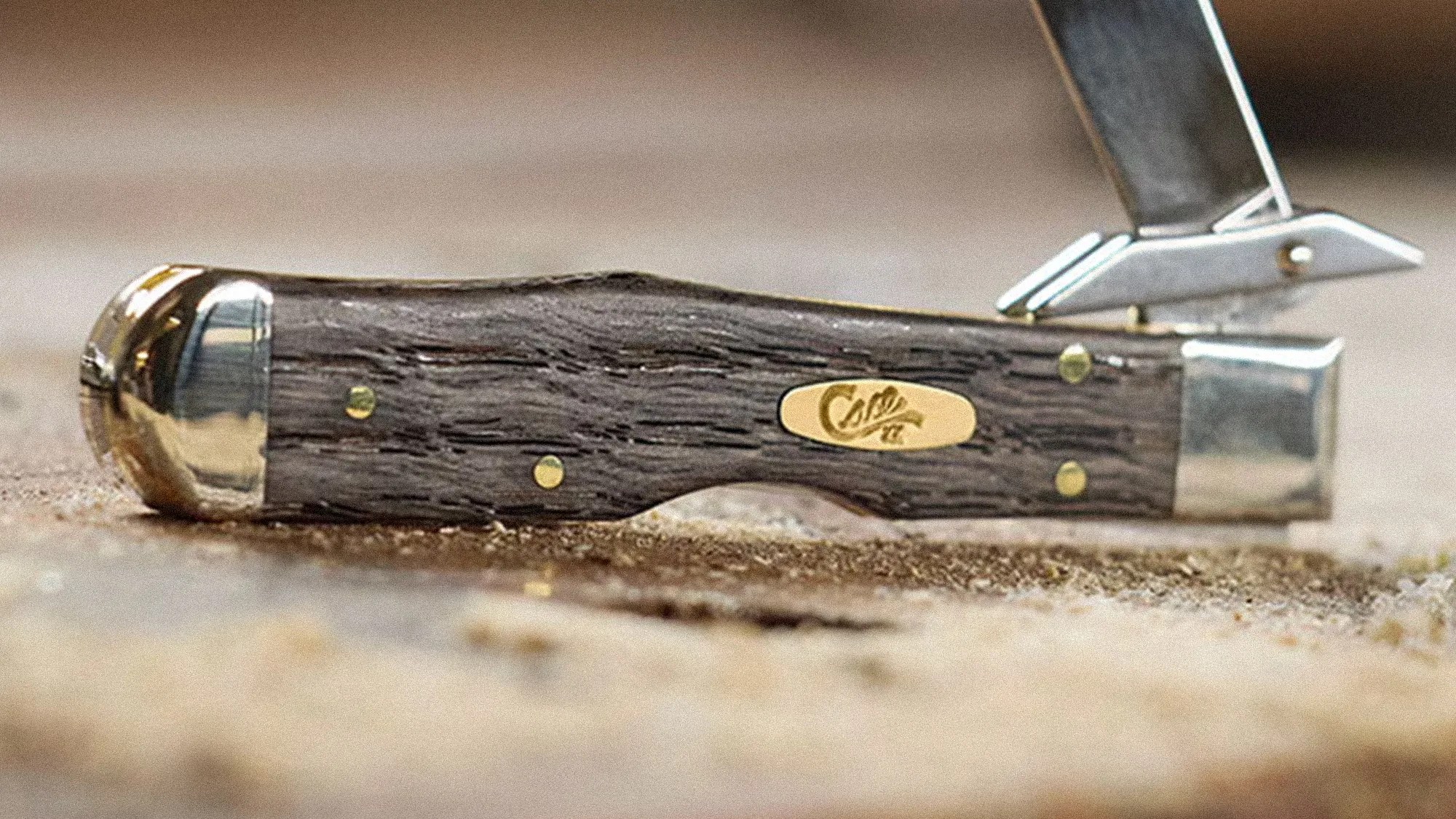
Folding pocket knife with a wooden handle and metal bolsters, blade partially open on a wooden surface.
Other handle materials include Black Curly Oak (above), Kirinite, G-10, synthetic and Abalone.
Case

Availability and pricing

Six versions of the Case Cheetah Cub have dropped on the brand’s site so far, priced between $95 and $117. However, more will be unveiled over the course of the year, and you can expect similar pricing.

That said, the six unveiled so far are not yet available for purchase. But you can sign up for stock notifications for when they become available.

Want to stay up to date on the latest product news and releases? Add Gear Patrol as a preferred source to ensure our independent journalism makes it to the top of your Google search results.

add as a preferred source on google
, , , ,