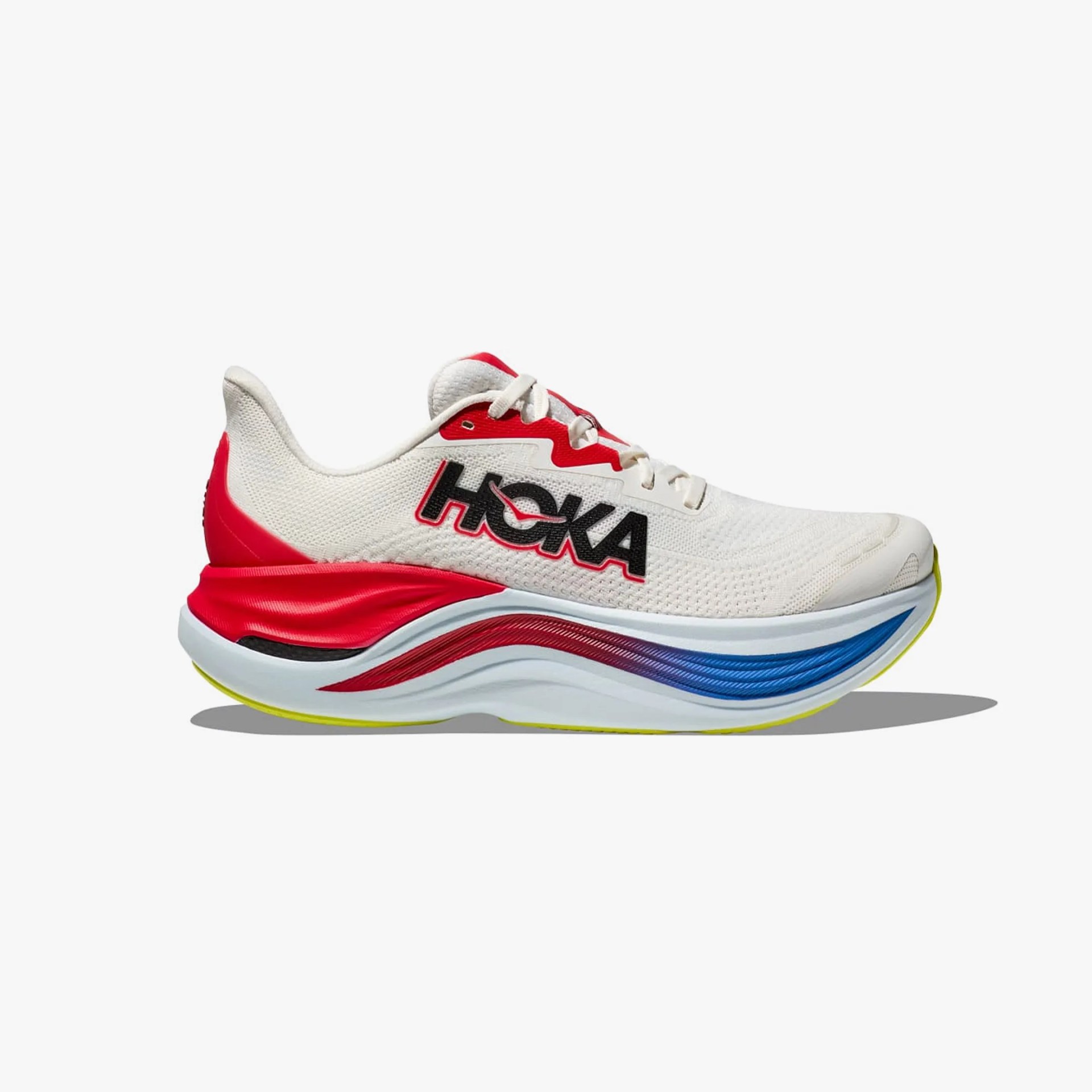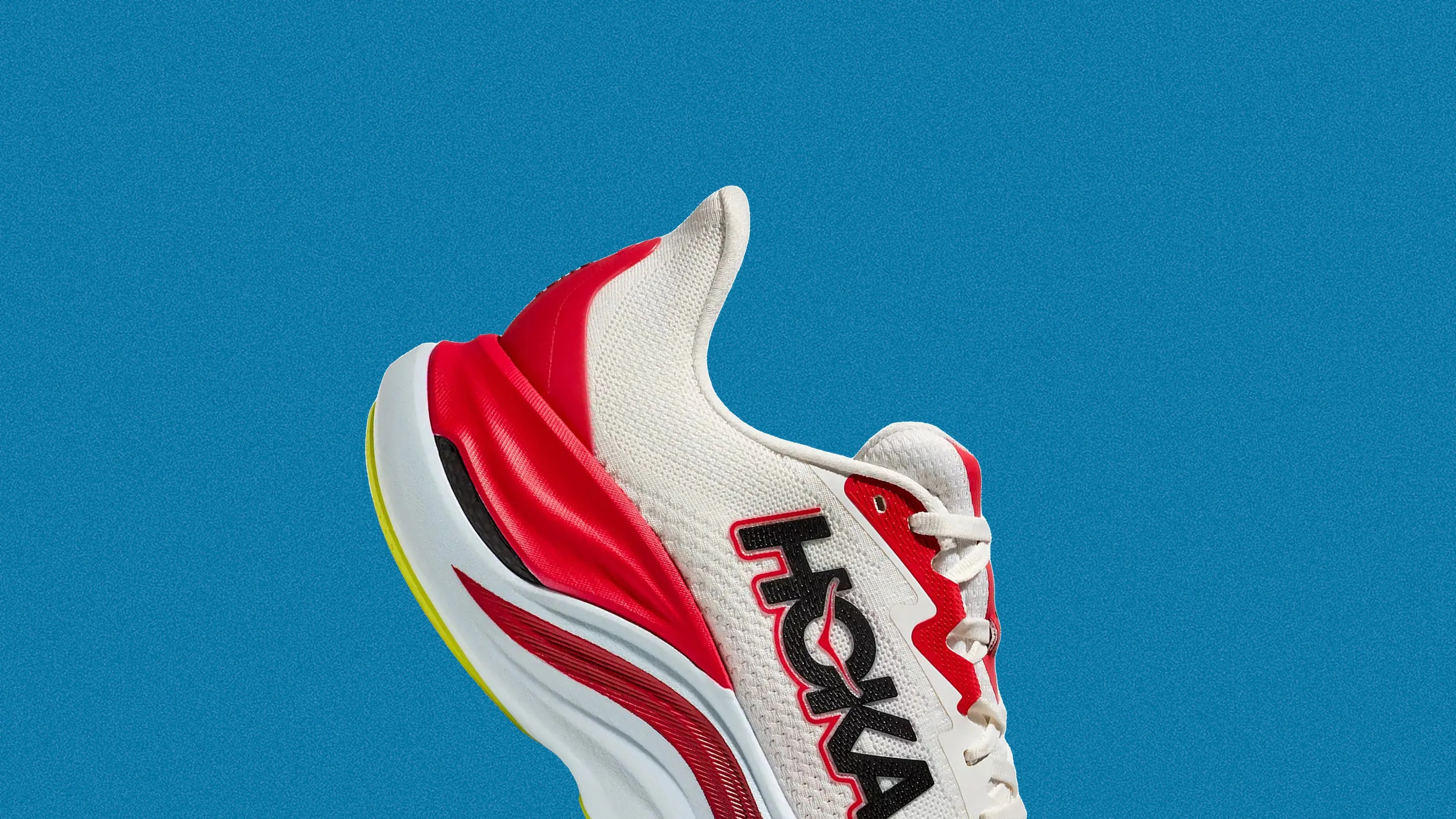


Some running shoes earn notoriety through marketing. The Hoka Skyward X earned it by getting banned. World Athletics flagged the shoe for exceeding its 40mm stack height limit — the rule that governs elite road racing footwear — making the Skyward X effectively illegal for sanctioned road races.

When it launched in the spring of 2024, the Skyward X sat at the top of Hoka’s performance-running lineup. It’s built around a full-length carbon fiber plate and a dual-layer midsole — PEBA foam over a supercritical EVA frame.
For everyday runners who aren’t lining up at USATF-sanctioned events, that restriction is irrelevant — what matters is that the same stack that crossed the line for regulators delivers a propulsive, high-energy ride that’s hard to find at this price point. As our original Skyward X coverage noted, the shoe punches well above its category.
Now that the next-generation Skyward X2 is out, Hoka has quietly dropped the Skyward X down to a much more appealing price point.
Welcome to Shop Smarter: A series dedicated to highlighting not just what’s on sale, but why it’s worth owning. Discover more here.
Why it’s worth considering

The Skyward X is built for runners who want a daily trainer with race-shoe energy return. The PEBA topped midsole — the same foam family found in elite super shoes — is lighter and more responsive than the EVA or TPU compounds in most training footwear. Combined with the carbon plate, the shoe generates a forward-rolling sensation that makes easy paces feel less like work. It’s a meaningful upgrade over Hoka’s own Clifton or Mach lines for runners logging faster long runs or tempo work.
The stack height that got it banned is the same reason it feels the way it does — there’s simply more cushioning underfoot than most shoes allow, without sacrificing the snappy response the plate provides. The incoming Skyward X 2 refines the platform, but the original remains a legitimate performance tool, not a clearance afterthought.