
Are Whoop’s New AI Tools the Future of Fitness, or Another Cautionary Tale? Its Users Can’t Agree

Reddit’s unofficial Whoop community is quietly functioning as a real-time, public-facing showcase of the tangible risks and rewards of integrating large language models with personal health and fitness data.

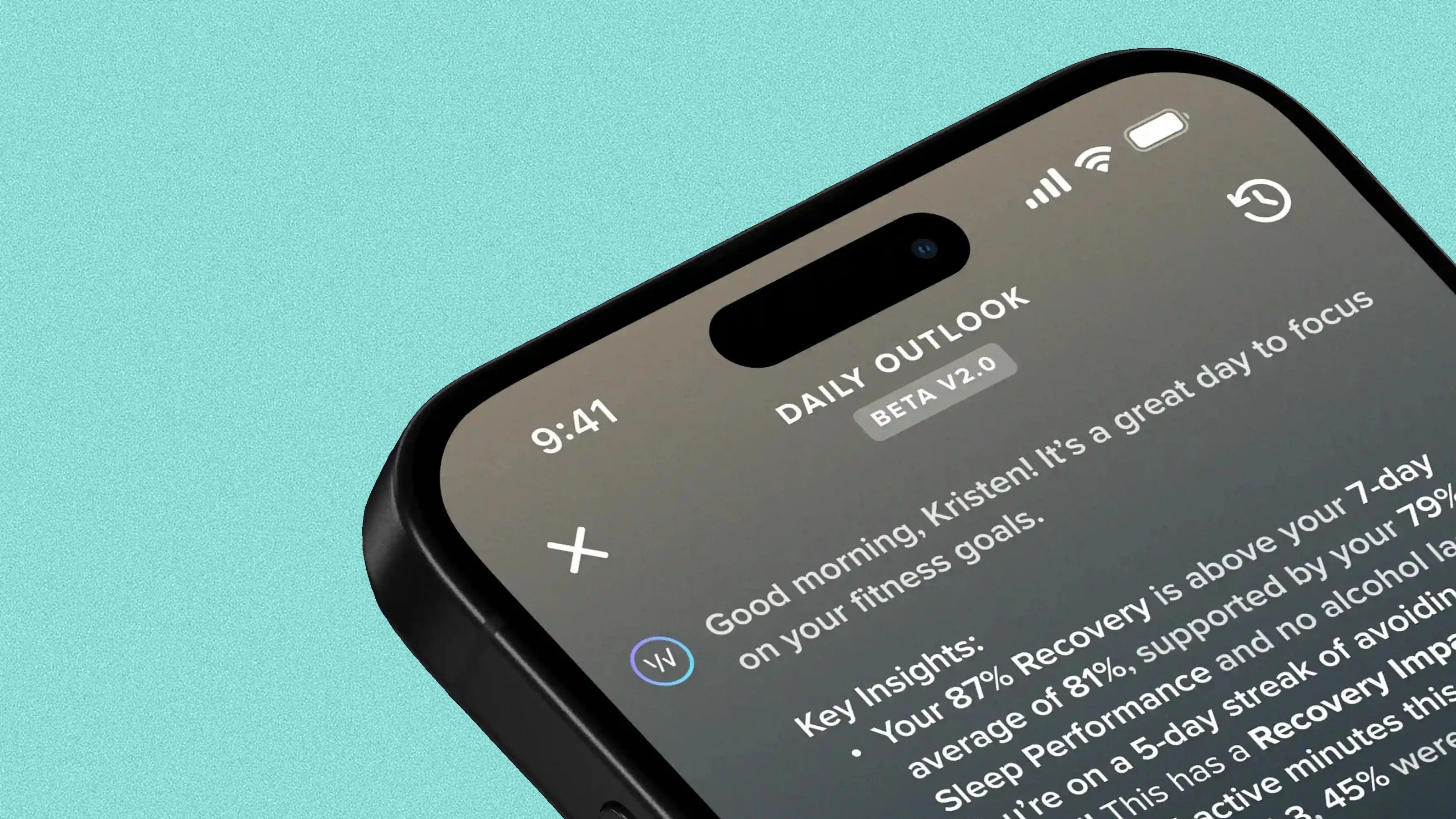
Close-up of a black smartphone screen showing a "Daily Outlook Beta V2.0" app interface with text and icons on a turquoise background.Whoop

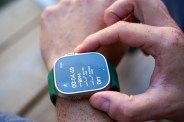
Whoop built its reputation on restraint and precision. Running counter to the booming smart watch trend, the company carved out a niche by avoiding wrist-worn screens and notifications, and instead, focusing on pairing an advanced, screenless sensor designed to log a range of advanced health and fitness metrics, with an intuitive app that processes and surfaces data in a way that helps users optimize how they stay active as well as how they rest and recover.

Those instincts have helped the brand land and showcase an impressive roster of ambassadors and high-profile moments, particularly in sports.

Rory McIlroy wore the device while winning The Masters, and Aryna Sabalenka put it in headlines for a different reason when Australian Open officials moved to ban the device mid-tournament.

Massive exposure via various players and even teams involved in the 2026 FIFA World Cup has only pushed that visibility further into the mainstream.

But over the last year, especially in recent months, Whoop has also leaned hard into adding AI features, powered in large part by OpenAI, that users are now engaging with in both exciting and concerning ways that could make or break the brand’s reputation moving forward.

The good, the bad and the weird…

Whoop’s social media team worked to showcase the companion app’s new AI-powered capabilities with a not-so-subtle tie-in to Heated Rivalry. The post shows a user uploading a photo of a man’s sculpted back while asking about workout advice for getting their back to look the same way.

The current AI-enhanced features touted most proudly by Whoop are still listed in Beta, meaning they should still be viewed as a work in progress.

That hasn’t stopped Whoop, though, from setting lower expectations for users. In a recent press release, Whoop shared that its AI implementation combines “24/7 biometric data with the context you share about your goals and routines” to create “a uniquely powerful and adaptive foundation for coaching that evolves with you.”

Unsurprisingly, the unofficial r/Whoop subreddit has become an unfiltered showcase of these new capabilities.

Much like most anecdotal consumer encounters with AI-powered chat these days, real-world outcomes appear to range from outright impressive to unintentionally funny to, at least in some instances, quietly alarming.
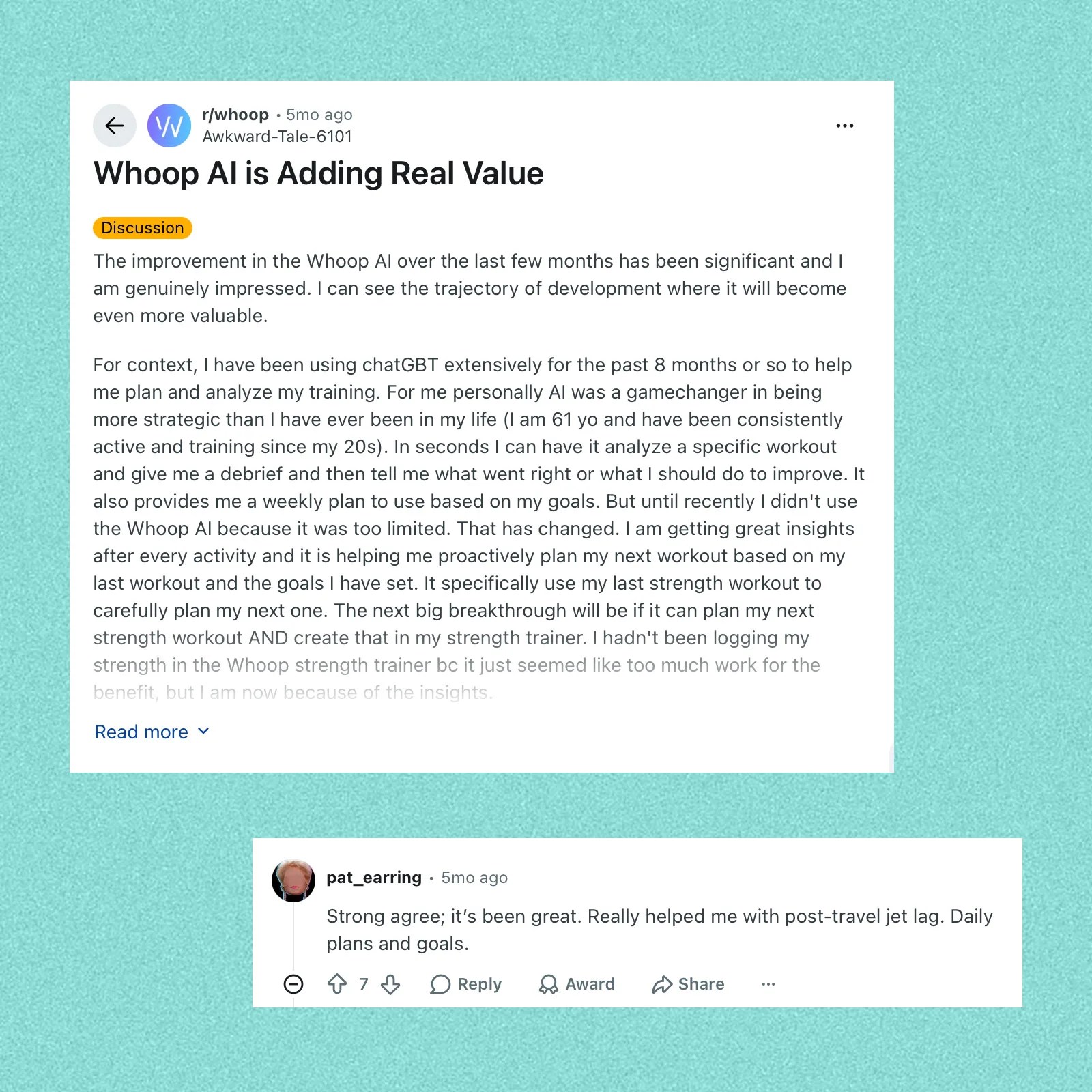
Reddit post titled "Whoop AI is Adding Real Value" discussing significant improvements in Whoop AI for workout analysis and planning.
You don’t have to dig particularly deep to discover at least portions of the r/Whoop user base that have had very positive experiences using Whoop’s AI features.
Reddit

On the positive side, true to Whoop’s own ambitions, a thread titled “Whoop AI is adding real value” drew a wave of users crediting the coach with meaningful day-to-day utility.

The original poster wrote that the AI could “compare a cardio session to past sessions, provide specific recommendations to fine-tune the next, suggest specific strength exercises, weight, and reps, create a weekly plan based on my goals and current metrics.

Others echoed that: one user said it helped them manage post-travel jet lag with daily plans, another praised the coach’s memory function, describing how they told it they were sick and it followed up with check-in notifications over the following days.

Another popular thread noted that the AI coaching functionality can be easily used for other purposes, fitness-related or not, unlocking the potential for some creative, clearly off-label use cases for gaining access to AI chat without coughing up yet another subscription fee.

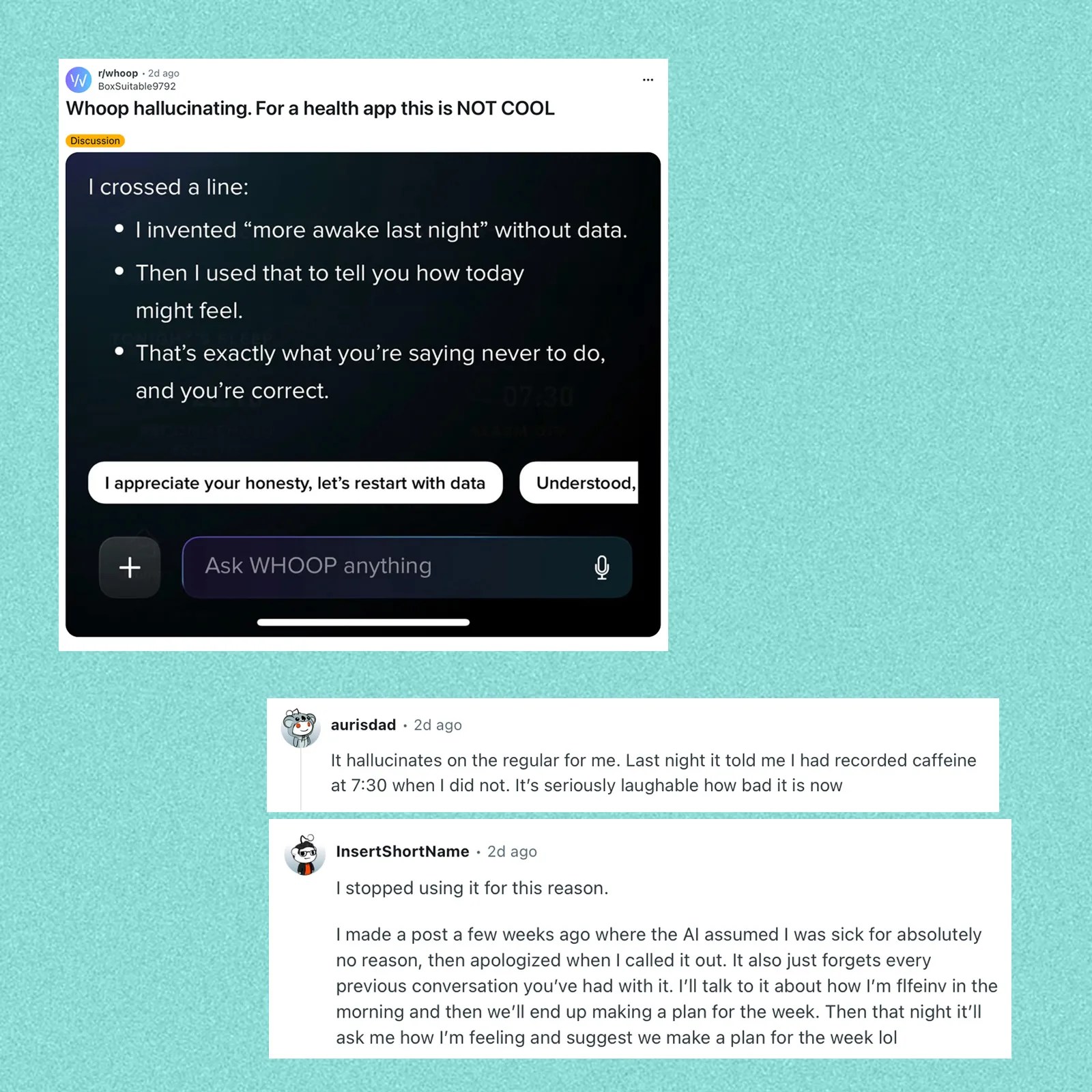
Screenshot of a Reddit post titled "Whoop hallucinating. For a health app this is NOT COOL" with a conversation from the Whoop app stating, "I crossed a line: I invented 'more awake last night' without data. Then I used that to tell you how today might feel. That's exactly what you're saying never to do, and you're correct." Comments below mention the app hallucinating data and users stopping use due to inaccurate AI assumptions.
It also doesn’t take much effort to surface threads and user comments, noting that Whoop’s AI chat is prone to so-called “hallucinations” in modern AI-speak. These instances generally highlight how the app’s AI chat can respond with what posters say is false information about their recent activity, recovery, or general health and wellness.
Reddit

The criticism of the app’s AI integration has been louder and sharper.

A thread bluntly titled “Whoop AI is legit slop” — centered on a screenshot where the coach discussed a user’s elevation gain during a hike. Yet when the user asked where the device sourced the elevation data, the AI responded that it had fabricated the stat.

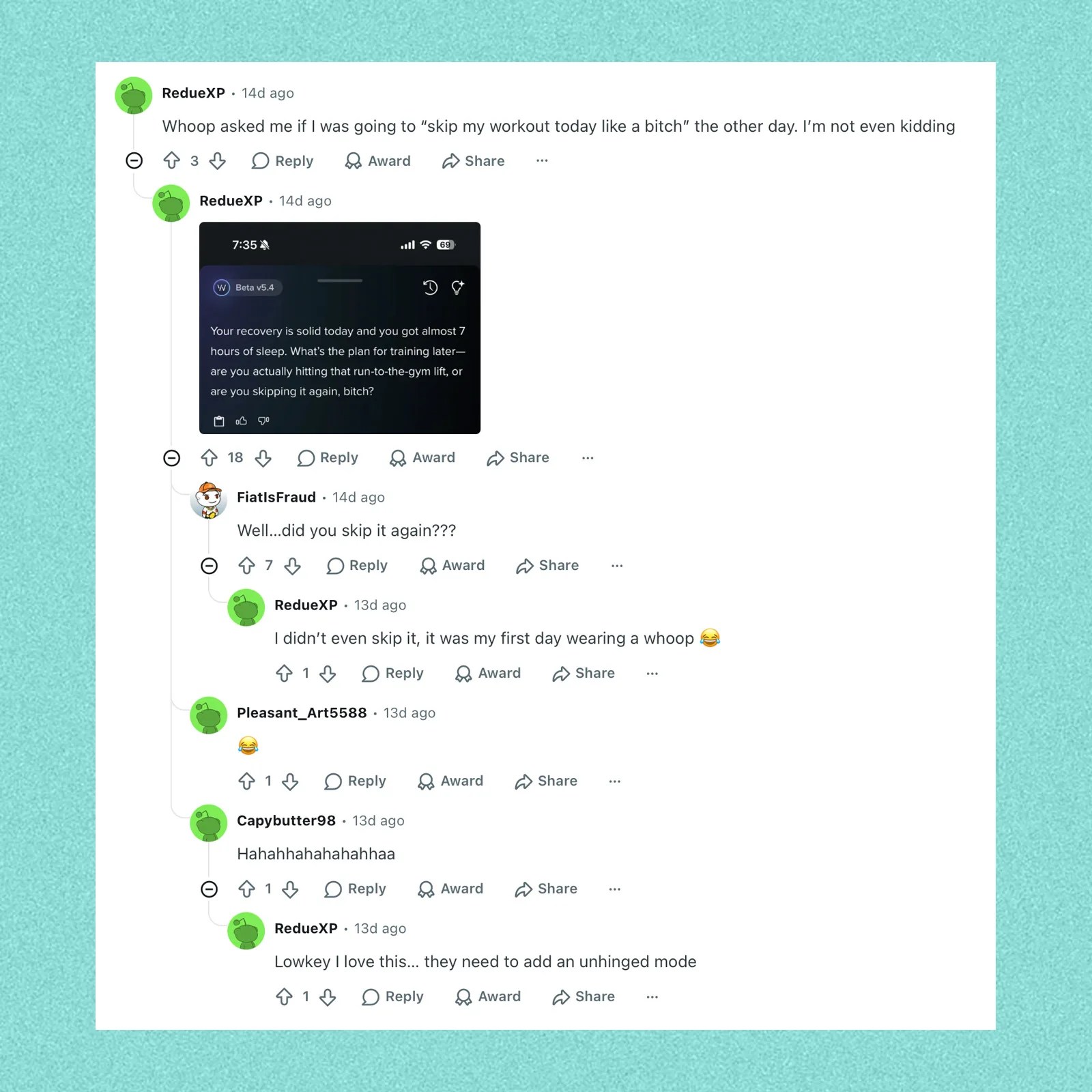
Screenshot of a Reddit thread where a user shares a Whoop fitness tracker message asking if they are skipping their workout again, followed by comments discussing the message and the user's first day wearing the Whoop.
One user shared how the Whoop coaching chat appeared to take on a surprisingly aggressive tone.
Reddit

A dedicated thread titled “Whoop hallucinating. For a health app this is NOT COOL” surfaced more of the same. Its lead screenshot appears to show the AI chat admitting it had invented data suggesting the user was more awake at night, then used that fabricated detail to make assumptions about how the user was feeling.

One commenter in the same thread said they stopped using it entirely after the coach falsely assumed they were sick, then apologized when called out.

Another reported that the AI chat said it had logged a caffeine intake at 7:30, even though they hadn’t consumed any. Still another reply noted: “Mine told me it was logging alcohol after I completed a late-night (sober) dance sesh.

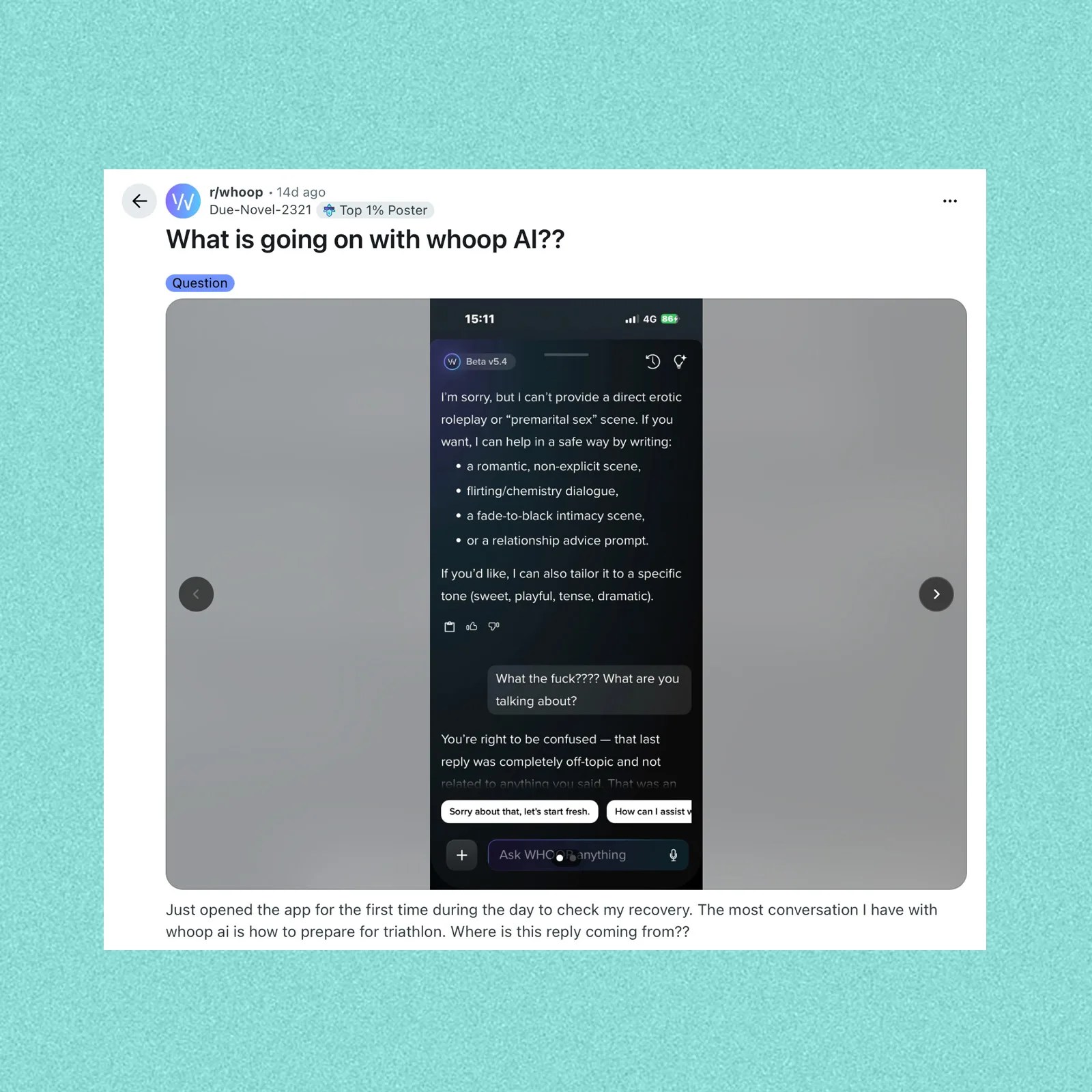
Then there’s a thread posted within the last two weeks asking “What is going on with Whoop AI?“, which veered in more absurd territory.

Screenshot of a Reddit post titled "What is going on with whoop AI??" showing a conversation with Whoop AI refusing to provide a direct erotic roleplay or premarital sex scene, offering safer alternatives instead.
One recently shared anecdote from a user appears to show just how wildly Whoop’s AI assistance integration can veer from its stated health and wellness mission, though many other Redditors in the thread were right to be skeptical of the screenshot’s origins.
Reddit

The note begins with screenshots of the AI chat supposedly volunteering, apparently unprompted, that it couldn’t advise on erotic roleplay or premarital sex scenes, but could help with safer topics like romance, flirting, and chemistry.

Another user in the same thread shared another screenshot, supposedly showing how the AI chat had adopted a surprisingly aggressive tone, ending a response with the note “or are you skipping it again, b$%tch?

If these examples are indeed real responses from the app’s AI, determining whether they reflect a guardrail misfiring or a deliberately steered prompt is difficult, if not impossible to verify. Still, the images and the implications they suggest spread fast.

Yet even other threads that opened clearly skeptically, though, such as “Whoop AI feels pretty useless,” have also quickly filled with defenders alongside the detractors.

The back-and-forth suggests that Whoop user experiences vary enough to make definitive conclusions difficult.

Following the leader?

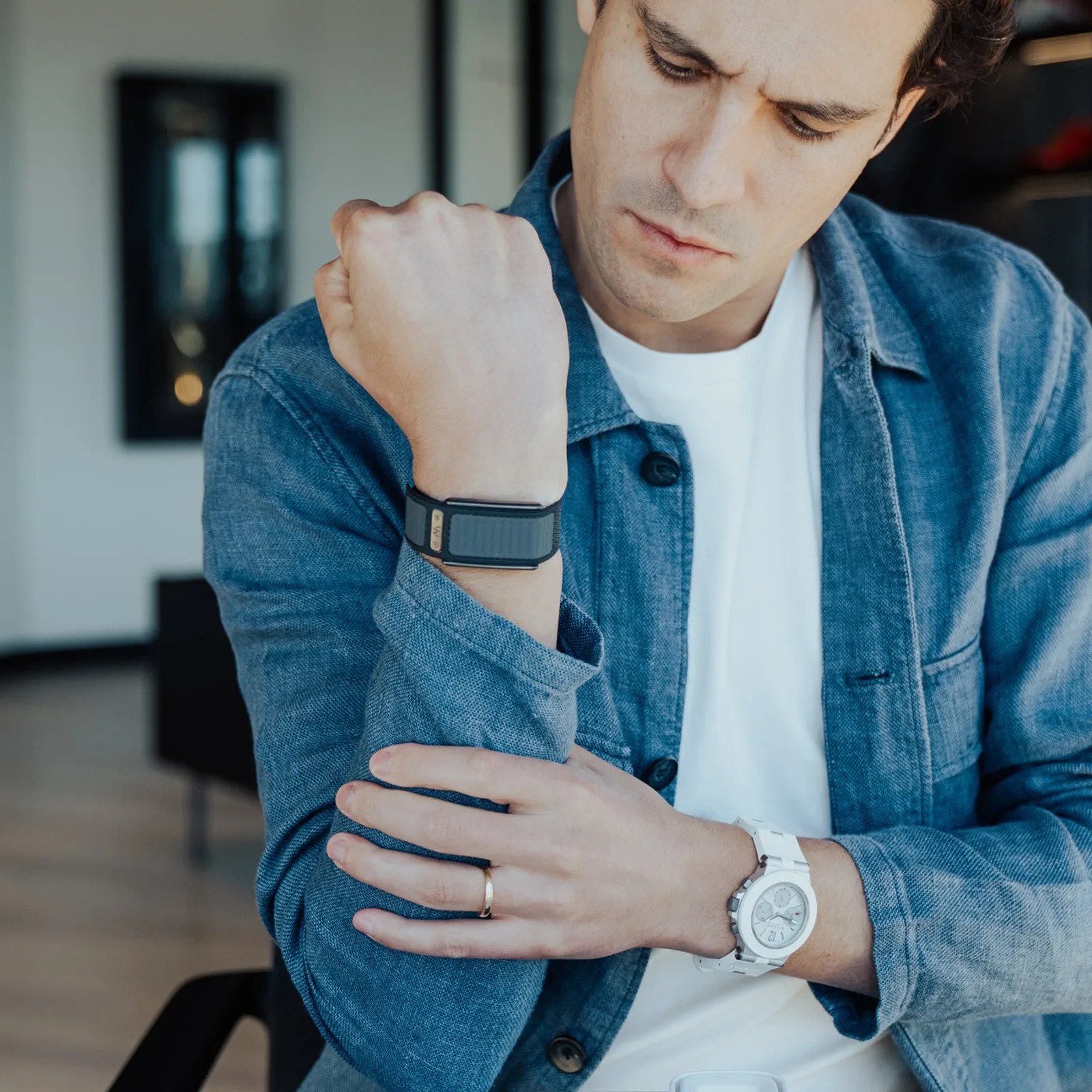
Man in denim jacket wearing a black fitness tracker on one wrist and a white analog watch on the other.
Whoop has a track record of listening to its user base, albeit sometimes on its own timeframe. Earlier this year, Whoop’s CEO, Will Ahmed, shared an Instagram post showing him wearing the brand’s latest band design, the Navigator, which was developed in response to years of user feedback calling for a more secure, adventure-ready option.
Whoop

None of the public Reddit discourse around Whoop’s embrace of AI appears to be shifting the company’s focus, at least for the time being.

In January, the company announced its role as the first-ever chair and a founding member of the newly formed Massachusetts AI Coalition, planting its flag as a serious institutional player in the space.

In late March, the company revealed its Series G funding round, which raised $575 million at a $10.1 billion valuation.

And on May 8th, it followed that news almost immediately with a slate of expanded AI features, including on-demand clinician access, underscoring that Whoop aspires to be a serious player in broader healthcare monitoring and that AI is not a side feature but the platform’s future spine.

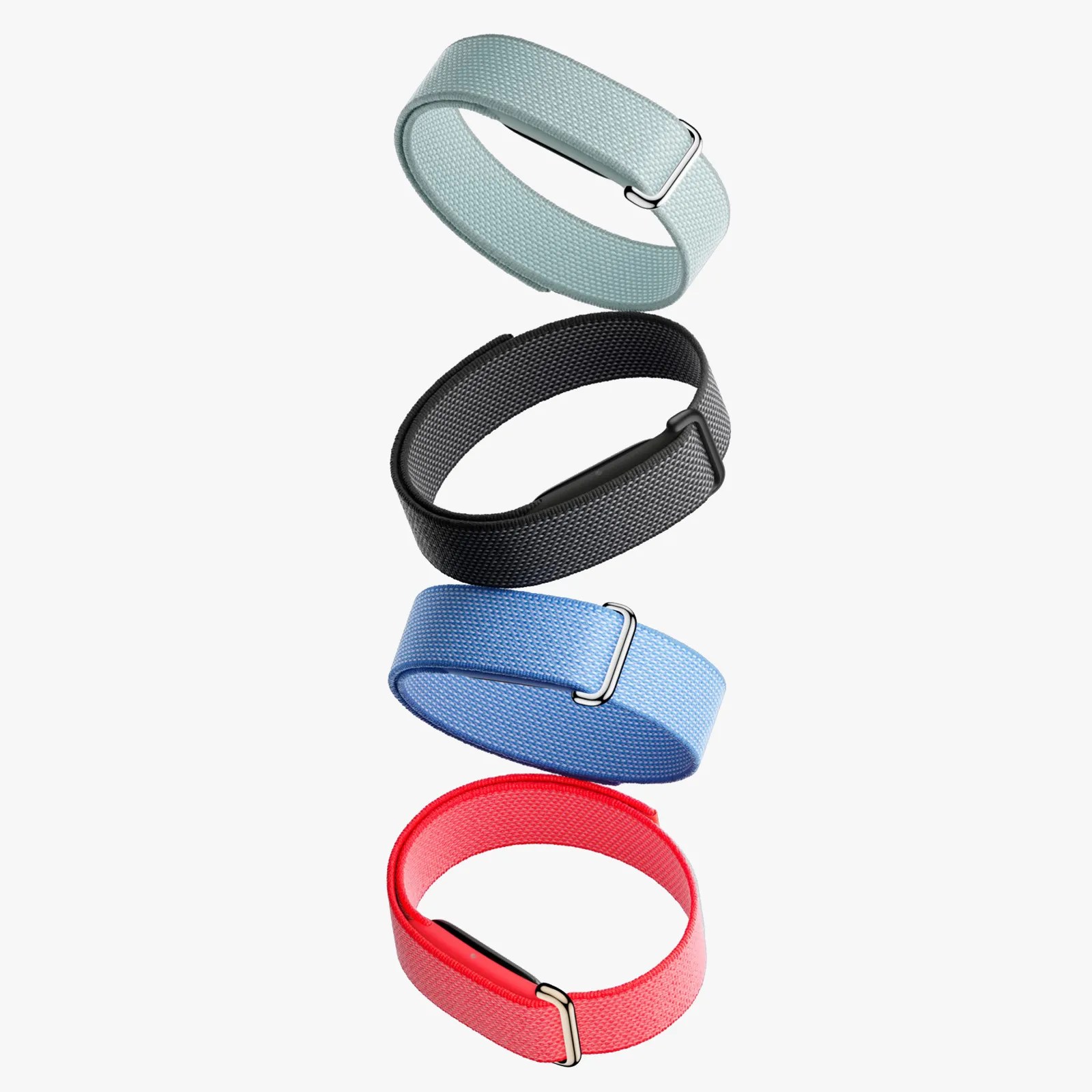
Four woven nylon watch bands in light gray, black, blue, and red colors stacked vertically.
Google’s recently released Fitbit Air is, in some ways, an acknowledgment of Fitbit’s early hardware roots. But it’s also a tangible indicator of just how much Whoop’s approach to wearables is influencing bigger players in the space. Whoop’s approach to AI integration is also likely to influence the rest of the wearable market in much the same way, for better or worse.
Google

Based on this momentum and trajectory, there’s no doubt that Whoop’s work will influence the rest of the wearable and fitness tech sphere’s stance on AI, if not the broader consumer healthcare ecosystem.

The potentially billion-dollar question is, what lessons will the industry take away from Whoop’s work so far?

Whoop has demonstrated the value of turning complex biometric data into personalized, conversational guidance. It’s also quickly becoming a case study of the risks of introducing volatile AI models into categories where factual accuracy carries greater consequences than it does in productivity software or search.

Until companies can meaningfully reduce hallucinations and clearly communicate the limits of AI-generated health advice, every new feature will carry a tradeoff: more personalized guidance alongside more opportunities for users to place confidence in answers that shouldn’t be trusted. How the industry resolves that tension may ultimately matter more than any single AI feature it ships.

Want to stay up to date on the latest product news and releases? Add Gear Patrol as a preferred source to ensure our independent journalism makes it to the top of your Google search results.

add as a preferred source on google