
The Golden Rule of Espresso Machine Design Might Be Fundamentally Flawed

New research from fluid dynamics experts is casting doubt on the 9-bar pressure standard, a benchmark that the specialty coffee world has treated as an immovable fact since the mid-20th century.

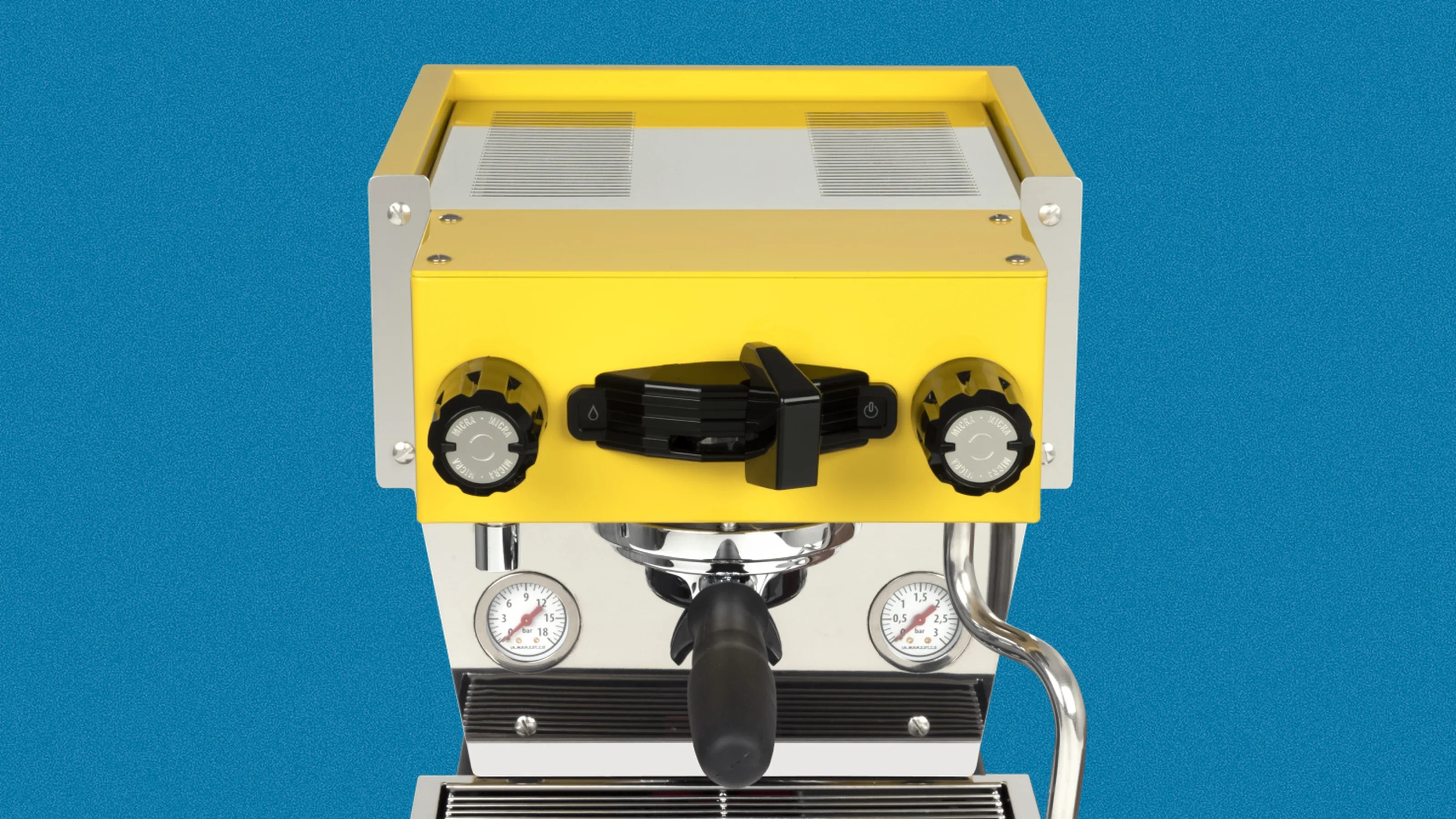
Yellow and stainless steel espresso machine with black knobs, pressure gauges, and steam wand on blue background.La Marzocco

The nine bars of pressure requirement is the closest thing espresso has to a commandment. It’s baked into machine design, carved into barista training, and treated as settled science across the coffee industry.

A new physics paper published in June in the journal The Physics of Fluids suggests, though, that whatever a machine’s specs state, the day-to-day reality of pulling an espresso shot actually looks quite different.

Setting the bar
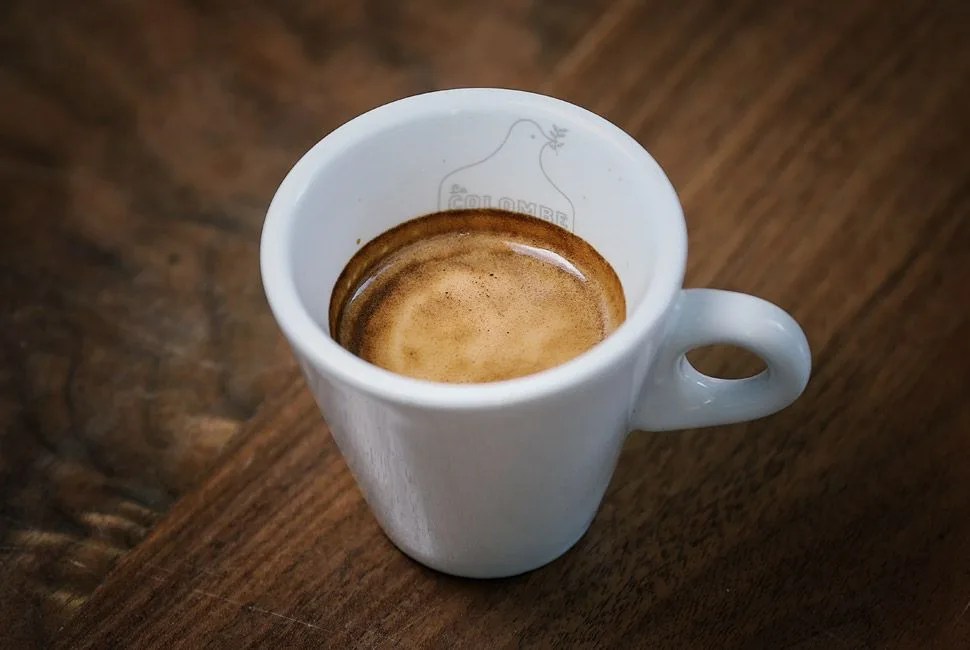
espresso-gear-patrol-slide-1
Modern espresso machines — from entry-level prosumer models to six-figure commercial workhorses — are engineered to hit and hold 9 bars. But new science suggests this level of pressure may not actually be optimal for espresso extraction.
Peregrine Espresso

The 9-bar standard didn’t emerge from a laboratory. It traces back to 1940s Italian espresso engineering, where Achille Gaggia’s spring lever machine accidentally produced around 9 bars — a figure later cemented by Ernesto Valente’s 1961 Faema E61, the first pump-driven machine to deliver it electrically and consistently.

As Cliff & Pebble detail, nine bars consistently yielded a balanced shot — enough force to extract oils and solubles without over-compacting the puck or over-extracting the coffee. It was practical as much as it was precise.

Clive Coffee’s history of the standard goes further, describing nine bars as espresso’s greatest accident — a number that stuck not because it was proven optimal, but because it worked well enough, often enough, for long enough that the industry built itself around it.

That consensus calcified into hardware. Modern espresso machines — from entry-level prosumer models to six-figure commercial workhorses — are engineered to hit and hold 9 bars. The spec appears in product listings like a badge of legitimacy. Challenging it, until recently, felt more like heresy than science.
Specs vs. reality

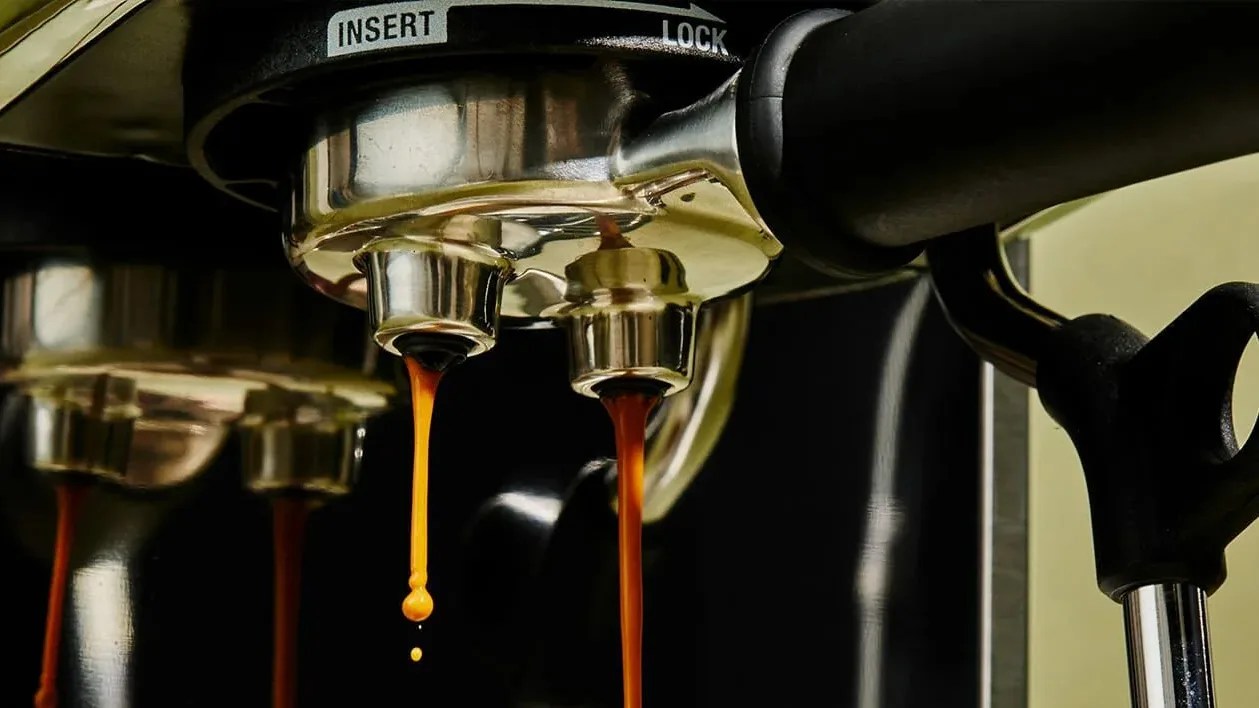
espresso shot being pulled
A new paper titled “Under pressure: Poroelastic regulation of flow in espresso brewing,” published in June 2026 in the Scientific journal The Physics of Fluids, explores how the tightly packed espresso puck influences the flow and extraction of espresso.
Photo by Chandler Bondurant for Gear Patrol

Published in Physics of Fluids, the new study examines how pressure interacts with the coffee puck itself — specifically, how the puck behaves as a deformable, porous material rather than a static filter. The researchers found that higher pressure doesn’t simply push water through coffee faster or more efficiently. Instead, once pressure climbs past roughly 5 bars, the puck begins behaving as a poroelastic material — compressing in ways that flatten and eventually reduce flow, rather than increasing it The puck, it turns out, pushes back.

Earth.com’s summary of the research notes that the findings confirm flow rate plateaus well below the 9-bar standard — a result that raises questions about whether the pressure most machines are engineered to deliver is actually doing meaningful work — a conclusion that cuts against the foundational premise of how most machines are built and marketed.

Barista’s vs. engineers

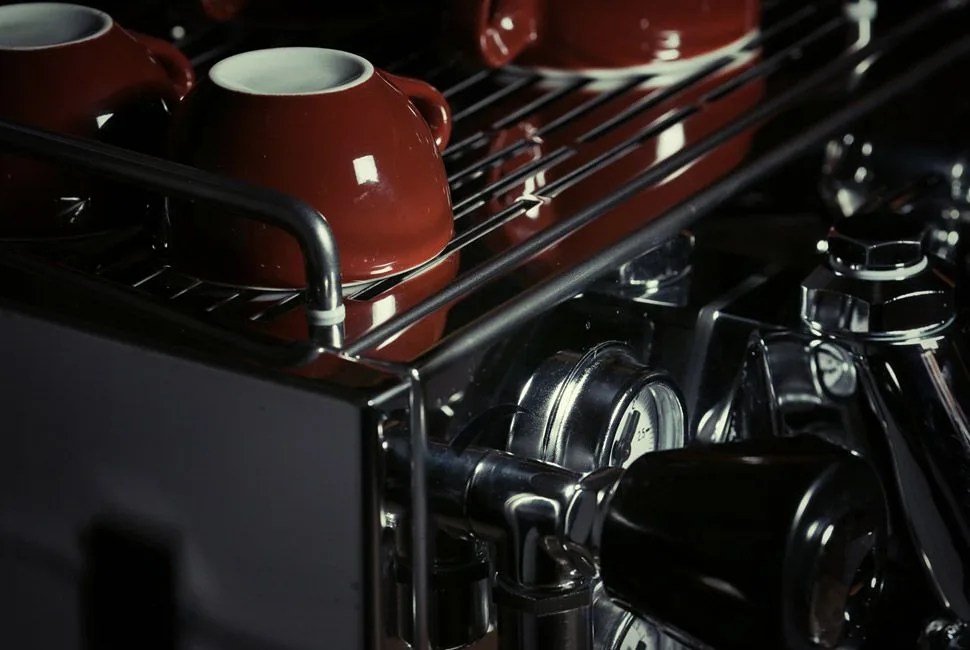
how-to-buy-an-espresso-machine-gear-patrol-slide-5
Whether the new work will eventually influence the design of future espresso machines remains to be seen. But at a minimum, it brings new scientific scrutiny to a major assumption that 9 bars of pressure are critical for espresso extraction. And as Sprudge’s Zac Cadwalader notes, it may soon at least influence how bleeding-edge baristas approach pulling shots.
Gear Patrol

Sprudge’s Zac Cadwalader, predicts this research could find its way into a US Barista Championship routine within two seasons — even if the leap from academic paper to commercial machine redesign remains a long one.

And it is a long leap. A single physics study, however compelling, doesn’t rewrite an industry overnight. Variables like grind size, roast level, bean origin and tamping technique all interact with pressure in ways that require far more research to fully untangle. Baristas and machine designers have also explored pressure profiling — dynamically adjusting pressure during extraction — for years, with promising but inconsistent results.

Still, the study lands at a moment when specialty coffee is increasingly open to questioning its own orthodoxies. If the physics holds up under broader scrutiny, the machines built around 9 bars may eventually look less like precision instruments and more like a comfortable habit that the industry never got around to stress-testing.

Want to stay up to date on the latest product news and releases? Add Gear Patrol as a preferred source to ensure our independent journalism makes it to the top of your Google search results.

add as a preferred source on google