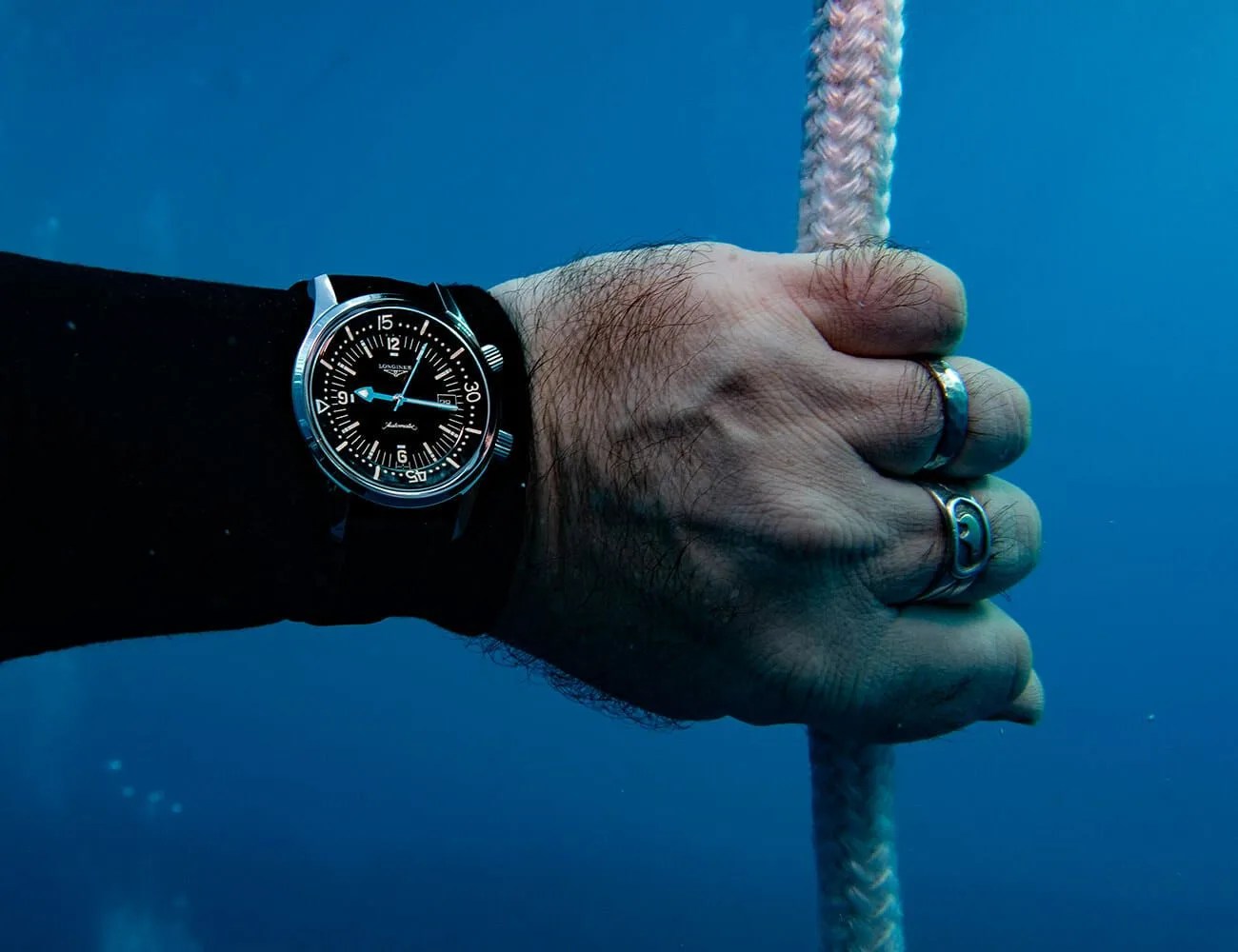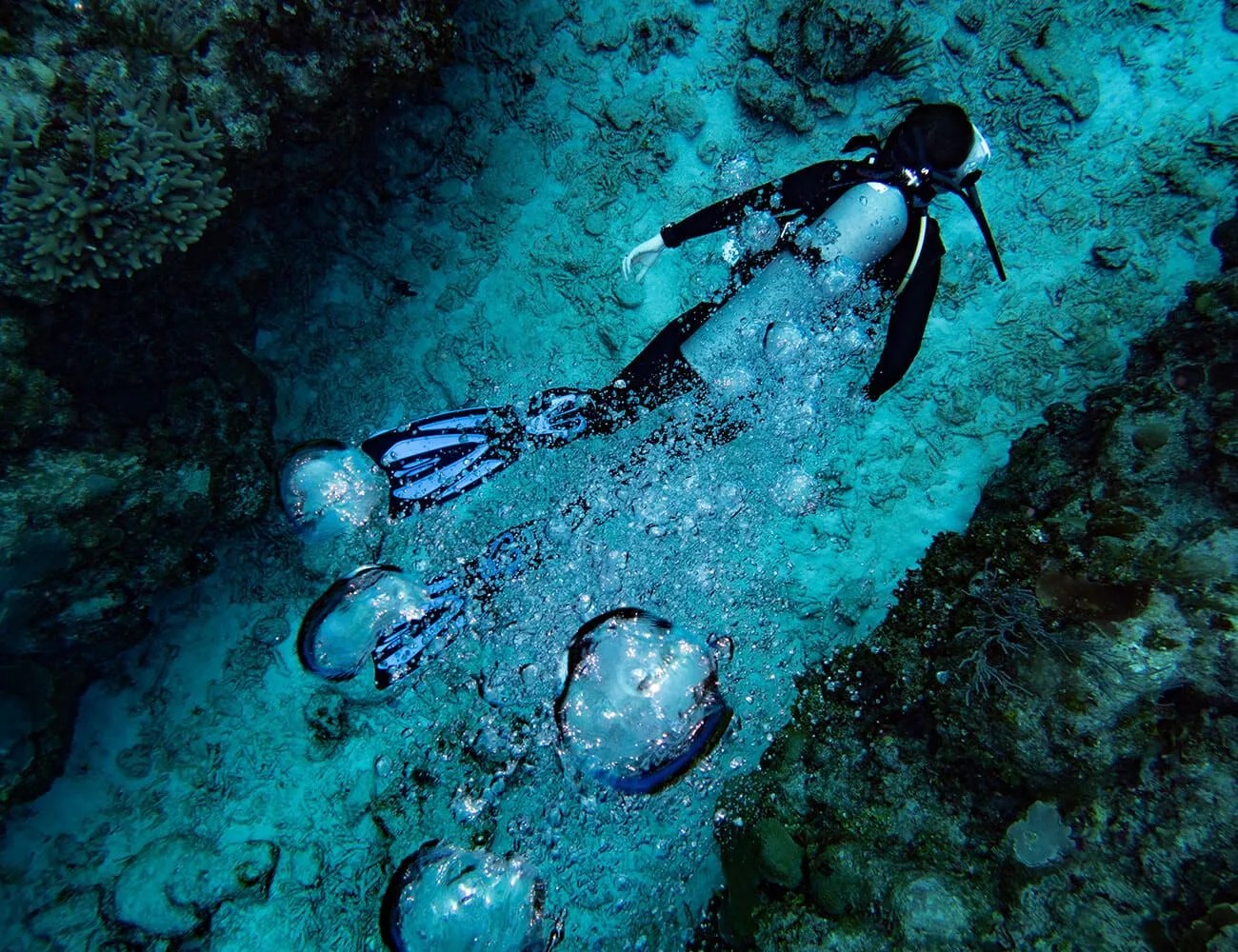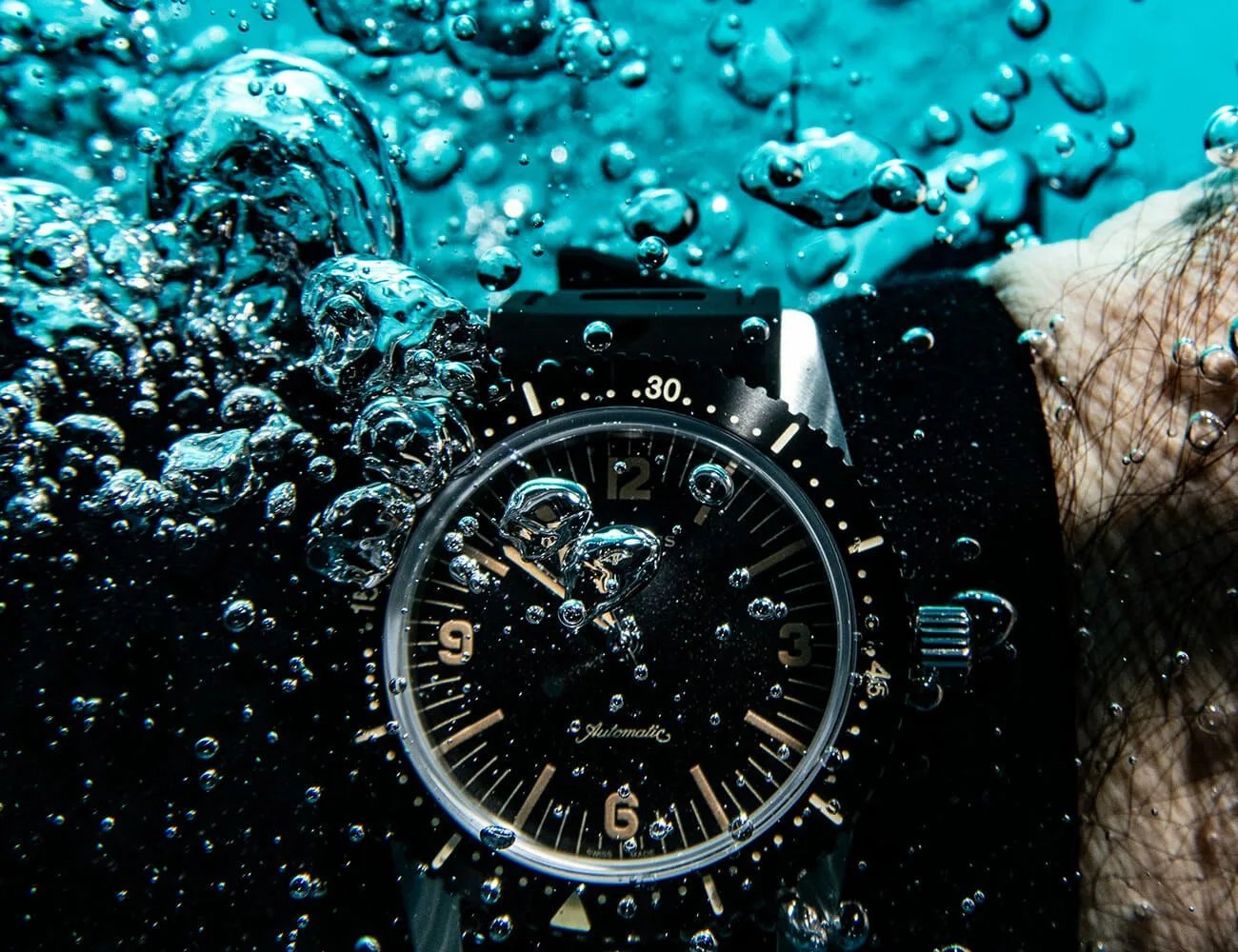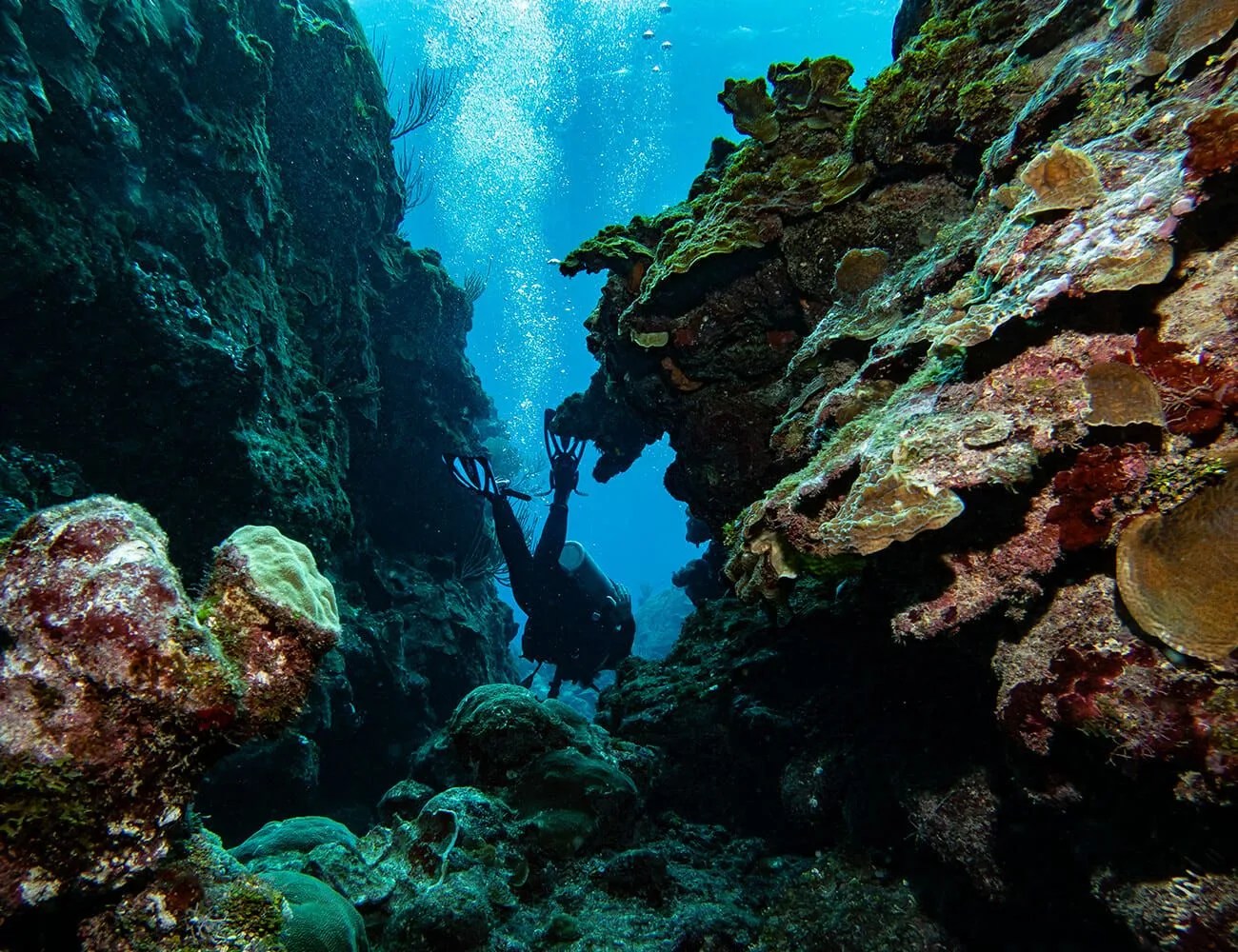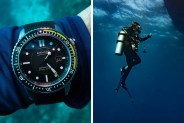

Welcome to Deep Dive, in which we test dive watches both new and vintage beneath the waves in some of the world’s most beautiful locations. This time, we’re in the Cayman Islands with the Longines Legend and Heritage divers, modern recreations of vintage Swiss classics.
Field testing dive watches means going scuba diving, and that’s what we did recently with two modern recreations of Longines’ first two dive watches, the Skin Diver (circa 1959) and the Legend Diver (technically reference 7042, circa the early 1960s). Though vintage in style, these two watches are capable modern divers packed with modern automatic mechanical movements, bright-shining lume, 300m of water resistance, sapphire crystals, and corrosion-proof stainless steel. Under the waves on the desolate East End of Grand Cayman in the West Caribbean, however, they proved that few significant advancements have been made in mechanical divers since the middle of the 20th Century.
As part of Longines’ Heritage Collection, the Skin Diver and the Legend Diver are very faithful recreations of the vintage pieces. Unlike most brands’ reissues, Longines doesn’t change the sizes much. Instead, they recreate watches that were originally larger than average, and this means you get both vintage credibility and modern appeal.
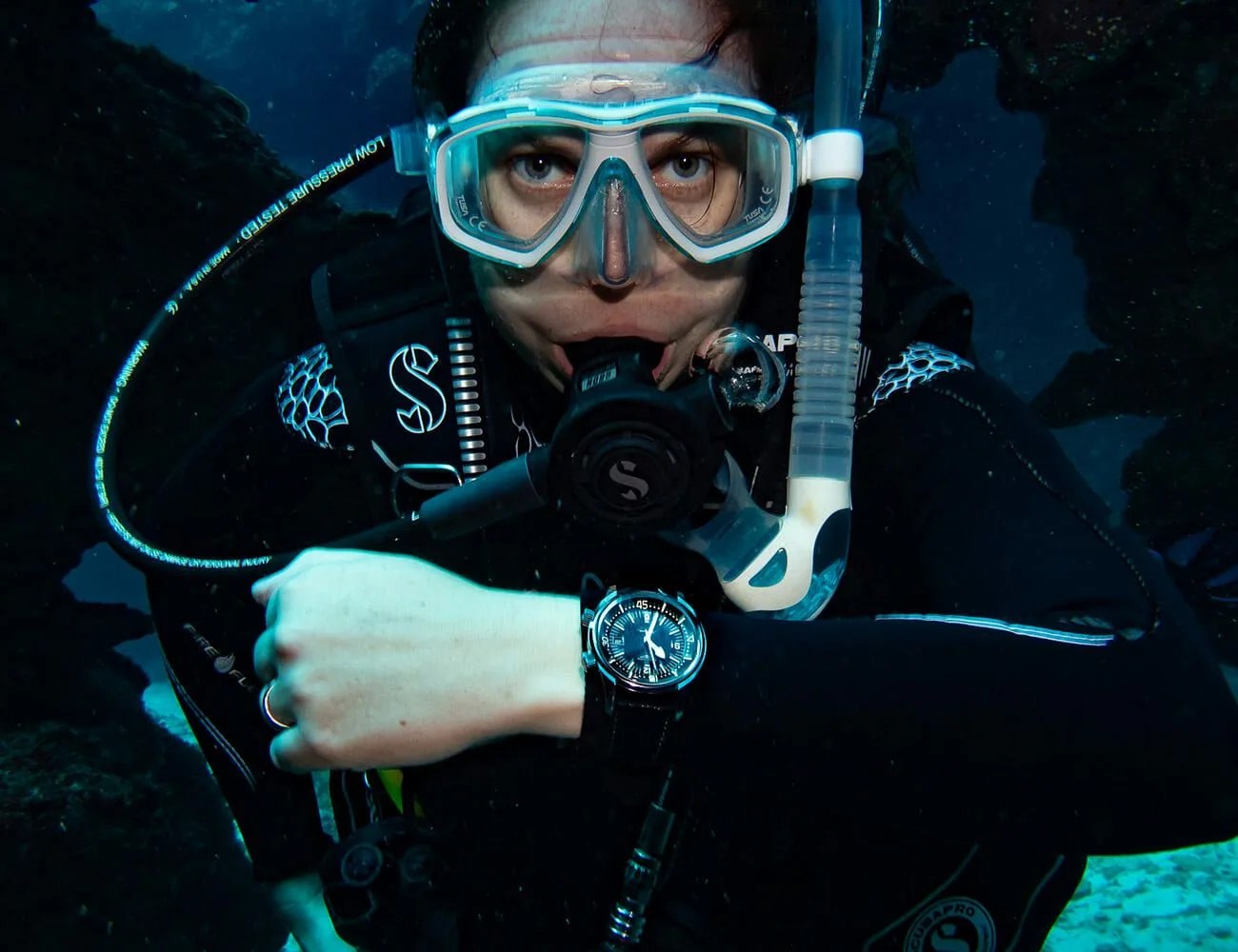
Original versions of the both the Skin and Legend Diver will cost you manyfold what these recreations will run you. (The Skin Diver costs $2,600, the Legend Diver $2,400.) Because these recreations are aesthetically accurate, durable, and well executed, seeking a vintage one seems reserved for collectors with money to burn. If you’re still not convinced, keep in mind that Longines has been in continuous operation in the same building (with some modern additions) since its inception in 1832 — this eliminates the inauthenticity one can feel when buying recreations from a brand that is essentially a trademark acquisition operating out of third-party factories.
In fact, though Longines uses ETA movements, it bears consideration that A) Longines and ETA are both owned by the SWATCH Group, and that B) two ETA facilities operate at the Longines factory, both building movements that were developed with and for Longines specifically.
When we asked CEO Walter Von Kanel if he considered Longines movements to be “in-house”, he rightfully noted that, “One has to be careful with this question.” Then he rattled off specific calibers and their varying level of uniqueness to Longines watches, citing small movements for ladies models as the most qualified for that exalted status. So, it’s a gray area, to be sure, but, perhaps like in buying a Seiko, when buying a Longines you do get the satisfaction of knowing that all manufacturing happens in one central facility, thus lending the watches the spirit of in-house manufacturing, if not concrete bonafides as such.