
Civivi Radically Updates a Traditional Minimalist Japanese Knife Without Breaking the Bank

Originating in Miki, Hyōgo Prefecture, before the turn of the century, the higonokami friction folder packs plenty of history.

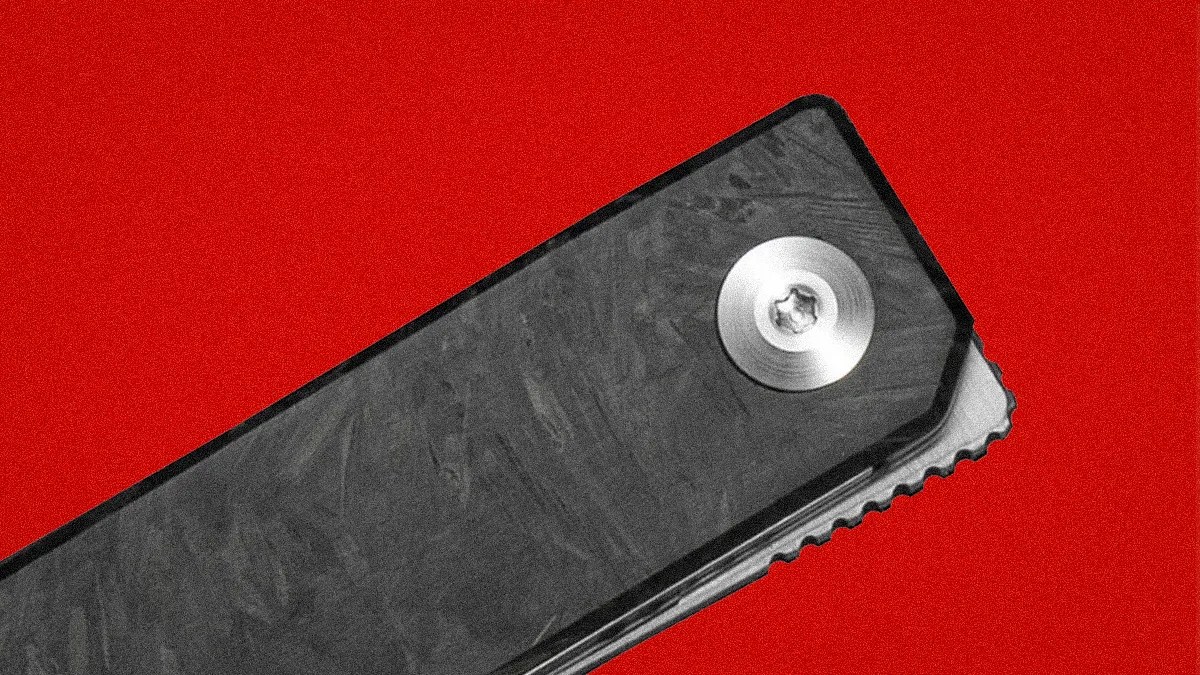
Close-up of a black textured folding knife handle with a silver screw on a red background.Civivi

If you buy from a link, we may earn a commission. Learn more

As a longtime lover of Laphroaig, I can attest that the taste of a Scotch is often only part of the appeal.

The history of the distillery, the processes by which the spirit came to be and, frankly, how befuddling it is to others can play as great a role in determining its value, if not even more of one.
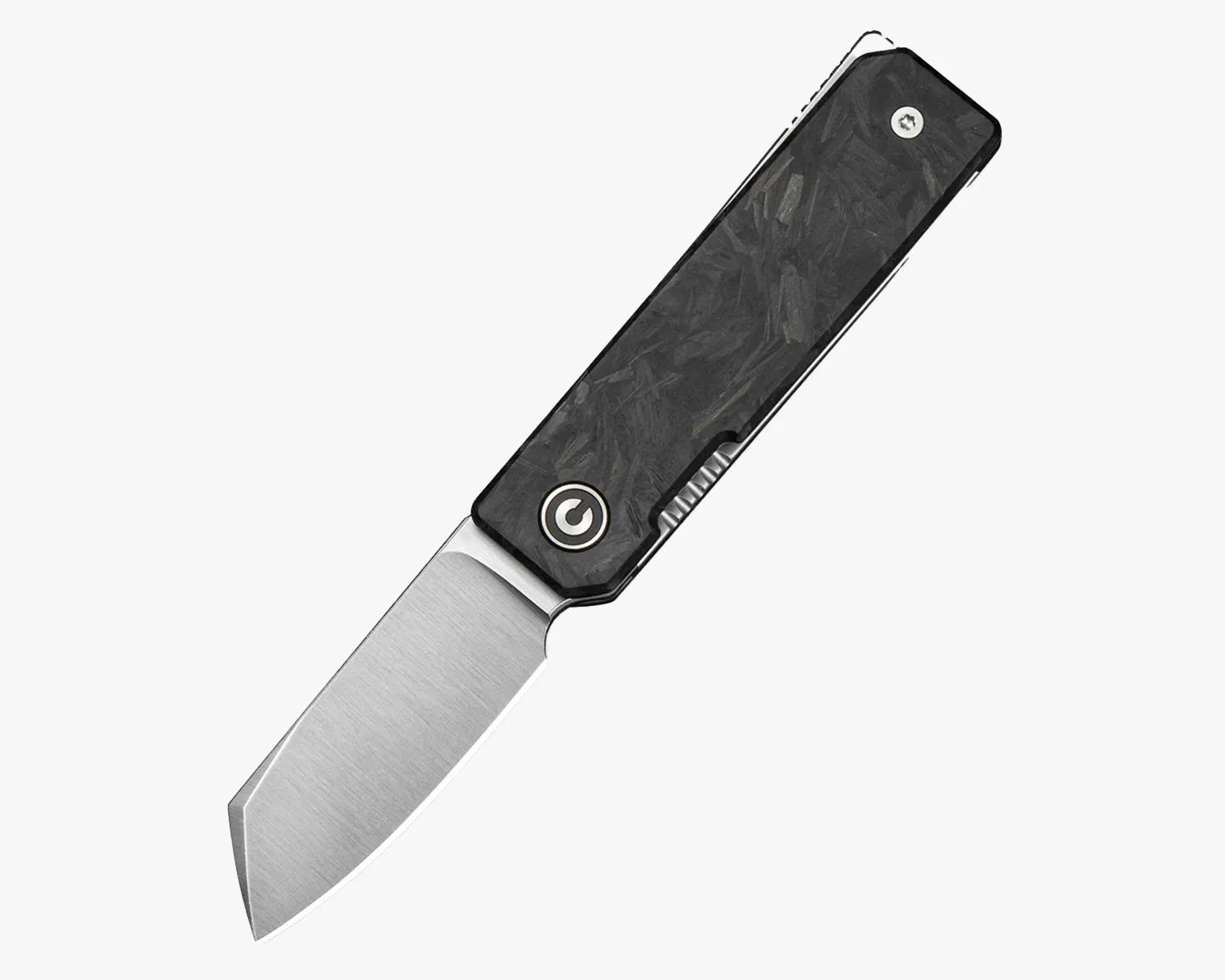
Folding knife with a brushed steel blade and a black textured handle featuring a circular logo.
Civivi’s new Kukei prototype draws inspiration from Japanese knives dating back to 1896.
Civivi

That’s pretty critical with a beverage that my nieces insist smells like a Sharpie, but this dynamic is hardly limited to booze. 

It can also surface with regard to pocket knives, especially those whose designs date back more than a century.

Case in point: A compelling new Civivi prototype dubbed the Kukei.

Sword substitute

Let’s start with a little history on this type of knife before getting into specifics. 

In the late 1800s, Japanese metal smiths found themselves in a tough spot thanks to a number of legal reforms, including the abolition of the samurai class and a ban on wearing swords in public. 
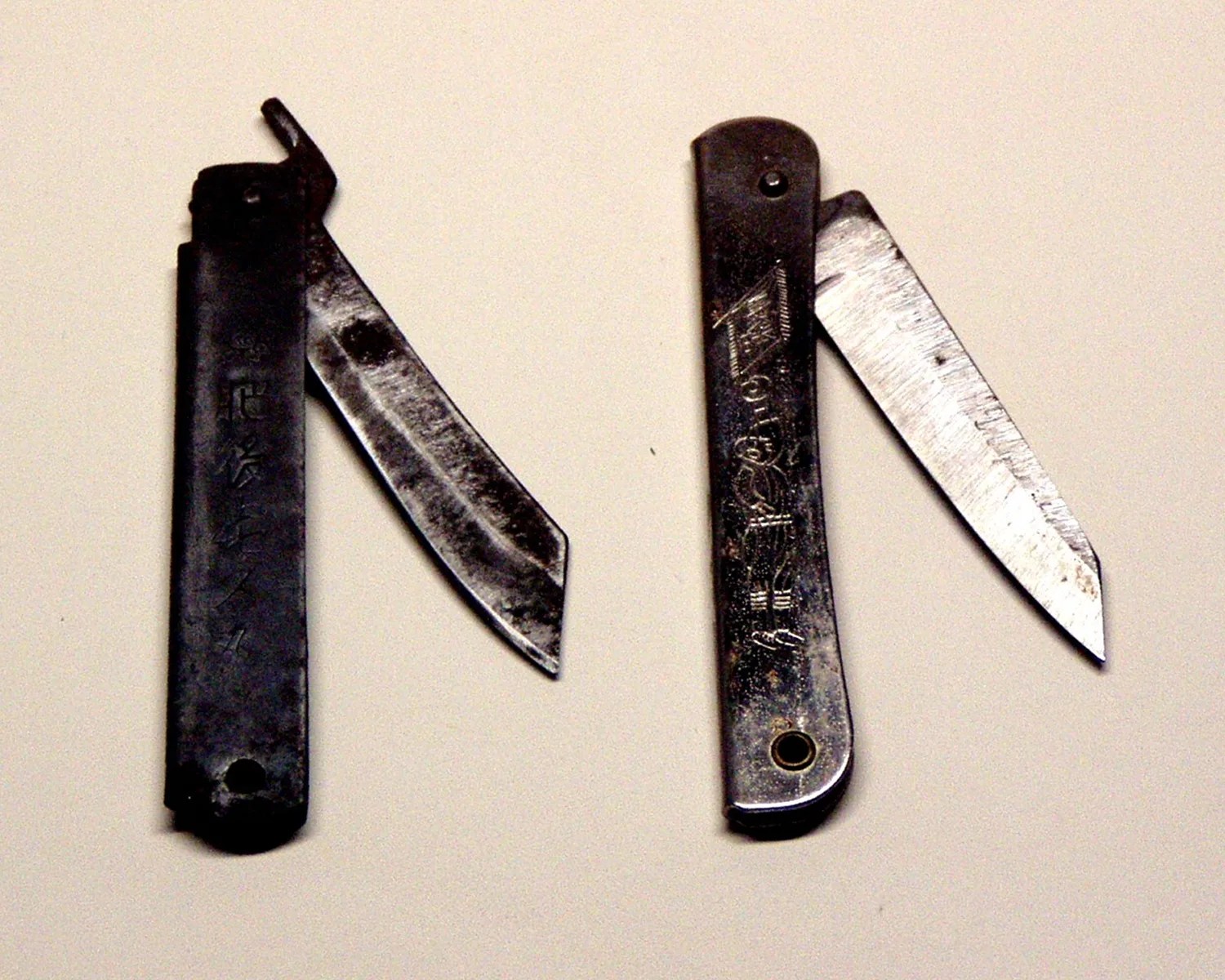
Two vintage black metal folding knives with partially open blades and engraved handles on a light surface.
These classic higonokami knives exhibit several hallmarks of the form. The one on the left, for example, features a prominent chikiri (lever), while the one on the right has a handle made of a single piece of folded metal. Both have handle markings that likely reference their makers and/or the steel used in their blades.
Yatobi

Diversifying their offerings, they began to find great success with pocket knives, leading to the introduction of the higonokami style in Miki, Hyōgo Prefecture, in 1896 (if not earlier). 

One key characteristic is a friction folder mechanism, requiring thumb pressure on its chikiri (lever) to hold the blade steady.

Folding knife with a rectangular black textured handle and a wide, straight-edged stainless steel blade.
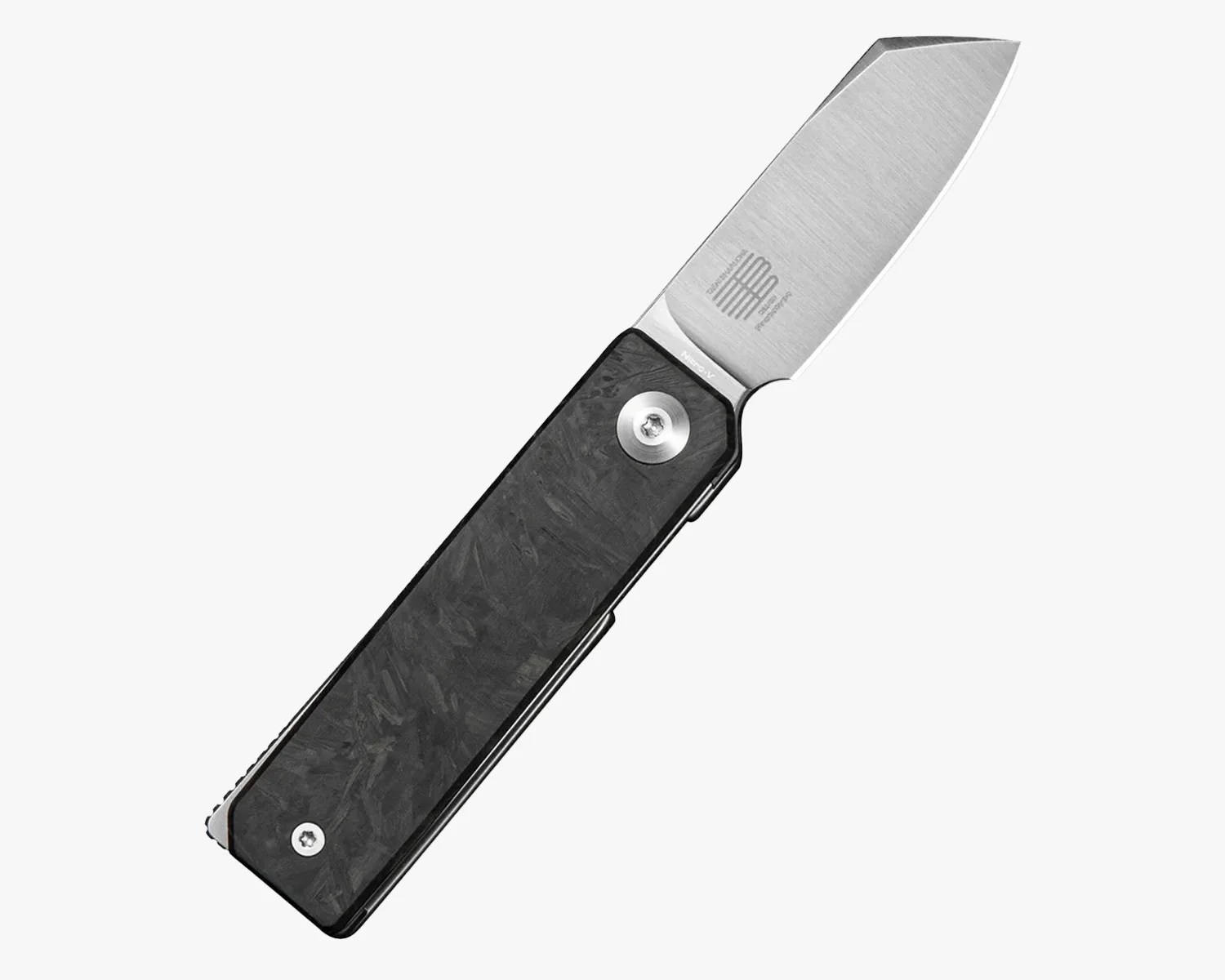
The Kukei departs sharply in some ways from its inspiration, yet it strongly maintains the minimalism.
Civivi

The handle is a folded-over sheet of metal, stamped with the name of its maker and the type of steel in the blade. 

The blade itself typically has a flat grind with no secondary bevel. 

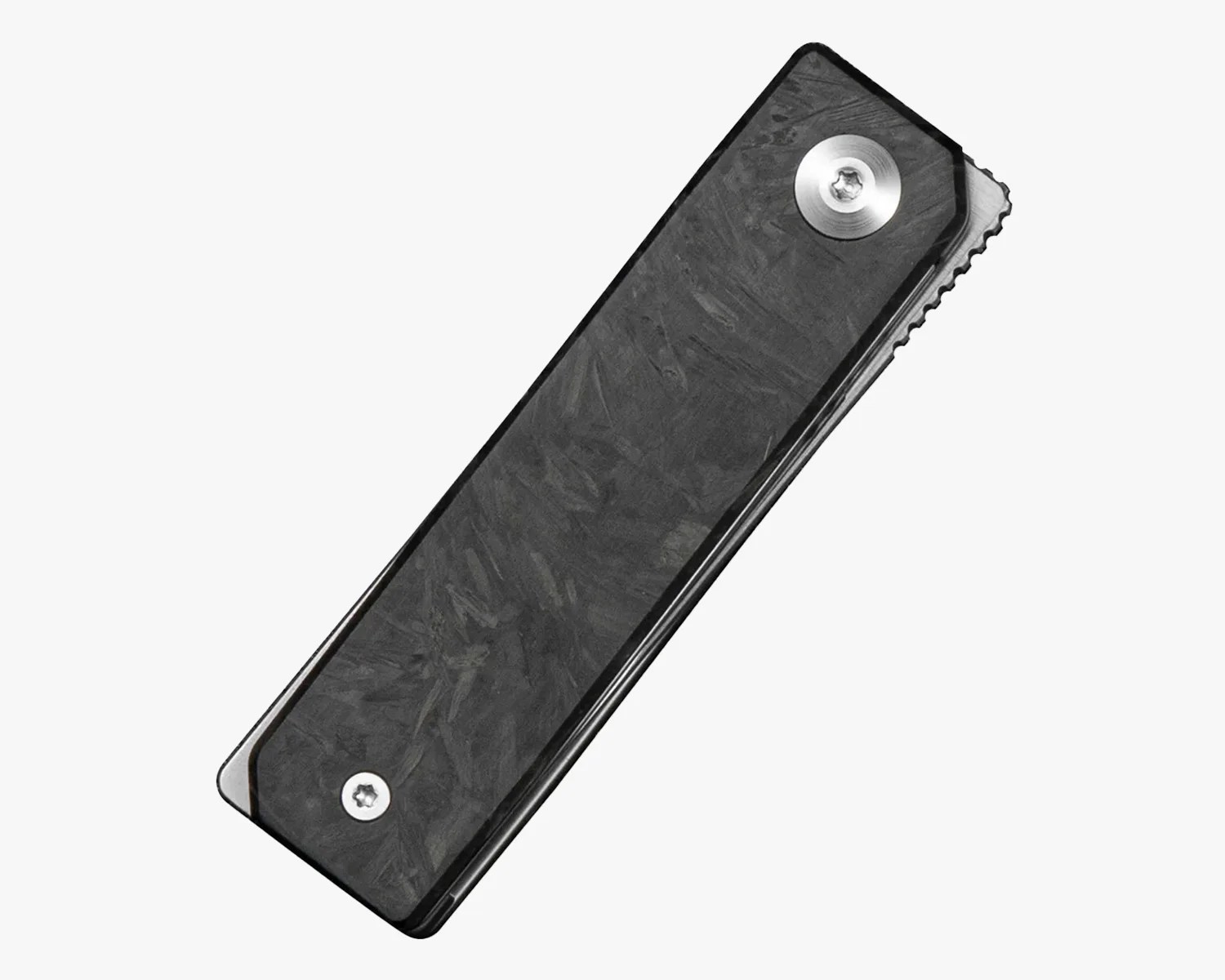
Closed black folding knife with textured handle and visible screws on a white background.
Using shredded carbon fiber for the handle was probably not an option in the late 19th century.
Civivi

The word higonokami is rather complicated but can be very loosely interpreted as “protector.” 

It is now trademarked by Miki Custom Knife Guild, near Osaka, and only one fifth-generation manufacturer can legally call its knives higonokami; others must call them higo or higonokami style.

Modern marvel

All of which brings us to the Kukei, a prototype designed by longtime We Knife collaborator Tashi Bharucha

Bharucha’s radical reinterpretation leads off with a 2.02-inch modified sheepsfoot blade that riffs on the higo’s classic reverse tanto. 

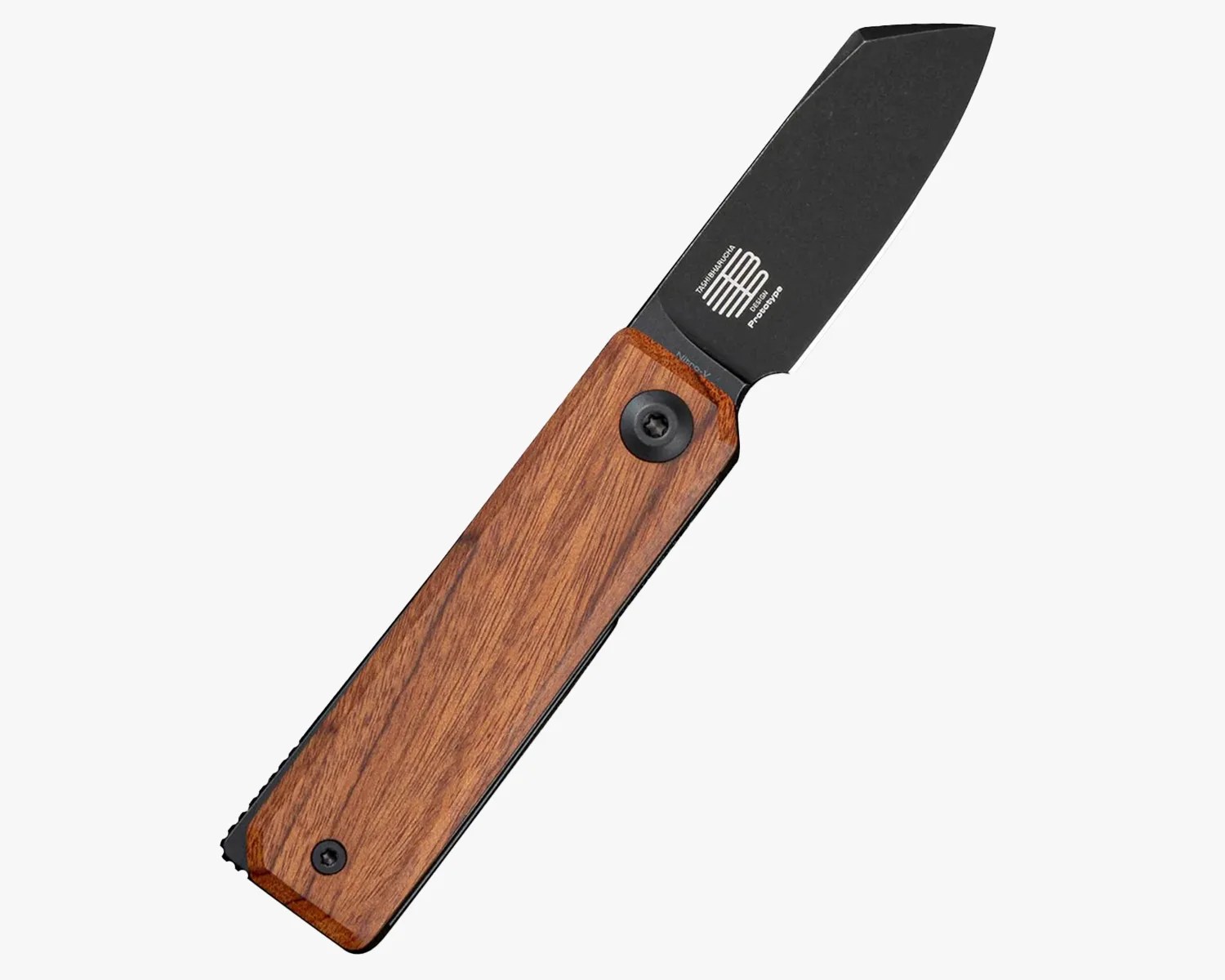
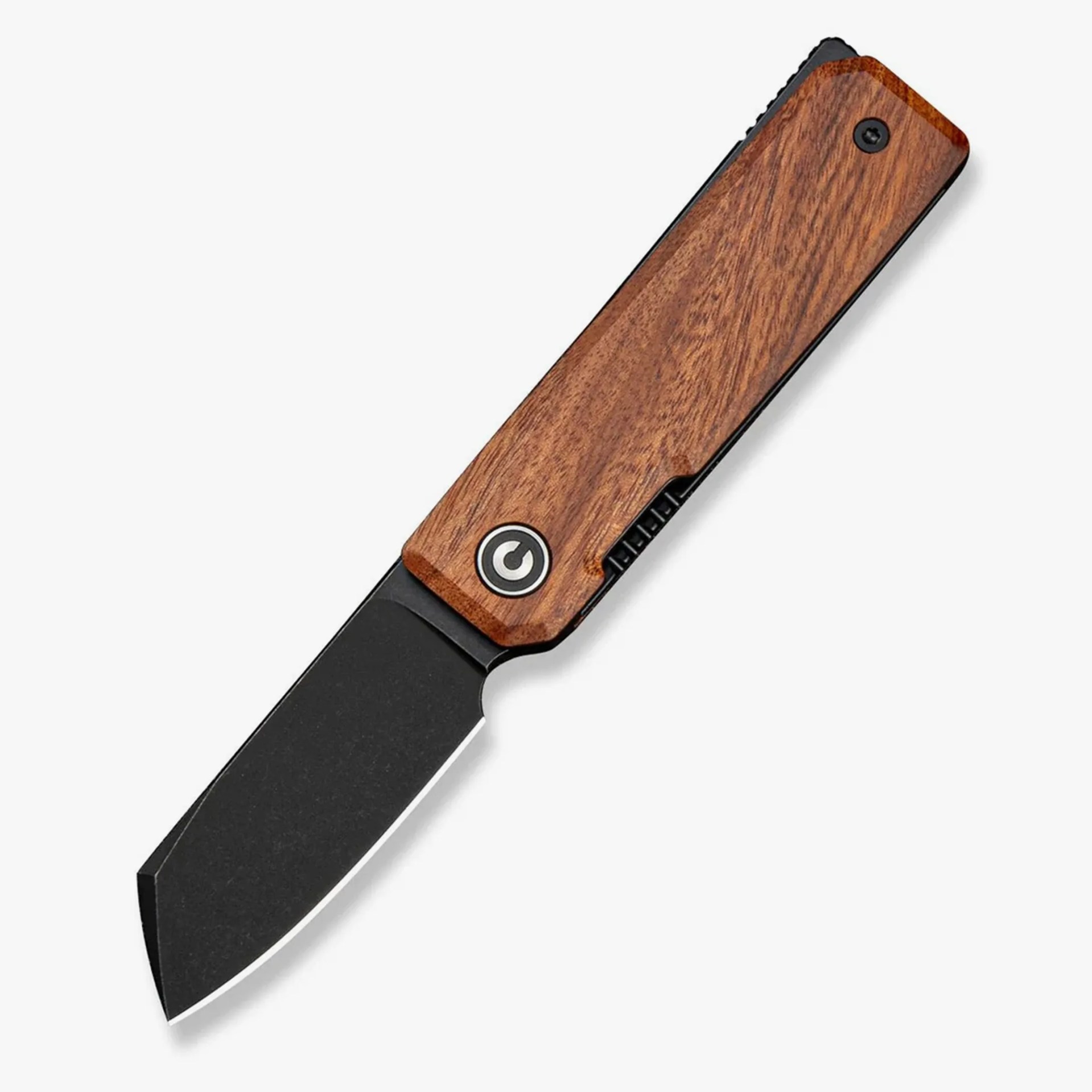
Folding knife with a black blade and a wooden handle featuring two black screws.
The Kukei eschews handle markings for ones on the blade, a very contemporary touch.
Civivi

The blade is made of Nitro-V, valued for its blend of toughness, corrosion resistance and ease of sharpening, and deployed via a subtle front flipper. 

Departing from the non-locking nature of the traditional knife, Bharucha’s design becomes sturdier, more user-friendly and safer with the introduction of a liner lock. 

The caged ceramic ball bearing on which it pivots is probably a lot smoother than anything they were using well over a hundred years ago. 

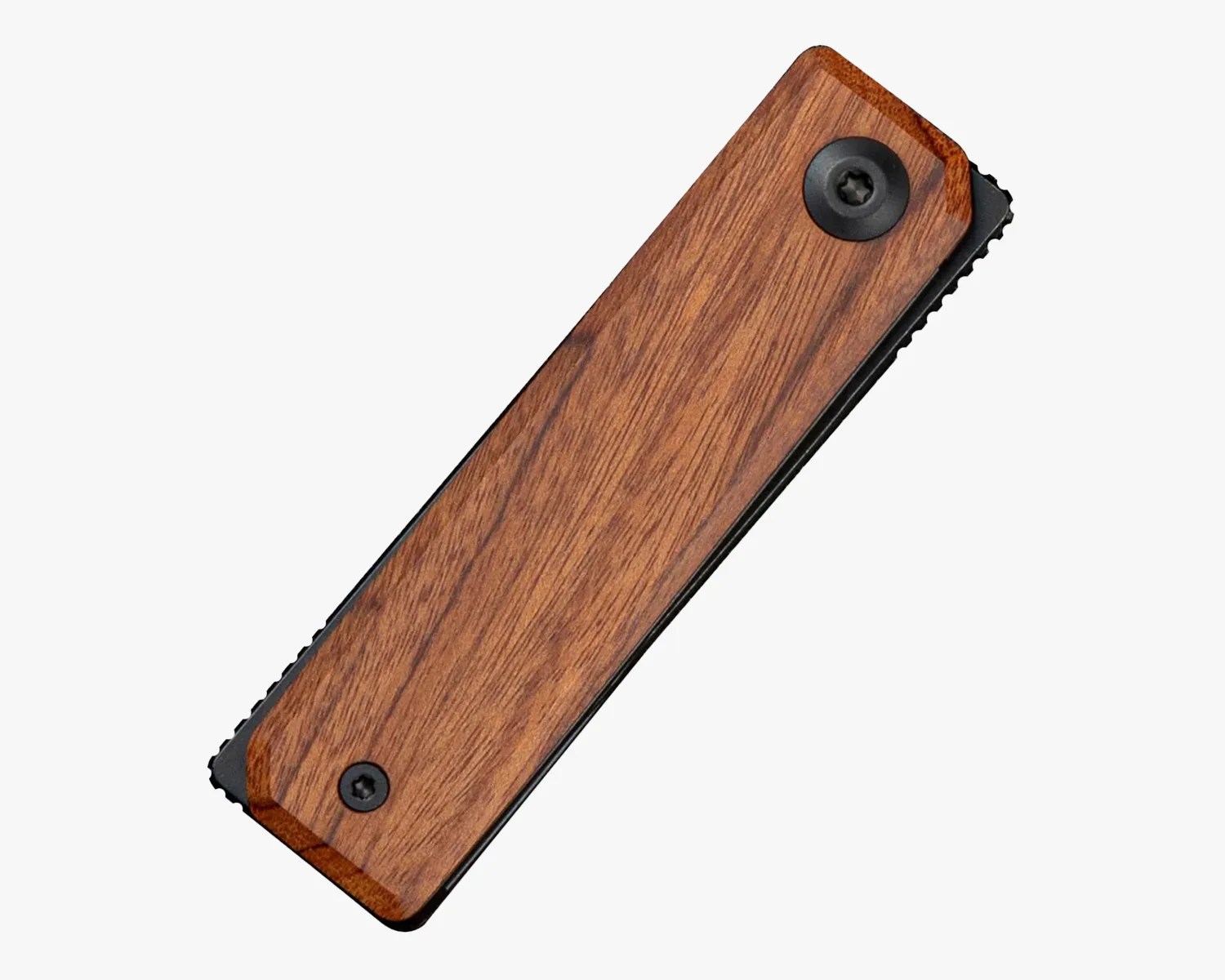
Rectangular folding knife with a wooden handle and black screws on a white background.
When closed, the two ends of the wood-handled prototype perversely mirror each other. My hunch and hope is that the final product will be closer to this version, which has jimping on the front flipper to aid deployment.
Civivi

The squared handle echoes the higo’s classically streamlined form, although with the Kukei, it is made of two scales held together with hardware, rather than being a single piece of metal. 

The whole package weighs just 1.57 ounces and measures just 2.87 inches when closed.

It also lacks a pocket clip, so you’ll have to keep a close eye on this little piece of history — especially after a dram or two of Scotch.

Availability and pricing

The Civivi Kukei comes in two variants, differentiated by their handles.

The Guibourtia wood edition costs $70 while the shredded carbon fiber option costs $80.

While no release date has been shared yet, you can sign up to be notified when the knife becomes available.

Want to stay up to date on the latest product news and releases? Add Gear Patrol as a preferred source to ensure our independent journalism makes it to the top of your Google search results.

add as a preferred source on google