
This Exquisite Classic Is Honda’s Most Important American Motorcycle Ever

As hyperbolic as that may sound, this particular two-wheeler previewed a model that created a whole category of bikes.

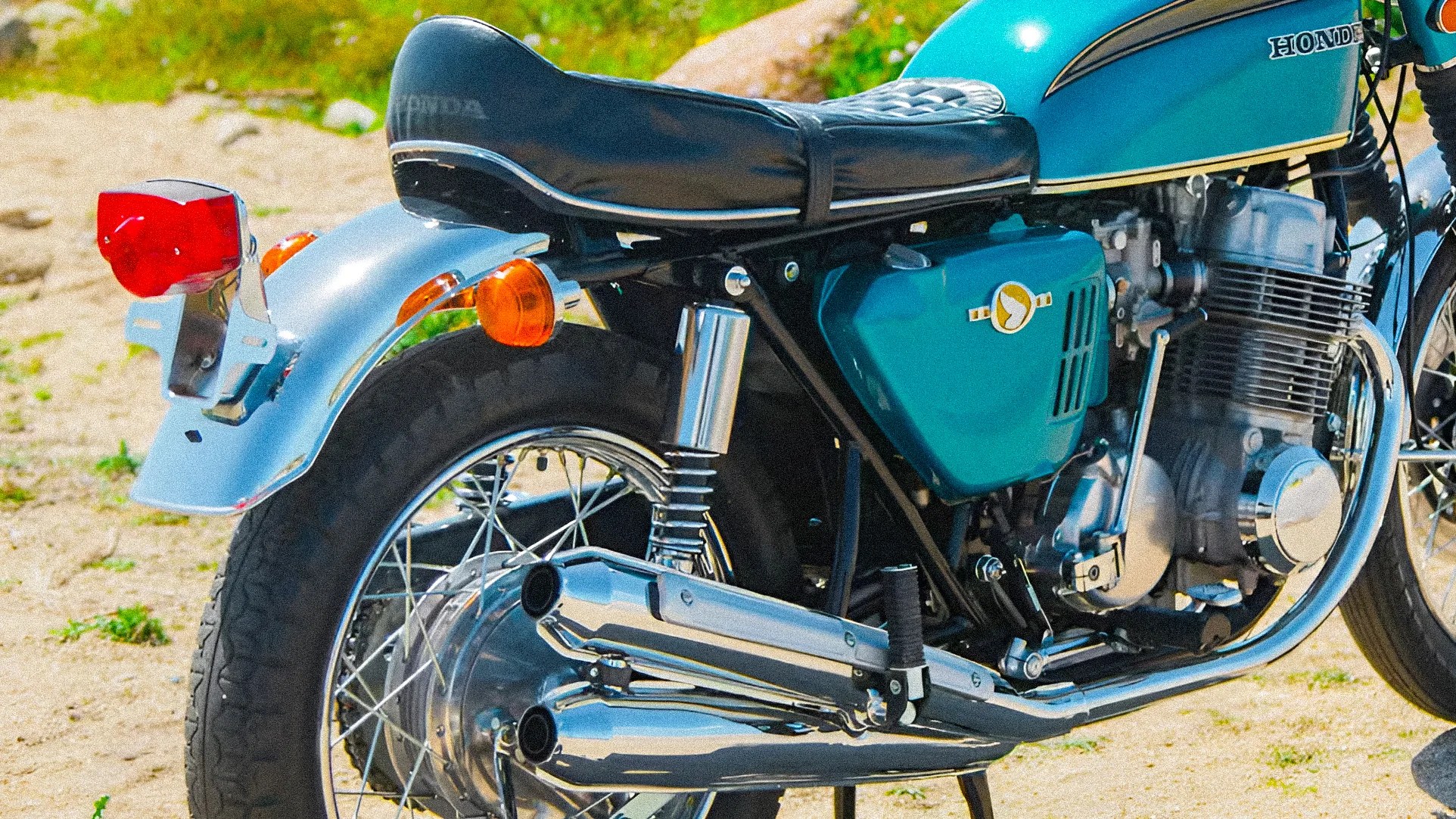
Close-up of the rear side of a vintage blue Honda motorcycle showing the exhaust pipes, rear tire, and seat.Mecum

“You meet the nicest people on a Honda.” It’s an ad that defined the Big Red back in 1966, and it’s one that continues to resonate with many riders today. 

Yet, the Japanese manufacturer’s biggest contribution to the American motorcycle industry actually came two years later, as it transformed not just the brand’s image but also the bike market as a whole.
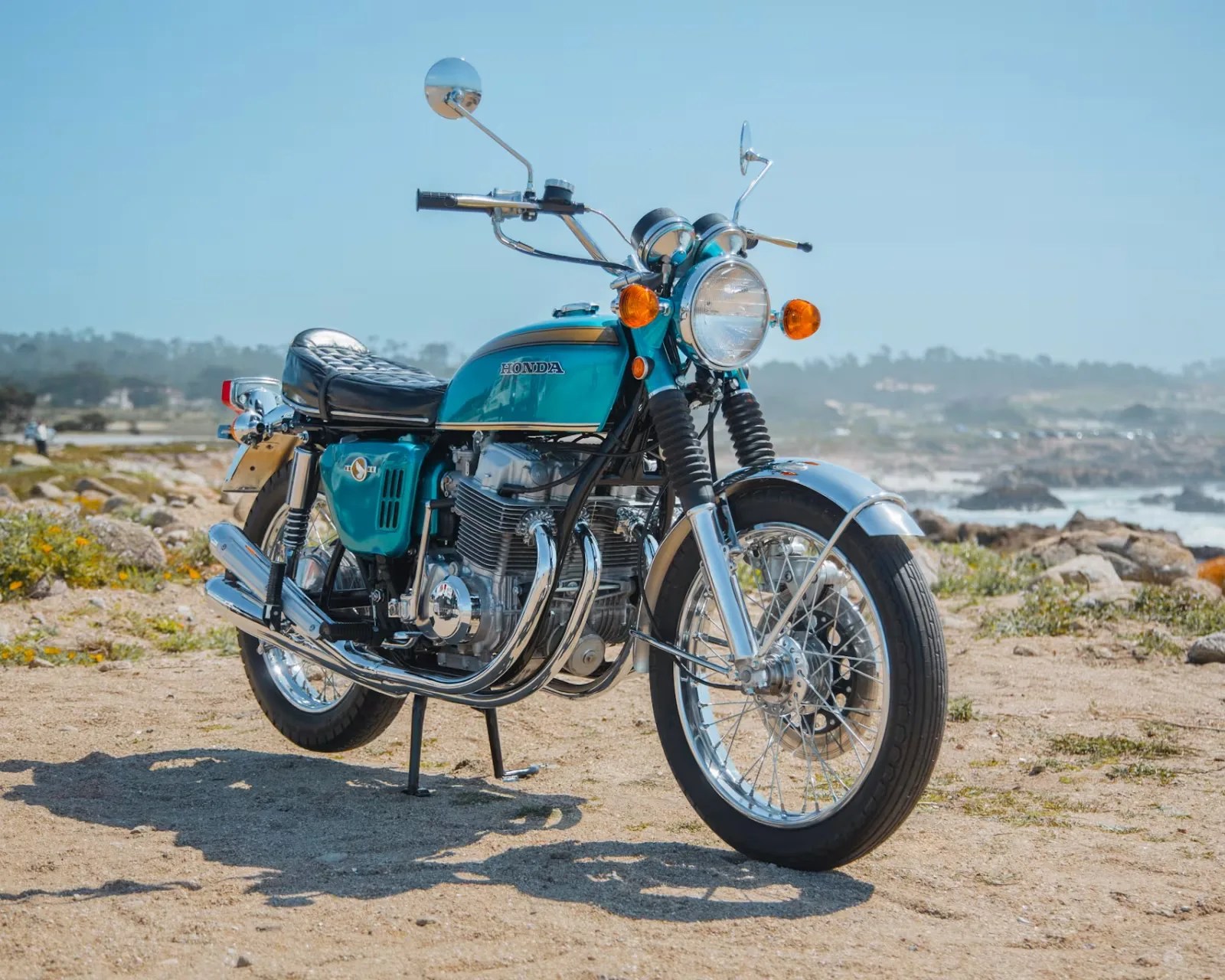
Vintage teal Honda motorcycle with chrome details parked on sandy ground near rocky coastline.
The CB750 is a bike that Honda developed specifically for the United States, as Americans prized displacement above all else.
Mecum

Upon its debut, this revolutionary two-wheeler previewed an entire category of motorcycles. As such, the example being featured today is especially notable because it’s the original prototype, ground zero.

Honda’s American revolution

The bike in question is, of course, the CB750. It was Honda’s first mass-produced large-displacement offering, a model specifically for the U.S. market as a means to combat stagnant sales.

Teal Honda motorcycle fuel tank with gold stripes and visible engine parts below.
Honda had already proven that it could sell bikes in the United States, but the CB750 is the model that solidified the brand as a mainstay of the market.
Mecum

While it wasn’t the only motorcycle to offer a powerful transverse-mounted, overhead-cam four-cylinder engine at the time, it was the first to do so at an affordable price. At $1,495, the CB retailed for roughly half that of the competition.

Moreover, along with bringing an engine design that ensured quintessential Honda reliability, the bike benefited from the convenience of an electric start, as well as the added safety and stopping power yielded from a front disc brake. At the time, it was cutting-edge stuff.

Teal and chrome vintage Honda motorcycle parked on sandy ground near a rocky coastline.
With a top speed of 125 mph, the CB750 is widely regarded as the first superbike to go on sale.
Mecum

Arguably most important, though, is that the CB750 established Honda as a true performance threat. With 67 horsepower on tap, a top speed of 125 mph and a 13-second quarter-mile ET courtesy of its 736cc engine, the model is widely regarded as the genesis of the motorcycle term “superbike.”

Nevertheless, because of the comfortable riding position, practical design and usable power, the CB750 also proved a truly versatile option. From spirited canyon rides to daily commutes to long-distance touring, Honda’s inline-four could handle it all with ease. 

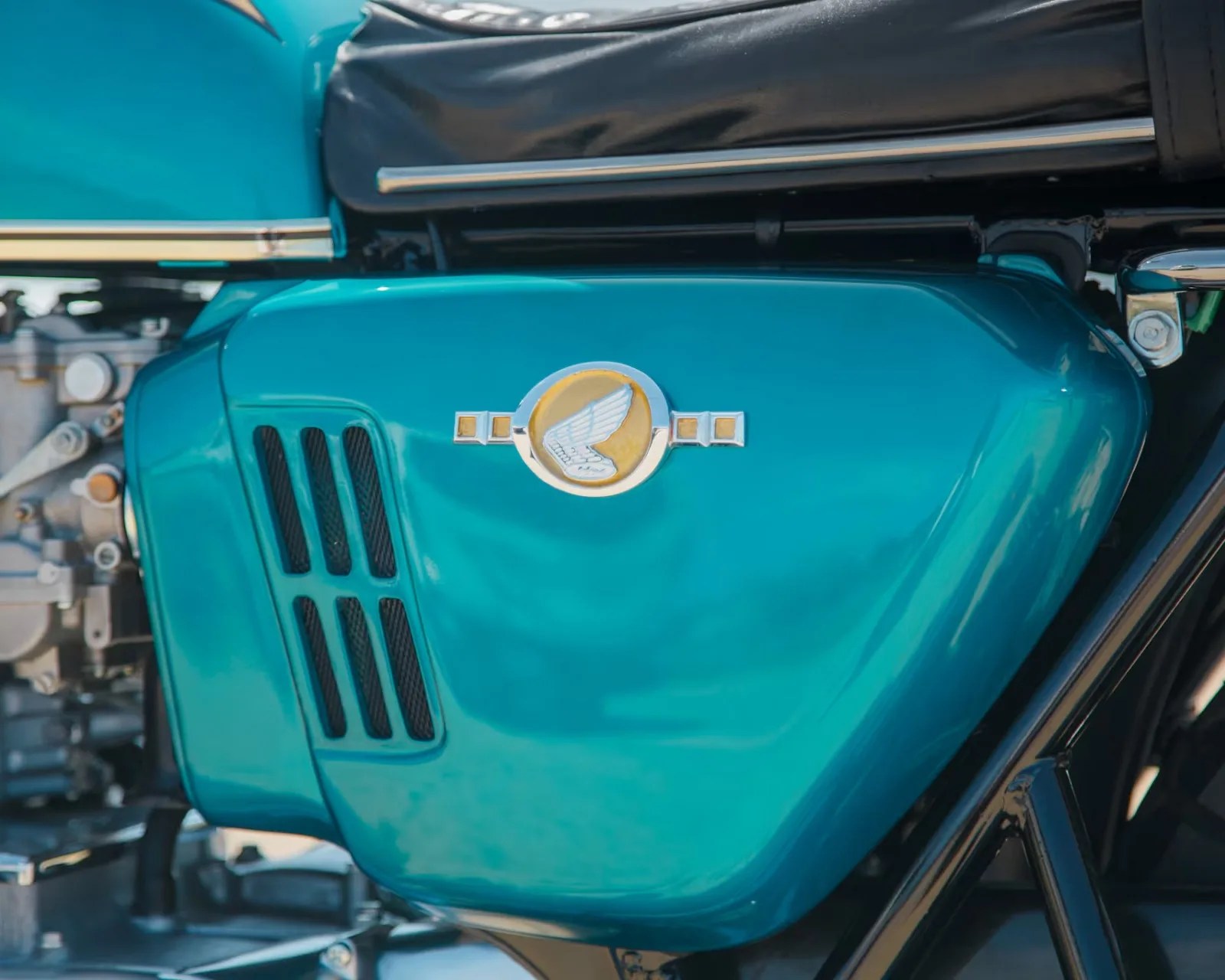
Teal motorcycle side cover with a silver wing emblem and black vent slats.
The CB750 prototype features a variety of unique details, like these Honda wing emblems on the side covers.
Mecum

Accordingly, it spawned a sea of imitators from Kawasaki, Suzuki and Yamaha in the 1970s, resulting in a segment that came to be known as the “Universal Japanese Motorcycle,” or UJM for short.

The very first stateside CB750

As the original sandcast prototype sent by Soichiro Honda to Bob Hansen in October 1968, the bike you see before is the very first CB750 to land on U.S. soil — it predates even the four pre-production samples that Honda distrubuted to dealers in January 1969.

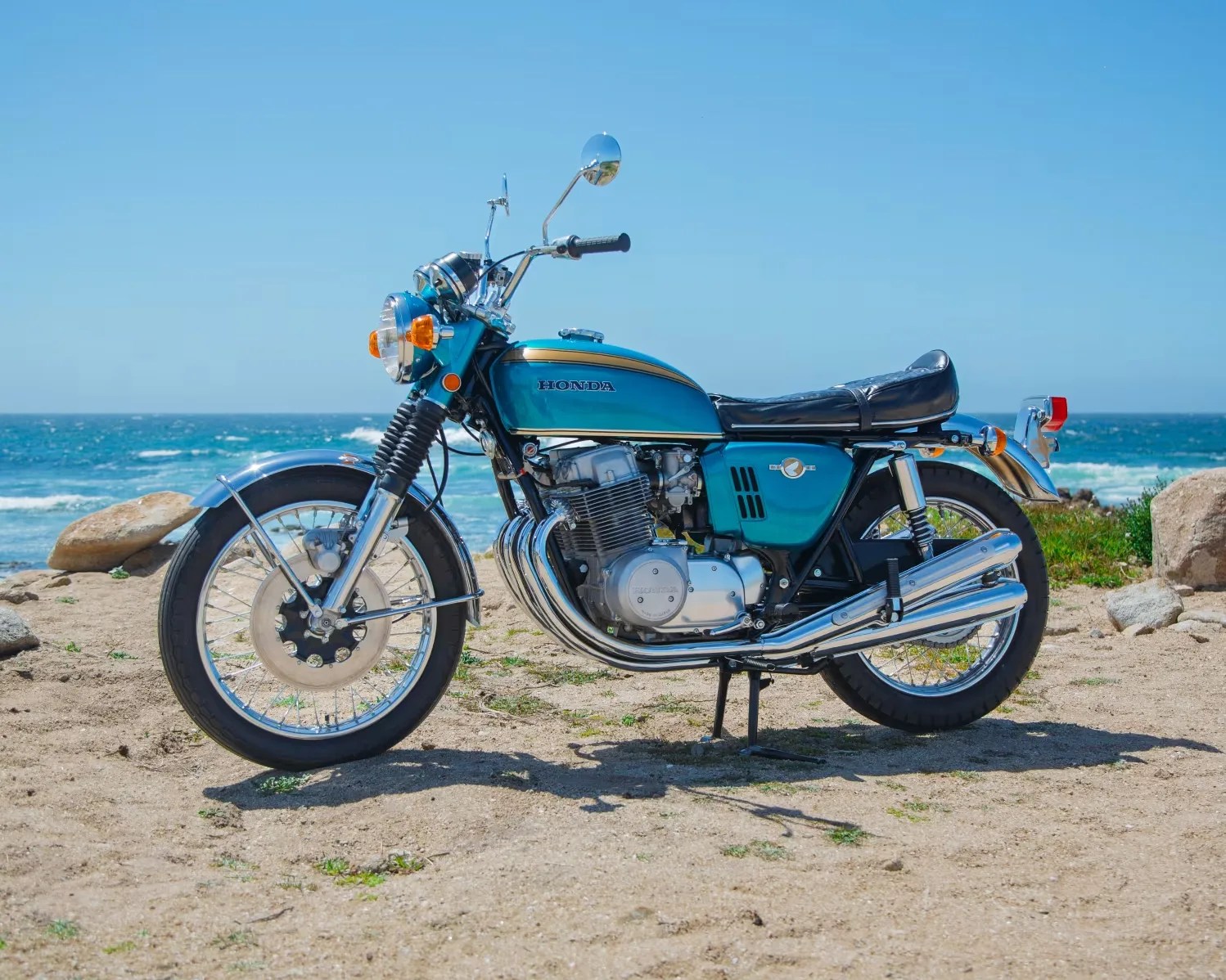
Teal vintage Honda motorcycle with chrome exhaust pipes parked on sandy beach near ocean.
As the prototype that Soichiro Honda sent to Bob Hansen in 1968, this is the first CB750 to land on U.S. soil.
Mecum

Honda Japan sent this prototype stateside for the purposes of drumming up excitement ahead of the CB750’s launch, conducting a two-day test in the Nevada desert and allowing Cycle Guide magazine to perform an in-depth exposé.

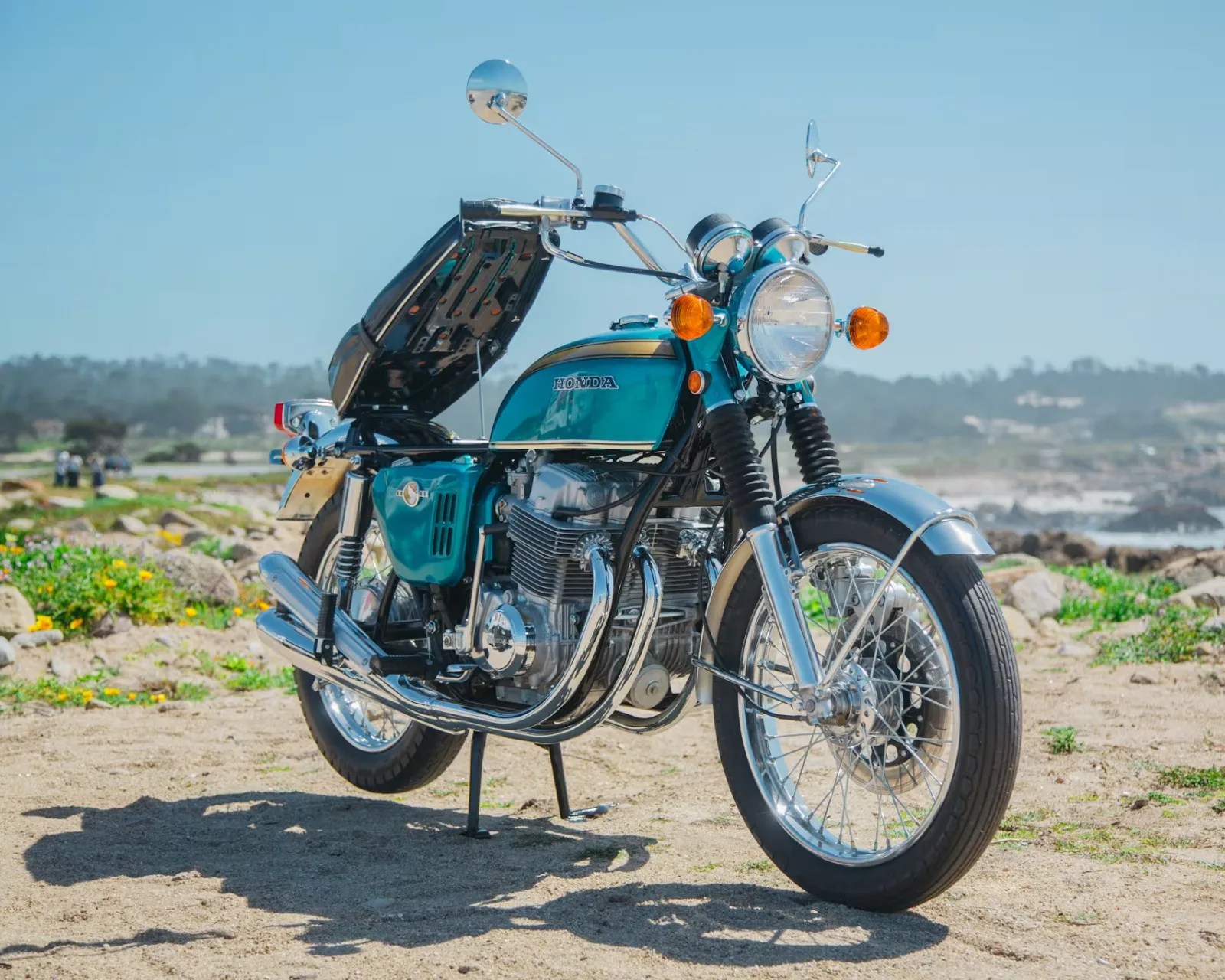
In keeping with its one-off status, the prototype features tons of parts that are unique to it and it alone. Along with a set of specially made Keihin carbs, it sports a rear-flipping seat, distinctive badging and an externally operated clutch rather than the usual inner cam mechanism (and those are just a few differences among a host of many others). 

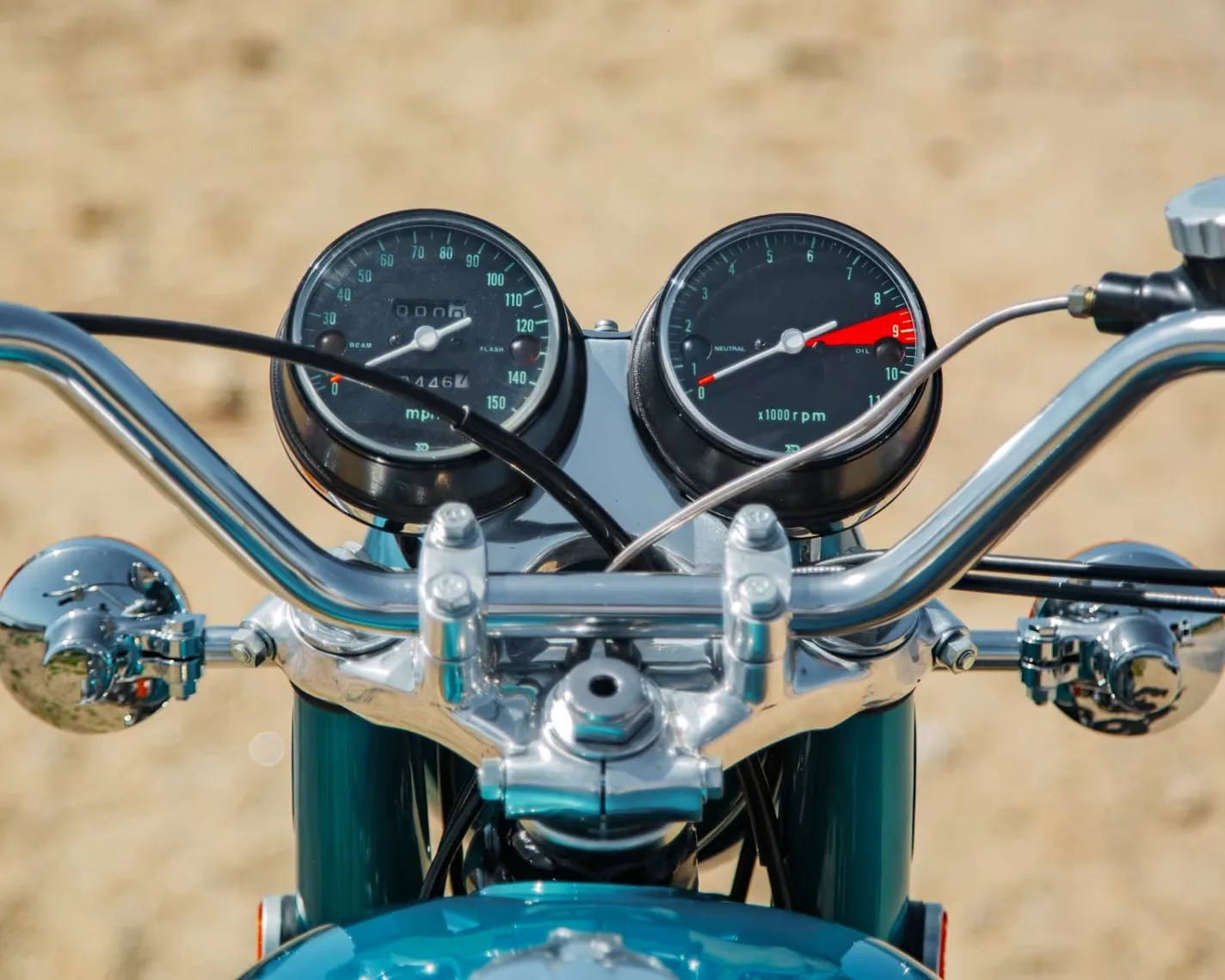
Close-up of a motorcycle's chrome handlebars with speedometer and tachometer gauges.
The restoration work has been extensive, and it required collaboration with a number of specialists to ensure that all the details were accurately preserved.
Mecum

In any case, it’s actually thanks to such details that the bike could even be identified. When it first surfaced over 30 years ago, it was little more than a dismantled pile of rusting parts.

However, when a passionate Honda CB750 sandcast collector by the name of Vic World got wind of the bike, he knew that he had to bring it back to its former glory. After acquiring the prototype in the 1990s and starting on the restoration project in the early 2000s, he worked painstakingly to ensure that everything was original.

Accordingly, along with having the engine cover molds shaped from wood and the tank badges painted by hand, this also meant getting the gauge dials reproduced by a silkscreen specialist. As you’d expect from such an extensive project, it took years to complete

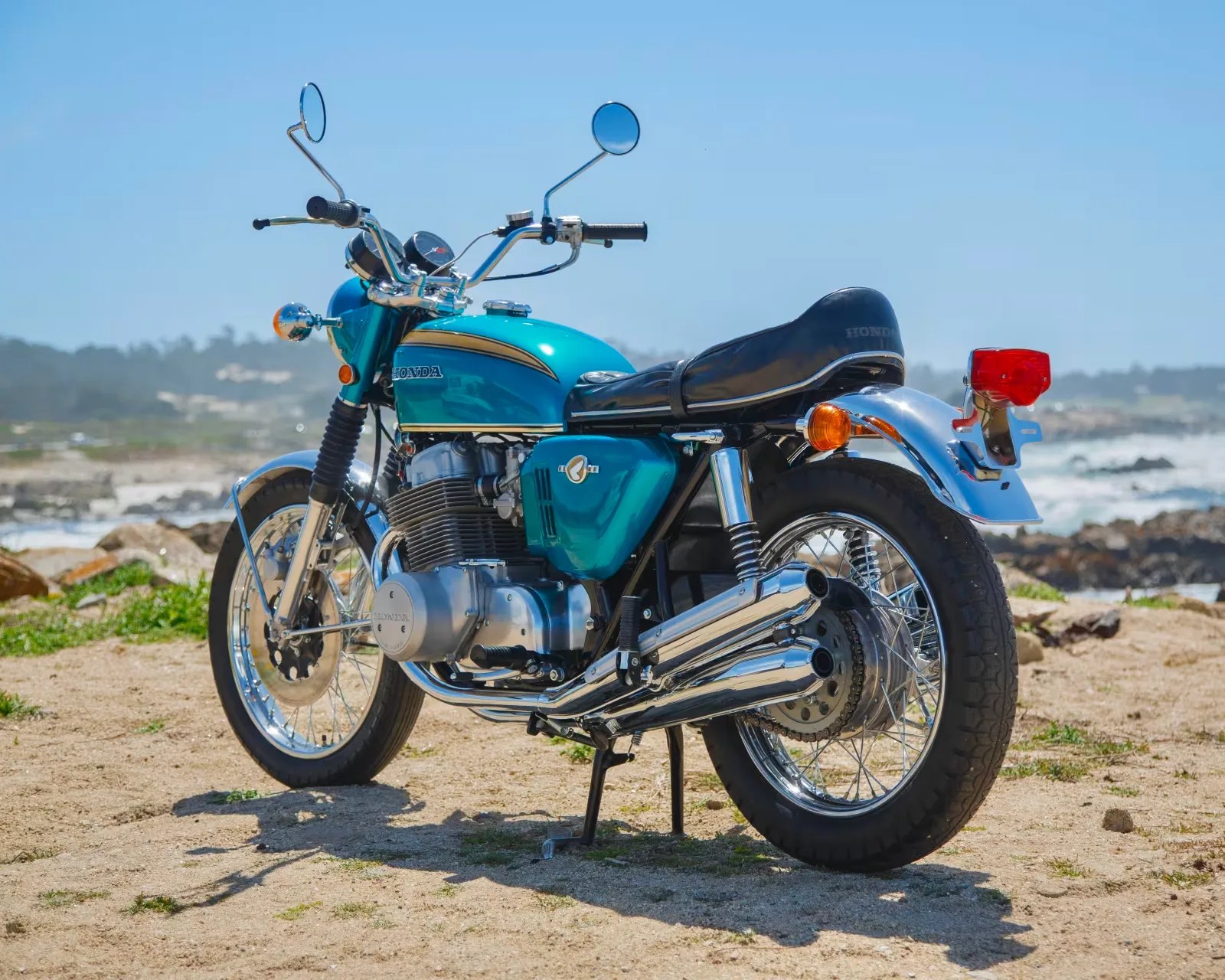
Teal and chrome vintage Honda motorcycle with raised seat parked on sandy ground near a rocky coastline.
The prototype CB750 is the only example to feature a rear-folding seat, among various other unique identifiers.
Mecum

A rare ownership opportunity

However, the results were well worth the effort. At The Quail 2024, the CB took first place among Japanese bikes, as well as overall Best of Show.

Now, it’s slated to cross the auction block as part of Mecum’s January Las Vegas event. If you’d like to learn more about the listing or the bike itself, you can head to Mecum or check out Vic World’s website dedicated to the prototype.

Want to stay up to date on the latest product news and releases? Add Gear Patrol as a preferred source to ensure our independent journalism makes it to the top of your Google search results.

add as a preferred source on google
,