
Honda’s Patent Could Put One of the Car World’s Most Polarizing Features on Motorcycles

The Big Red has designed a bike-specific system that uses blind spot detection to steer you out of harm’s way.

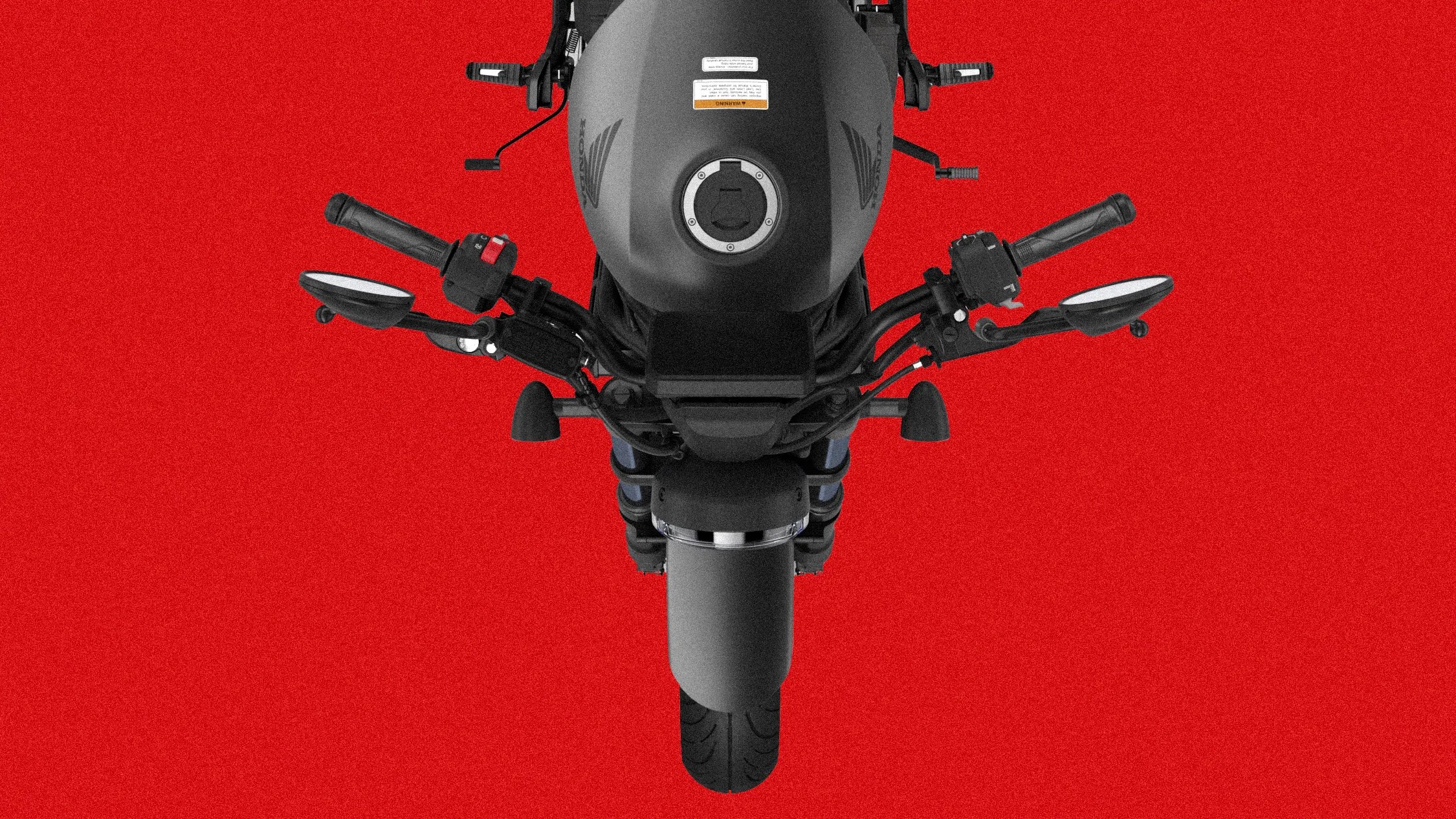
Top-down view of a matte black Honda motorcycle against a red background.Honda

Studies have shown that the addition of something as simple as ABS has the potential to reduce fatal motorcycle crashes by 22 percent, though some riders still let their pride prevent them from swinging a leg over anything saddled with “electronic nannies.”

As someone who’s had the misfortune of laying such a bike down in panic, I’m a firm believer in what electronic aids can do. The tech doesn’t replace proper braking technique, but it’s nice to know that something smarter and faster is working alongside your lizard brain’s impulses.
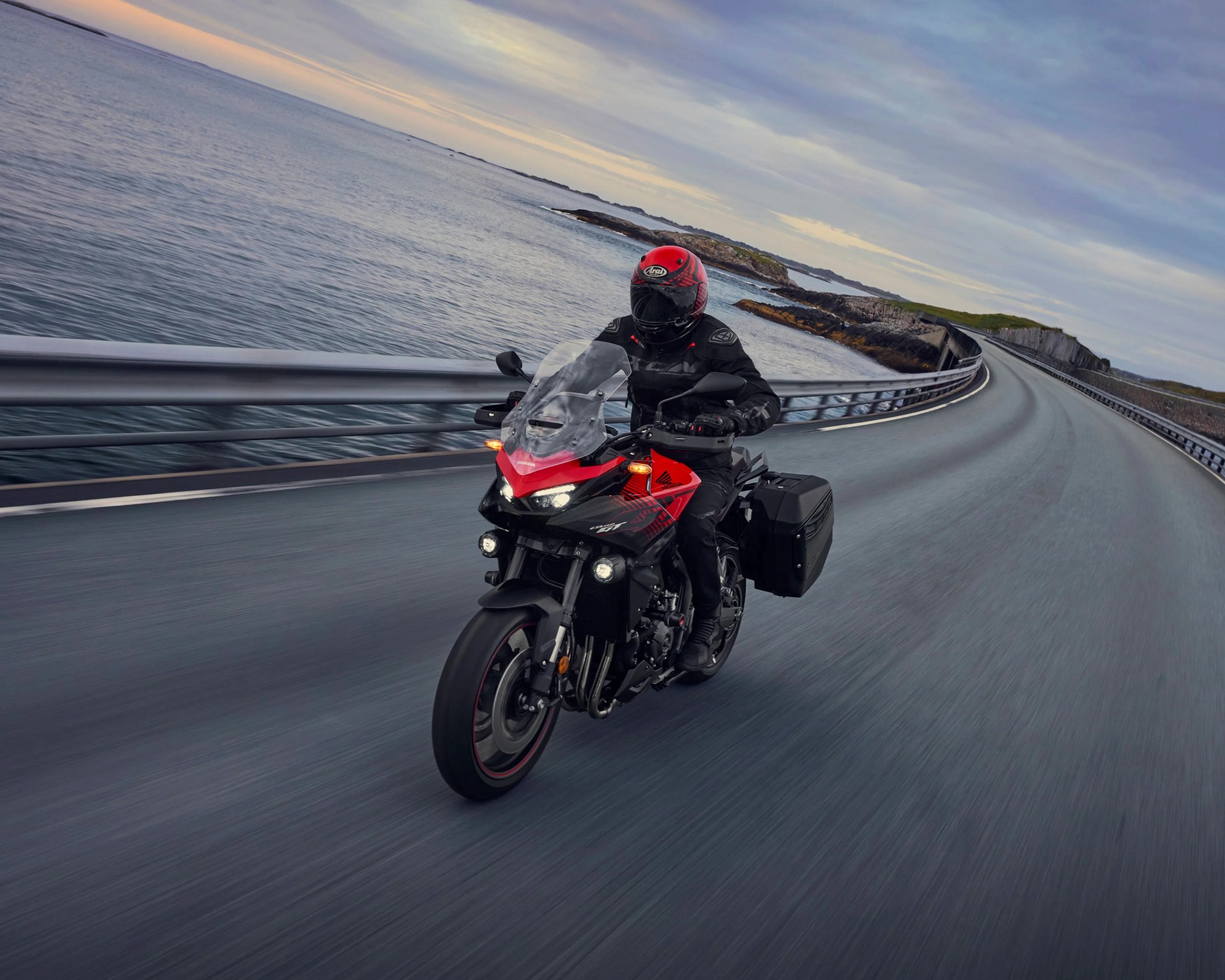
Black and red Honda motorcycle with side panniers ridden on a coastal road with guardrails.
Honda has envisioned a steering assist system that would help redirect you away from other motorists should they encroach on your blindspot.
Honda

ABS would likely have been enough to avoid the hazard and ride away. I managed the former, but it was at the expense of a new valve cover and several other repairs.

Even still, for all my faith in safety tech, I can’t help but feel more than a little skeptical about what Honda could have cooking up for motorcycles. At the risk of sounding like less-enlightened riders, this is one electronic nanny I don’t want.

An informed assist

At least based on the latest patent that RideApart unearthed. As much as it promises to advance accident prevention, it could also invite a litany of problems, many of which you can see in cars.
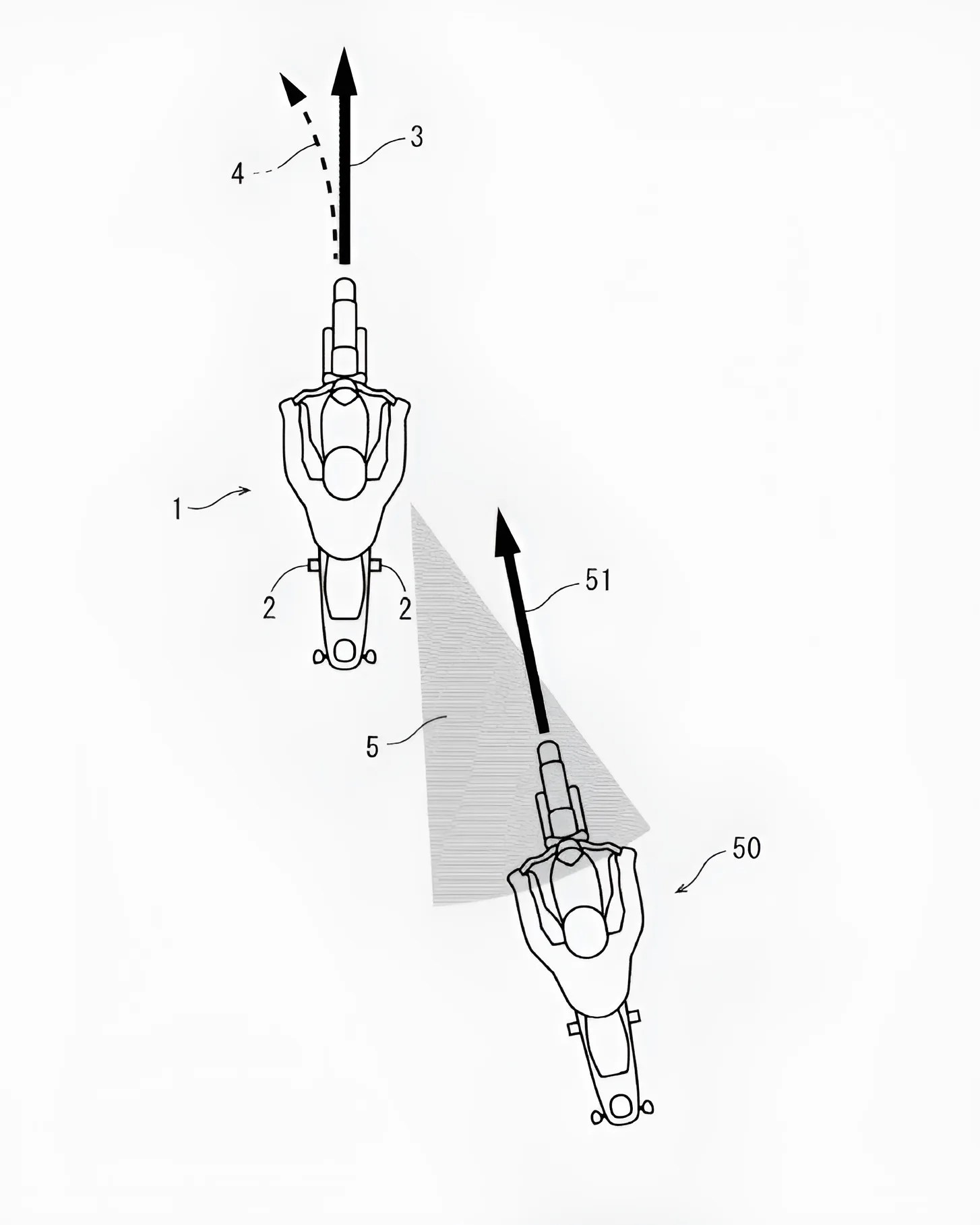
Top-down schematic of two motorcyclists with directional arrows and a shaded triangular area between them.
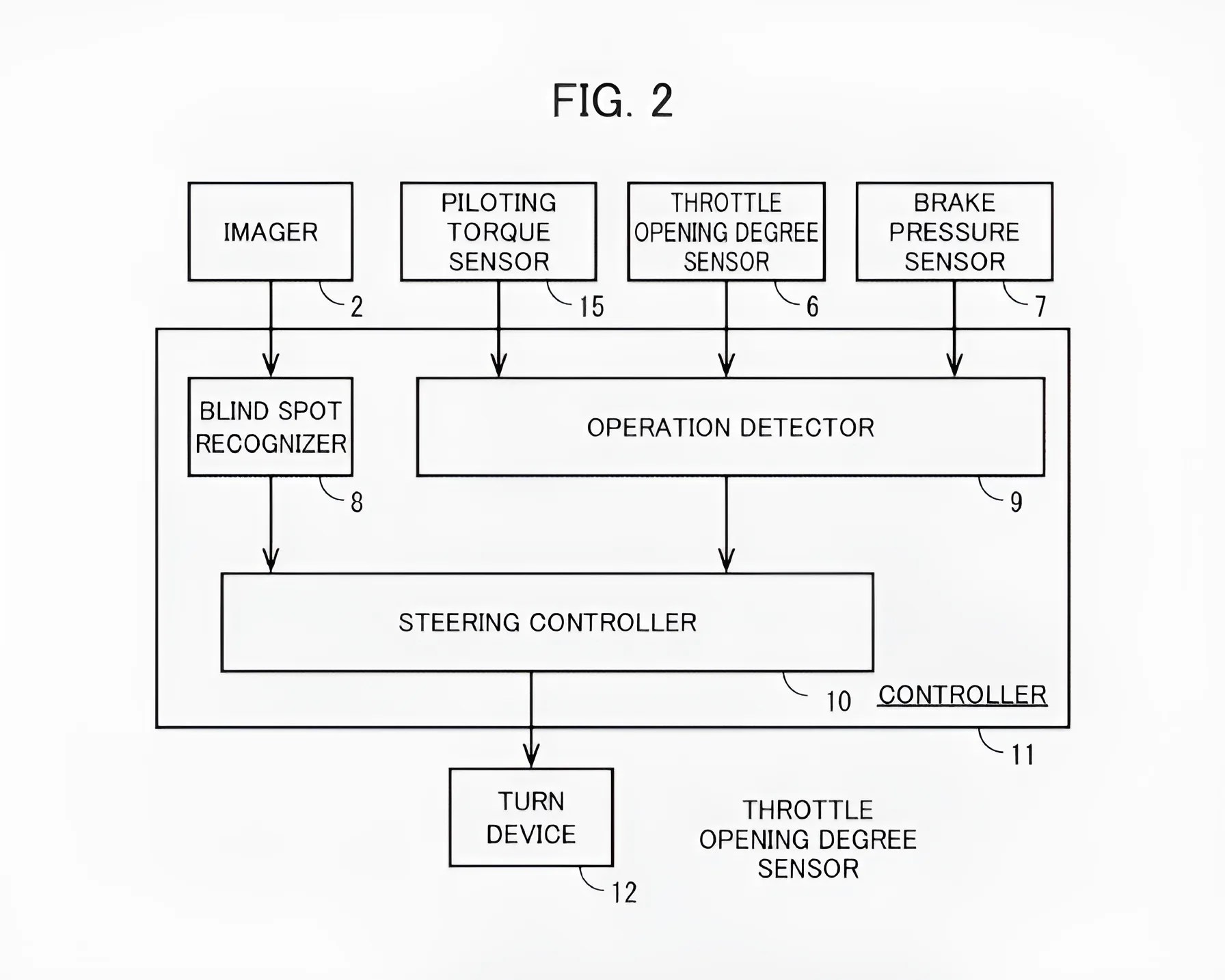
Honda’s system relies on a camera, a blind spot recognition unit and a steering control unit to act in unison.
WIPO

That’s because it’s an emergency steering device designed to work like advanced driver assistance systems, such as lane keeping assist and blind spot detection.

By combining an imaging unit (a camera) with a blind spot recognition unit and a steering control unit, Honda’s design provides the bike with the ability to give you a helpful ‘nudge’ to get out of harm’s way.

Of course, for the system to do its job effectively, the coded intervention can’t surprise the rider. For this reason, Honda has envisioned two scenarios that determine the steering system’s behavior.

Block diagram showing an imager, piloting torque sensor, throttle opening degree sensor, and brake pressure sensor feeding into a controller with blind spot recognizer, operation detector, and steering controller, which outputs to a turn device.
The Big Red designed it such that it takes the rider’s actions into account when making a decision.
WIPO

In the first, it responds as though you’ve taken some kind of action based on recognized throttle input, braking or steering. Accordingly, the system provides immediate intervention to redirect you away from the perceived hazard.

However, assuming the system believes that you’ve failed to recognize the potential for an ensuing accident, it acts much more progressively. By gradually increasing the amount of turning control assistance, it’s supposed to respond without upsetting your response (or balance, for that matter).

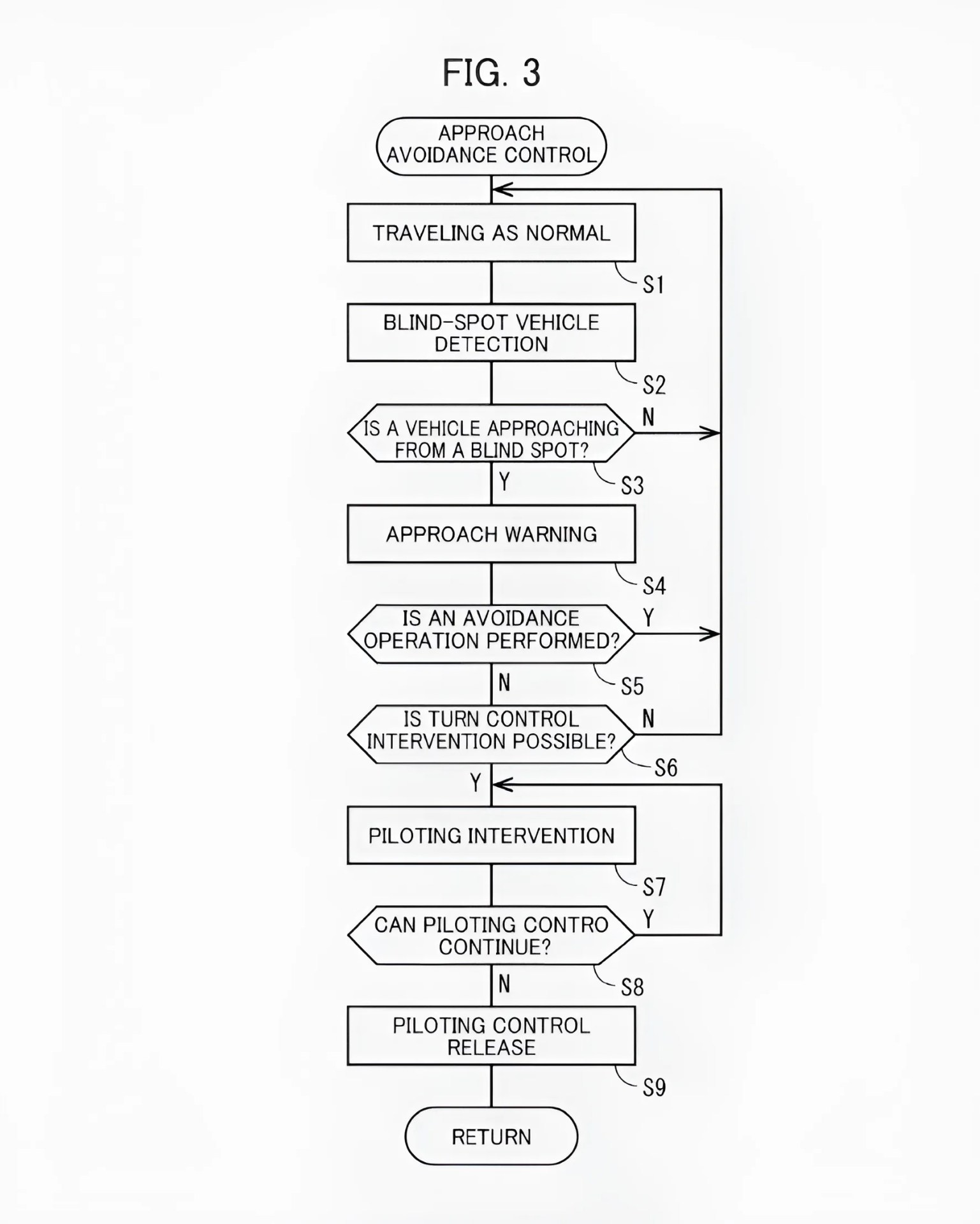
Flowchart illustrating approach avoidance control for vehicle blind-spot detection and piloting intervention steps.
If the system doesn’t detect a response, it will gradually initiate steering intervention.
WIPO

Out of your hands

At the bare minimum, I see the potential for problems because of Honda’s ability to lower the learning curve and make motorcycles almost too approachable. While I’m all for ensuring that bikes are more accommodating of more riders through additions like e-Clutch, I do think there comes a point where simplification through assistance does more harm than good.

Especially with something like situational awareness. As a motorcyclist, you’re taught to ride defensively from day one, assuming that your bike is completely invisible to other motorists. For this reason, practically every decision you make is to improve your ability to see or be seen on the road.

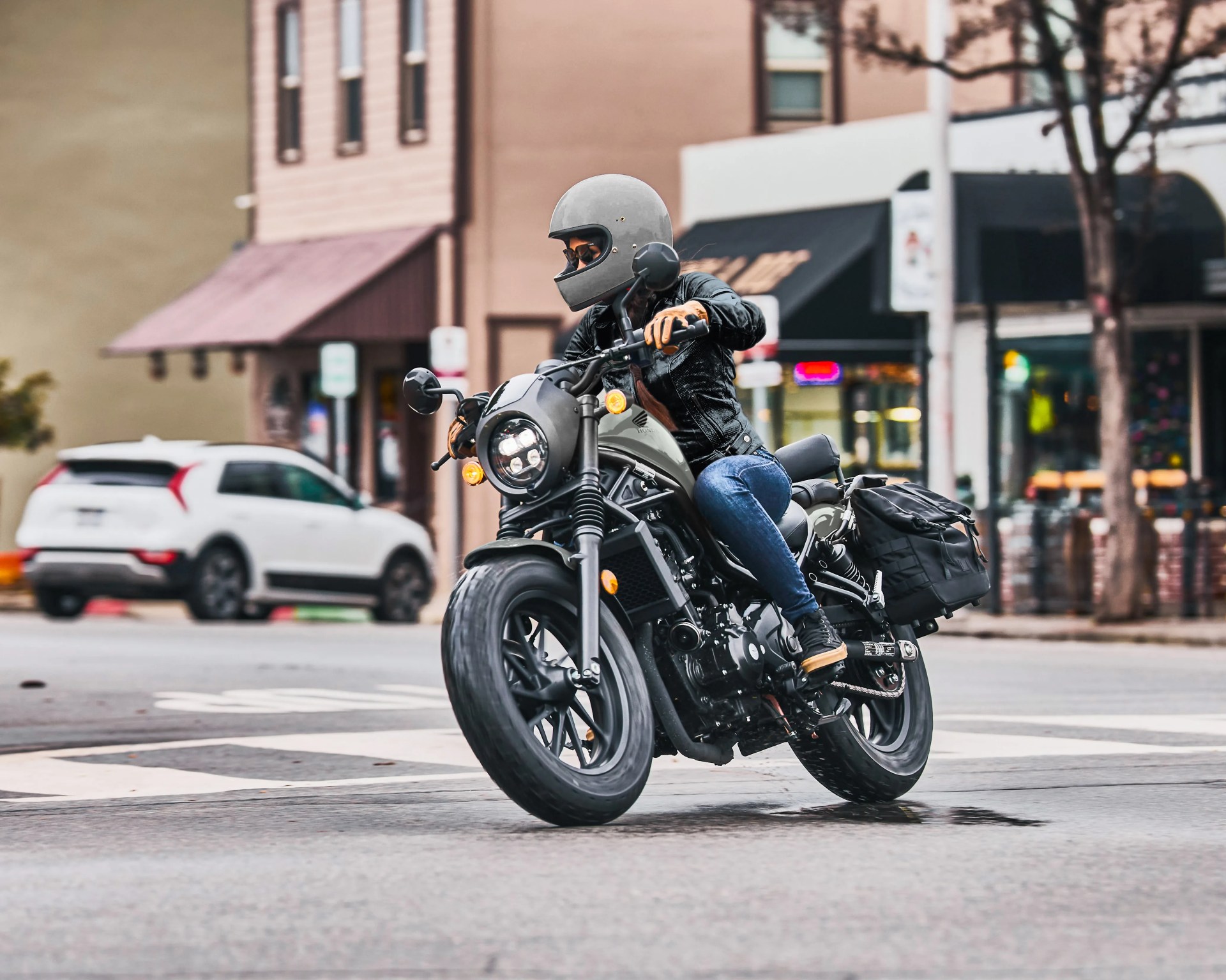
Person wearing a gray helmet and black jacket riding a gray Honda motorcycle with a black bag on the side on a city street.
The addition of e-Clutch earned Honda’s Rebel 300 a spot on this year’s GP100 roundup.
Honda

While Honda’s system could aid in that effort, it could just as easily become a crutch, inherently relaxing riders’ attentiveness and allowing them to divert their focus away from, well, riding. I’m not suggesting that we’re about to see texting on two wheels en masse, but it’s hard to ignore that systems like these make it easier than ever to multitask when you’re in the driver’s seat.

In any case, this kind of over-reliance becomes all the more problematic when you consider the system’s control of the bike’s direction and how that relates to balance. Sure, Honda has designed the intervention such that it’s more amenable to bikes, but it’s nevertheless a response that’s, to some degree, out of your hands. 

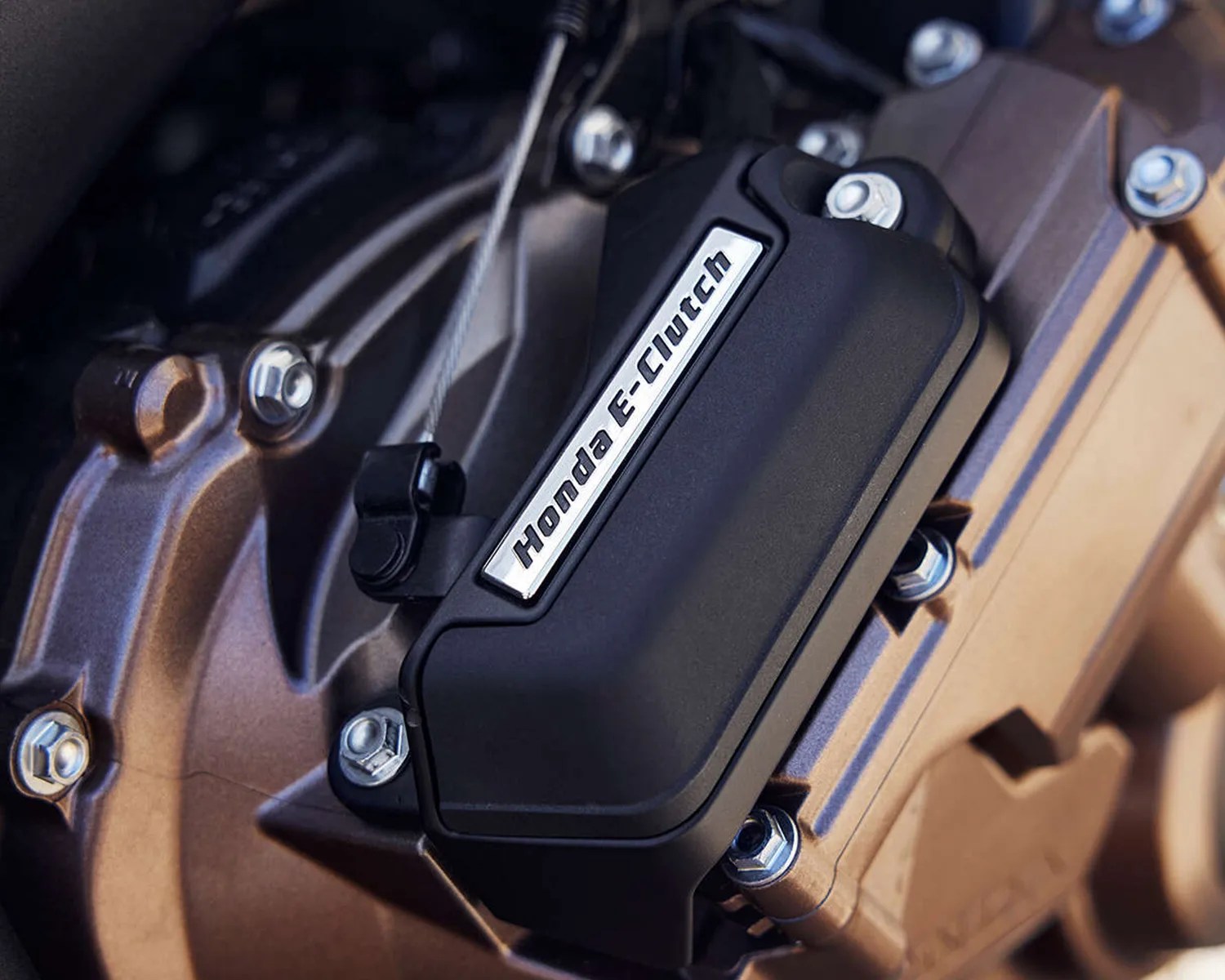
Close-up of a black Honda E-Clutch cover mounted on a bronze motorcycle engine with visible bolts.
E-Clutch is more assistive than it is intrusive, as it allows for normal operation, thereby facilitating skills development.
Honda

Because let’s face it — even if you still have your gloves wrapped around the bars, there’s the potential for the system to act unpredictably, whether due to a bug or by design. From faulty warnings to phantom lane departure intervention mishaps, owners can speak to it all when it comes to cars.

While Honda would surely put its best foot forward with this kind of innovation were it to make it to market, even ‘proven’ systems have shown to be anything but. A patent filing doesn’t guarantee that something will enter production, but at the rate the Big Red is innovating in the two-wheeled space, steering assist could be here sooner than you think.

Want to stay up to date on the latest product news and releases? Add Gear Patrol as a preferred source to ensure our independent journalism makes it to the top of your Google search results.

add as a preferred source on google
,