
This Astronaut Watch with ’60s Roots Honors the First Human in Space. It’s Not an Omega

Blast off.

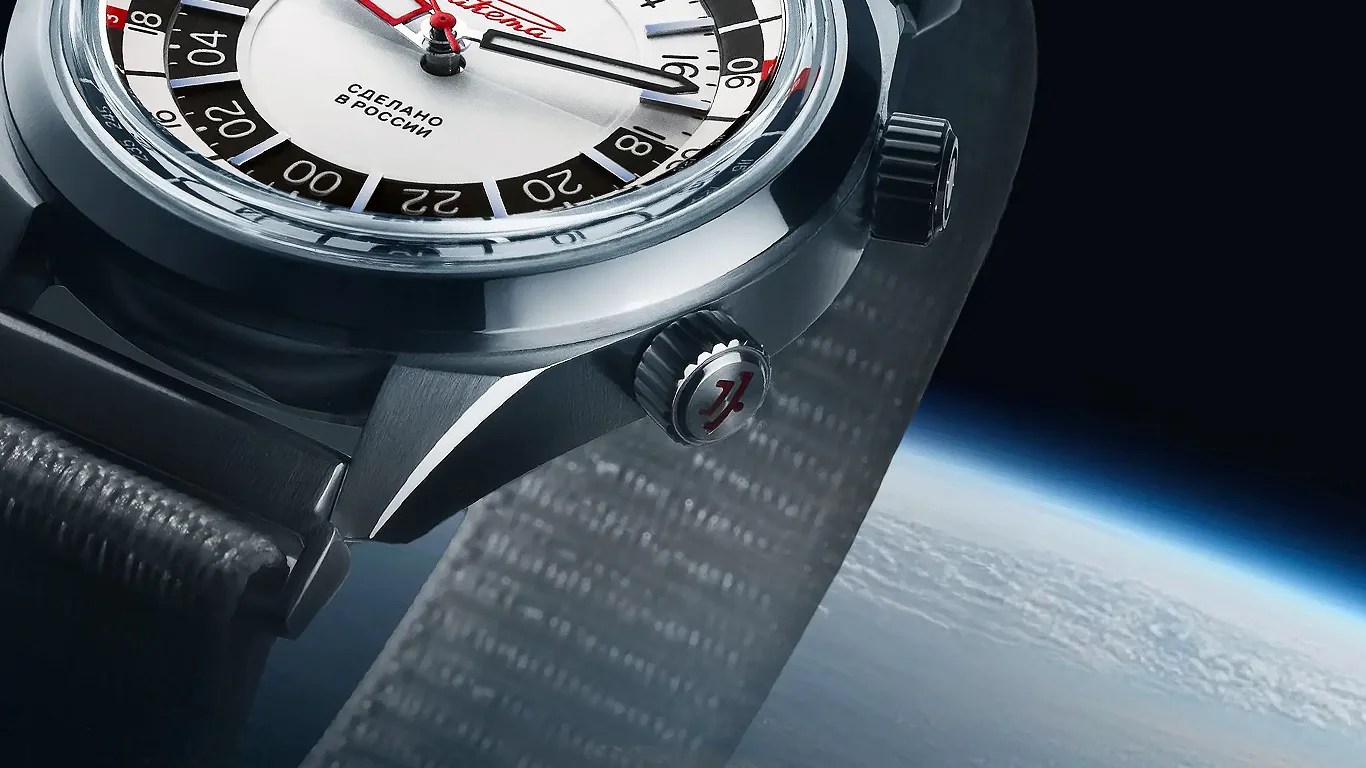
Close-up of a silver wristwatch with a white and black dial, red hands, and a textured black strap against a space background.Raketa

If you buy from a link, we may earn a commission. Learn more

With U.S. astronauts Neil Armstrong and Buzz Aldrin landing on the moon in 1969, an Omega Speedmaster Professional strapped to the latter’s wrist, the United States effectively won its decade-plus Space Race against the Soviet Union.

It’s easy to think that U.S. space dominance was always inevitable, but in reality, the Apollo 11 mission was a come-from-behind victory. Most early victories in the Space Race — the first satellite in space, the first spacewalk, the first unmanned lunar lander, etc. — were all achieved by the Soviets.

Arguably, the most notable of these achievements was the Vostok 1 mission that saw Soviet cosmonaut Yuri Gagarin become the first human to reach outer space on April 12, 1961. The event had such an impact on Soviet culture that later that same year, a new watch brand called Raketa — Russian for “rocket” — was founded in honor of the event.

It’s now been 65 years since Gagarin entered Earth’s orbit, so to celebrate the anniversary — and its own founding of the same vintage — Raketa has debuted a new watch intended for today’s Russian cosmonauts.

Red skies
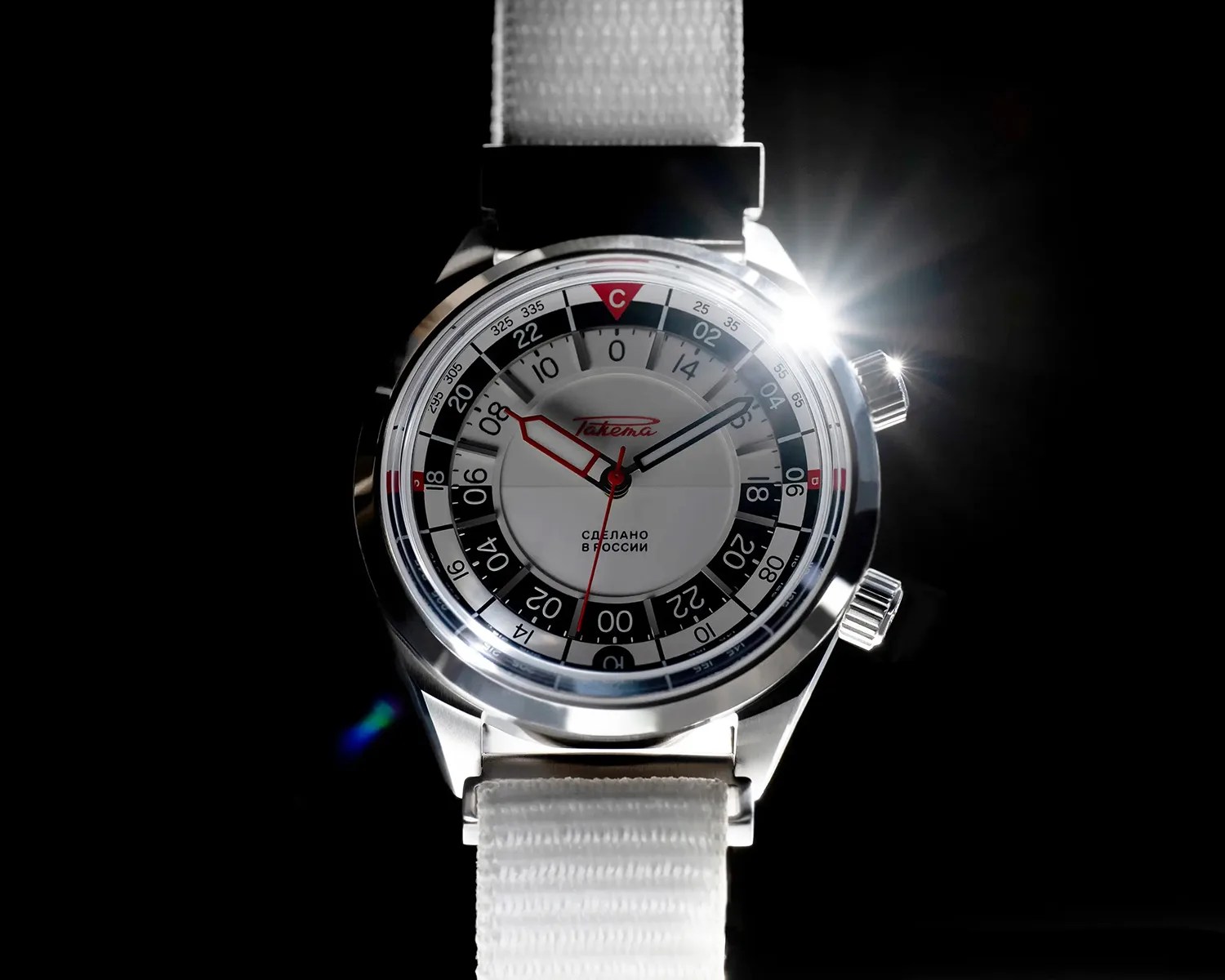
Silver wristwatch with white dial, black and white 24-hour markings, red and black hands, and white fabric strap.
It’s been 65 years since both the first man in space and Raketa’s founding.
Raketa

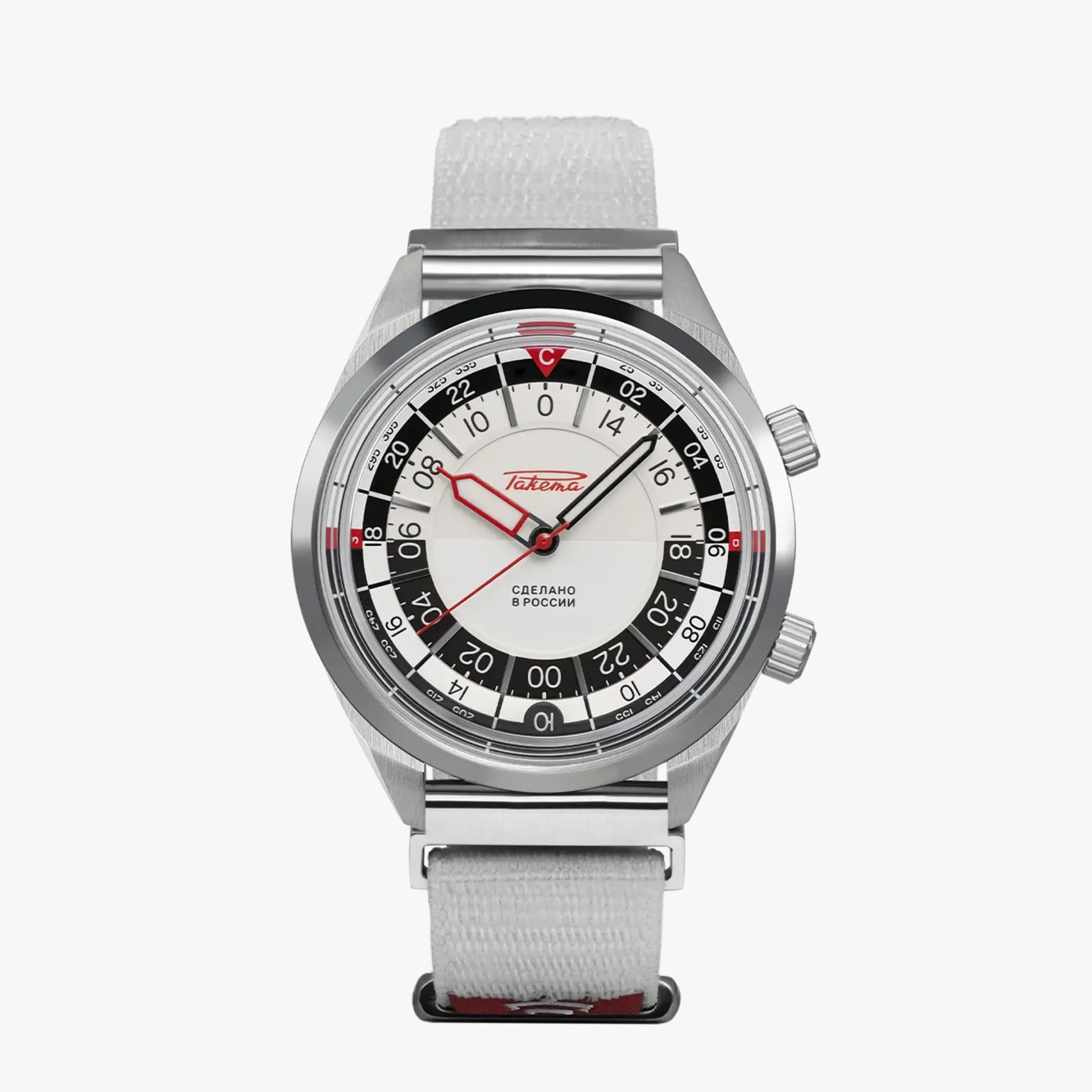
The Raketa Baikonur is a tool watch with some unique features that cosmonauts — or astronauts — would likely find handy. Most obvious is the unusual dial.
On space missions, and specifically on the International Space Station, time is read in a 24-hour format. The Baikonur features a 24-hour dial that’s complemented by a second 24-hour inner bezel. While not a traditional GMT — there is no fourth hand here — the watch is designed to track two time zones.

The local time is tracked on the main dial on a 24-hour scale, while the watch’s second crown is used to adjust the inner bezel to set a second time zone. On both scales, the daytime and nighttime hours are executed in white and black, respectively, which is both practical and looks very cool for a space-themed tool watch.

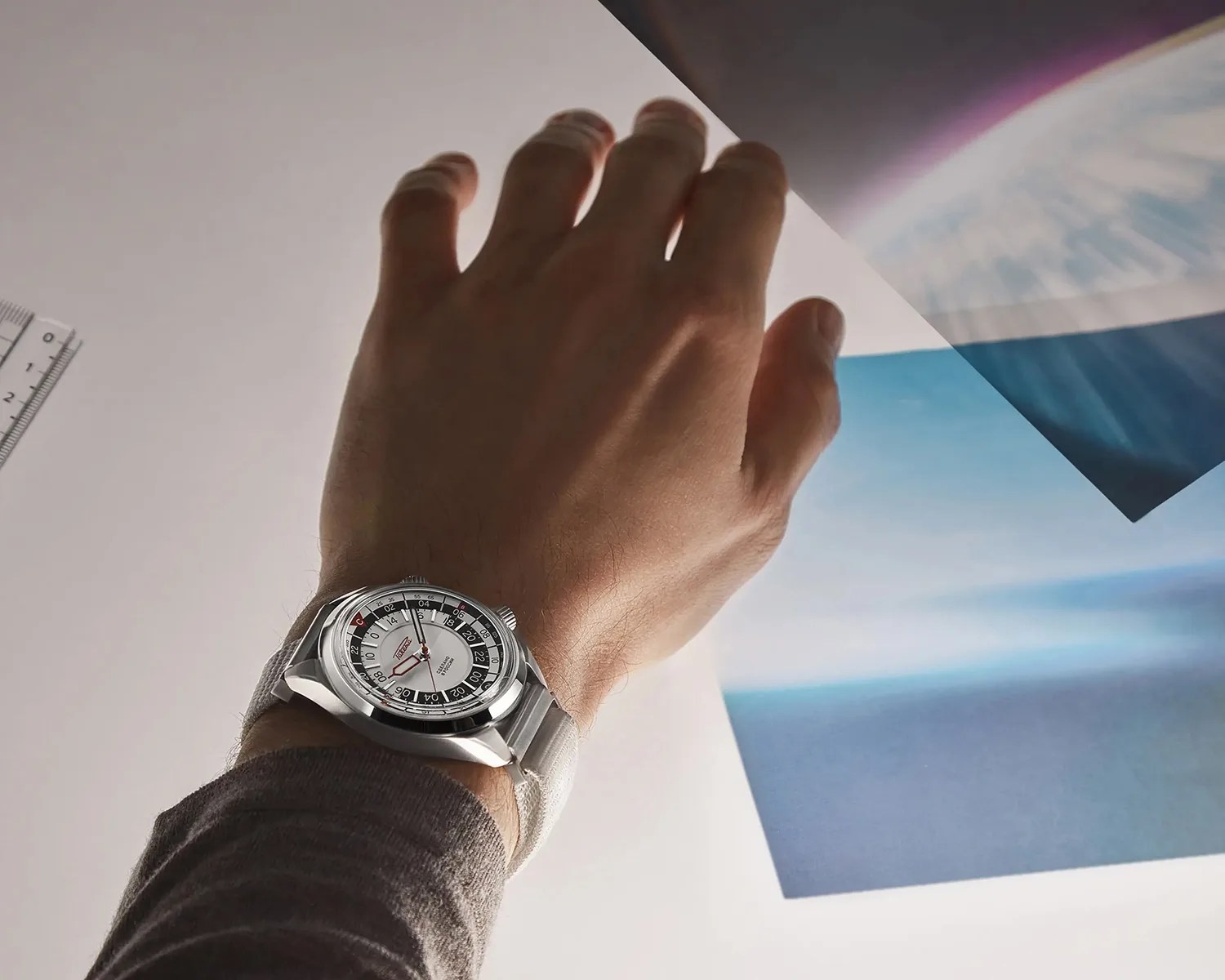
Silver wristwatch with a white dial and black and red accents worn on a wrist over a gray sleeve.Raketa

The fat syringe hour hand and seconds hand are both red, as are the Raketa logo under 24:00 on the white dial and the four cardinal points on the outermost scale of the inner bezel (more on that in a bit). The hour and minute hands are filled with blue-emission Super-LumiNova, as are the hour markers — but only for the nighttime hours of the local time. This is a unique feature I’ve never seen before, which theoretically would make it easier to tell the time at night with fewer distractions.

Now, back to that inner rotating bezel. The outermost scale, outside of the second time zone, is a solar compass. The idea is that if space travelers returning to Earth land off-course and have damaged equipment, this wristworn compass could be used as a last resort to allow them to get their bearings.

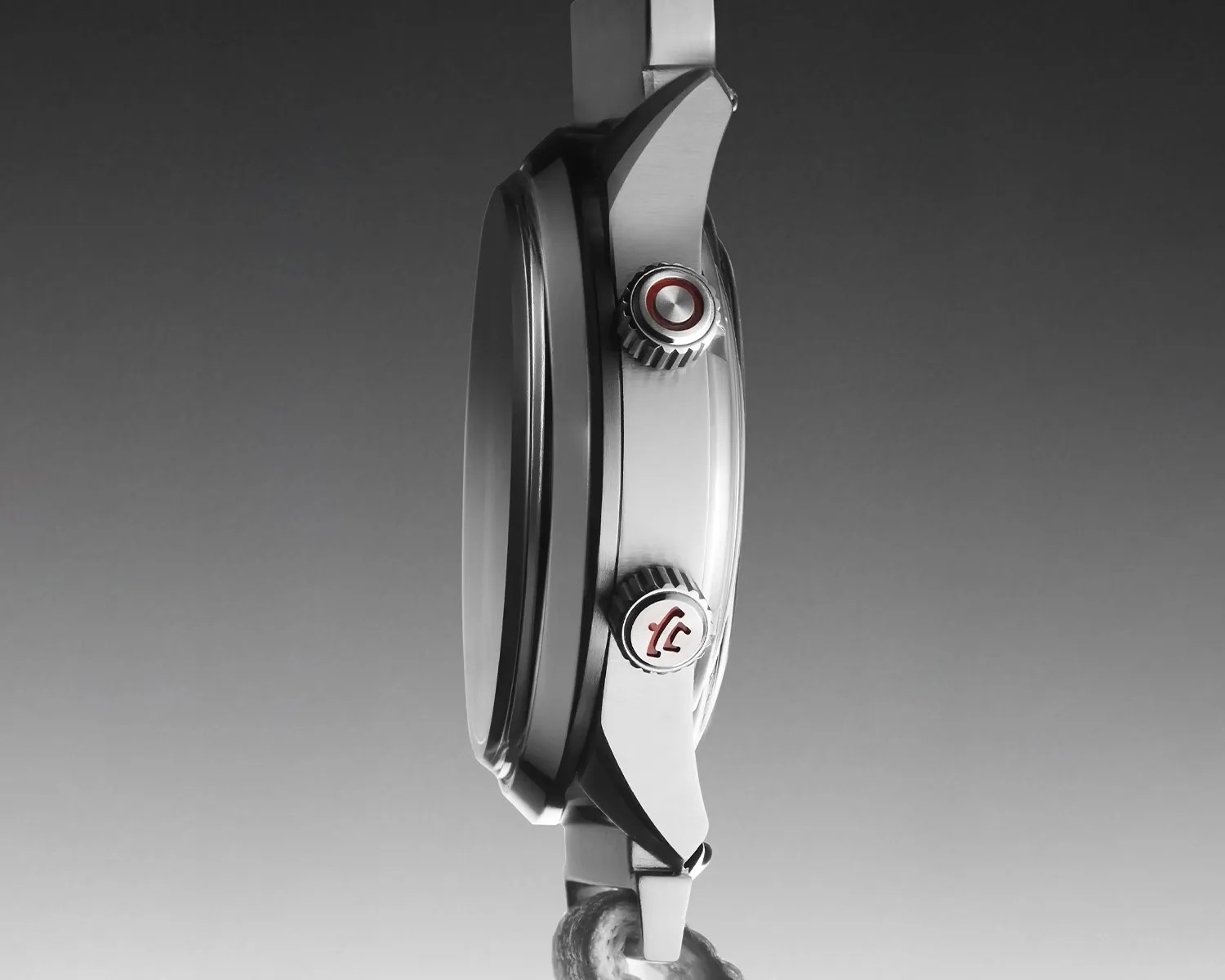
Side view of a silver watch case with two textured crowns, one featuring a red circle and the other a red logo.
The twin crowns are inset with synthetic rubies for a cool red effect.
Raketa

The dual-crown case is in stainless steel and is a pretty beefy but wearable tool watch, measuring 42mm across, 49mm from lug to lug and 14mm thick. That’s the same case diameter as a Speedy while being slightly longer and thicker. In other words, pretty tried and true dimensions for a space watch. Water resistance is a surprisingly robust 200m, which I suppose is nice to have for splashdowns.

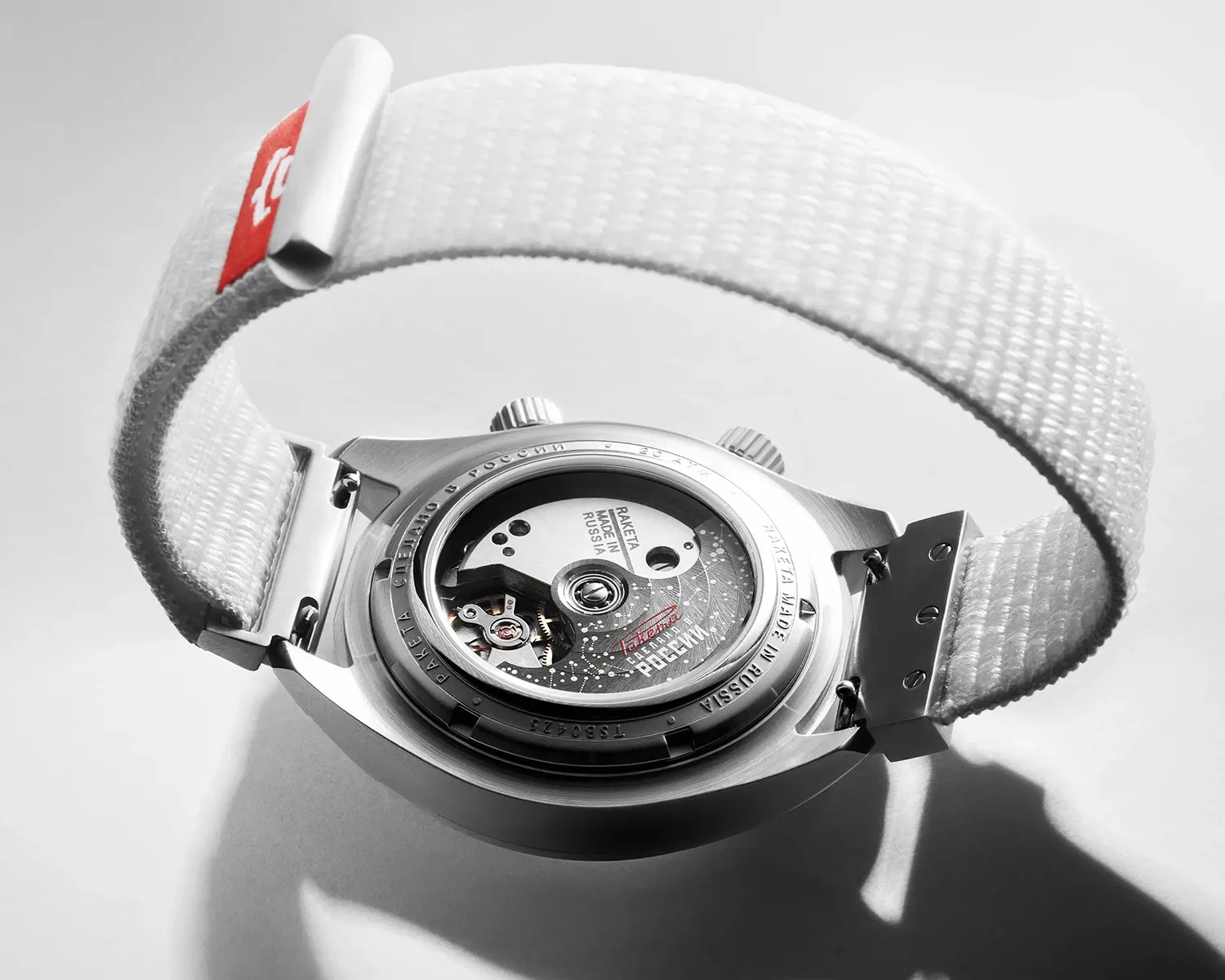
The watch’s front crystal is sapphire, while the caseback features a mineral glass exhibition window. Visible behind it is Raketa’s in-house Calibre 2624СА featuring a rotor decorated with depictions of stellar constellations. Because automatic movements don’t wind in space, Raketa has created a decoupler that disconnects the self-winding module when manually winding the watch to eliminate unnecessary wear on the movement.

Silver Raketa watch with visible mechanical movement and white woven strap with red tag.
The in-house movement boasts a decoupling function to prevent excessive wear to the rotor when manually winding the watch.
Raketa

Finally, we have the strap, which is made of white nylon and secured with Velcro. It conveniently connects to the watch via solid end links with quick-release spring bars, and is both practical for wearing over a space suit as well as being the perfect aesthetic match to the watch. The watch also includes an extra strap in leather.

Availability and pricing

This is a seriously cool-looking space watch with some unique features and a solid chunk of history behind it. I’ve never personally handled a Raketa nor any other Russian watch, and I don’t love the idea of promoting a Russian company given the country’s continued aggression against Ukraine. But Raketa isn’t the Russian government, and I happen to like this watch.

Raketa currently has the Baikonur available for preorder on its website, where it’s listed for €2,400, which roughly converts to $2,845 as of this writing.

Silver stainless steel watch with white and black 24-hour dial, red accents, and white fabric strap.Raketa

Raketa Baikonur

Specs

Case Size 42mm
Movement Raketa Cal. 2624СА automatic
Water Resistance 200m

Want to stay up to date on the latest product news and releases? Add Gear Patrol as a preferred source to ensure our independent journalism makes it to the top of your Google search results.

add as a preferred source on google
, ,