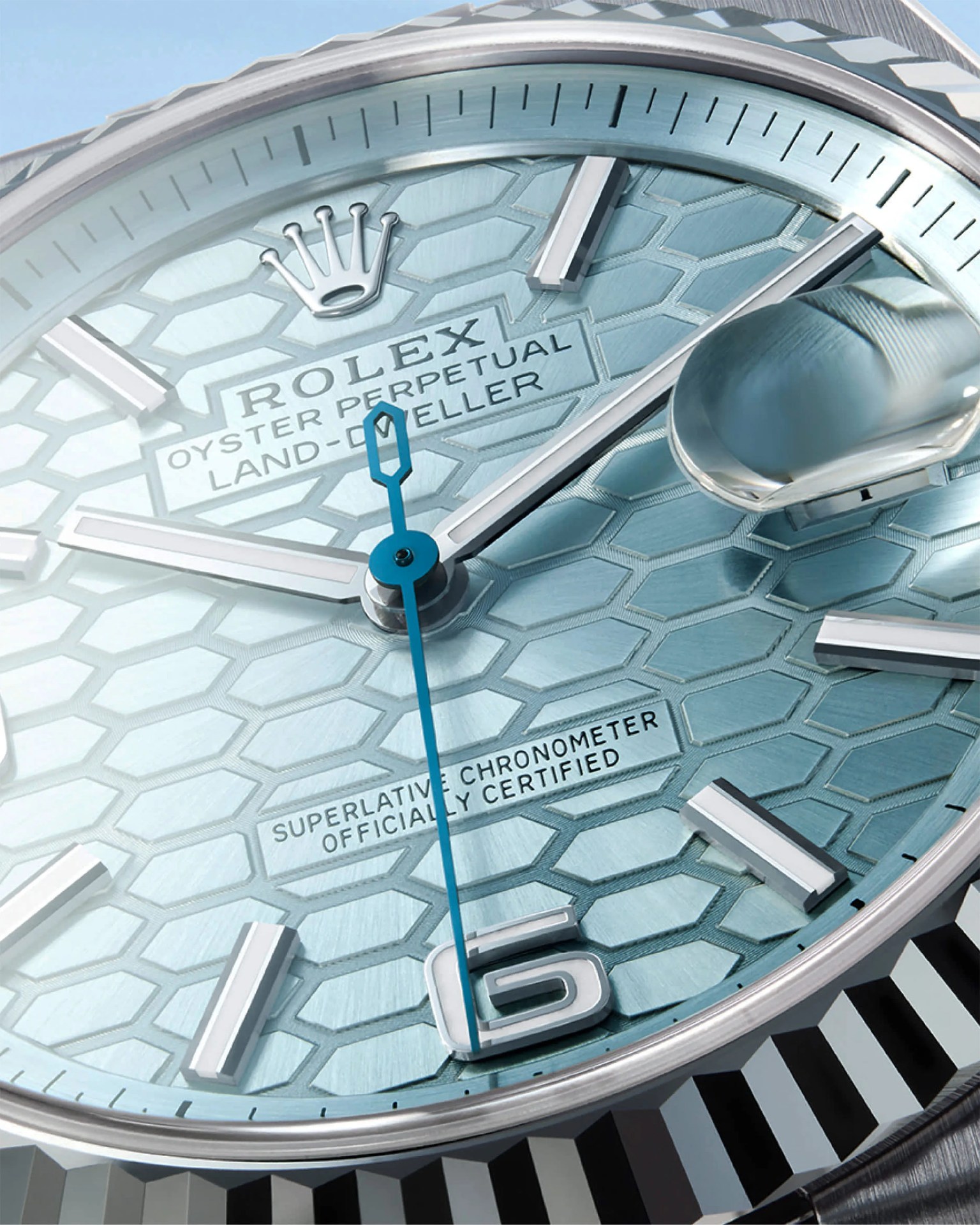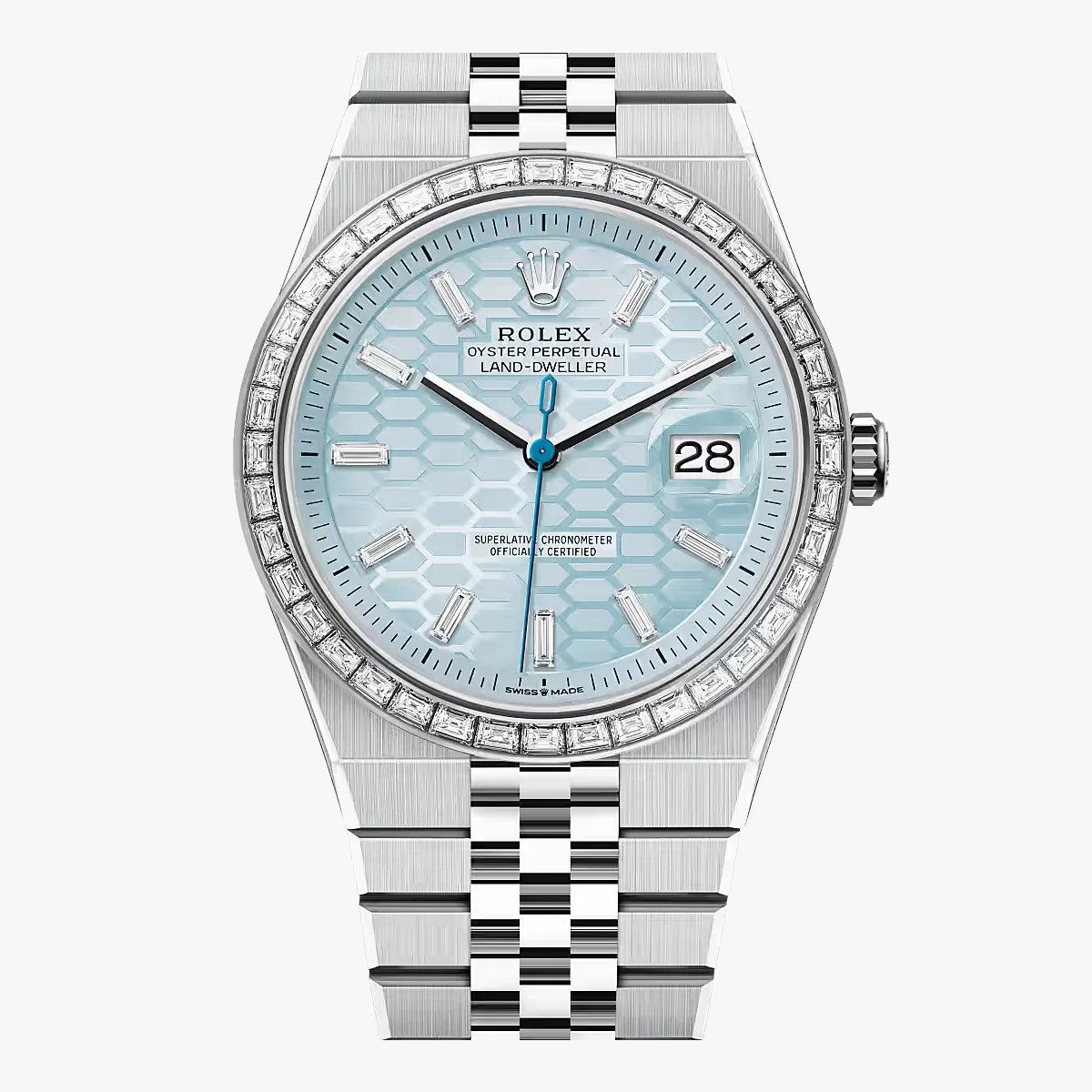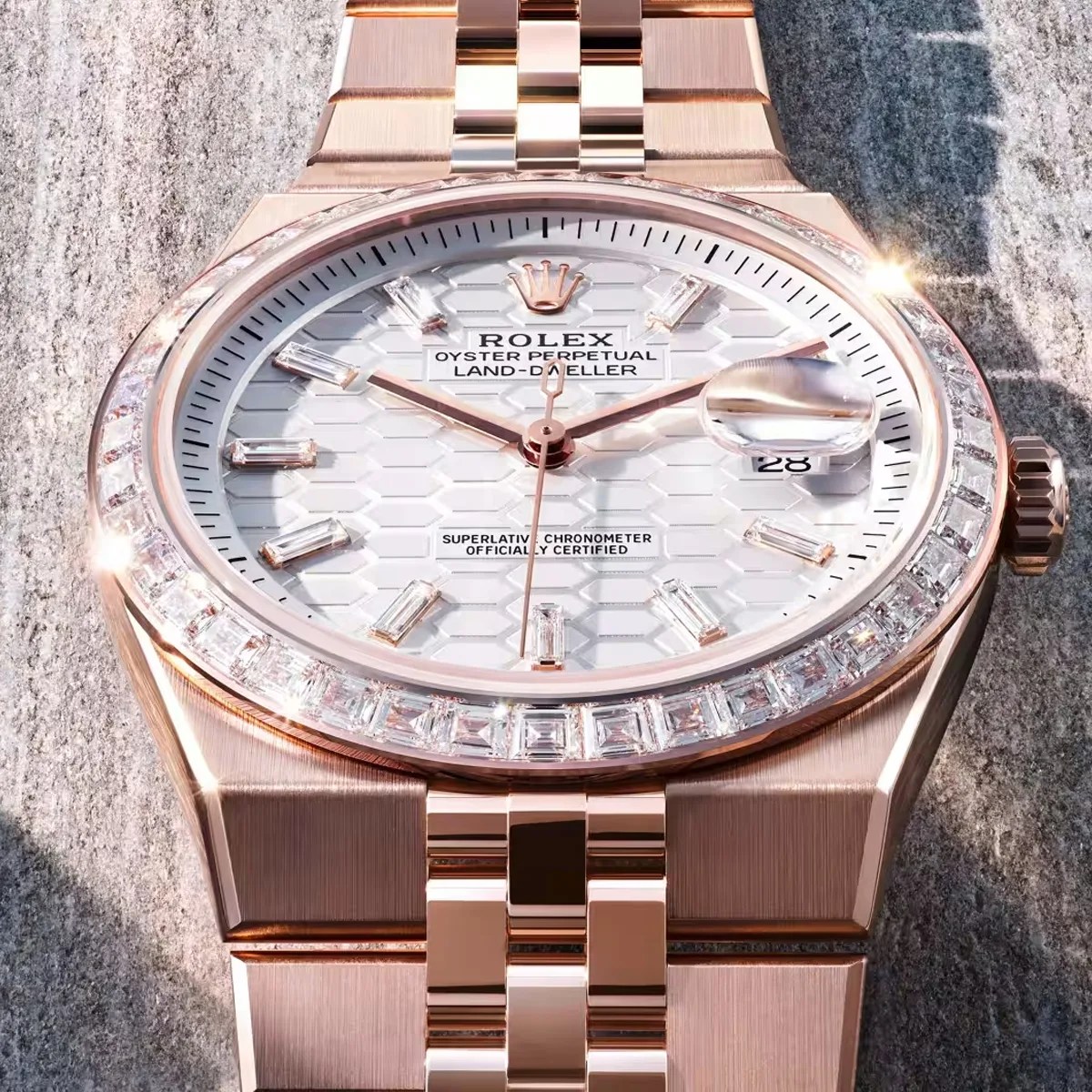

When Rolex unveiled the Land-Dweller at Watches and Wonders Geneva last April, it made the kind of headlines the watch world rarely sees.
This was no iterative update to an existing reference. It was a genuinely new model, the brand’s first integrated-bracelet watch in decades and, more significantly, the debut of an entirely new escapement – widely viewed as the heart of a mechanical watch – called Dynapulse that replaced the Swiss lever system Rolex had relied on since its founding.

As we covered in our initial report, the new Calibre 7135 movement – the first high-beat movement made by Rolex ever – represented arguably the most significant innovation from the Crown since the Perpetual rotor in 1931.
The technological case for the watch was hard to argue. And add to that the fact that Rolex finally delivered its answer to the luxury integrated stainless steel sports watch segment, long dominated by Audemars Piguet Royal Oak and the Patek Philippe Nautilus, and it was an easy call for us to include it among the 100 most innovative products released in 2025.
But even among committed Rolex collectors and enthusiasts, the newcomers’ reception has been genuinely mixed. The dial design, in particular, has sparked significant debate across the watch community, with some citing Rolex’s various design choices as glaring missteps.

Now, with the world’s largest luxury watch trade show, Watches and Wonders 2026, scheduled for mid-April, the watch community is watching closely to see what Rolex does with the Land-Dweller in year two.
This is my best guess at what we should and shouldn’t expect from the Land-Dweller in 2026.