Did a Sonos Rival Just Make the Next Great Dolby Atmos Soundbar?

The revered hi-fi maker is best known for its beautiful streaming amplifiers and wireless speaker systems.

A modern living room setup featuring a sleek black soundbar mounted on the wall beneath a large flat-screen TV displaying a tennis match. Below the soundbar is a minimalist metal and wood shelving unit with plates and decorative items. The room includes vibrant red artwork on the walls and a green leafy plant on the right side. The foreground shows blurred furniture, adding depth to the scene.Bluesound

If you buy from a link, we may earn a commission. Learn more

Bluesound is one of the biggest names in multi-room audio and a bona fide rival to Sonos.

The Canadian hi-fi manufacturer makes a range of wireless speakers and streaming amplifiers that can all be grouped together, but it also makes the BluOS multi-room streaming platform that many other hi-fi makers (such as NAD, Dali, and NAD) use.

The primary advantage of the BluOS platform is that it enables you to build a wireless multi-room system with speakers and components from various brands. Not just Bluesound.

Now, Bluesound is introducing two premium Dolby Atmos soundbars to compete with Sonos’s Arc Ultra and Beam (Gen 2). And as you might expect, they have a key advantage for audio enthusiasts already invested in Bluesound’s wireless speakers or in its BluOS multi-room platform.

Bluesound’s Dolby Atmos soundbars
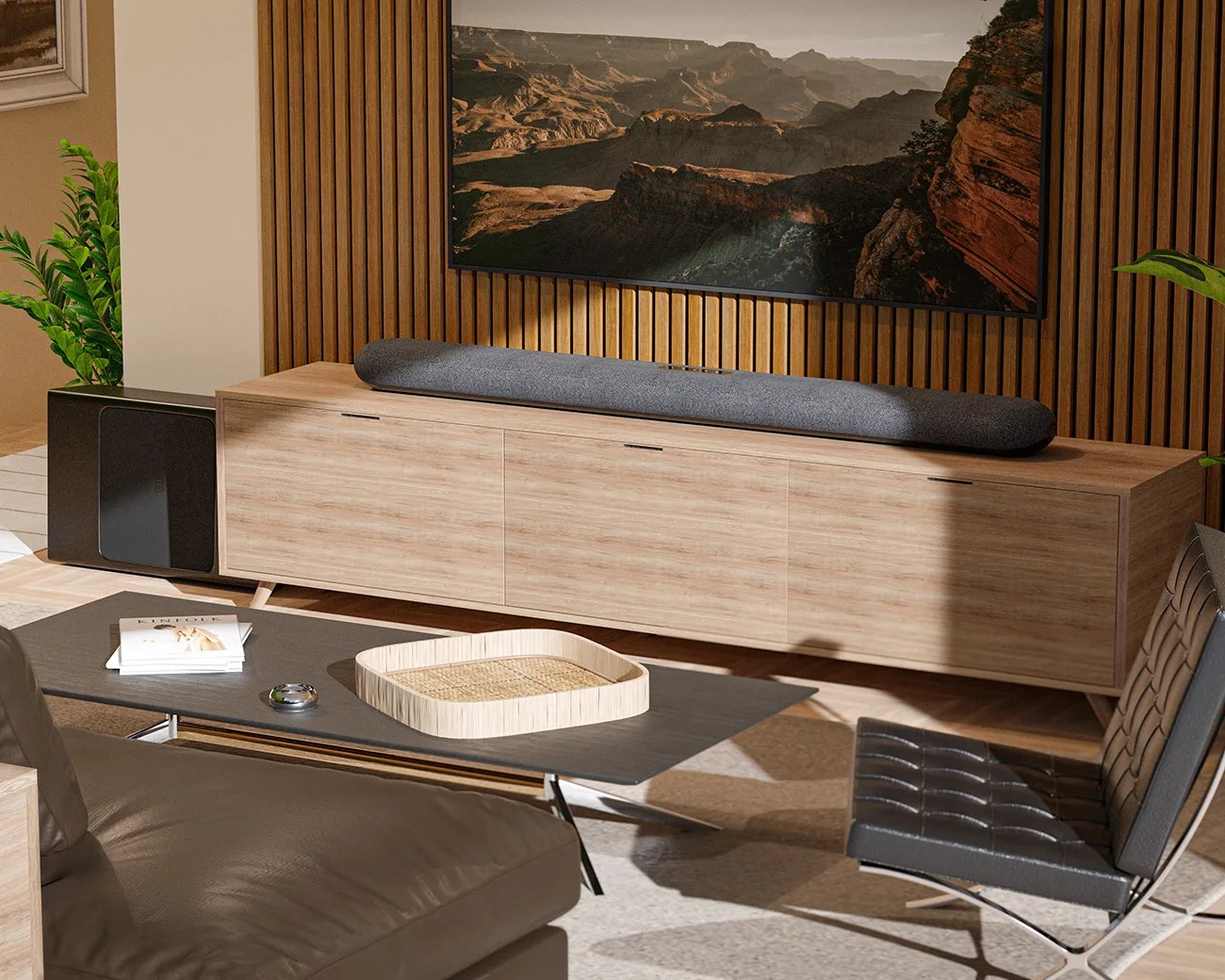
A modern living room setup featuring a wooden media console with a long, dark gray soundbar on top. A large flat-screen TV mounted on a vertical wooden slat wall displays a scenic canyon landscape. To the left of the console is a black subwoofer, and in front is a sleek black coffee table with a light wooden tray and a couple of books. The room includes a dark leather chair with a tufted design and a matching leather sofa partially visible in the foreground. Green plants add a touch of nature to the space.
The Pulse Cinema is the larger of Bluesound’s new Dolby Atmos soundbars.
Bluesound

The new flagship

Bluesound’s Pulse Cinema is the company’s new flagship Dolby Atmos soundbar that’s positioned as pretty much an elevated version of Sonos’s Arc Ultra.

The Pulse Cinema is a 3.2.2-channel premium soundbar that features 16 total drivers — including a center channel, dual 4-inch woofers, and dedicated upfiring drivers — and is capable of outputting 500 watts of total power.
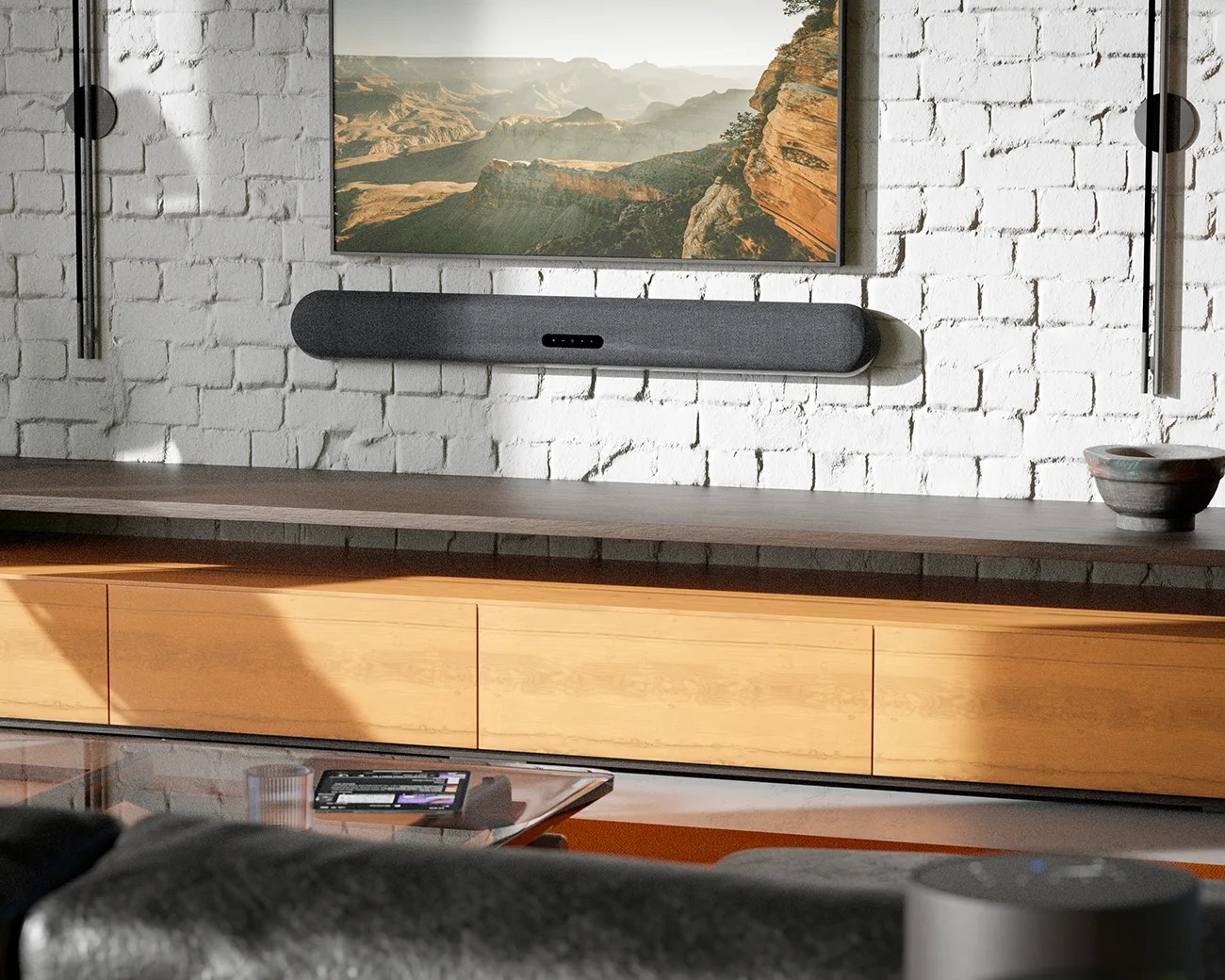
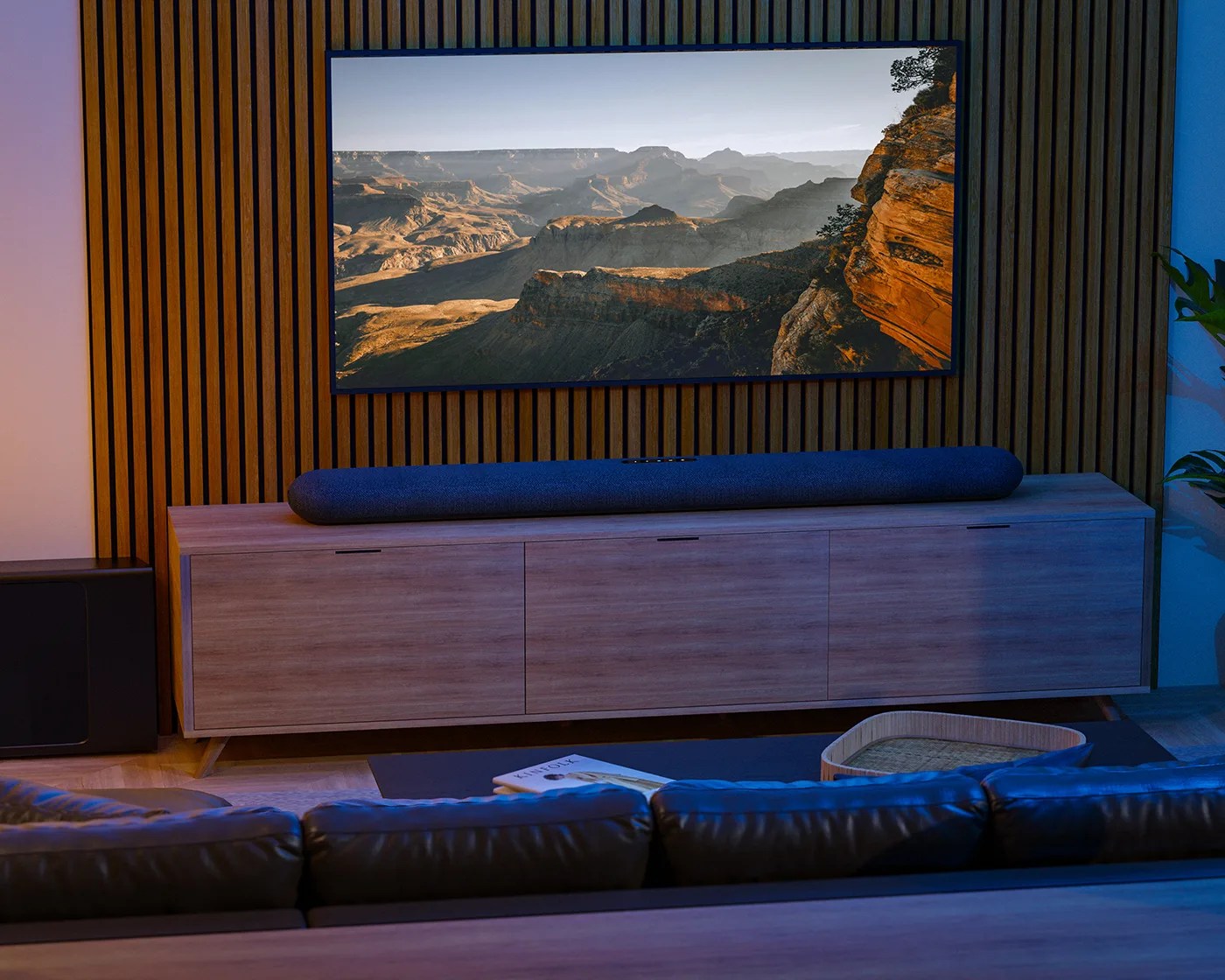
The Pulse Cinema soundbar stretches 47-inches long and, according to the brand, is designed for TVs that are 55 inches or larger.

A modern living room setup with a wall-mounted flat-screen TV displaying a canyon landscape. Below the TV is a sleek, black soundbar attached to a white brick wall. A long wooden cabinet with a dark countertop runs beneath the soundbar. On the right side of the cabinet, there is a decorative bowl. The foreground shows part of a glass coffee table with a tablet and a glass on it, and a dark sofa.
Thanks to automatic orientation detection, the Pulse Cinema can change its sound depending on whether it’s wall-mounted or resting flat on a surface.
Bluesound

As you’d probably expect, Bluesound’s Pulse Cinema soundbar works with the brand’s BluOS platform. This allows you to stream high-resolution audio over Wi-Fi — up to 24-bit/192kHz and MQA playback — when not watching TV.

Additionally, you can expand the soundbar into a more immersive surround sound system by configuring two of Bluesound’s existing wireless speakers, such as the Pulse Flex or Pulse M, as rear-channel satellites.

If you have two passive speakers powered by Bluesound’s Powernode streaming amplifier, those can be configured as rear satellites, too.

You can also expand the system with Bluesound’s wireless subwoofer, the Pulse Sub+. Uniquely, the soundbar also has a subwoofer output, allowing you to add a wired subwoofer of your choosing.

A modern living room setup featuring a large flat-screen TV mounted on a wooden slatted wall, displaying a scenic canyon landscape. Below the TV is a light wood media console with three cabinet doors, topped with a long, dark blue soundbar. In front of the console is a dark coffee table with a book and a woven tray. The edge of a dark leather sofa is visible in the foreground. The room has a cozy, ambient lighting with a mix of warm and cool tones.
The Pulse Cinema is designed for TVs 55-inches or larger.
Bluesound

Another cool feature of the Bluesound’s Pulse Cinema is that it has built-in sensors for automatic orientation detection.

So, depending on whether the soundbar is wall-mounted or resting on a flat surface — in which case a different part or the soundbar faces you and acts as the center channel — it’ll automatically adjust its sound accordingly.

(Bluesound hasn’t specified if one orientation sounds better than the other.)

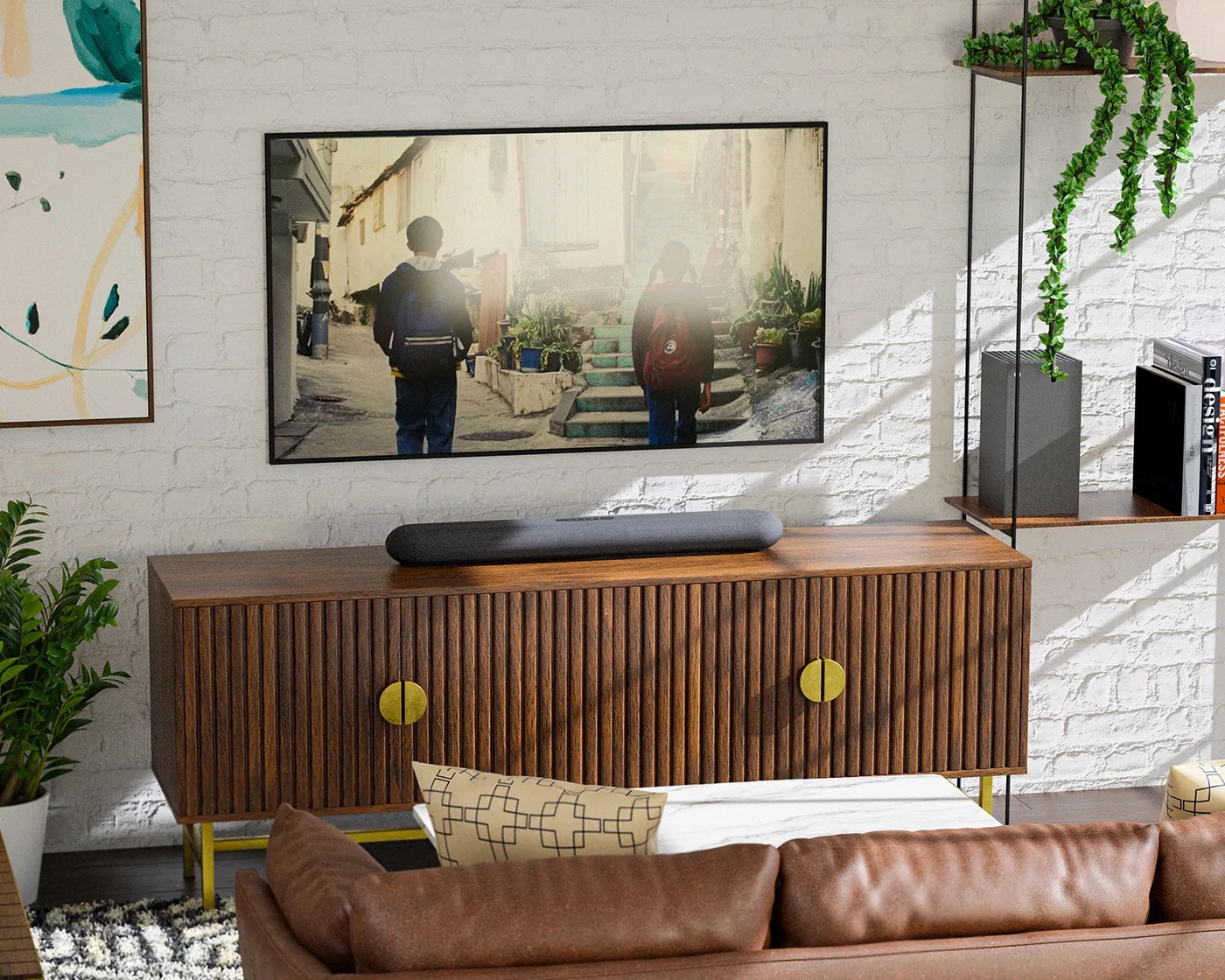
Wooden TV console with vertical slats and round brass handles, supported by brass legs. A black soundbar sits on top. Mounted above is a flat-screen TV displaying an image of two people walking up stairs. To the right, a glass shelf holds a black speaker, books, and a hanging green plant. A brown leather sofa with patterned cushions is in the foreground, and a potted plant is on the left. The background features a white brick wall with a framed abstract painting partially visible on the left.
The Pulse Cinema Mini is a smaller and less powerful version of the flagship Pulse Cinema.
Bluesound

There’s a Mini, of course

The Bluesound Pulse Cinema Mini is the smaller of the brand’s new Dolby Atmos soundbars. It’s a 2.1-channel soundbar featuring eight total drivers and capable of delivering 280 watts of power.

According to the brand, the Pulse Cinema Mini “brings the same thoughtful design and advanced acoustic engineering to smaller-sized spaces and secondary TVs, making it the perfect sound system for bedrooms, dens, or condos.”

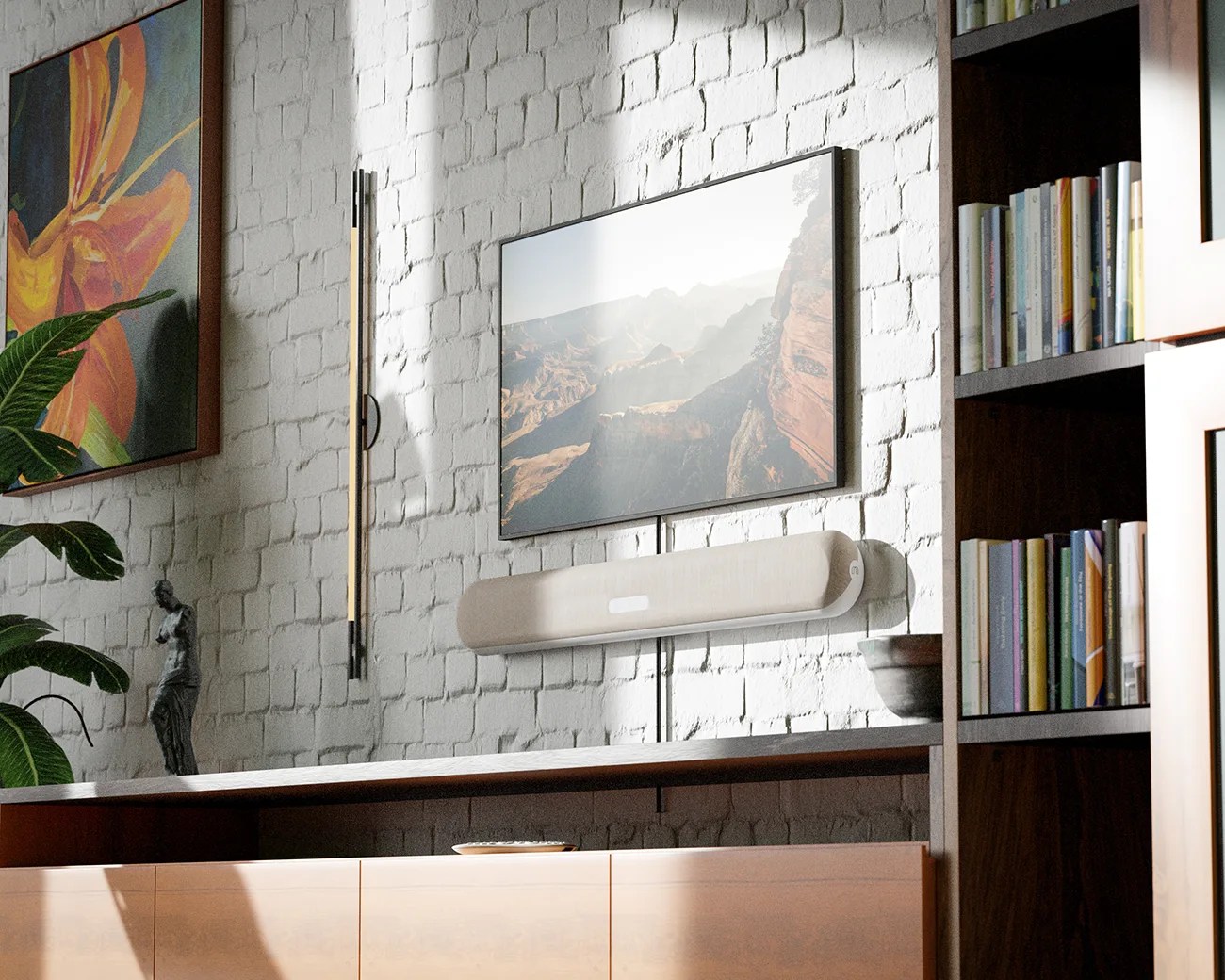
A modern living room wall features a mounted flat-screen TV displaying a scenic canyon landscape. Below the TV, a beige soundbar is mounted on the white brick wall. To the left, there is a vertical wall light fixture and a large framed painting of an orange flower with green leaves. A leafy green plant and a small statue are placed on a wooden cabinet beneath the TV. On the right side, a dark wooden bookshelf filled with books is partially visible.
Unlike the Pulse Cinema, the Mini comes in two finishes: black or white.
Bluesound

The main disadvantage of the Pulse Cinema Mini is that, unlike the larger Pulse Cinema, it lacks the dedicated upfiring drivers and thus won’t deliver quite as immersive a Dolby Atmos experience.

Aside from size and power (and upfiring drivers), the Pulse Mini operates exactly the same as the larger Pulse Cinema.

The soundbar can be expanded into a larger surround sound system with Bluesound’s other wireless speakers and subwoofers. It supports the same high-resolution streaming. And it has the same automatic orientation detection.

One difference is that the Pulse Mini comes in two finishes. In addition to the black finish with a dark grey fabric grille (which is the only option for the Pulse Cinema), the Pulse Mini also comes in a white finish with a tan grille.

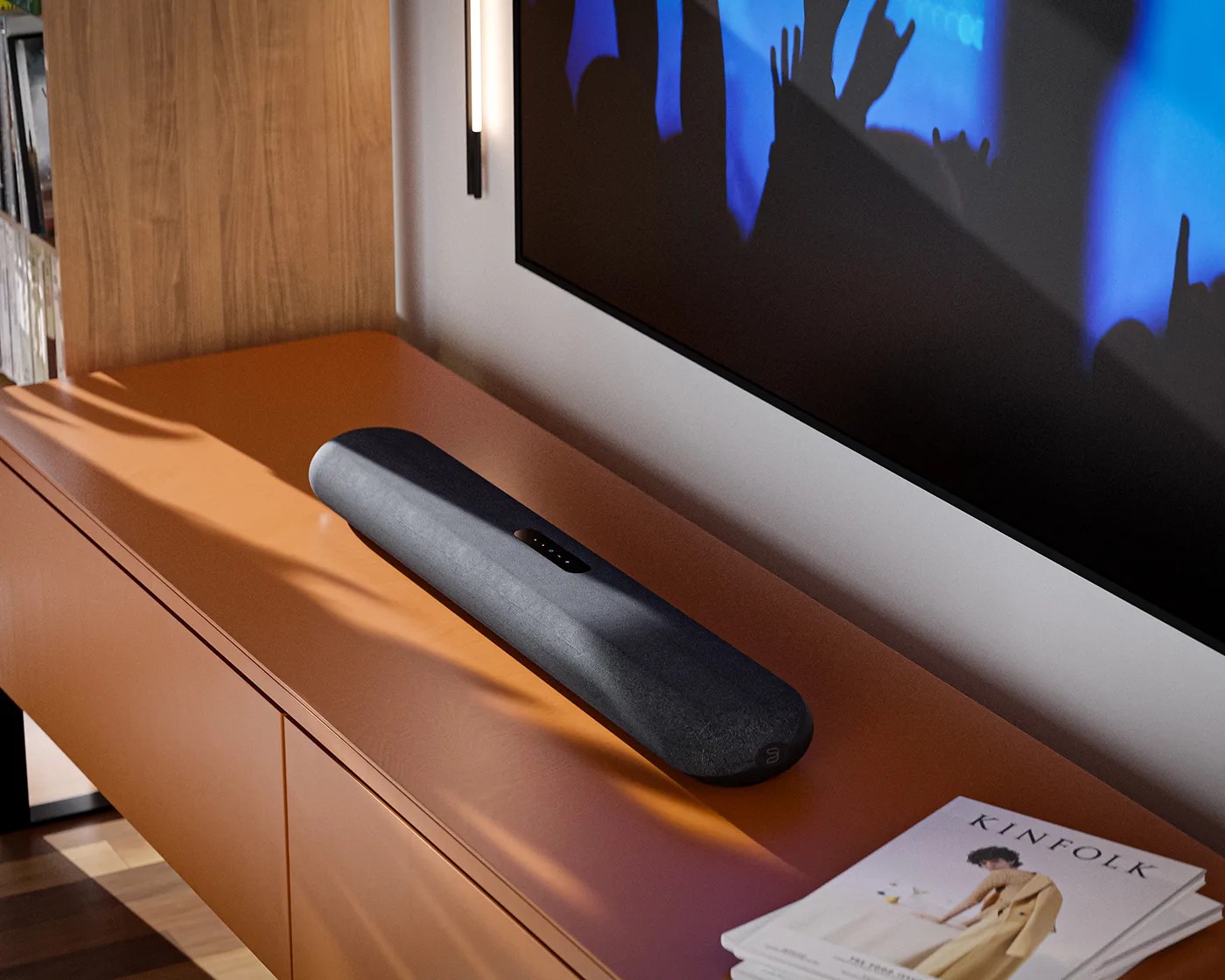
A sleek, black soundbar with a fabric finish is placed on a modern, orange-brown cabinet beneath a wall-mounted TV. The TV screen shows a blue background with silhouettes of raised hands. A stack of Kinfolk magazines is positioned on the right side of the cabinet.
Both Pulse Cinema soundbars are quite expensive.
Bluesound

Price and availability

Both Bluesound’s new soundbars are positioned as more premium (aka more expensive) alternatives to Sonos’s flagship and midrange soundbars.

The Pulse Cinema costs $1,499, which is a $400 increase over the Sonos Arc Ultra. While the Pulse Cinema costs $999, which is just $100 less than the Arc Ultra.

Both of these soundbars will be available for preorder starting September 24th. Shipping is set to start on October 24th.

,