
Mercedes-Benz Reminds the World Once Again Why It’s the King of Luxury Sedans

This is the most extensive midcycle overhaul in the company’s long history.

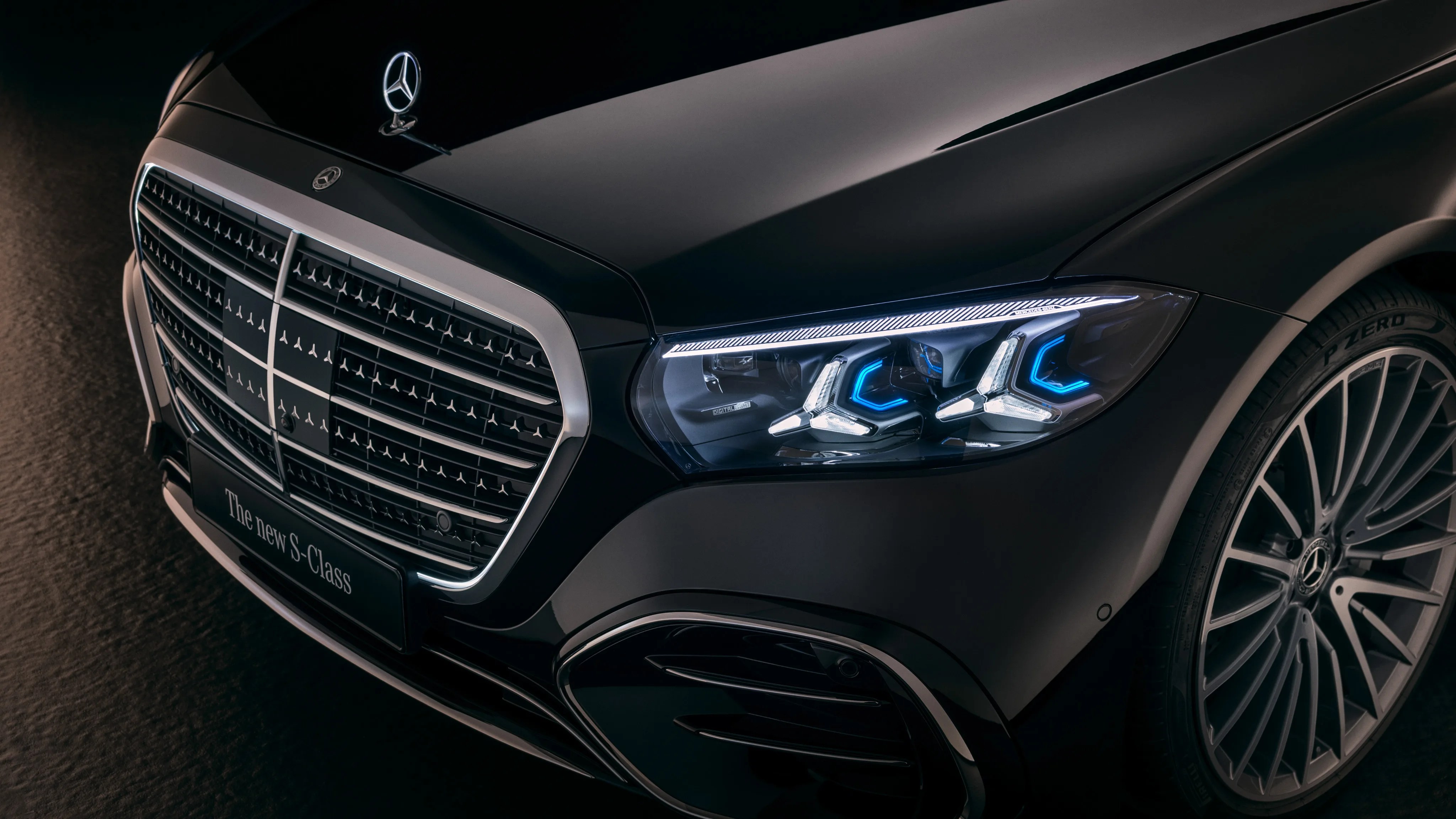
Front view of a black Mercedes-Benz S-Class showing the grille, illuminated headlight, and alloy wheel.Mercedes-Benz

After many teasers and leaked details, the world’s definitive luxury sedan is here with all of its promised updates. Say hello to the extensively reworked 2027 Mercedes-Benz S-Class.

Heralded as the most extensively updated model in the company’s nearly century-and-a-half-long history, the new S-Class arrives to replace the original version of the W223, which debuted in 2020.

The W223 is the seventh generation of S-Class. And, it’s arguably the first model since the W126 in the 1980s to get such an extensive makeover, without ushering in a completely-new generation.

The most updated S-Class ever
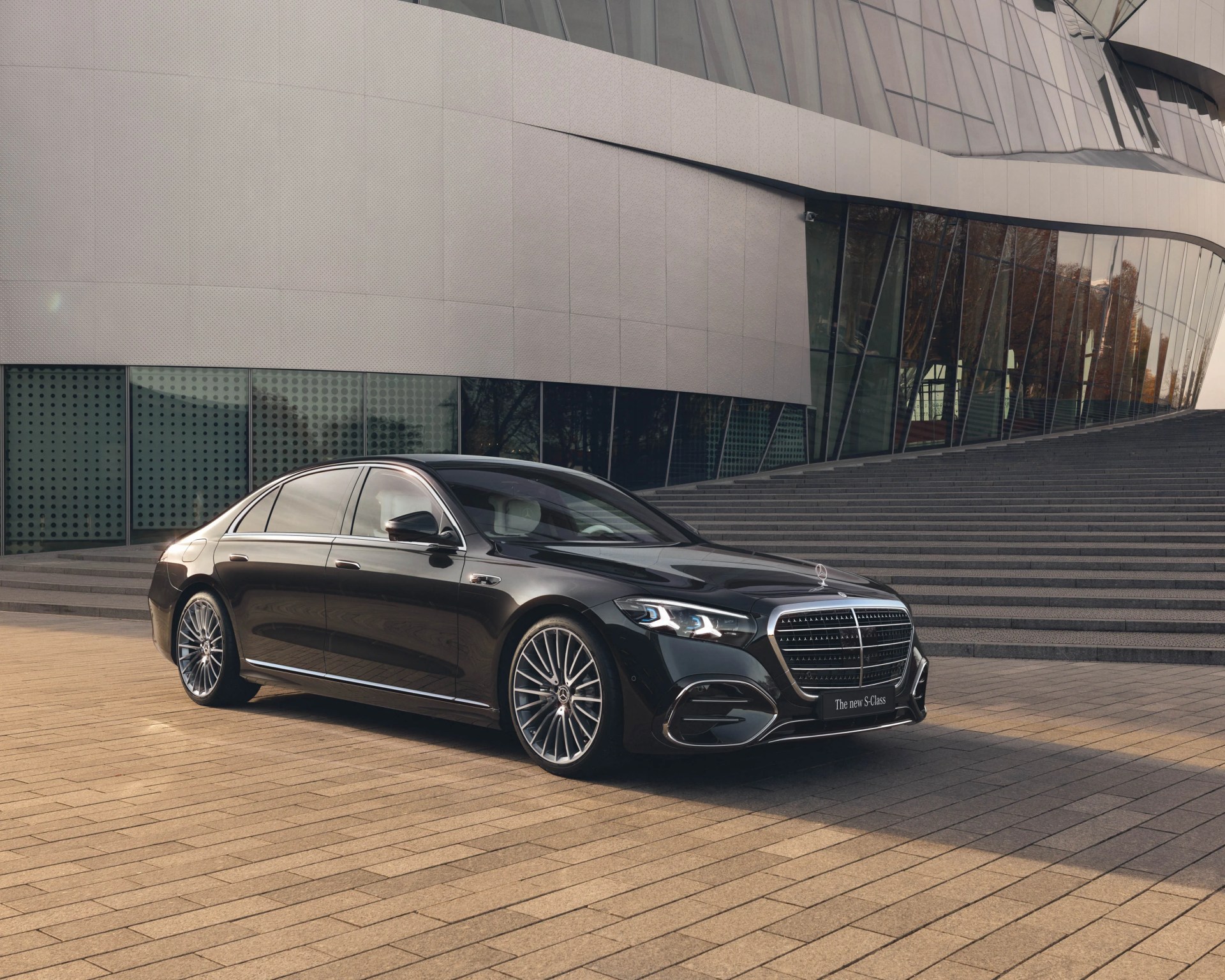
Black Mercedes-Benz S-Class sedan parked on a paved area in front of a modern building with large glass windows and stairs.
Although it sort of looks the same, the 2027 S-Class is the most extensively updated model in the company’s 140-year history.
Mercedes-Benz

Normally, the average generational lifespan of an S-Class varies between seven to eight years. With the W223 cresting six years old, a new generation of S-Class would usually have been the next expectation.
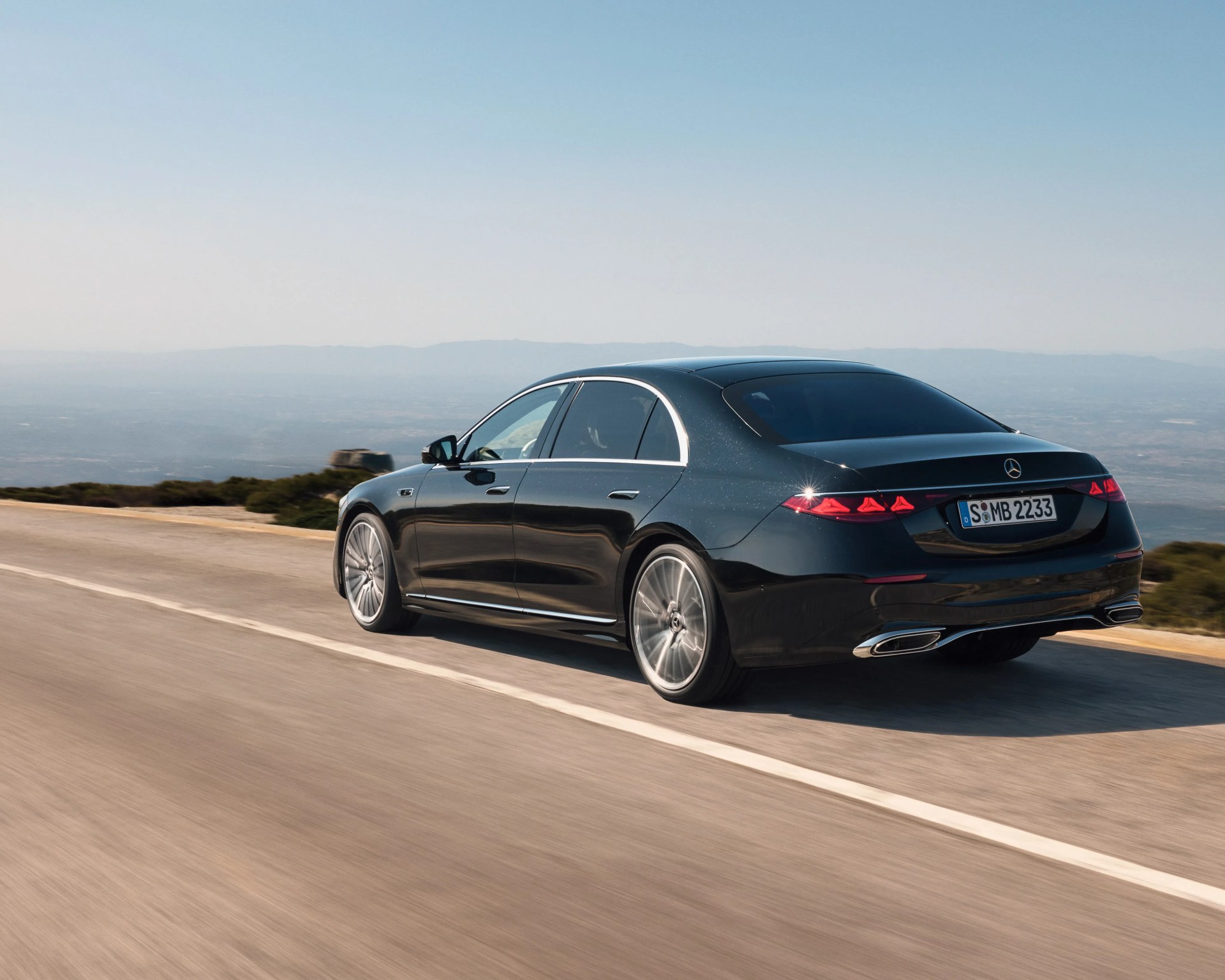
Black Mercedes-Benz luxury sedan driving on a mountain road with clear sky in the background.
Exterior changes are omnipresent, but the updates amount more beneath the skin.
Mercedes-Benz

But this time around, Mercedes-Benz chose to stick with the W223 platform and extend its series production lifecycle. The reasons behind why Mercedes-Benz stuck with the current W223 platform aren’t clear.

However, Mercedes-Benz does have a history of extending production lifecycles to buy engineers more time to further research and develop new generations and technology.

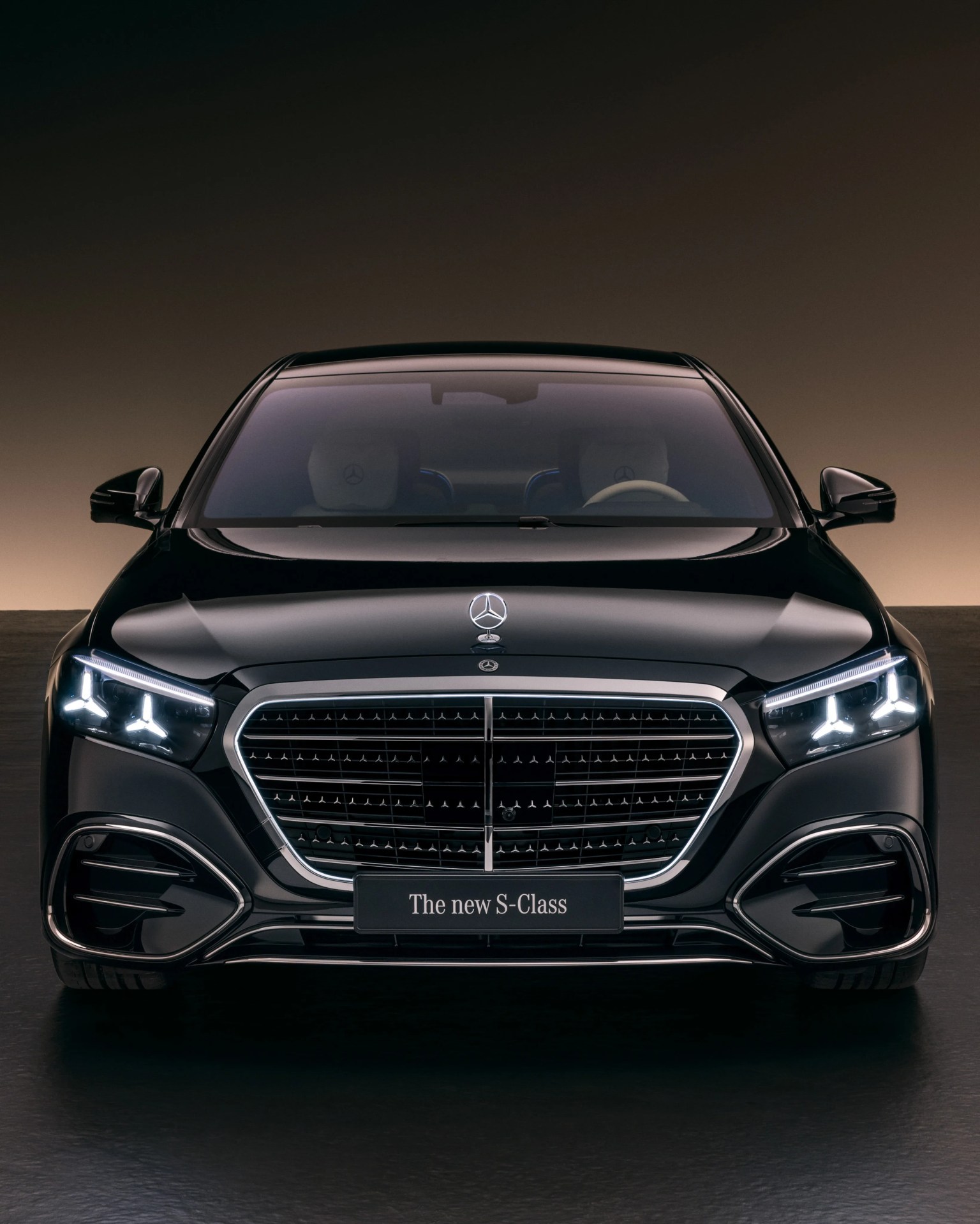
Front view of a black Mercedes-Benz S-Class sedan with illuminated headlights and a prominent grille.
The grille is larger and more distinctive, especially with all of the tiny three-point stars festooning the inserts.
Mercedes-Benz

For instance, Mercedes-Benz updated the W126 in 1985 to prolong its production, since development for the succeeding W140 hit a few snags on the way. It was also to adapt to new and rapidly evolving changes to environmental and safety regulations at the time. And, Lexus caught them off guard from a competitive standpoint.

This time around, with the W223, some believe it’s Mercedes-Benz’s reaction to a slowing EV market after the brand committed to an all-electric future. Others also think it’s to allow more time to further develop a platform to accommodate next-gen autonomous driving tech.

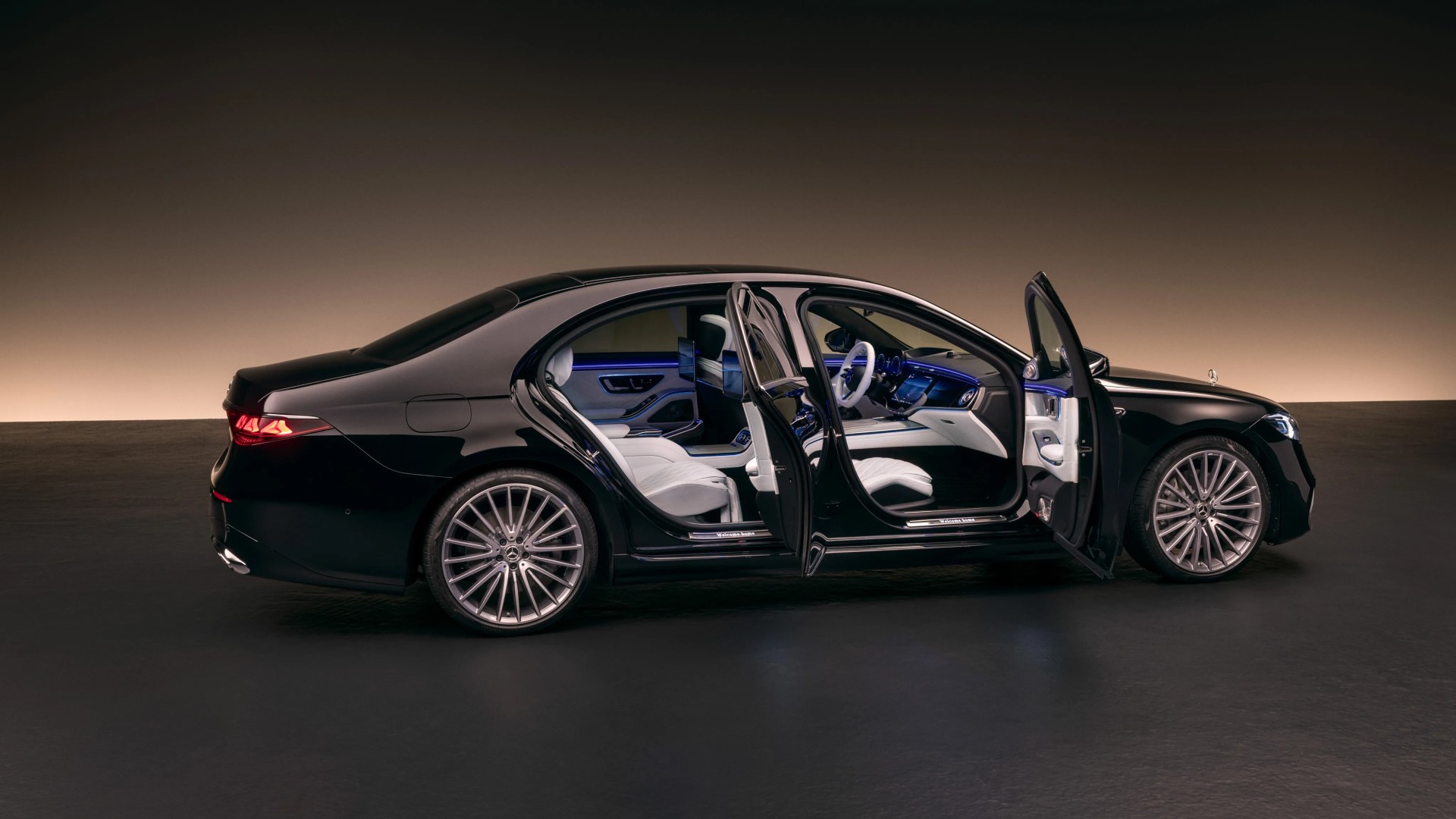
Black luxury sedan with all four doors open showing white leather interior and blue ambient lighting.
Like all other S-Classes, the new W223 is engineered to cosset its occupants.
Mercedes-Benz

But after its plans to make an all-electric S-Class didn’t pan out in time, Mercedes-Benz likely refocused its efforts on improving the W223 to make the car that we see today. It was also likely a move to adapt to the changing market.

So, what’s new on the updated W223? Over 2,700 components underwent change for the new model, according to the manufacturer.

More than skin-deep changes

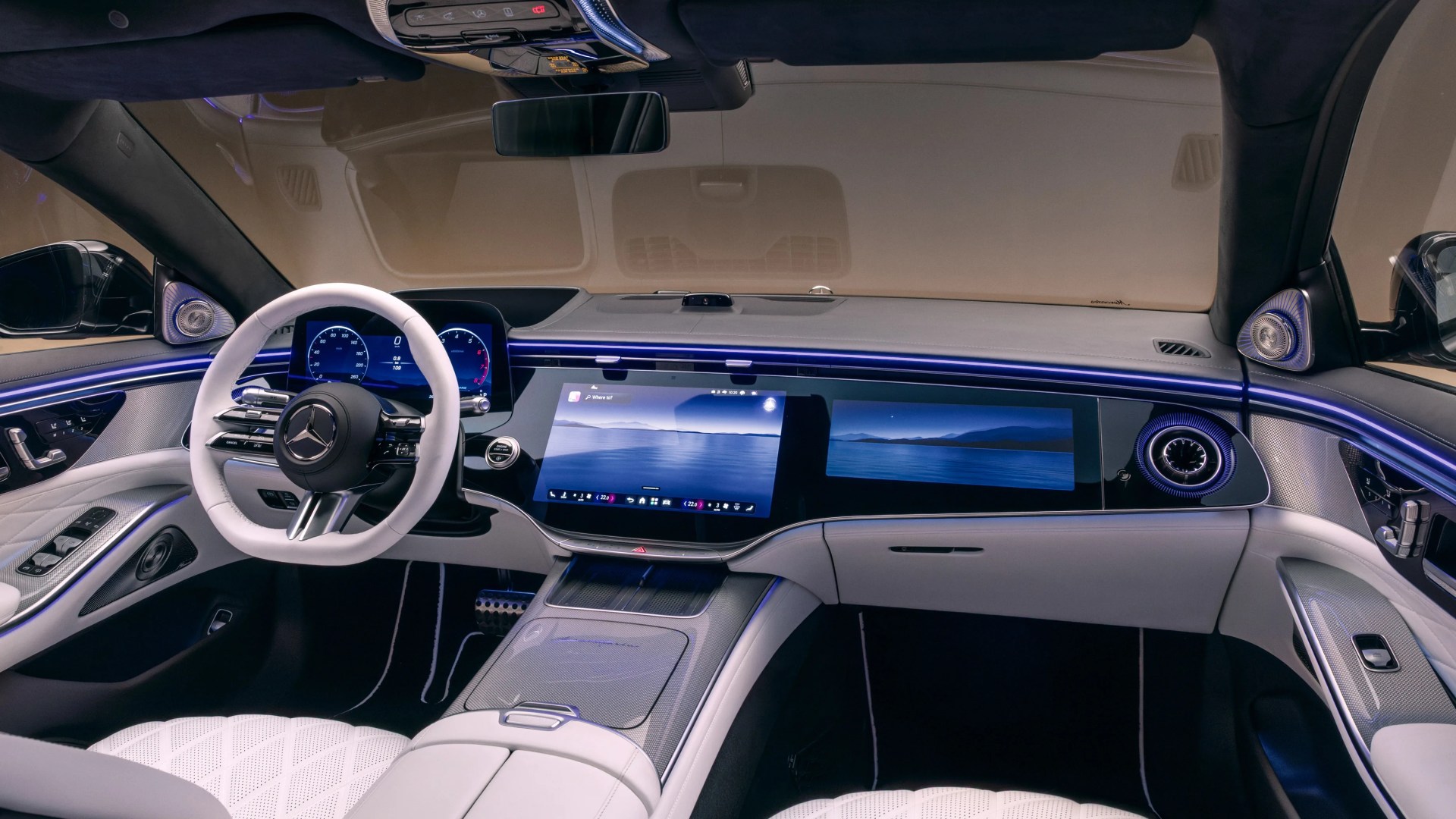
Luxury car interior with white leather steering wheel, dual digital displays, ambient blue lighting, and quilted white seats.
Larger screens with newer software and a completely new graphical user interface festoon the dashboard.
Mercedes-Benz

Upon first glance, it may look the same as the W223’s overall shape and distinctive details remain. But pay closer attention to the details, and one can see the usual suite of exterior design upgrades.

Such includes new head- and taillight assemblies, a revised and bigger grille, and updated bumper and wheel designs. But it’s on the inside and underneath the sheet metal where the changes truly amount.

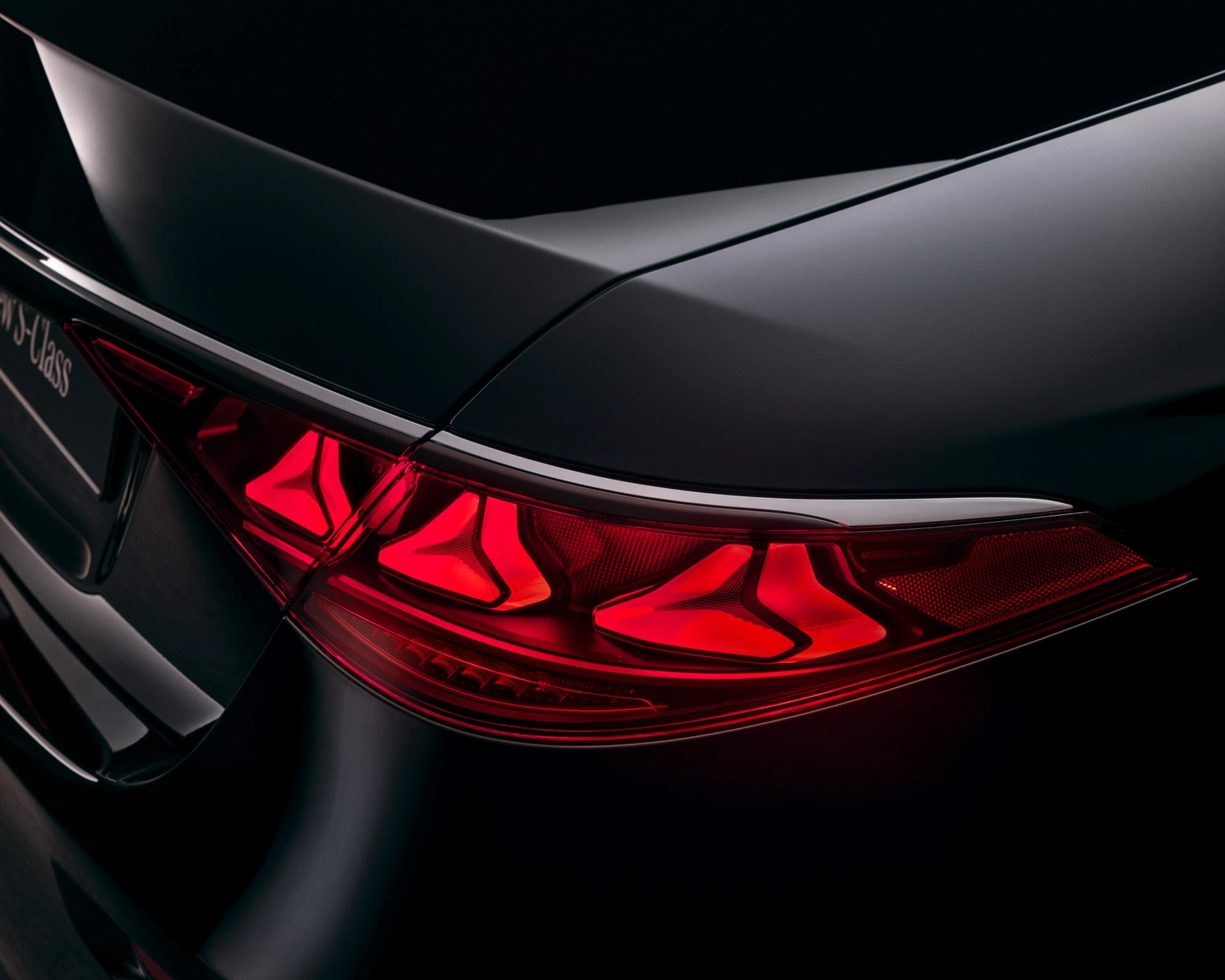
Close-up of a sleek black car's rear with illuminated red taillights and a subtle chrome trim.
Revised taillights feature even more integrated three-point star, in case one forgets they’re driving a Three-Point Star.
Mercedes-Benz

For example, an all-new MBUX Superscreen with 13.1-inch displays and the latest software sits in the dashboard, touting next-level generative AI. The system also integrates the latest version of Google Maps, and a completely new “Zero Layer” interface for the graphics and user experience.

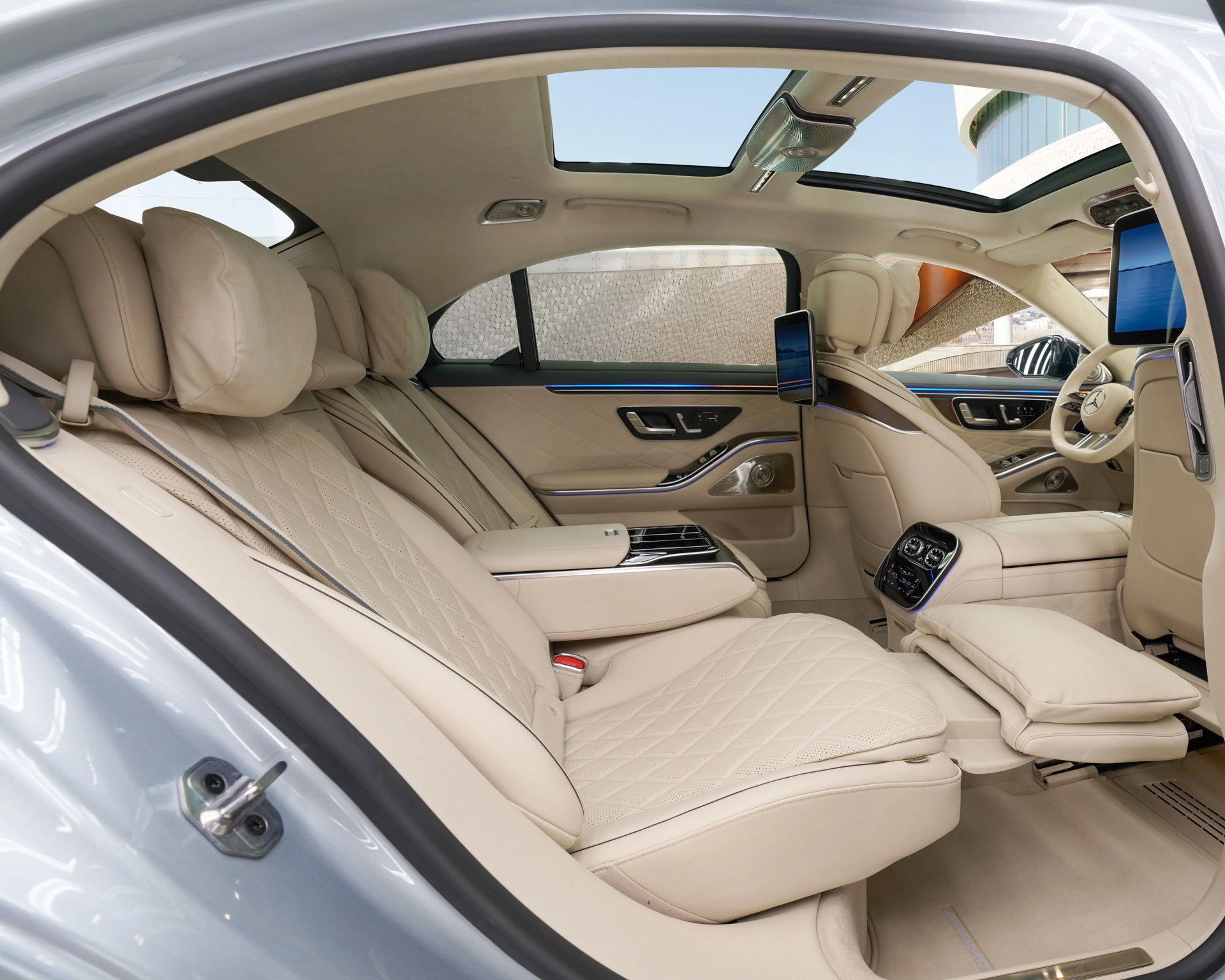
Beige leather luxury car interior with quilted seats, rear entertainment screens, and panoramic sunroof.
Like all other S-Classes, the updated W223 is designed to also be a chariot for executives and heads of state.
Mercedes-Benz

The newly updated W223 boasts Mercedes-Benz’s latest MB.DRIVE advanced driver assistance tech. And at the heart of it all is the latest MB.OS central operating system, which unifies all the digital vehicle operations.

MB.OS also allows for greater integration of over-the-air software updates and a simpler ecosystem. The result is better oversight and quality management over the function of all the car’s electronic gizmos.

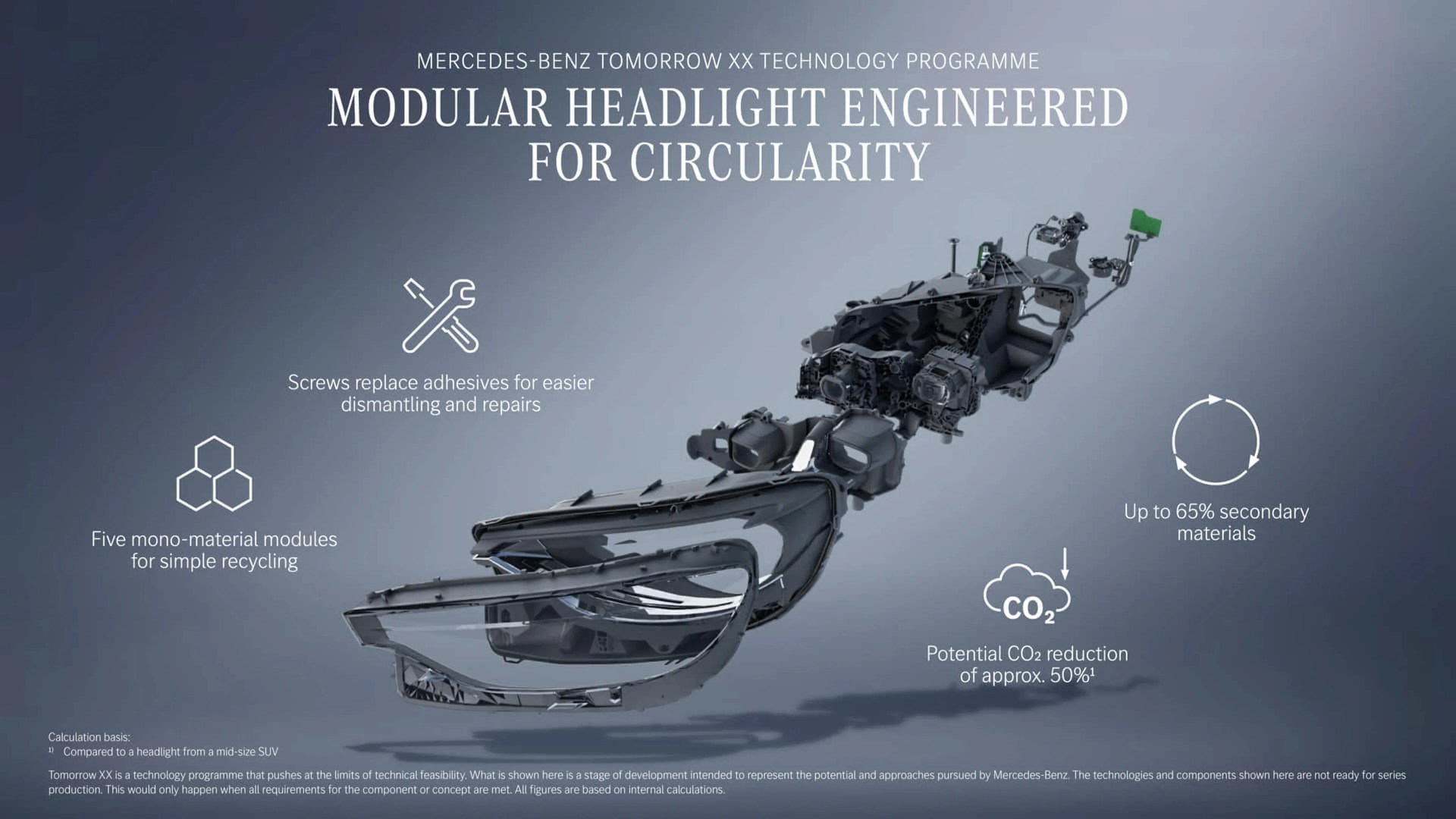
Exploded view of a modular Mercedes-Benz headlight with annotations about screws, mono-material modules, secondary materials, and CO2 reduction.
Despite being a full-fledged luxury sedan, engineers made sure the car is serviceable, easily repairable and even environmentally friendly.
Mercedes-Benz

Mercedes-Benz engineers made significant changes to the car’s assembly to ease serviceability, recyclability and environmental friendliness. For example, the head- and taillight assemblies utilize screws, rather than adhesives, for easier reparability.

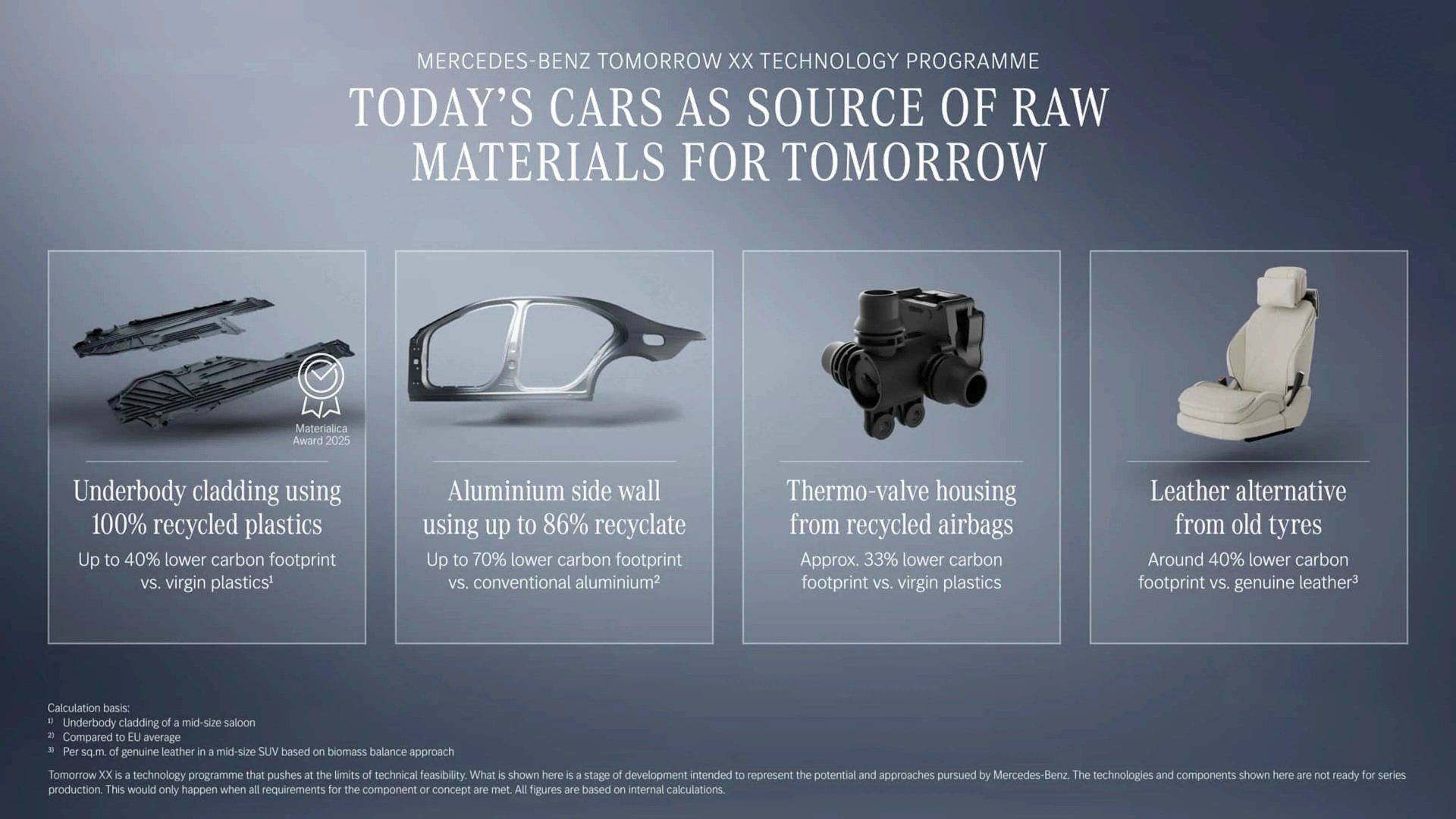
Four car parts labeled as recycled materials: underbody cladding from 100% recycled plastics, aluminum side wall with 86% recyclate, thermo-valve housing from recycled airbags, and leather alternative from old tires.
Despite being a symbol of opulence, the new S-Class continues its tradition for being a benchmark in employing recycled materials.
Mercedes-Benz

Most of the car’s plastics are recycled from old, retired vehicles. And the interior faux-leather comes from old tires. Even the car’s main heater control valve comes from recycled airbags.

A world-class luxury sedan requires world-class pockets

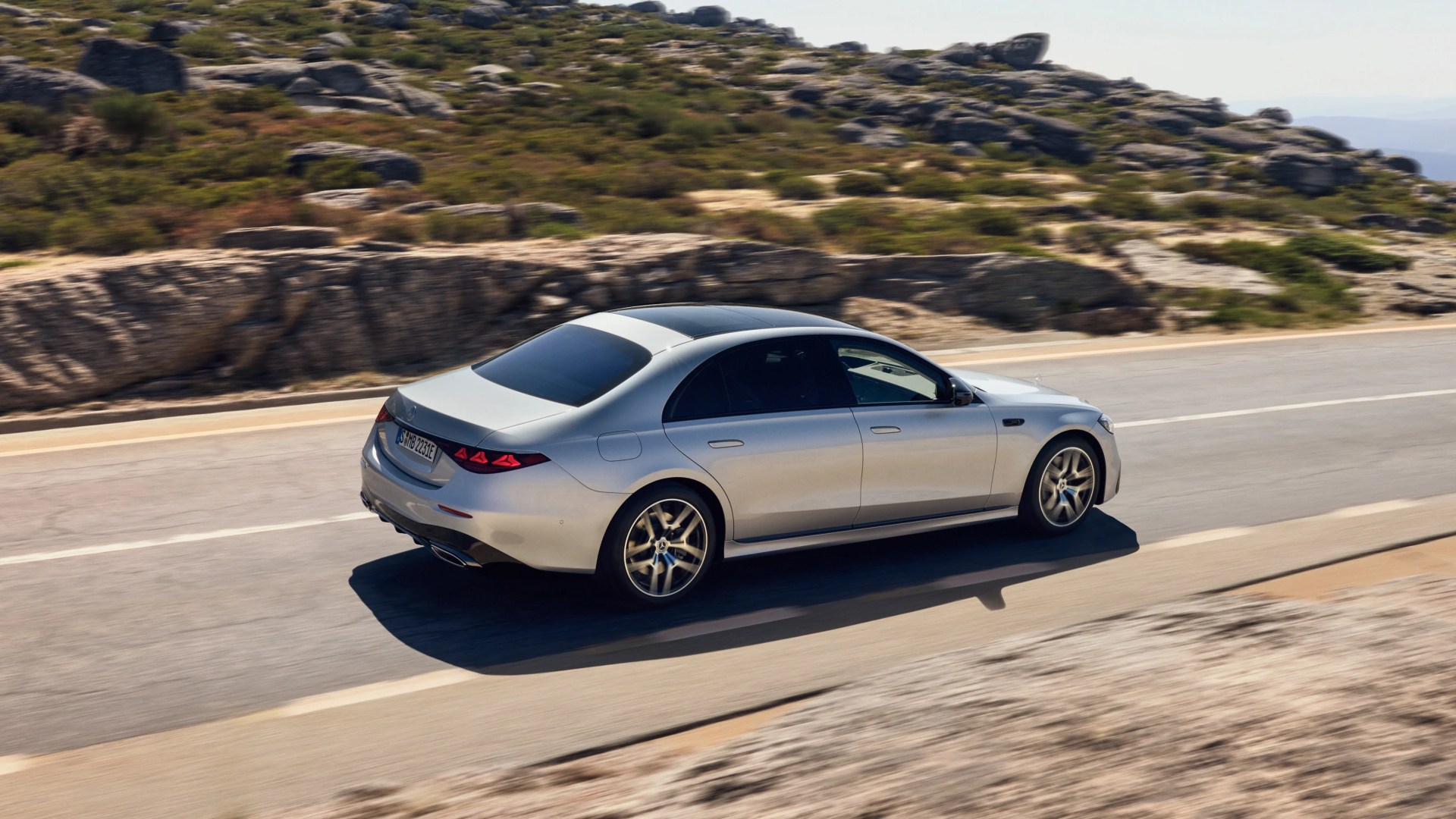
Silver Mercedes-Benz sedan driving on a mountain road with rocky terrain in the background.
Like the outgoing model, the new S-Class will still have the option for inline-six, V8 and gas-electric hybrid power.
Mercedes-Benz

At launch, the S-Class will continue its use of Mercedes-Benz’s latest M256 3.0-liter inline-six in the base S500. It’s still good for the same 442 horsepower, but torque gets a boost to 443 pound-feet of torque versus the old car’s 413 lb-ft.

The more powerful S580 still gets a V8. More excitingly, though, it gets the new M177 Evo V8 with its new flat-plane crankshaft. The result is 530 hp and 553 lb-ft, versus the previous 496 hp and 516 lb-ft.

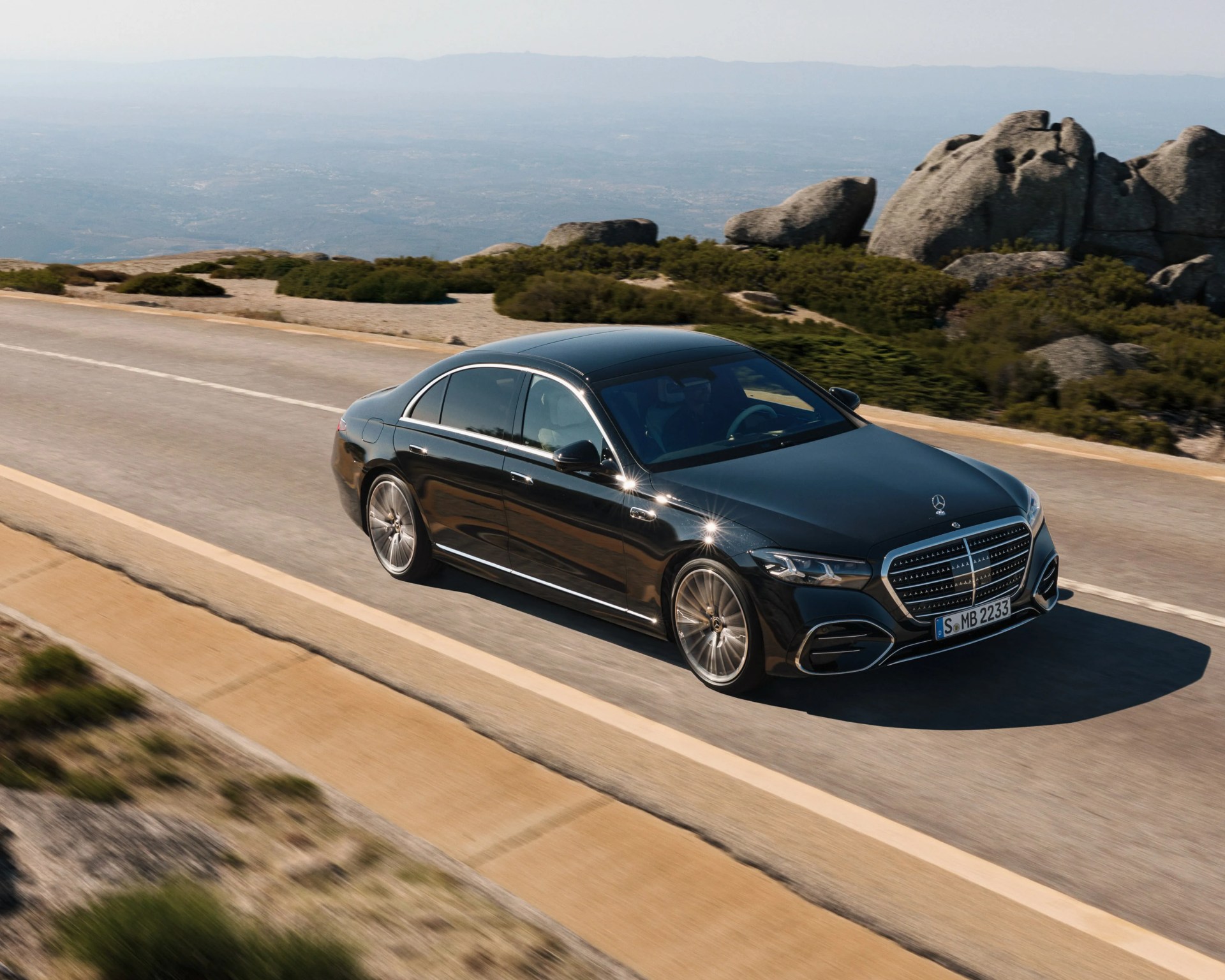
Black Mercedes-Benz luxury sedan driving on a mountain road with rocky terrain in the background.
And, like all of its predecessors, it isn’t going to be cheap.
Mercedes-Benz

For those looking for a hybrid option, the S580e carries on with the new M256 Evo. The electric motor, however, benefits from a bump in 73 horsepower, resulting in a total system output of 576 hp, compared to the old car’s 503.

Obviously, this sort of luxury, performance and technology won’t come cheap. As no S-Class has ever been, well, cheap.

Pricing has yet to be released. Though, Mercedes-Benz said such info will be ready when the S-Class launches later this year.

Want to stay up to date on the latest product news and releases? Add Gear Patrol as a preferred source to ensure our independent journalism makes it to the top of your Google search results.

add as a preferred source on google
,