
This Outlawed Porsche Was Practically Everyone’s Dream Car in The ’80s and It’s Still a Head-Turner

Is this the ultimate collector Porsche ever? We certainly think so.

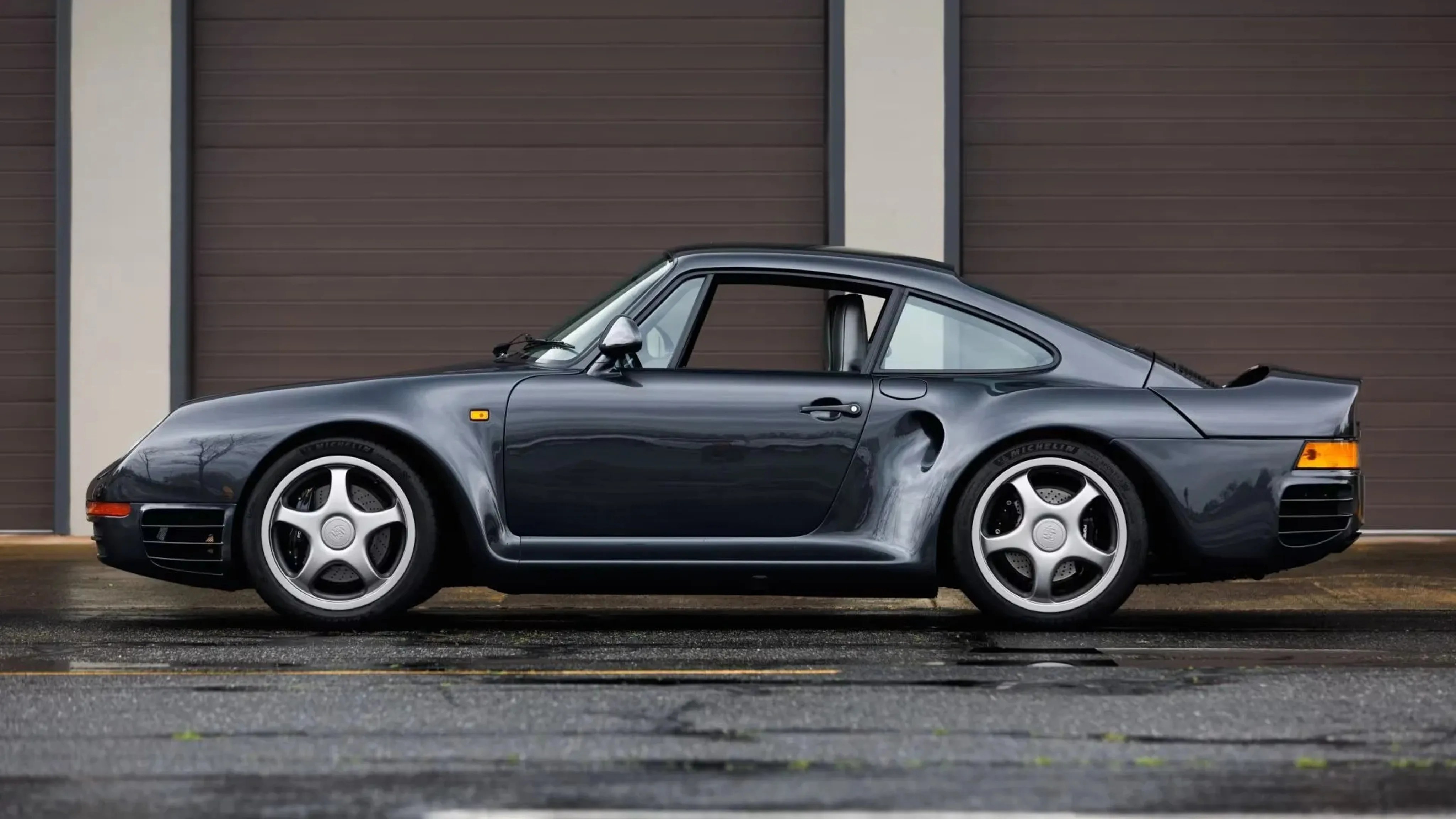
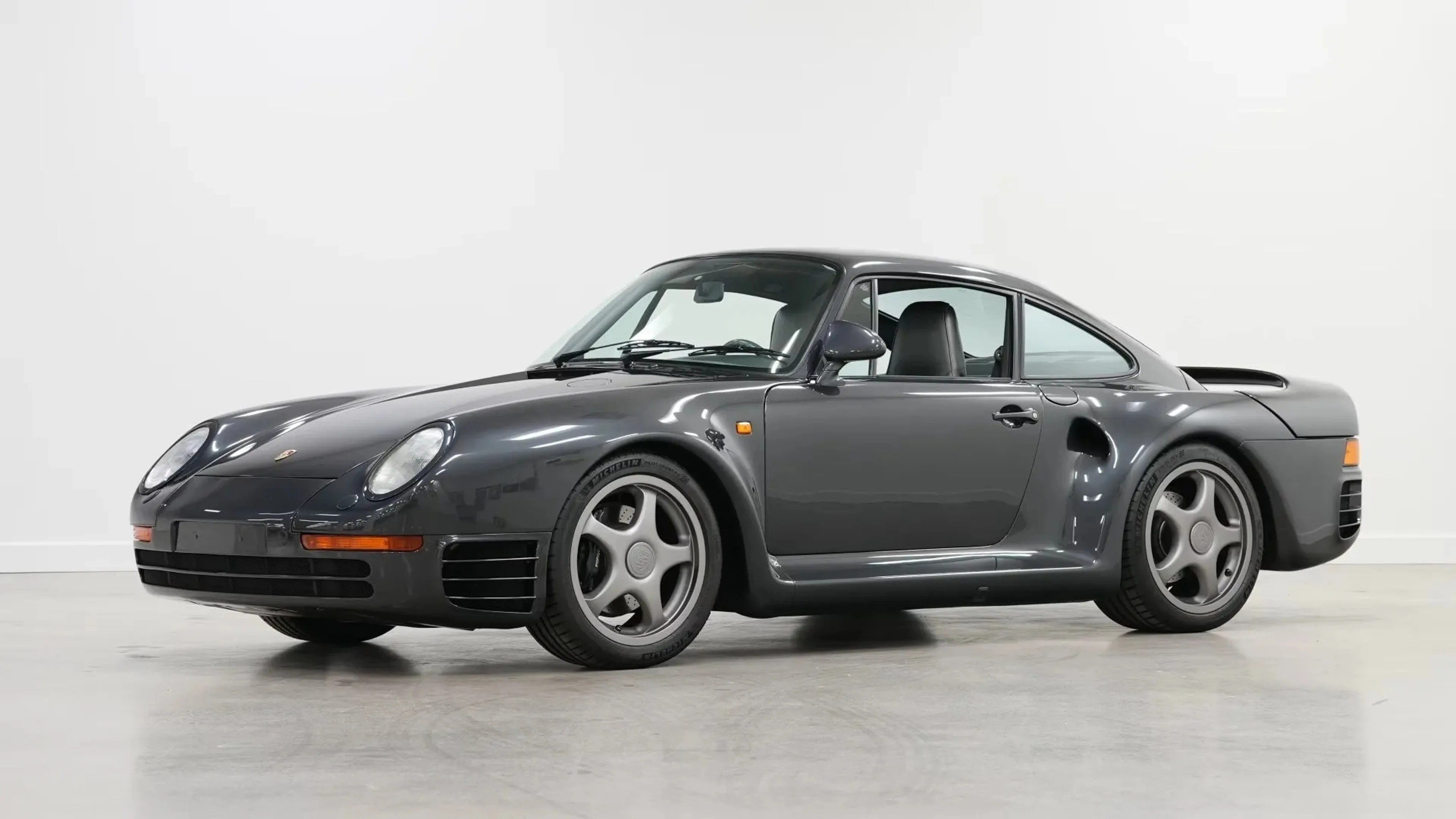
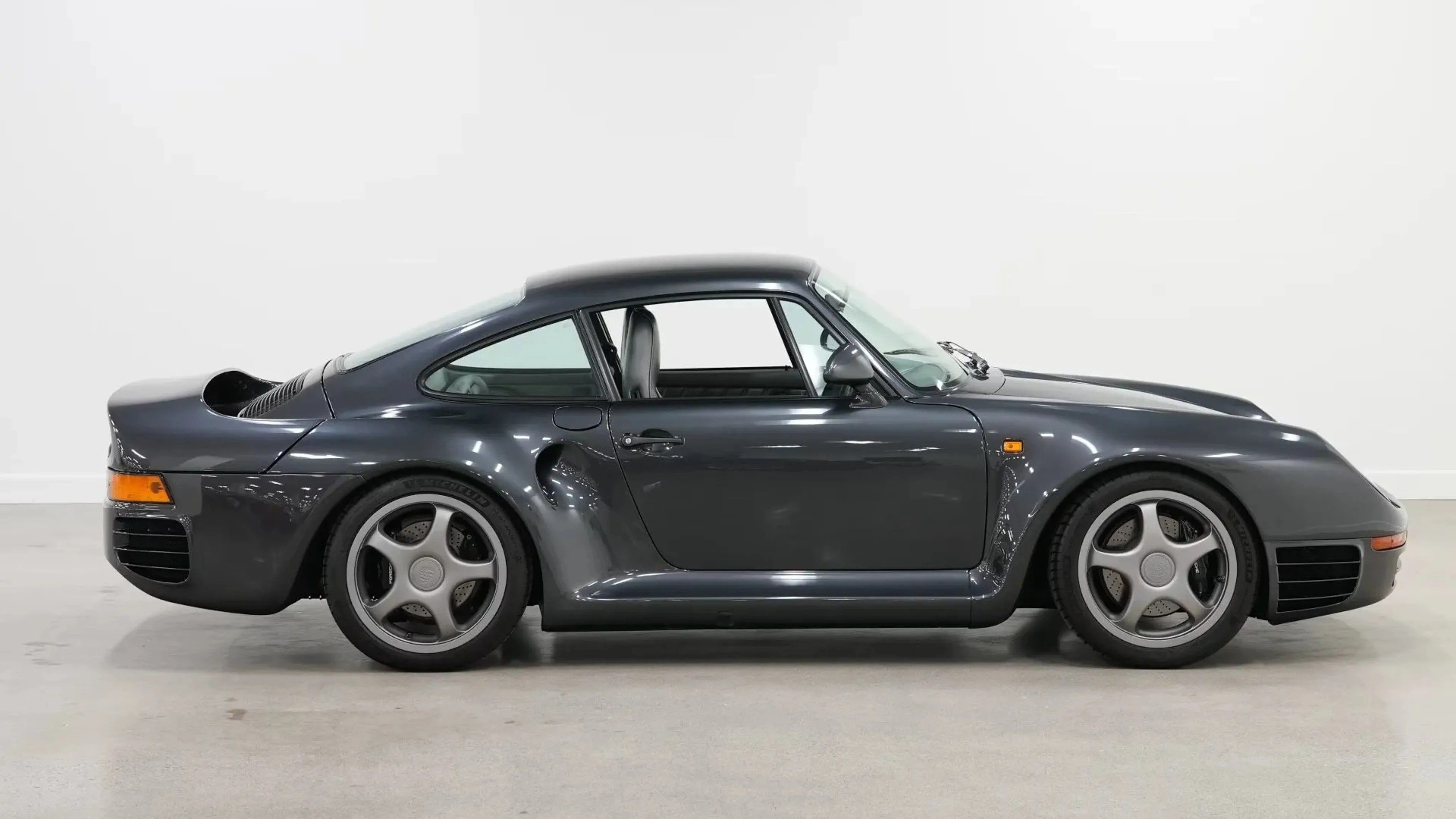
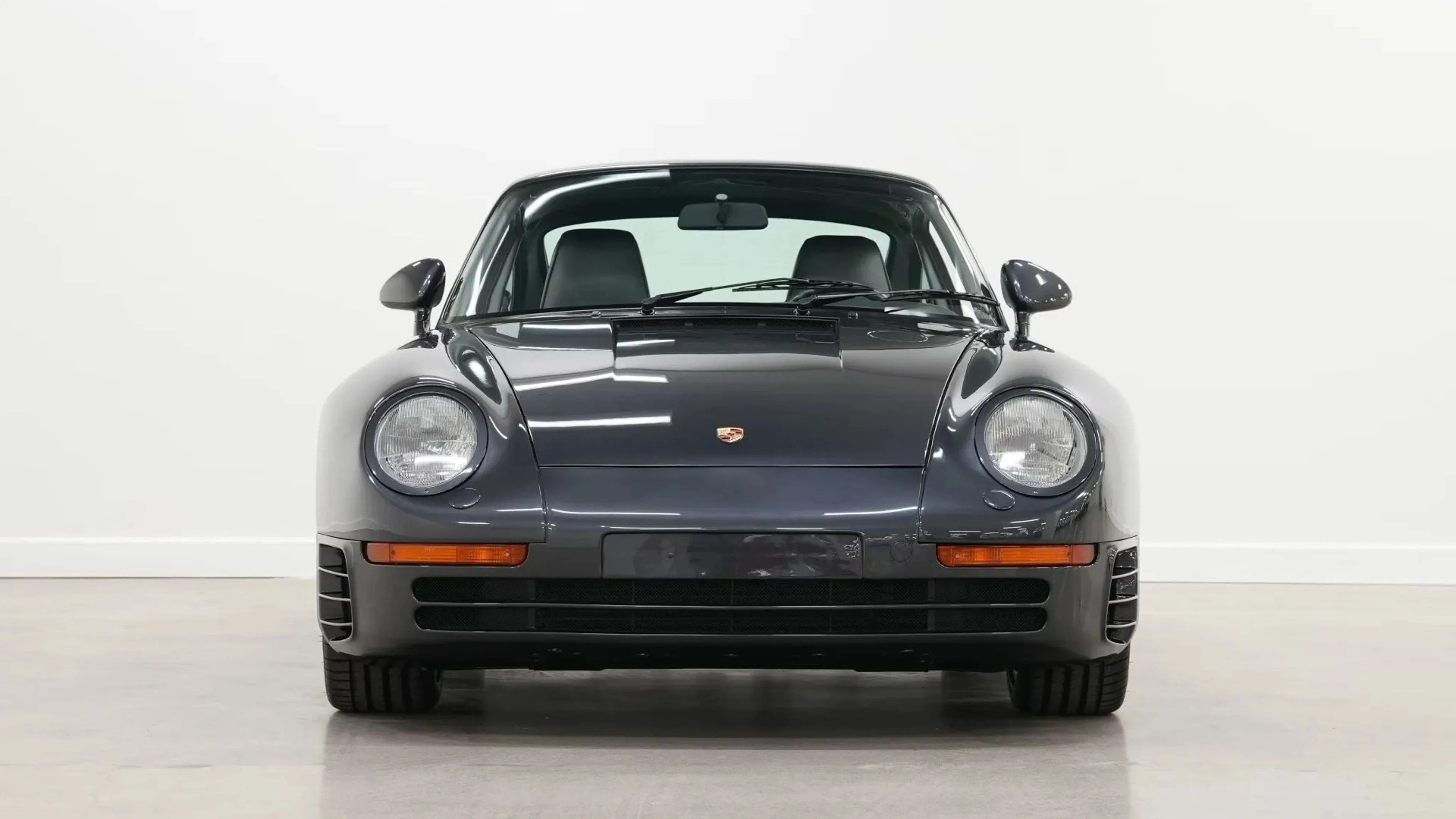
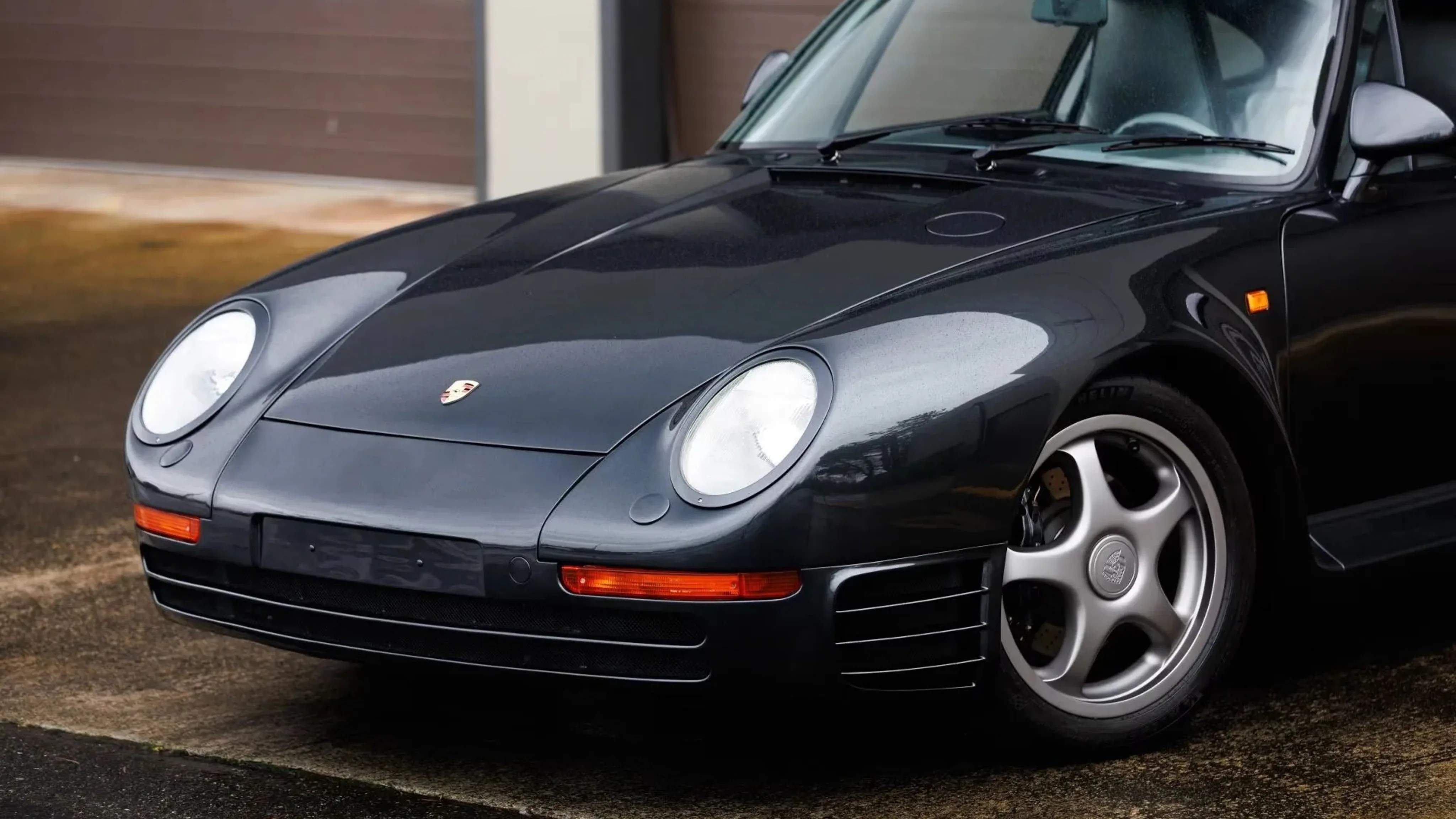
Front side of a black Porsche 959 sports car with round headlights and silver alloy wheels.Mecum

It’s not often when an elusive piece of moving art and engineering like the Porsche 959 hits the used car market. Even in today’s BringATrailer culture and the insane world of high-dollar collector car trading.

That’s because the 959 is more than just an extremely low-production, record-breaking supercar from the 1980s. Rather, it’s a downright legend.

Which is why the latest example to hit Mecum’s auction lot has us absolutely stopped in our tracks. And drooling over our keyb o ar…sddsds (oops).

The most legendary modern Porsche of all time
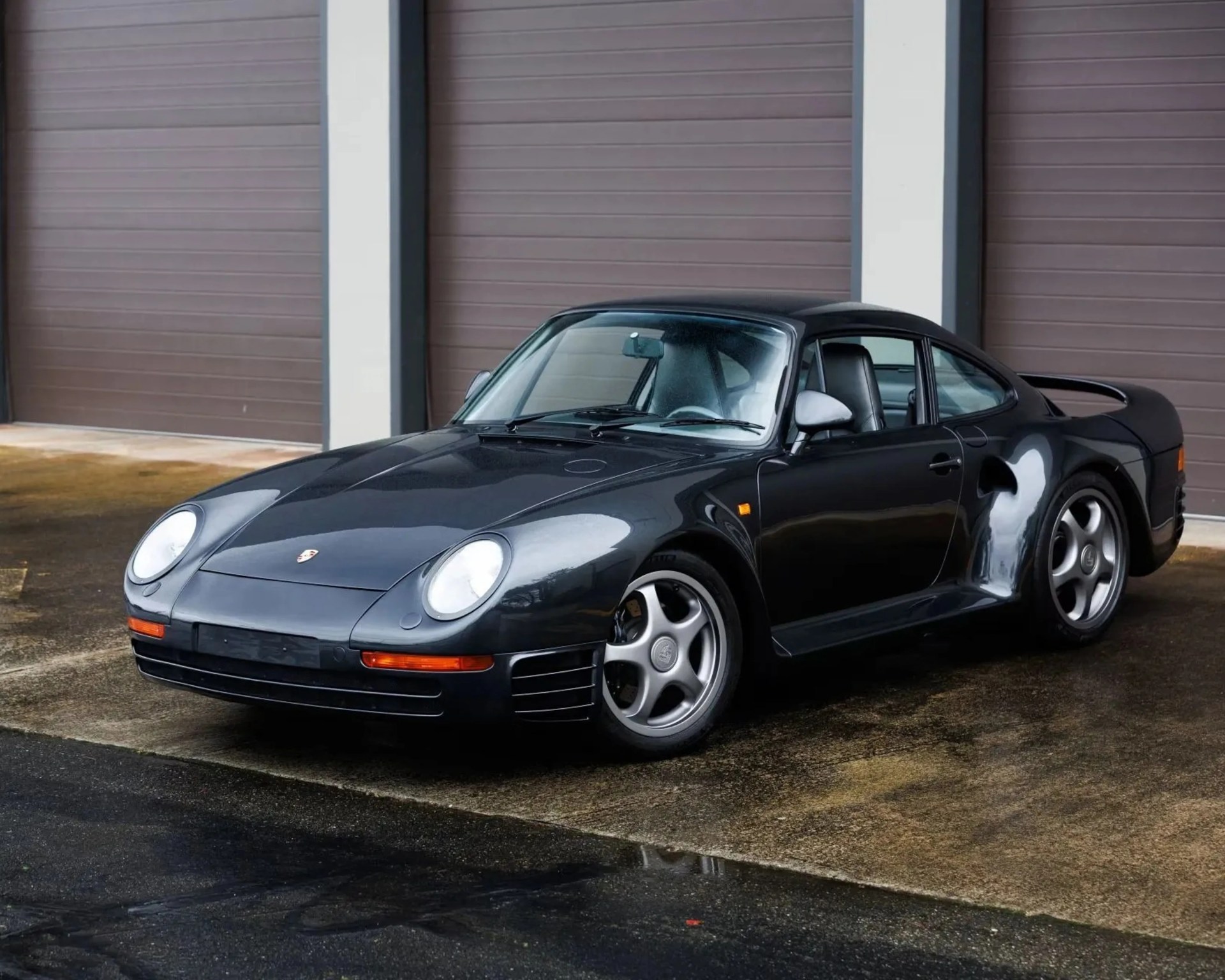
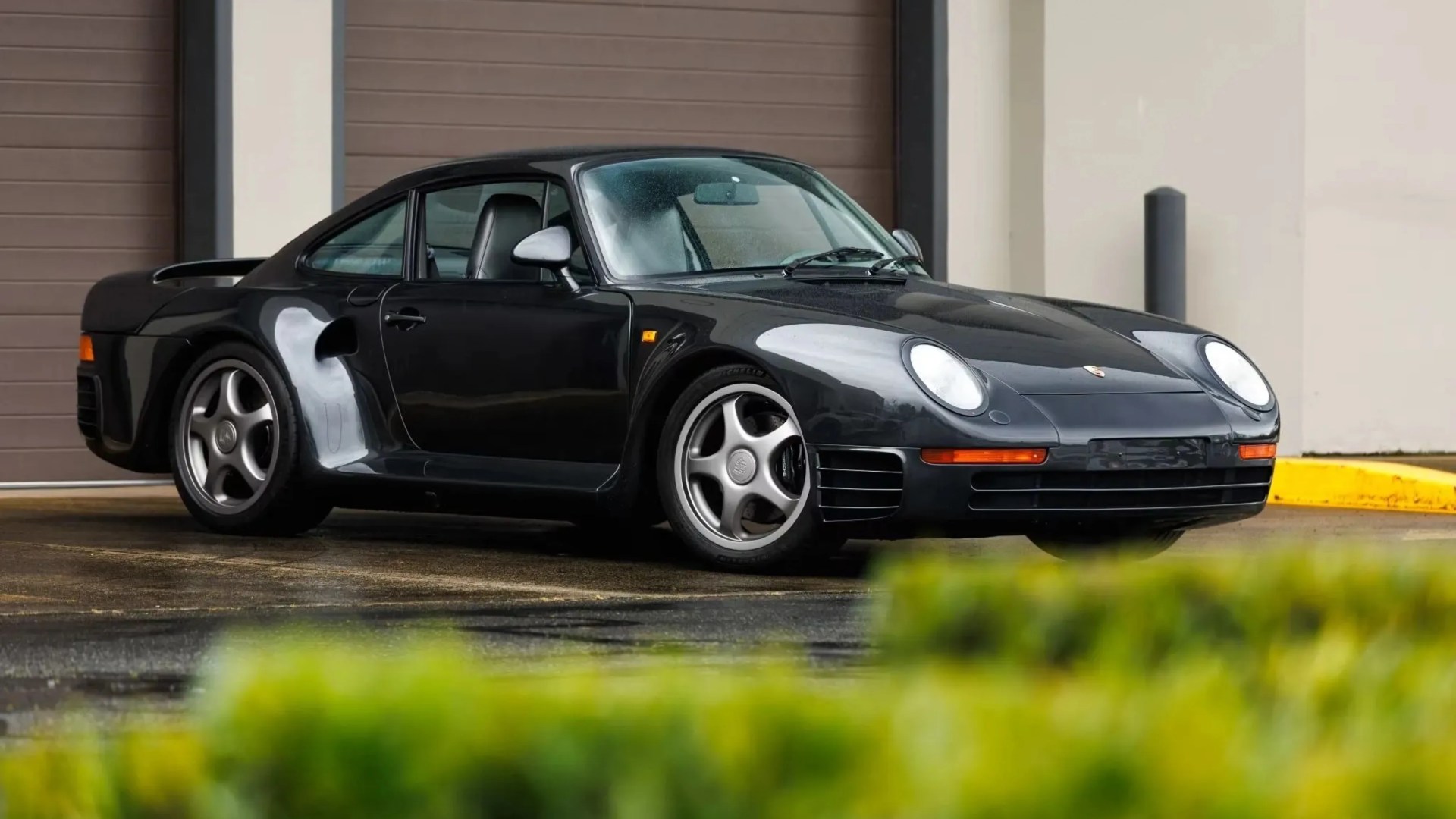
Black Porsche 959 sports car parked on wet pavement in front of closed brown garage doors.
The Porsche 959 is the rarest of the rare and it’s always a major occasion when one pops up on the second-hand market, particularly in the US.
Mecum

In the world of mythical high-performance cars, very few are as fabled as the Porsche 959. But its allure isn’t just due to how fast it was back in the day or even its rarity (though both qualities certainly helped define the 959’s overall story).

Rather, the lore behind the 959 goes way beyond its performance and straight to its origins and how unattainable it was (and still is). The 959’s influence is borderline immeasurable, not just for Porsche but also for the automotive world in general.
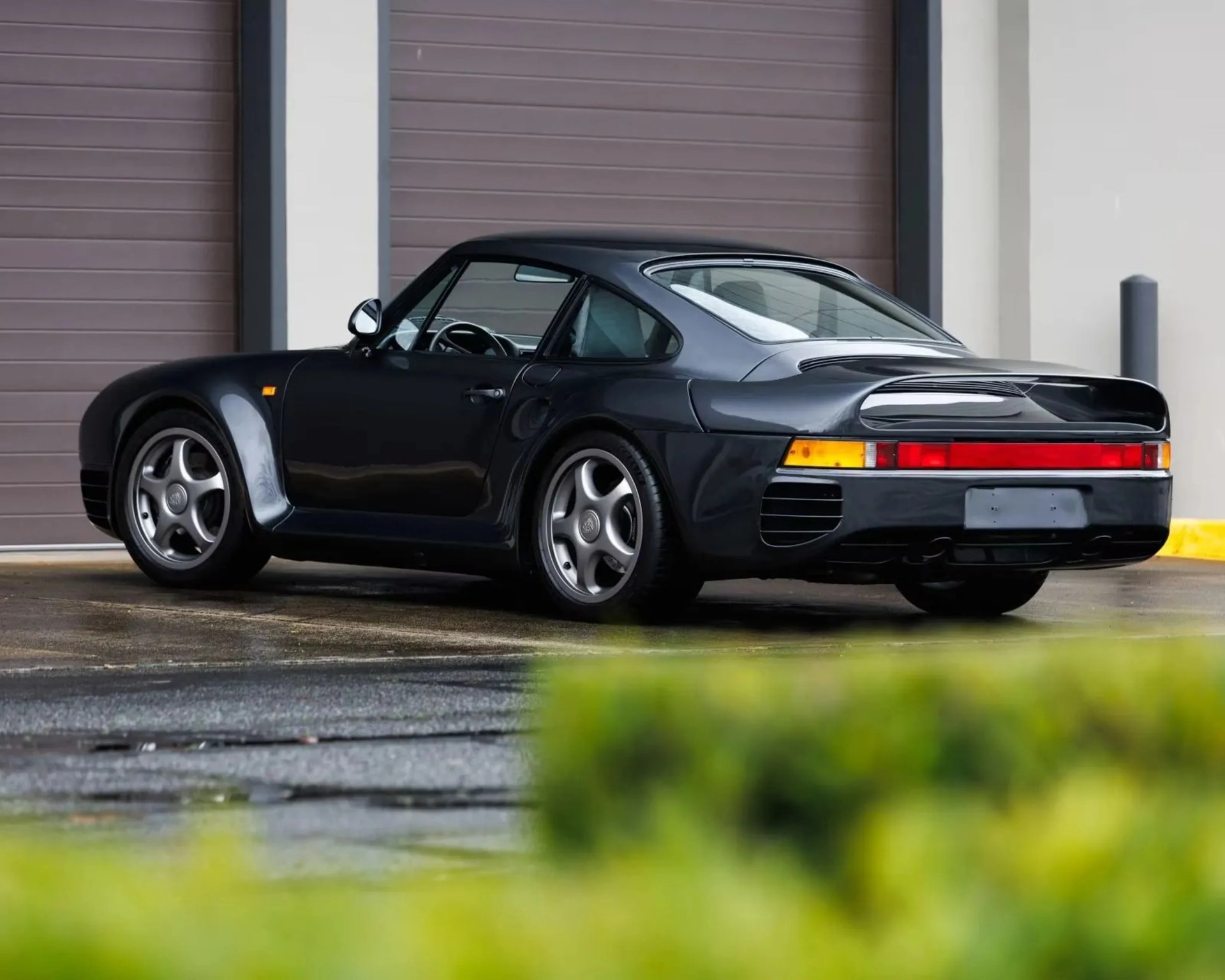
The 959 was an absolute technological tour de force. It proved that motorsports-grade performance, luxury car-like comfort and everyday drivability could all coexist in one package. And it did so in a way that was unlike anything that preceded it.

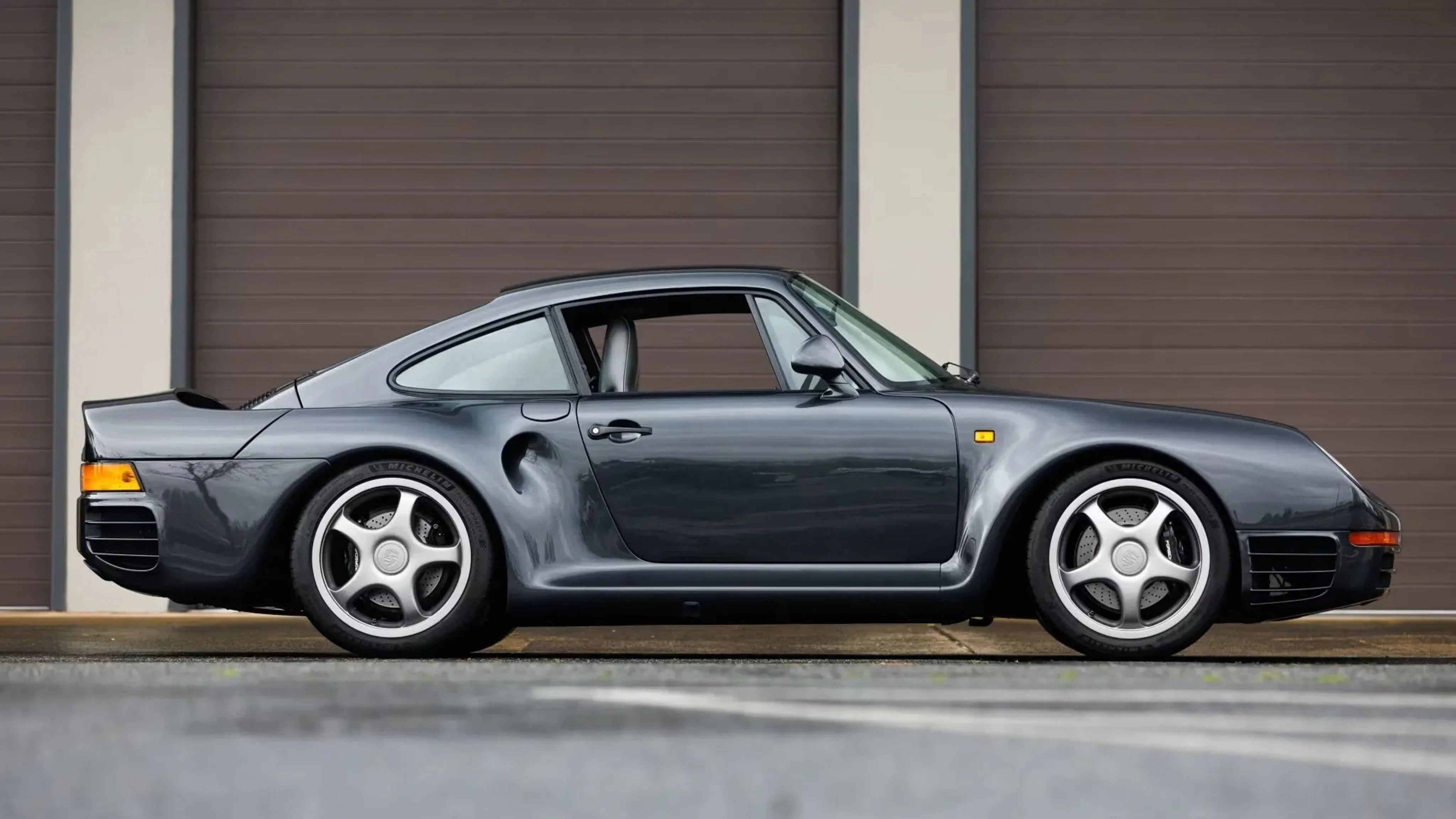
Black Porsche 959 sports car parked in front of a closed garage door.
Only 262 road-legal 959s were ever produced, and this is one of those examples.
Mecum

The 959 set the record as the world’s fastest street-legal production car at the time, with top speed runs hitting 197 and 211 mph. During its heyday, it was also heralded as one of the most technologically advanced cars ever made.

The 959 laid the groundwork for what would eventually become today’s 911 Turbo. It also convinced engineers to make all-wheel drive an engineering staple of the model.

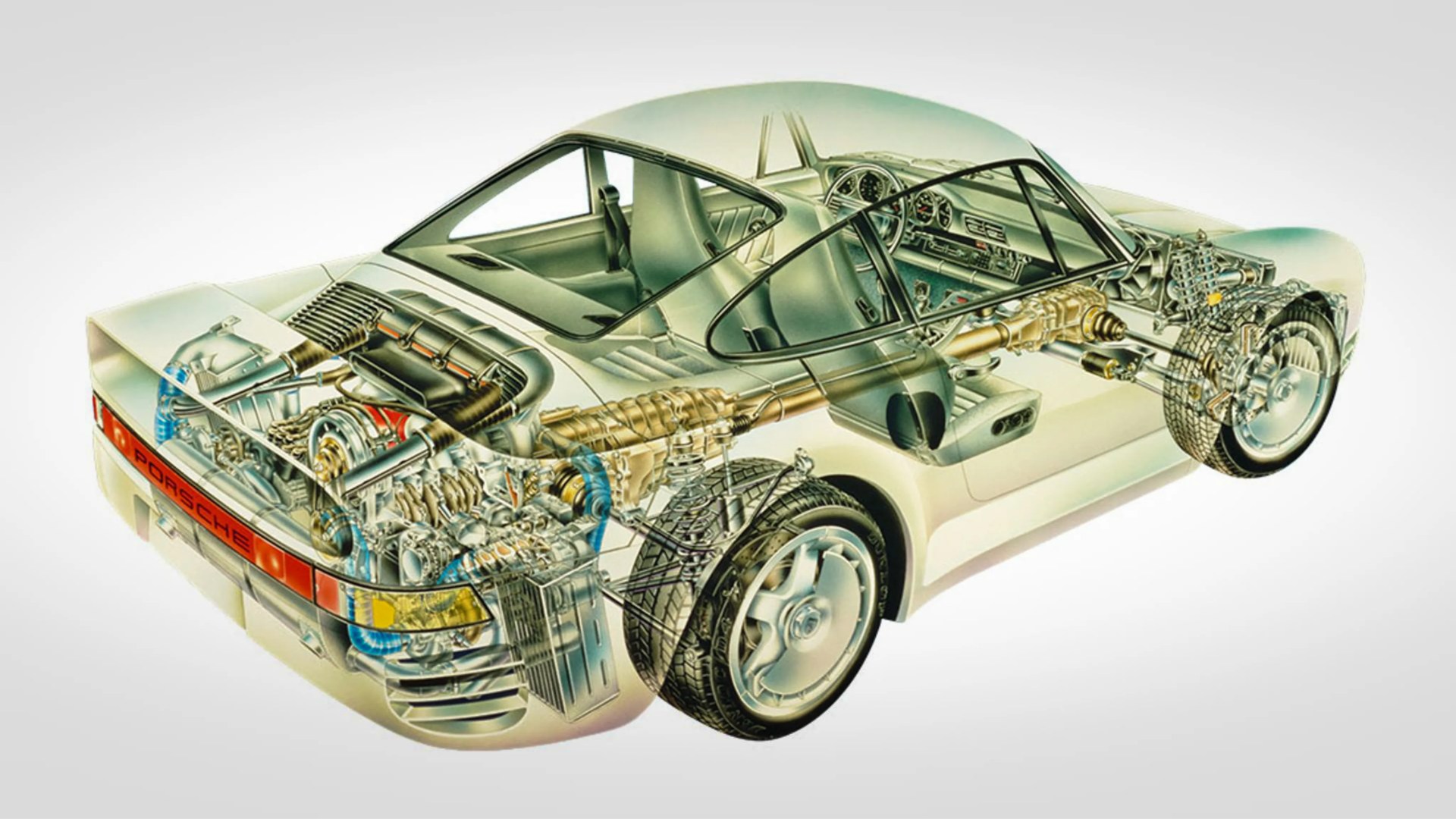
Cutaway illustration of a white Porsche sports car showing internal engine, transmission, suspension, and interior details.
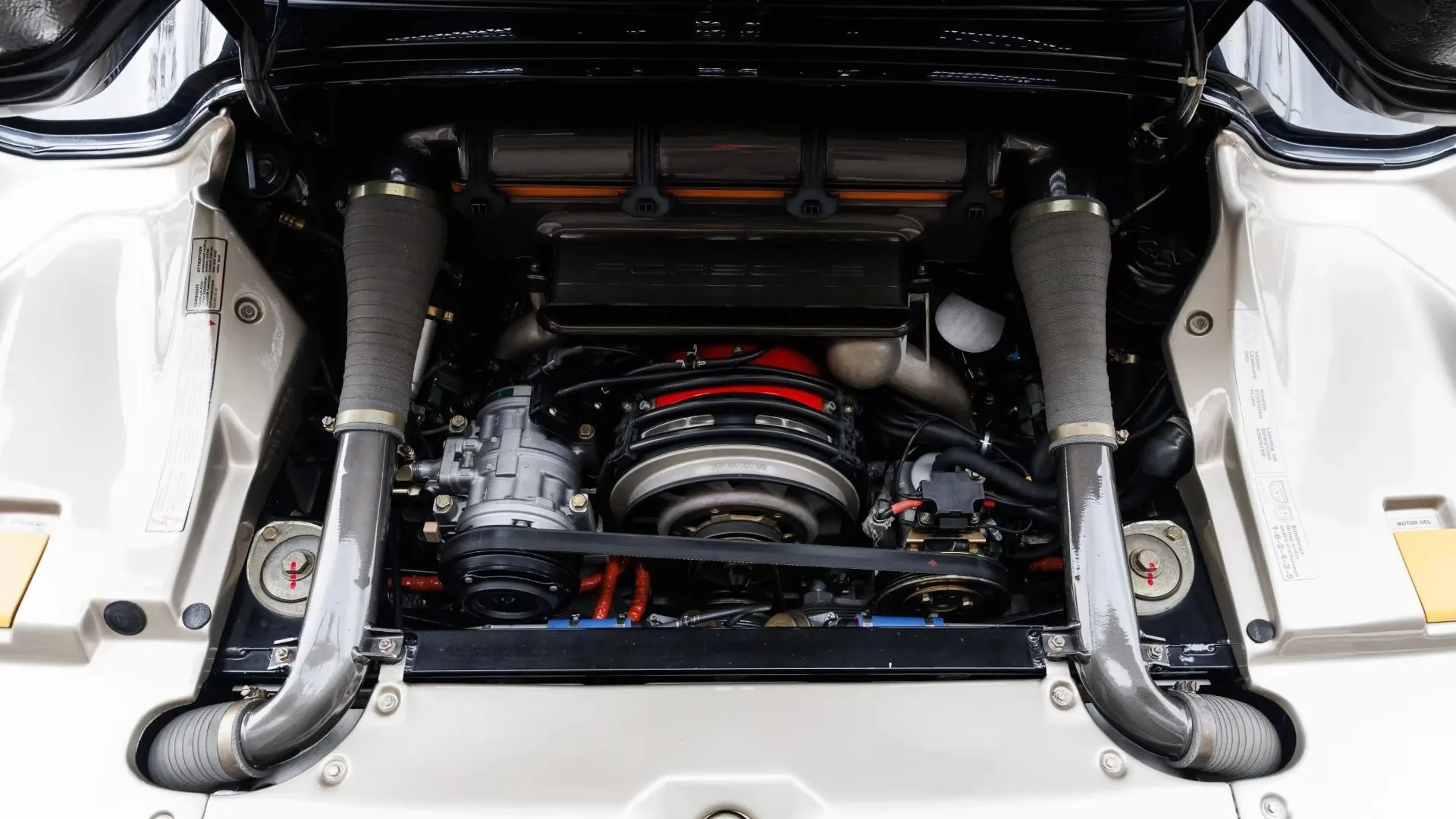
In addition to being the world’s fastest road-legal production car during its heyday, the Porsche 959 was also an engineering masterpiece.
Porsche

The 959 pioneered the use of complex and exotic materials, all to save weight without sacrificing structural rigidity. It was one of the first cars to feature suspension with electronically adjustable ride height and microprocessor-controlled ABS.

It also was the first to feature an electronic tire pressure monitering system. And, its all-wheel-drive system was so advanced, it served as inspiration for almost every performance-driven system that came after it.

Still, the 959’s legendary status didn’t just come from its limited production and as an ultimate expression of Porsche’s innovation.

Bred from motorsports

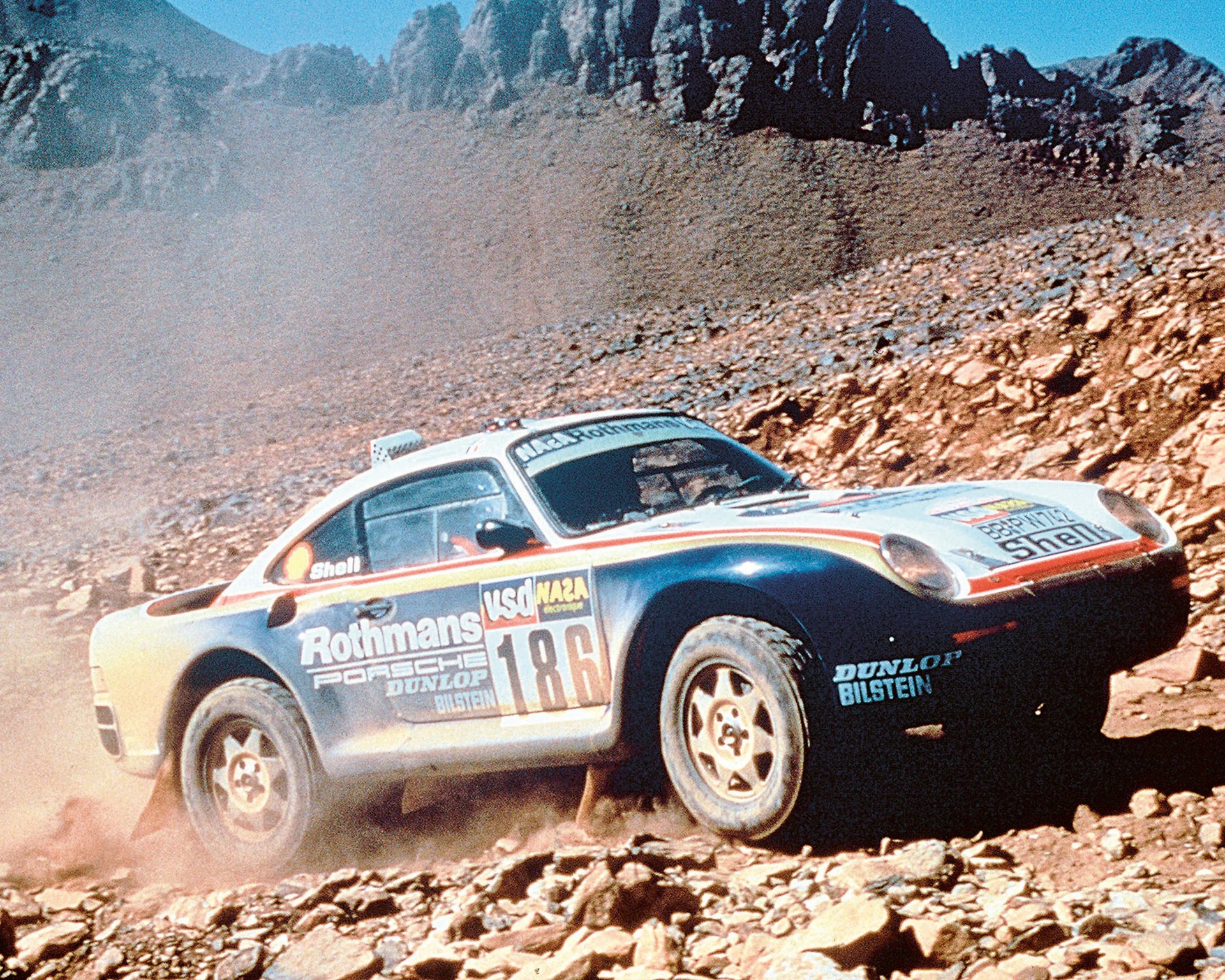
White and blue Rothmans Porsche rally car with number 186 driving on rocky terrain.
The Porsche 959 came to life as part of the automaker’s push to qualify and compete in the legendary Group B World Rally Championship series in the 1980s.
Porsche

Consider the context. The world was still healing from the 1973 Oil Crisis. The arrival of digital computerization and massive technological innovation took the automotive world by storm, leading to unprecedented performance gains.

The World Rally Championship exploded in popularity through the 1970s and 1980s as one of the world’s most prestigious motorsports events. Thus, automakers like Porsche took to the competition to show off their latest performance benchmarks.

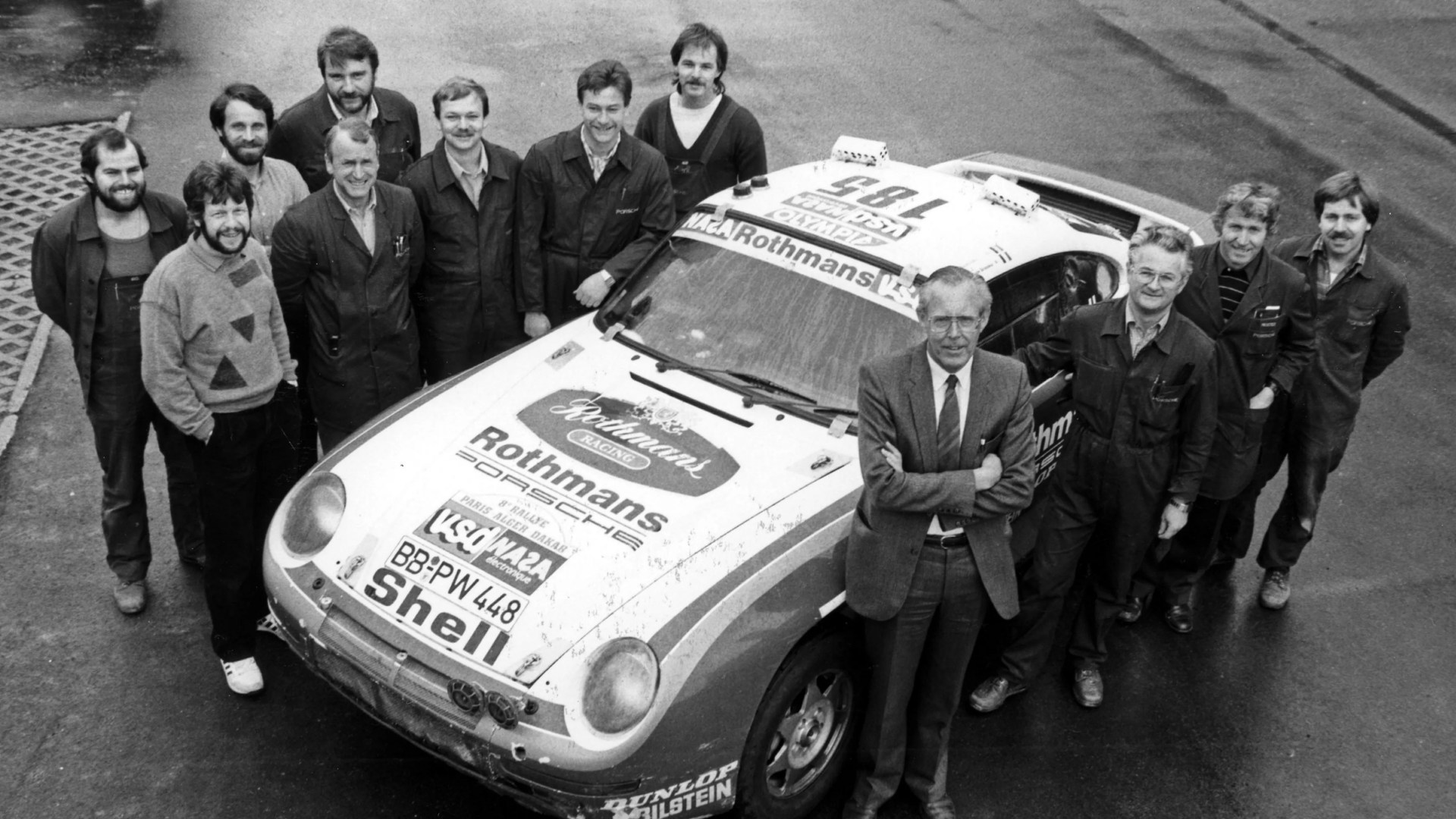
Group of men standing around a vintage Rothmans Porsche race car with racing decals and sponsor logos.
The Porsche 959 is hands down one of the era’s and history’s most definitive automotive heroes.
Porsche

But in order to participate, while raising the stakes, the WRC’s FIA governing body introduced a new set of rules, known as Group B, in 1982. Said homologation requirements mandated that carmakers manufacture at least 200 road-legal production units of their purpose-built competition machines in order to qualify for the league.

Group B rules led to one of the greatest eras in WRC history. It also resulted in the creation of some of the world’s most iconic performance machines. The Porsche 959 was one of them.

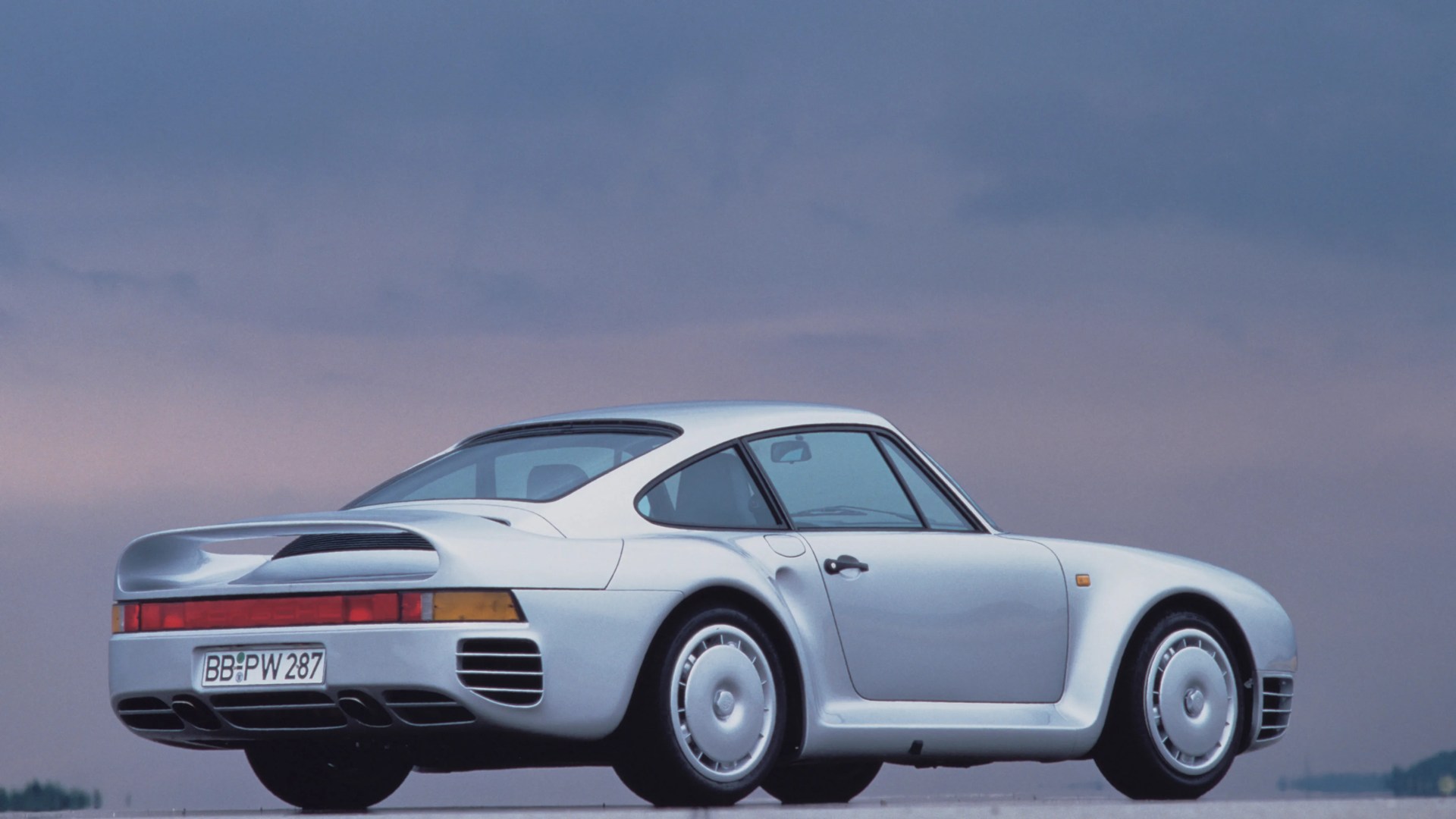
Silver Porsche 959 sports car viewed from the rear side against a dusky sky.
Prior to the 959, no other car existed and packaged all of its attributes like it.
Porsche

Porsche did get a chance to compete in some satellite races as part of the 959’s R&D stages. But before Porsche could even fully compete, FIA cancelled the Group B regulations in 1987, forcing its withdrawal from the series altogether.

And the automaker was left with a project that didn’t truly and deservedly get the chance to shine. However, that didn’t mean Porsche threw in the towel.

Outlawed in America

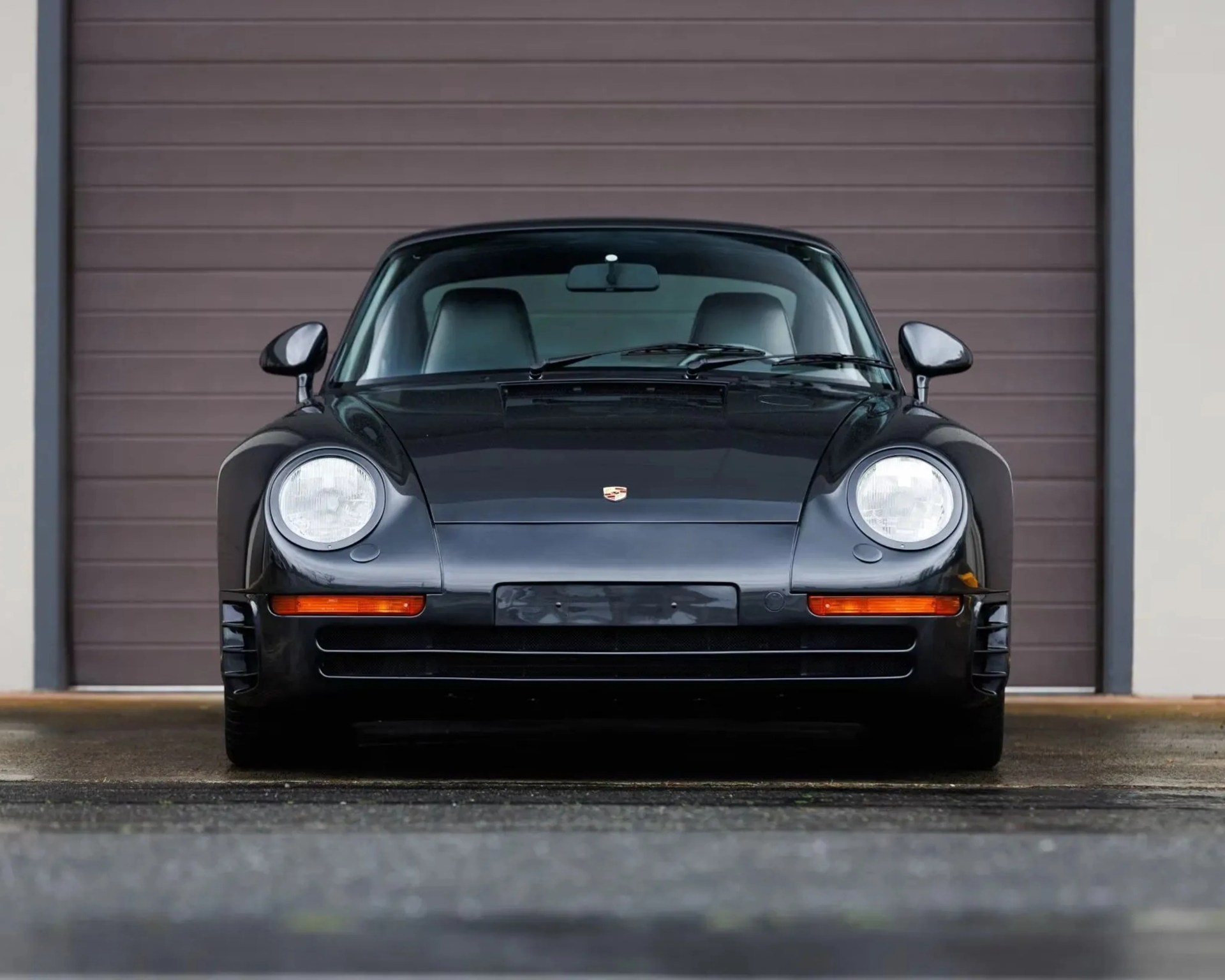
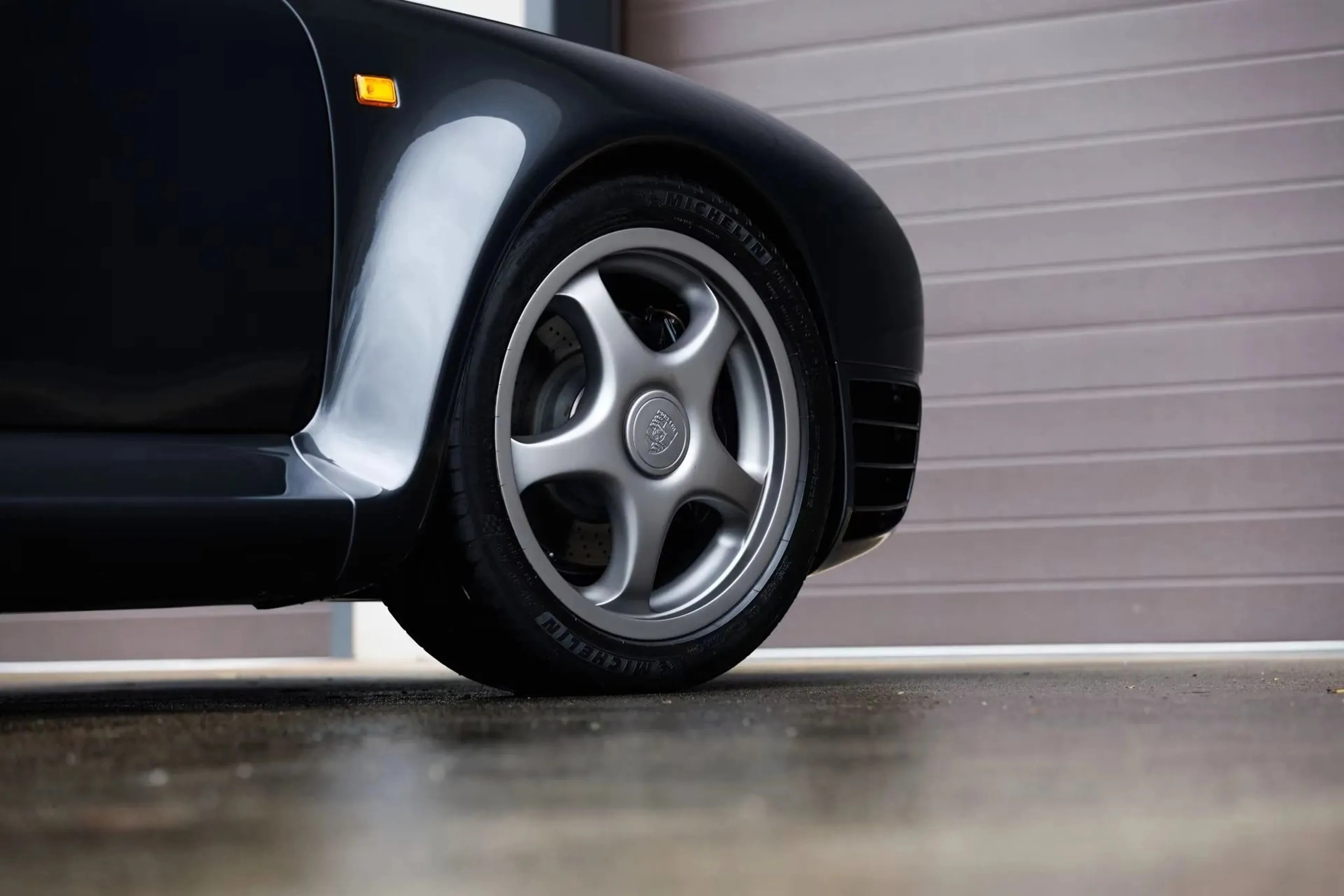
Front view of a black Porsche sports car parked in front of a closed brown garage door.
This example is one of the few 959s imported in to the US legally.
Mecum

Porsche began developing the 959 in 1983 with the intent to produce road-going versions by 1985, all so that the 959 could compete in Group B in the following years.

But because FIA cancelled Group B in 1987, the 959 program essentially stopped in its tracks. The whole purpose of its existence came to an end. Porsche also experienced developmental setbacks, leading to unforeseen production delays. Thus, customer deliveries didn’t commence until late 1987.

Because the 959 was so technologically advanced and groundbreaking, on top of being a racecar adapted for the road, it commanded serious money. Or more specifically, 431,550 Deutsche Mark, or the then-equivalent of $225,000 (in 1987!).

Just for comparative purposes, with inflation, that equates to $637,826 today. And my Mercedes-Benz 560SEL from the same year stamped its window sticker at $65,400.

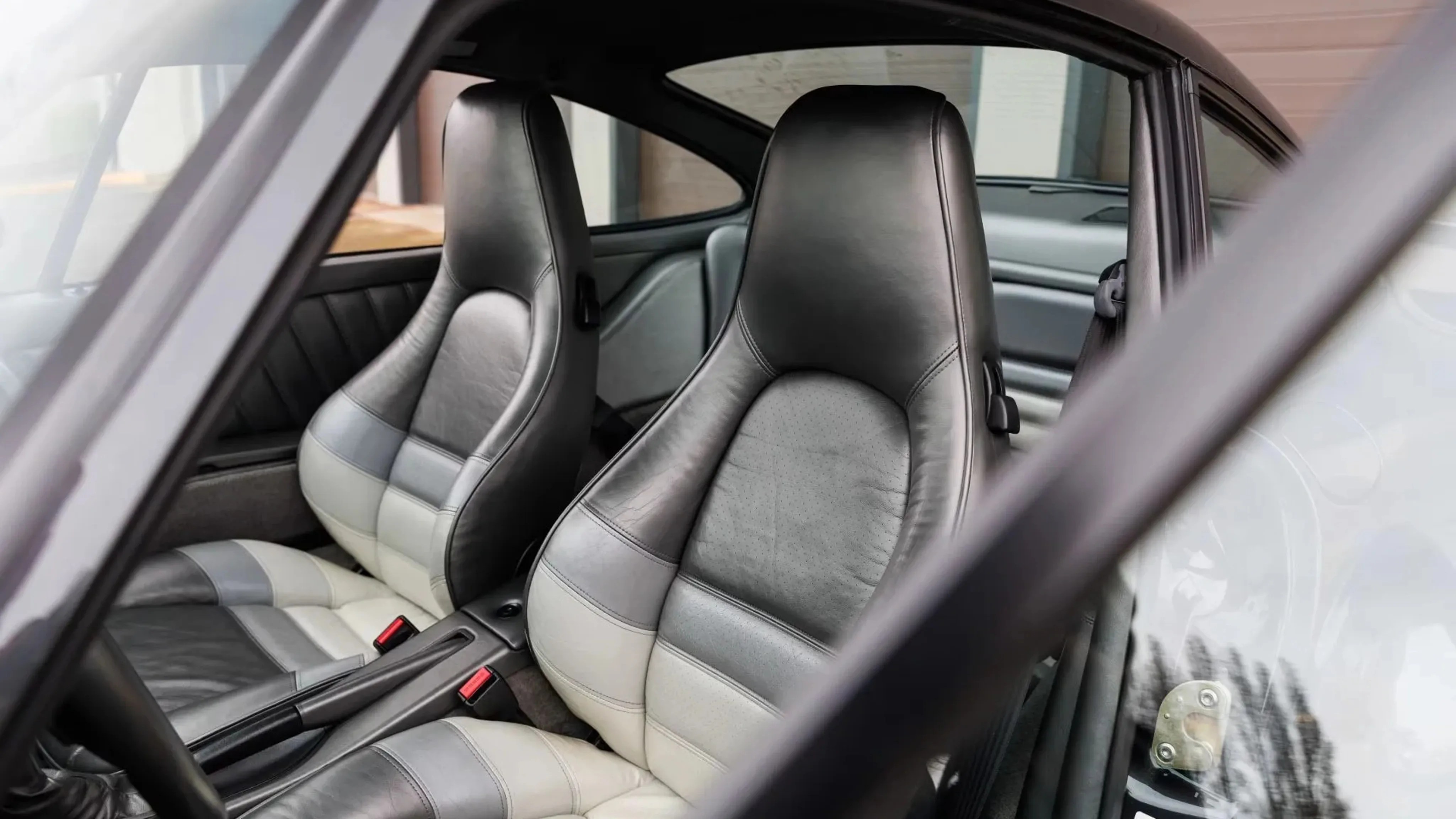
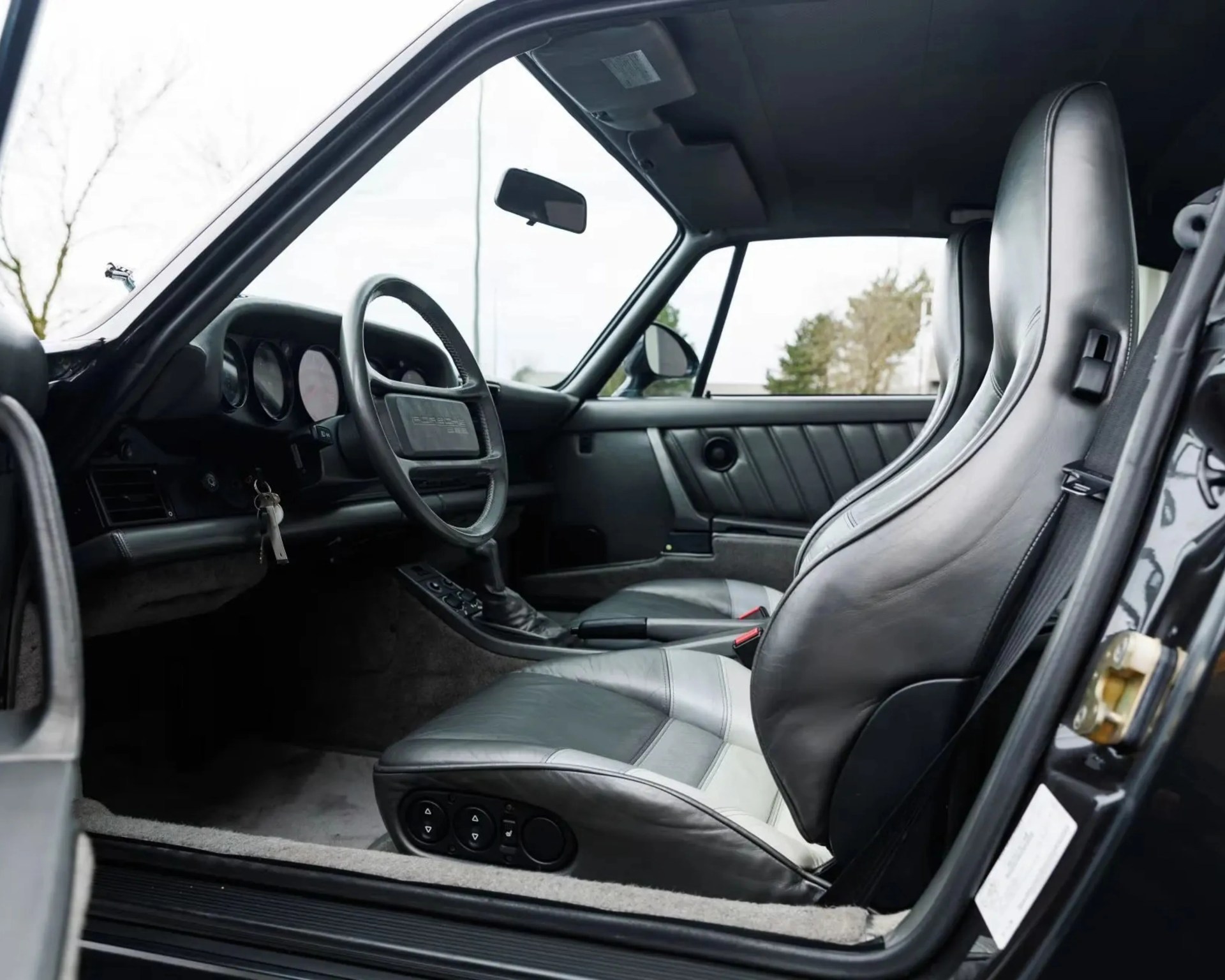
Black and gray leather bucket seats inside a classic car with a black steering wheel and dashboard.
The 959 is essentially a Porsche 964 on seriously heavy dose of steroids, which is why the interior looks very 911-like.
Mecum

Because it was so costly to develop and produce, Porsche decided to crash-test the 959 only to meet European compliance. The unfavorable exchange rates between the Deutsche Mark and the US Dollar also made further crash tests of the 959 outrageously expensive. Thus, it did not qualify for America’s safety standards per the National Highway Traffic Safety Administration.

This was because Porsche projected to lose a whopping $200,000 (again, 1987 money) for every road-going 959 produced. And because the NHTSA had just passed the Imported Vehicle Safety Compliance Act in 1988, which the 959 didn’t qualify for, the 959 was simply banned from sale in the US.

Very few made it to the States under special circumstances

Black Porsche 959 sports car parked on wet pavement in front of a brown garage door.
The United States banned the Porsche 959 from sale when new because it was not certified for federal crash safety compliance at the time.
Mecum

Because the US outright outlawed the 959, it was made only more tempting. It was the fastest road-legal production car ever made and everyone with money wanted one.

Only a very select few high-profile and wealthy customers managed to import examples, adding to the 959’s appeal. Bill Gates was one of them. He bought a 959 in 1988, but couldn’t fully import it into the States because of said federal regulations.

Instead, Gates’s 959 was withheld by U.S. Customs and stored for almost a decade before being released. Normally, the department crushes noncompliant import vehicles. But Gates managed to prevent that from happening.

Gates didn’t officially take possession of his 959 until the NHTSA enacted the “Show or Display” law in 1999.

A potential auction record breaker

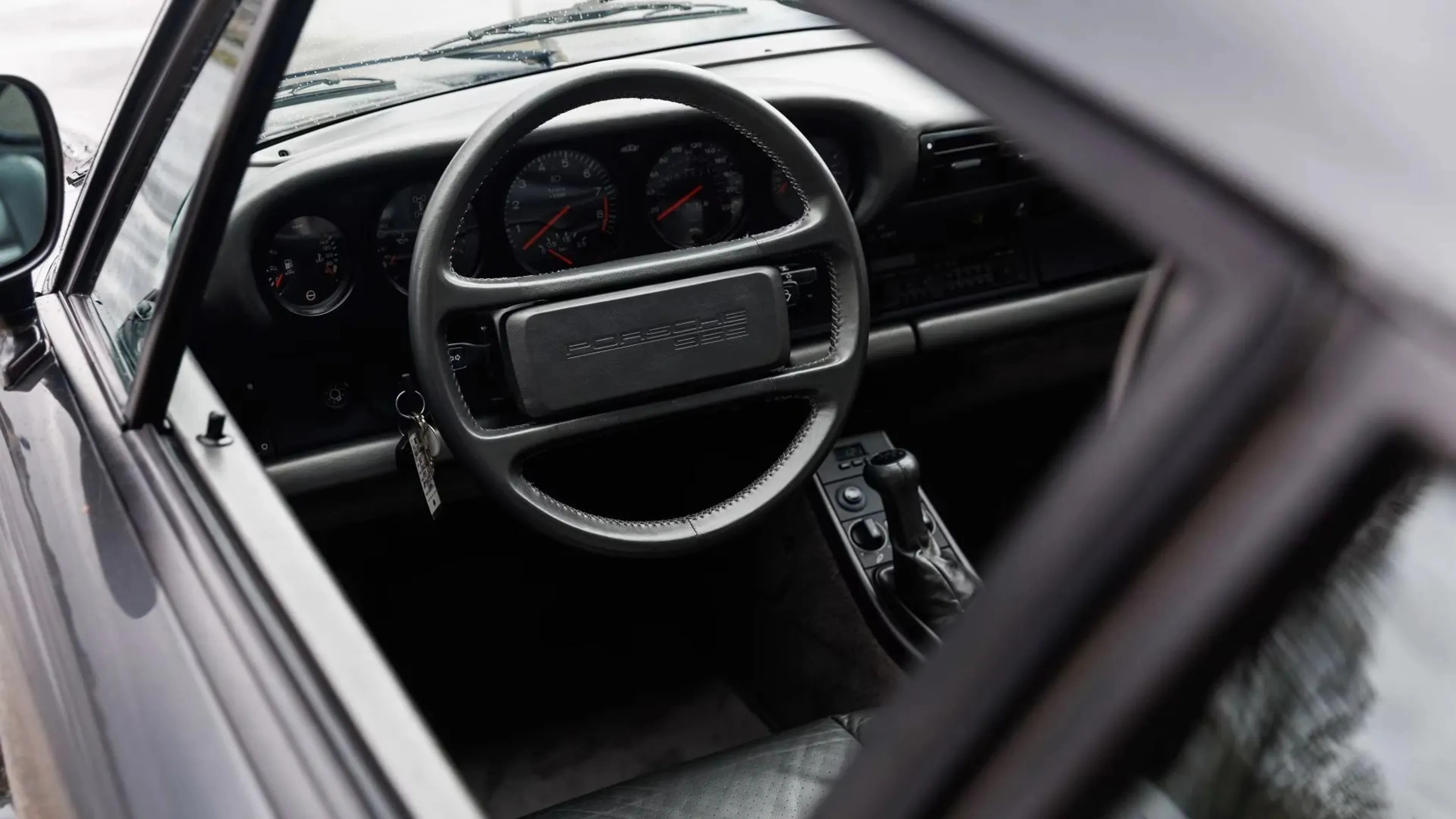
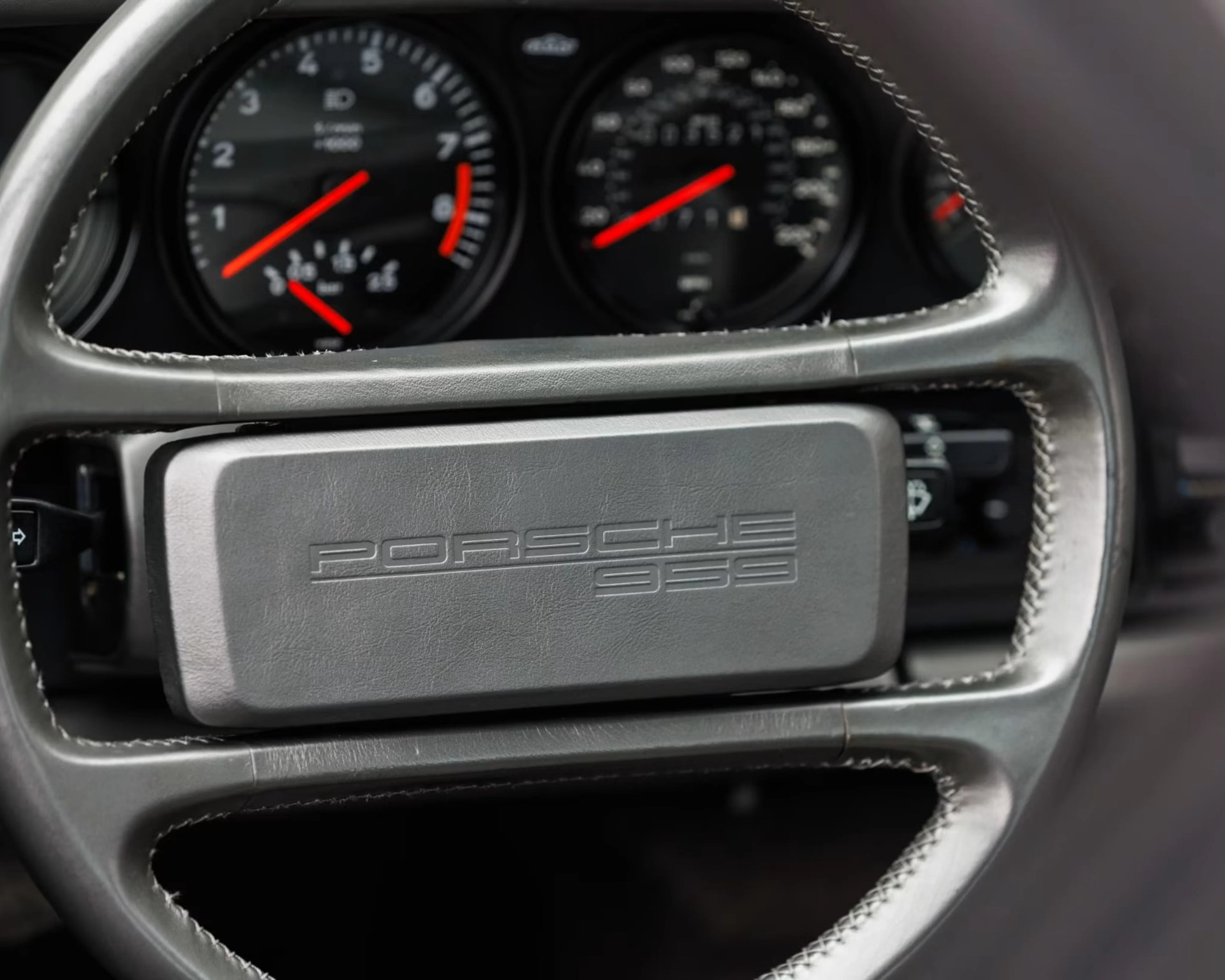
Gray leather steering wheel with "Porsche 959" embossed on the center airbag cover and red gauge needles in the background.
The Porsche 959 is arguably the pinnacle of when it comes to collectible models.
Mecum

This specific example heading to Mecum is one of 292 Porsche 959s and is of the “Komfort” specification. Porsche offered the 959 in two forms, with Komfort being the more road- and daily-friendly variant. The second option was the “Sport” specification, which was geared more towards track performance.

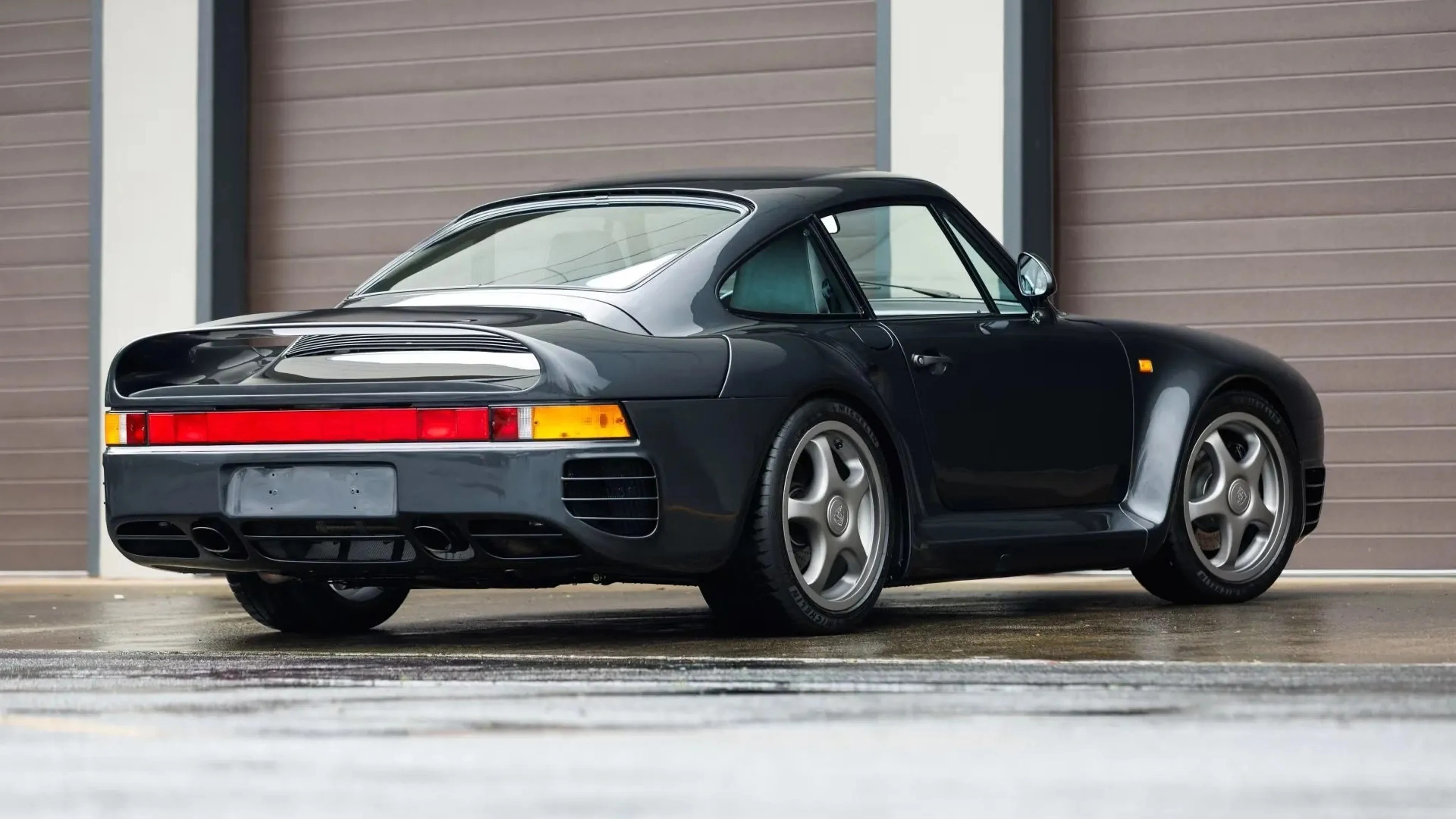
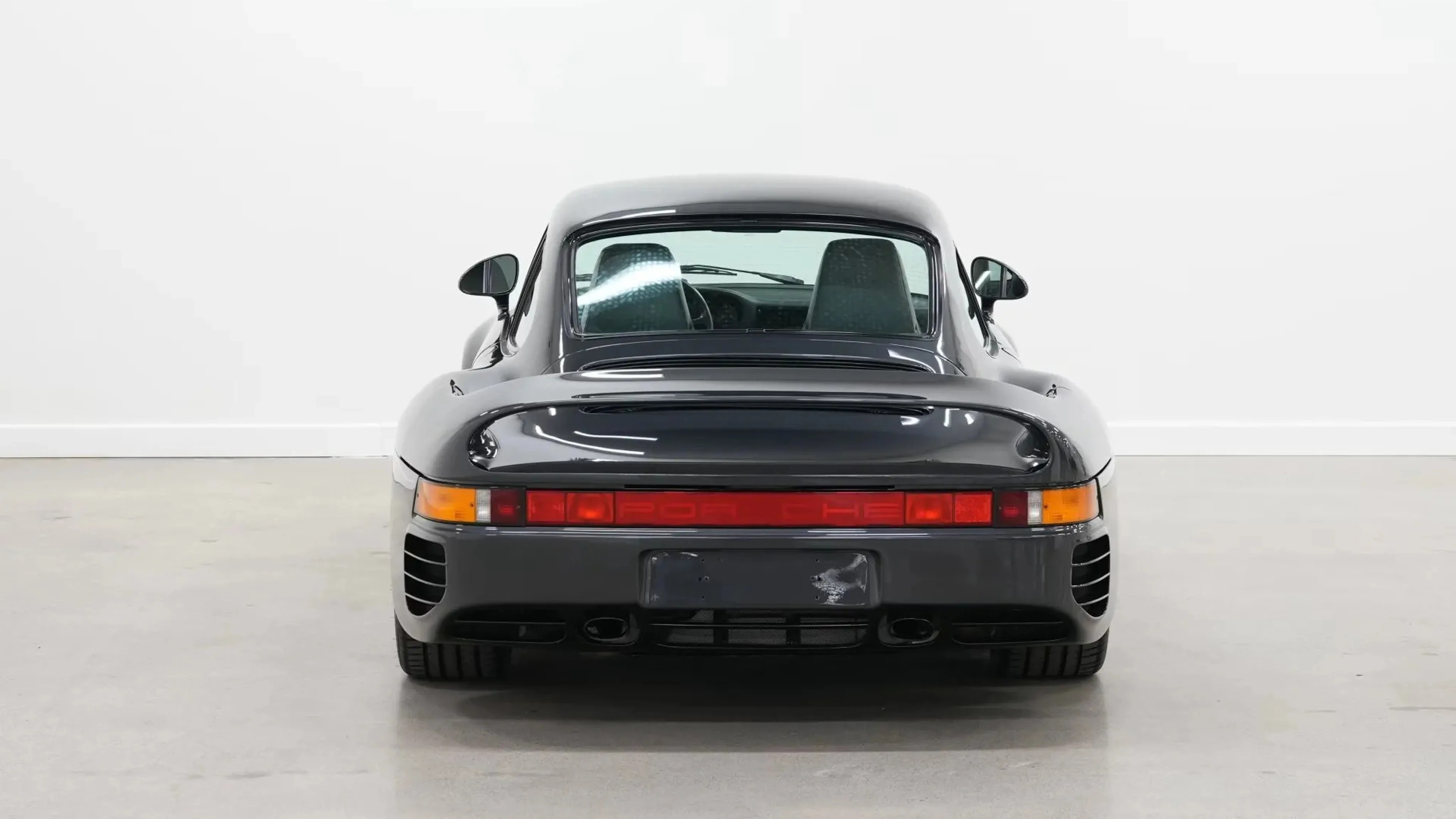
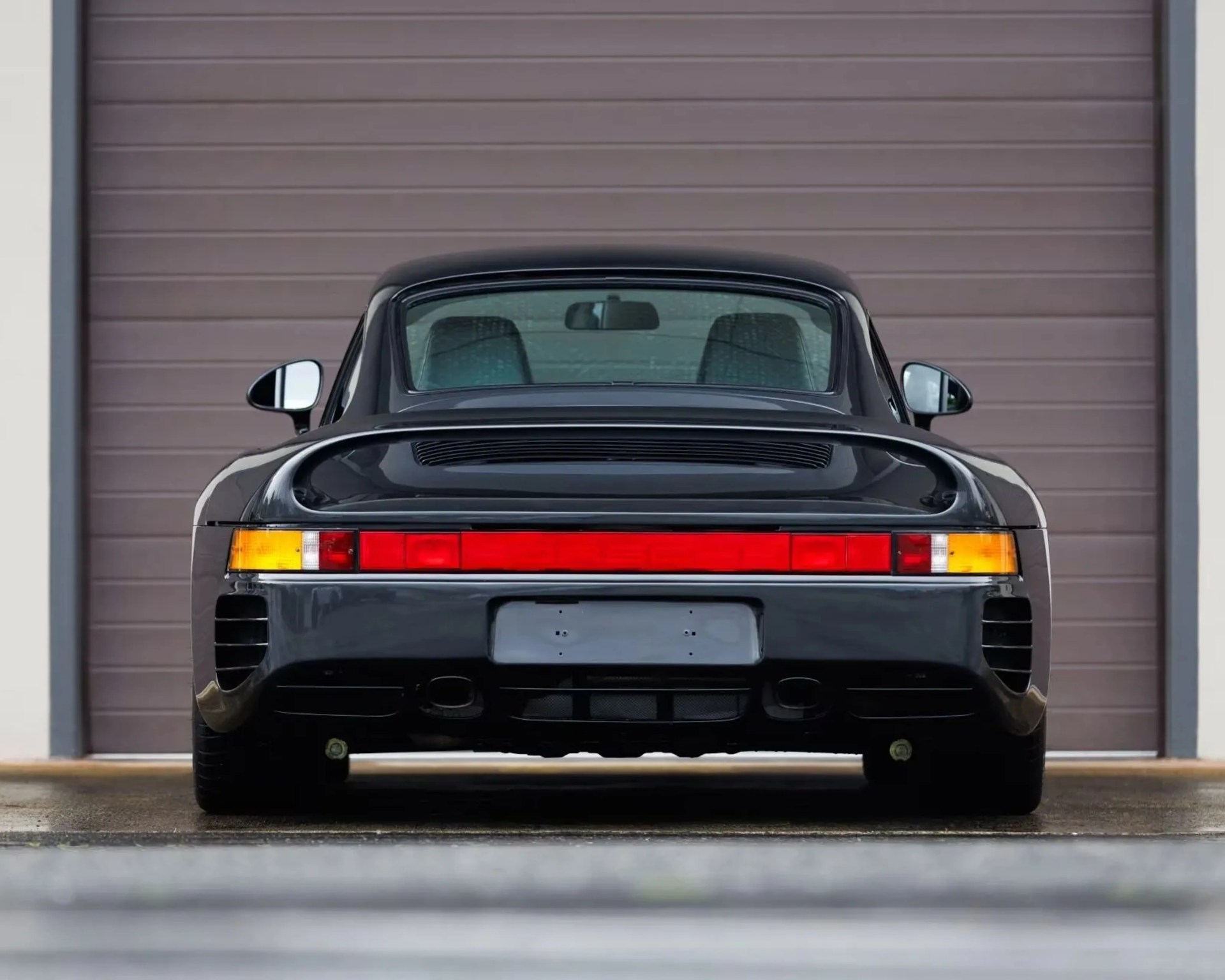
Rear view of a black Porsche 959 sports car with red taillights and dual exhausts in front of a closed garage door.
Speculation suggests this specific 959 could fetch well north of $2 million when the gavel slams down.
Mecum

With the 959 being much older than 25 years, its status as an automobile banned from US roads no longer holds. Still, that doesn’t make importing the car any easier to come by.

Mecum didn’t disclose any estimates. But speculation suggests this 3,521-mile example, complete with a Porsche Certificate of Authenticity, could fetch sale price well north of $2 million.

Want to stay up to date on the latest product news and releases? Add Gear Patrol as a preferred source to ensure our independent journalism makes it to the top of your Google search results.

add as a preferred source on google
,