
Toyota’s Hot Hatch Could Get Gains in This One Key Area

Because who will say no to a boost in cylinder count and power?

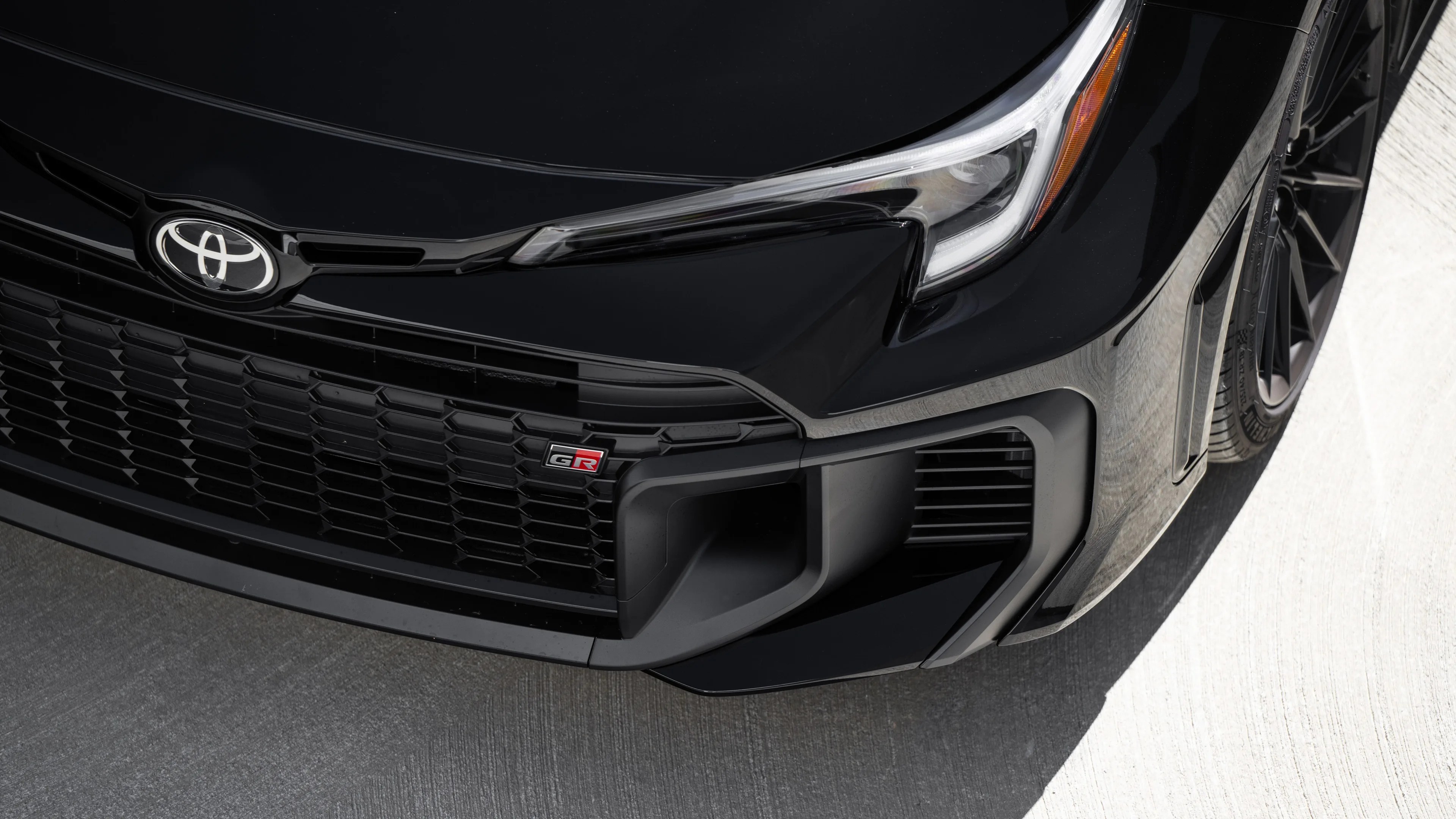
Close-up of the front grille and headlight of a black Toyota GR car with black alloy wheel on a concrete surface.Toyota

Toyota’s hot GR Corolla hatchback could be getting hotter. Speaking exclusively with MotorTrend, the Japanese automaker’s chief technology officer, Hiroki Nakjima, and powertrain chief, Takashi Uehara, said the new model could get a bigger engine.

But rather than increasing its bore and stroke, Toyota’s engineers are adding another cylinder. Currently, the GR Corolla delivers its impressive performance thanks to what could be described as a measly motorcycle engine: a turbocharged three-cylinder.

For the next-gen model, however, that three-cylinder could morph into a more potent four-cylinder.

‘Yota’s commitment to combustion
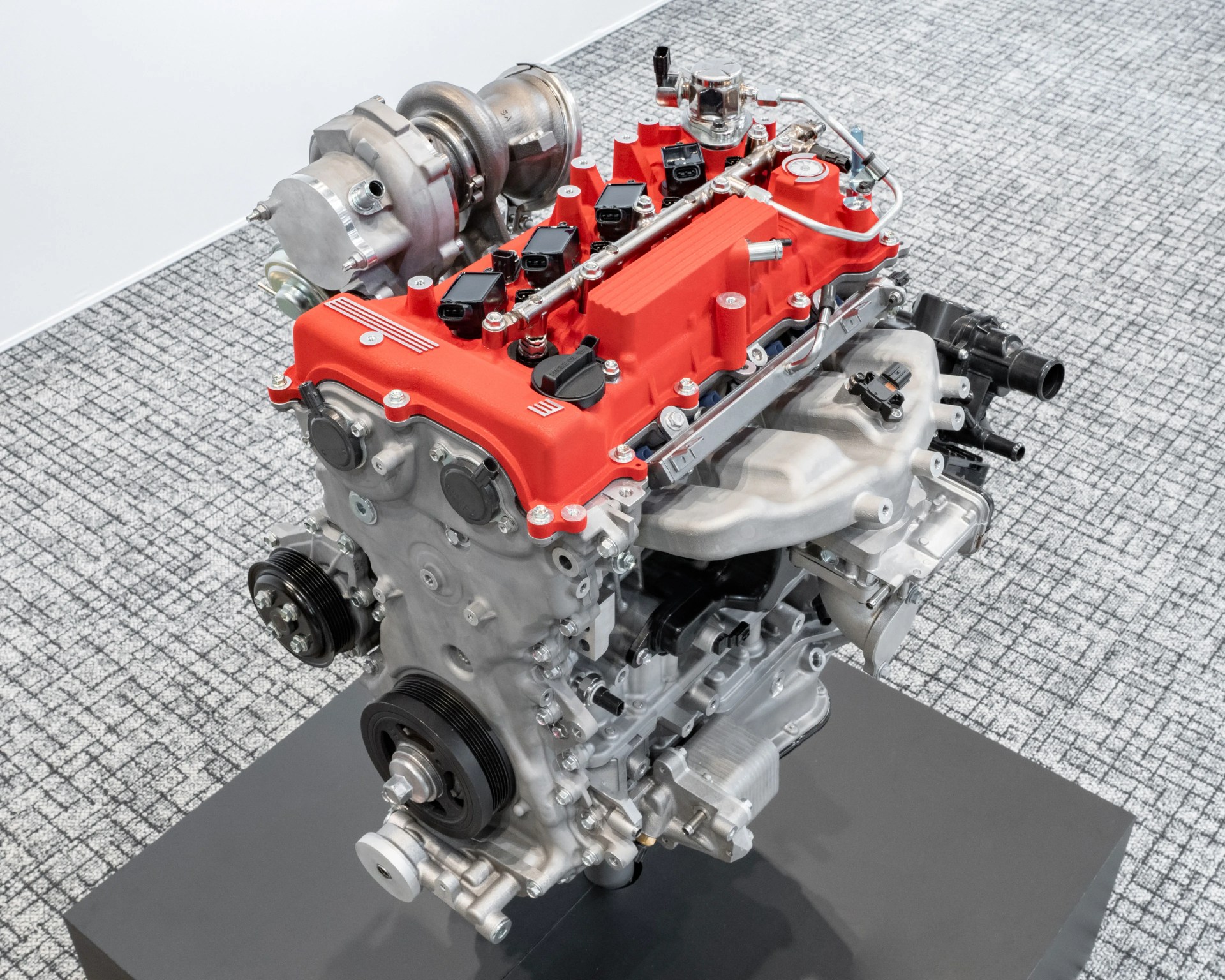
Silver car engine with a red valve cover and turbocharger mounted on a black platform.
Toyota’s new high-performance 2.0-liter turbo-four is part of a wide range of next-generation internal combustion engines, which are expected to power the company’s entire lineup.
Toyota

It’s no mystery that Toyota has been working on a new next-generation high-performance turbocharged four-cylinder. The automaker teased the engine when it revealed its mid-engine GR Yaris-based test mule last year.
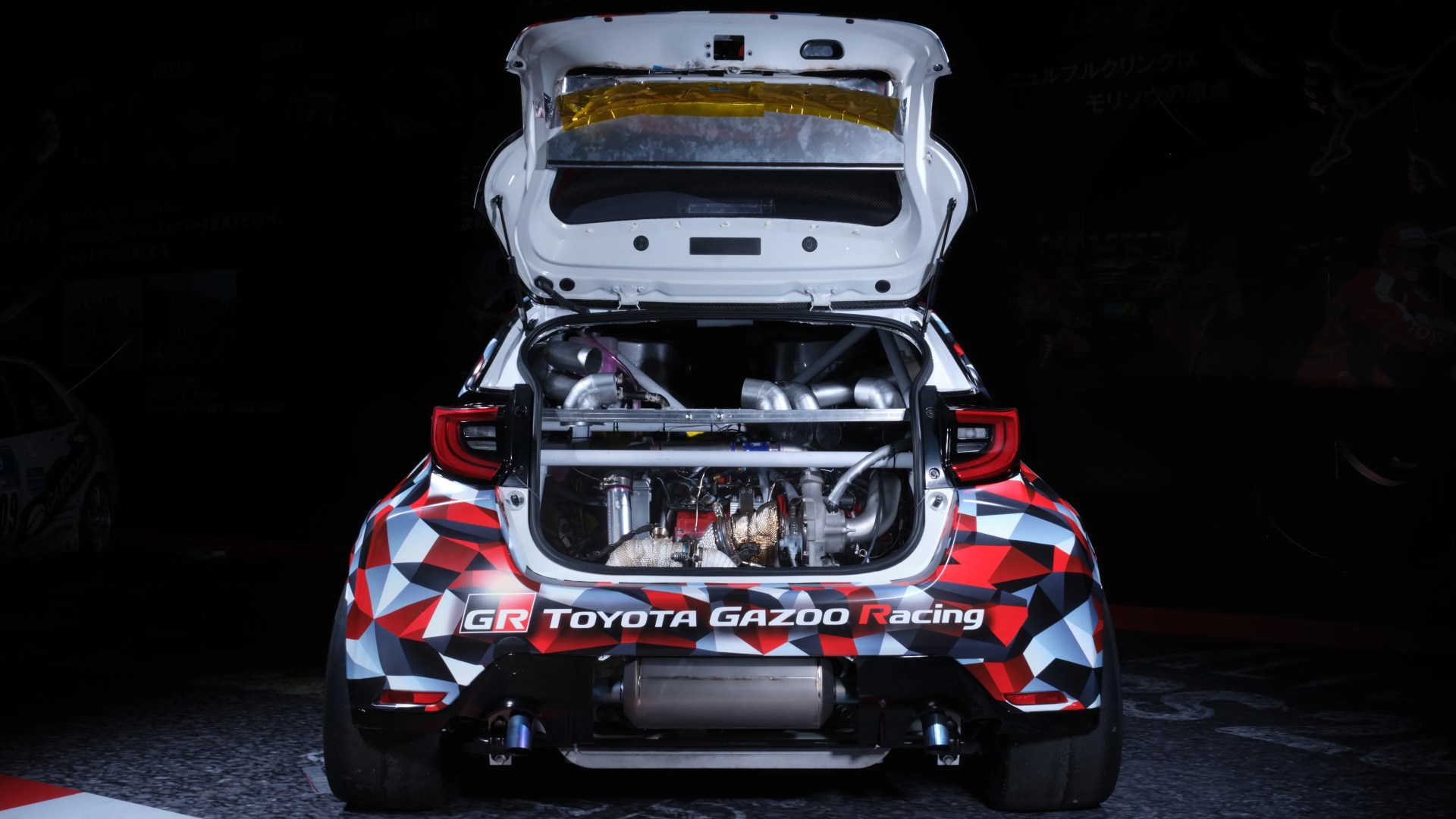
Rear view of a Toyota Gazoo Racing car with open trunk showing exposed engine and red, white, and black geometric patterned body.
The mid-engine GR Yaris is the test-bed for what is expected to result in an MR2 revival.
Toyota

The engine is part of Toyota’s recent strategy focusing on further developing internal combustion engines. It also includes a joint venture between Mazda and Subaru through which all three will work together to improve ICE tech, along with EV and gas-electric hybrid powertrains.

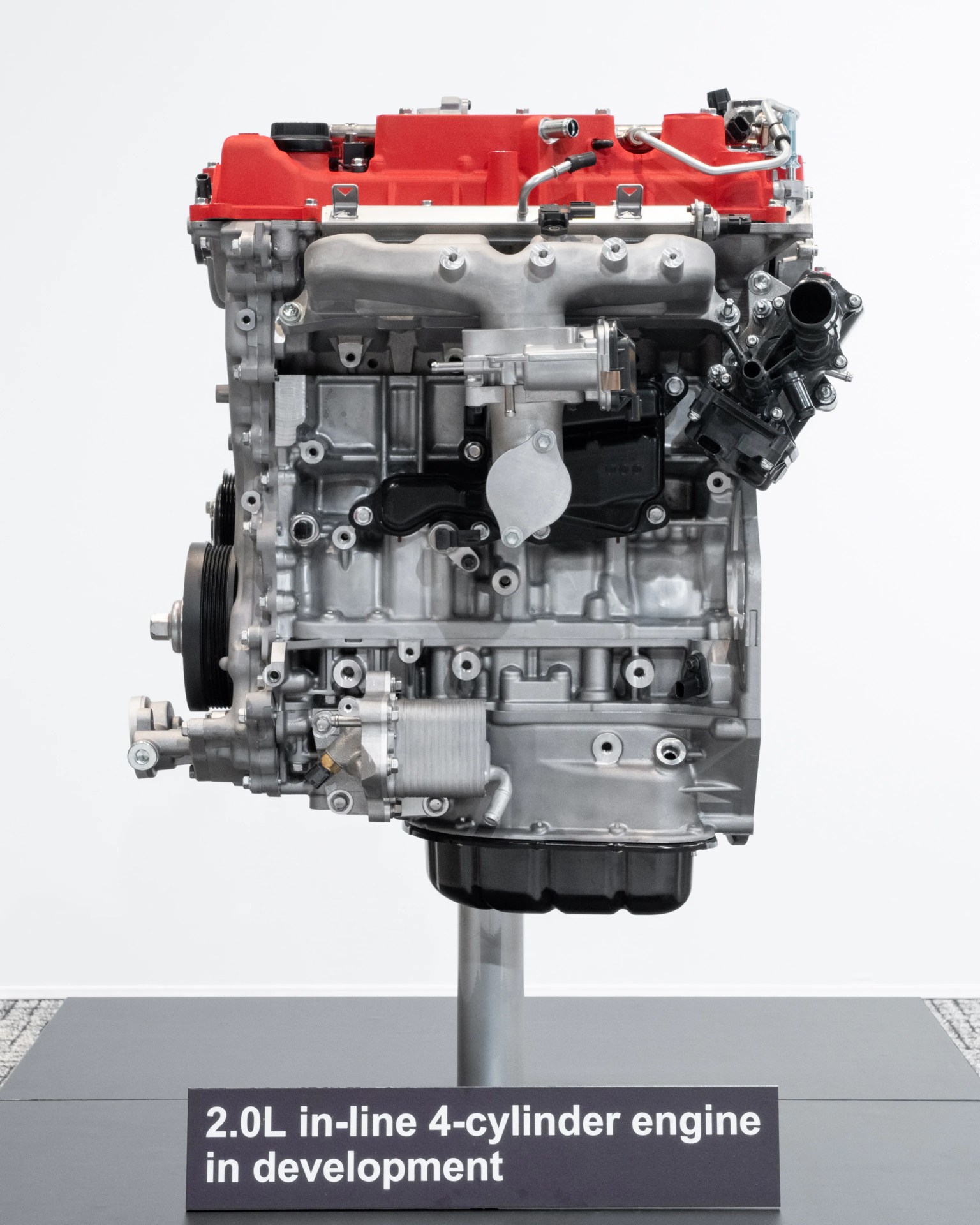
2.0L in-line 4-cylinder engine with red valve cover displayed on a stand with a sign.
Toyota announced its new high-performance 2.0-liter turbo-four in May of 2024.
Toyota

The joint venture also includes high-performance and even motorsports variants. The 2.0-liter turbo-four in the mid-engine GR Yaris test mule is one of those engines.

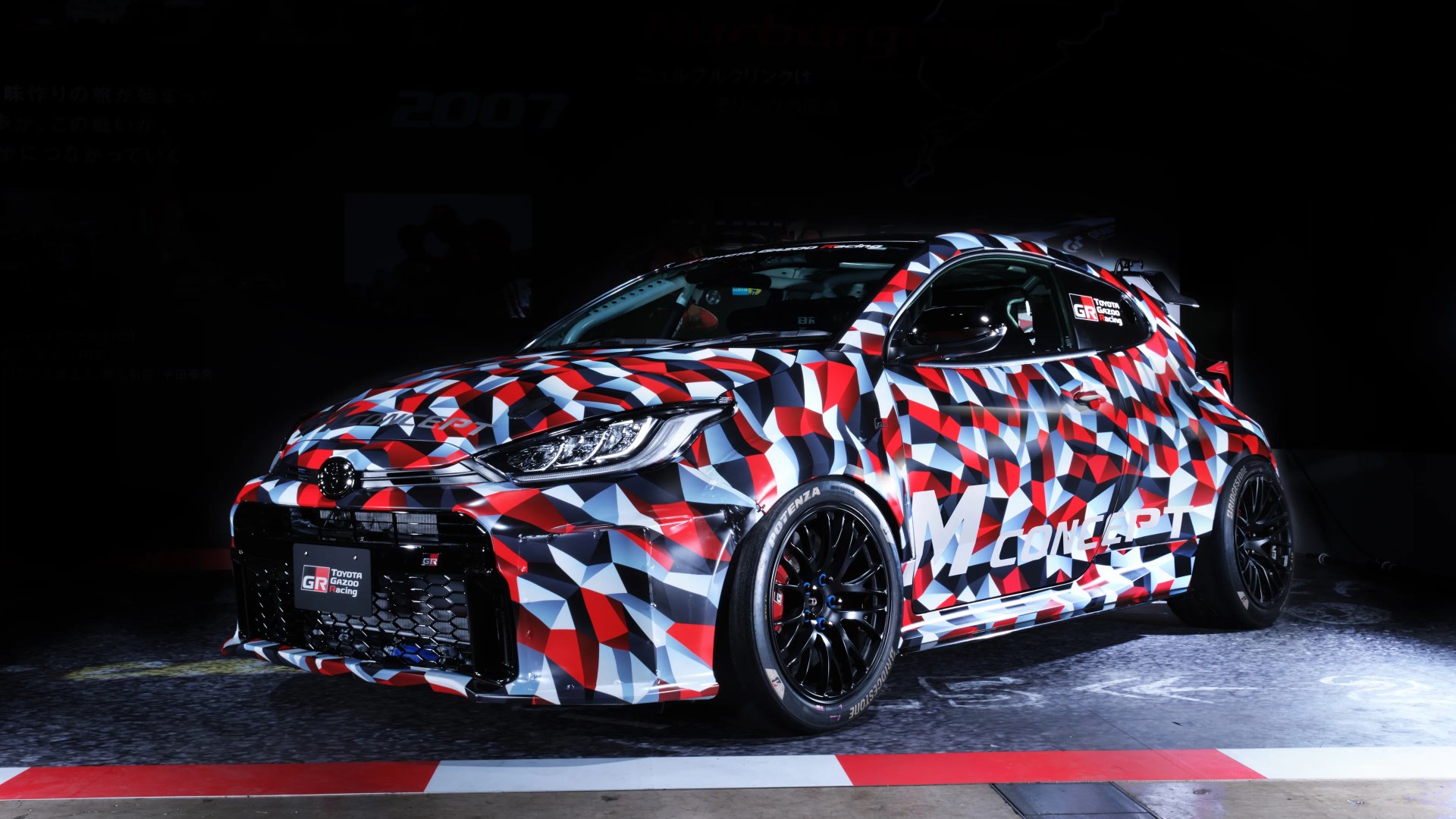
Initially, it was a bit mysterious as to why Toyota was toying with a mid-engine GR Yaris. Circumstantial evidence and official word from upper management eventually confirmed the automaker’s revival of its iconic MR2 sports car.

Toyota GR racing car with red, white, and black geometric camouflage and black wheels on a dark floor.
Toyota’s been hard at work testing its new turbo-four in its unique, mid-engine GR-Yaris-based prototype.
Toyota

This new engine could be the heart of the MR2, while also doubling its duties in the next-gen GR Corolla.

A 400-hp GR Corolla? Yes, please

Back when the new 2.0-liter turbo-four surfaced, rumors suggested an output of at least 400 horsepower in the road-going version. The motorsports variant reportedly pumped out way more.

Silver Toyota GR Corolla hatchback driving on a curved road with its rear lights illuminated, set against a cloudy sky at dusk.
The current GR Corolla is already pretty darn quick with its 300-horsepower turbo-three.
Toyota

According to MotorTrend’s chat with Uehara, that claim of 400 hp is turning out to be true. This would ultimately imply that the next-gen GR Corolla could be getting significantly more power. Something that is expected from a larger engine with a greater cylinder count.

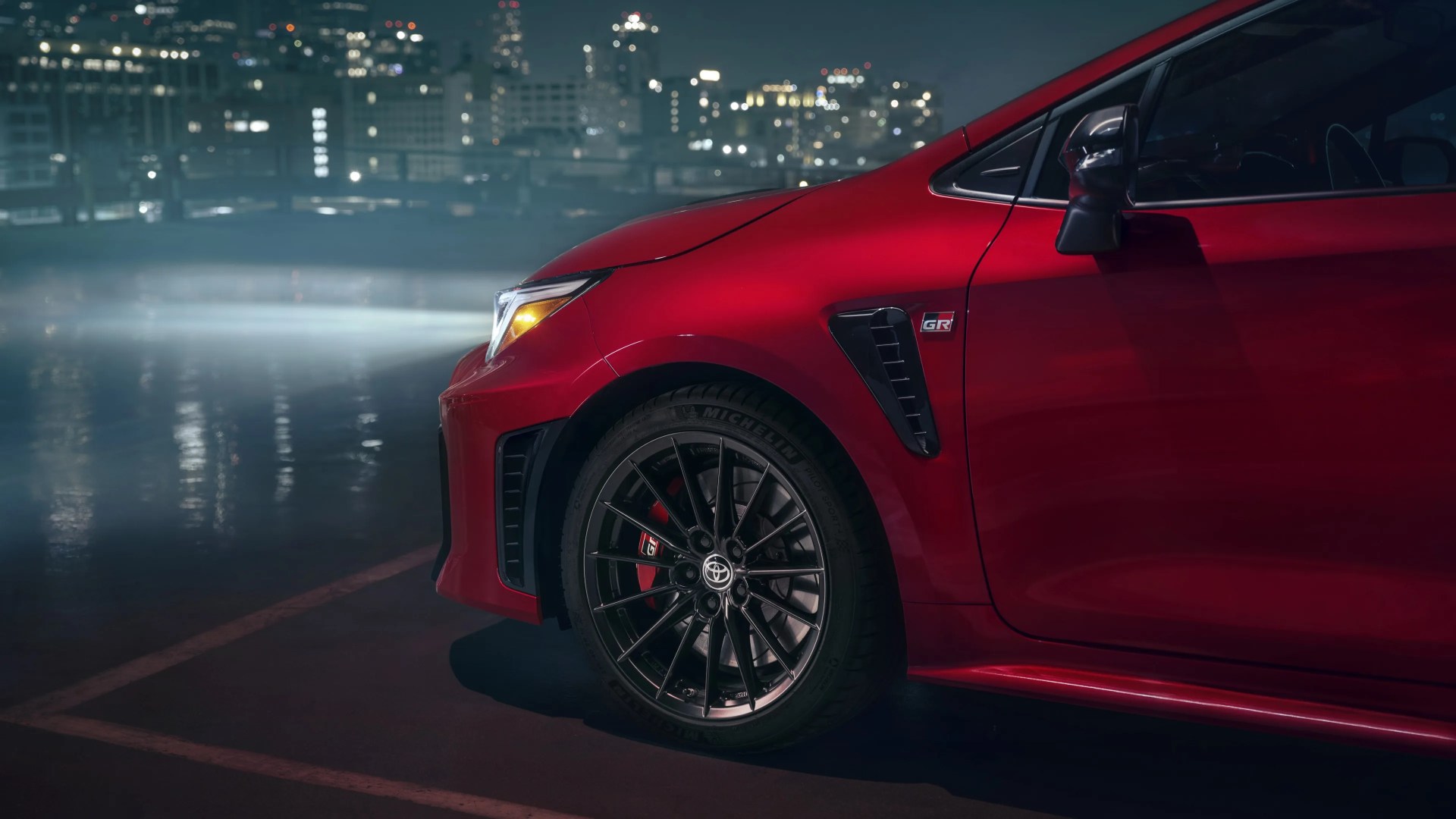
Front side of a red Toyota GR car with black alloy wheel and illuminated headlight at night.
The GR Corolla is one of Toyota’s most fun cars to date.
Toyota

Currently, the GR Corolla delivers 300 horsepower and 295 pound-feet of torque from its 1.3-liter turbo-three. With the choice of either an eight-speed auto or a six-speed manual, 0-60 mph happens in around five seconds.

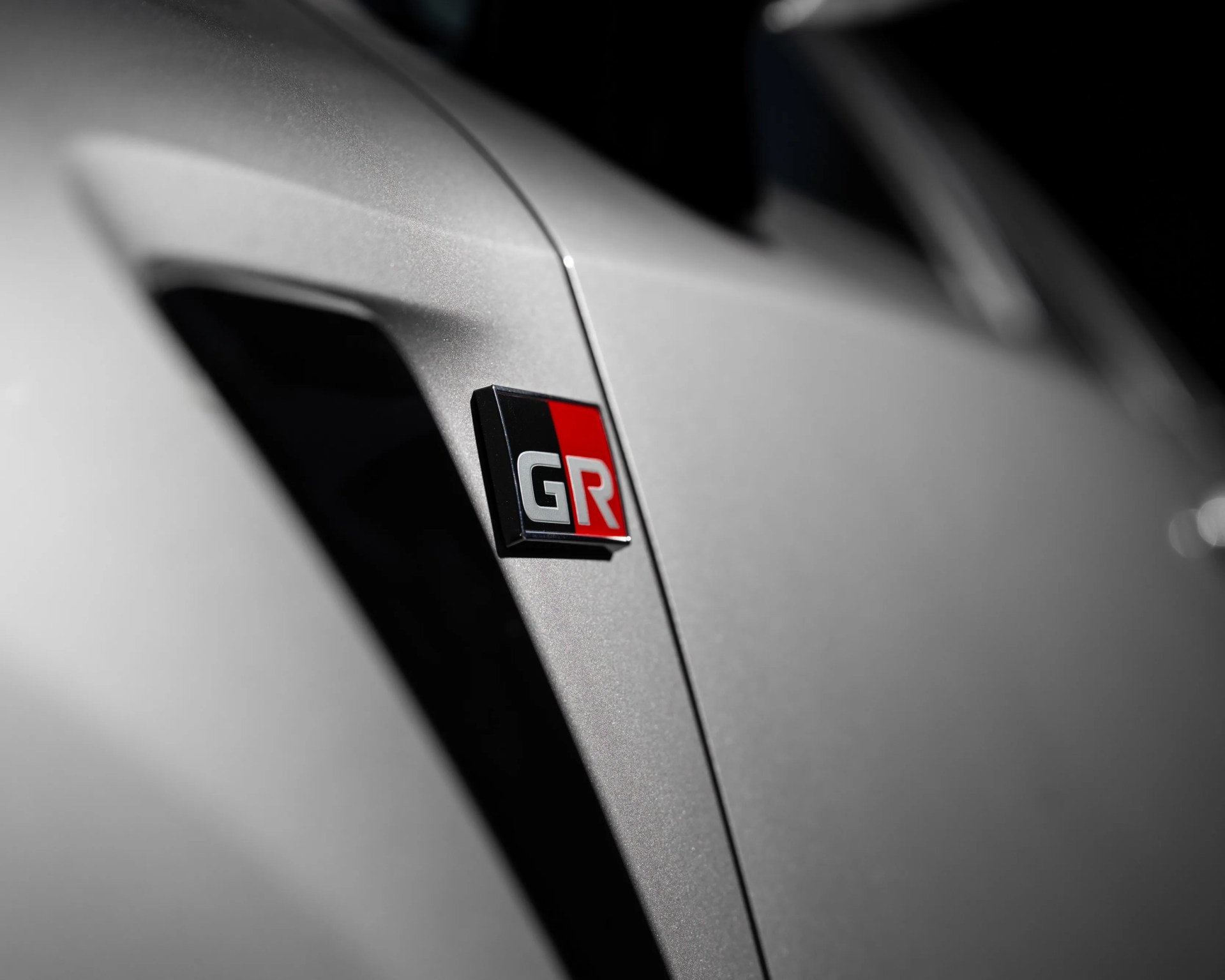
Close-up of a silver car's side panel featuring a black and red "GR" badge. The badge is positioned near a black vent or trim piece on the car's fender. The background is dark, highlighting the metallic texture of the car's paint.
Don’t worry, the GR model isn’t going anywhere, despite a next-gen Corolla being on the horizon.
Toyota

Adding an extra cylinder and a further 100 horses would definitely yield significantly quicker results — especially in a vehicle as compact and lightweight as the GR Corolla.

But faster performance isn’t the only benefit to increasing the cylinder count from three to four.

A smoother operator

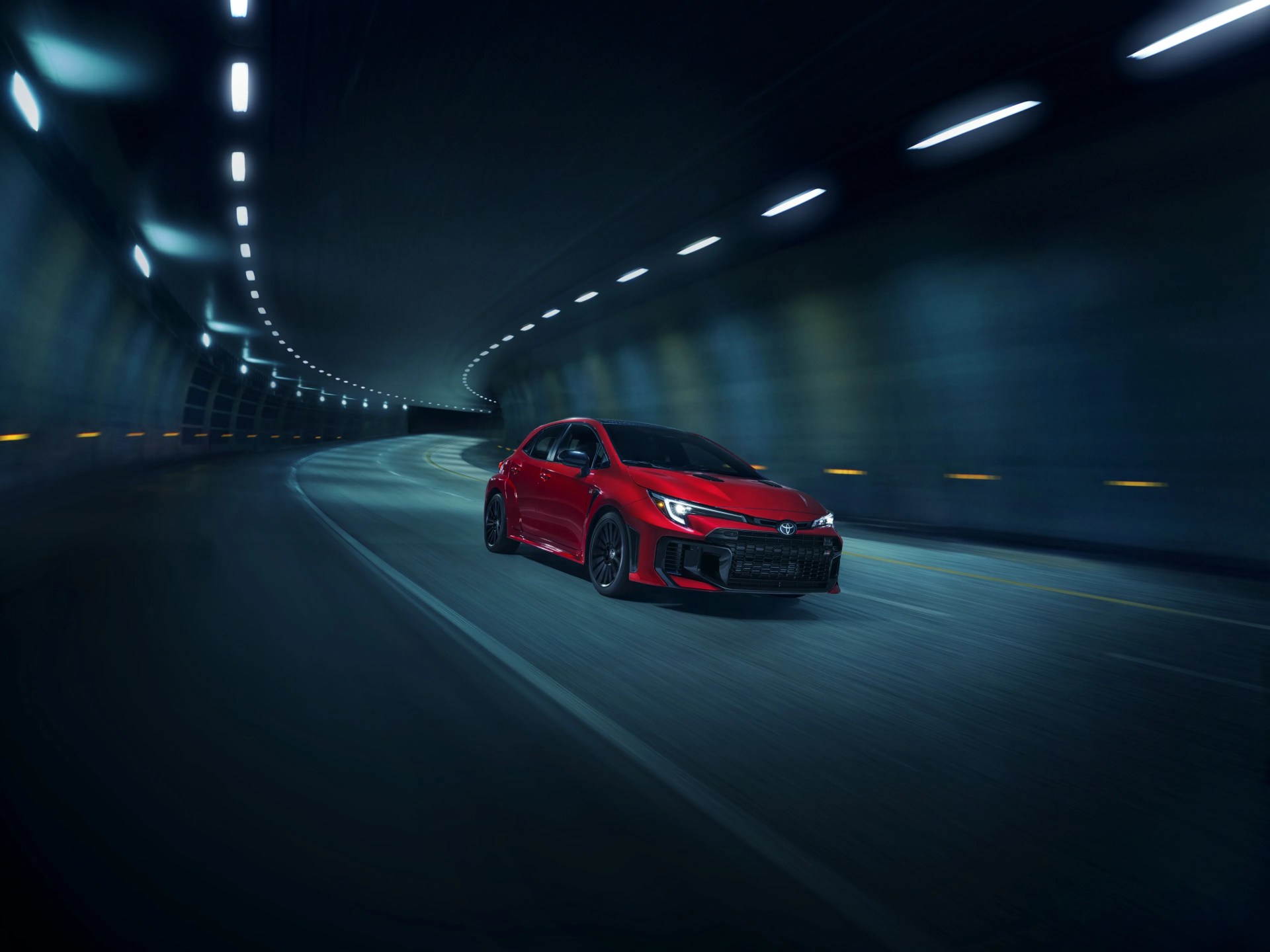
Red sporty sedan driving through a dimly lit tunnel with curved walls and overhead lights, creating a sense of motion and speed.
More power and smoother operation could be the main benefits if the next-gen GR Corolla uses a turbo-four.
Toyota USA

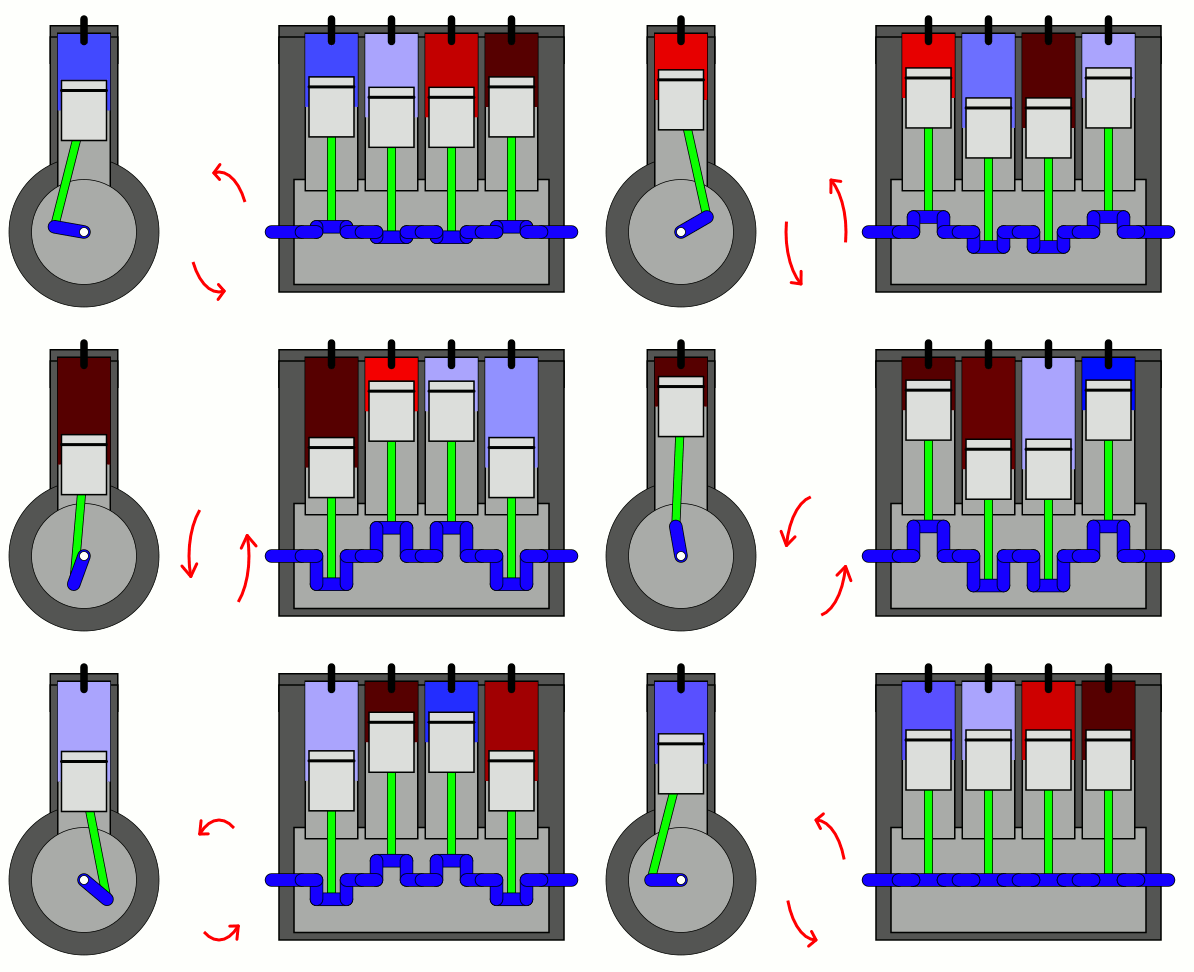
When it comes to cylinder count, internal combustion engines typically depend on an even number of cylinders for optimal smoothness. That’s because an engine’s ability to deliver power through a circular assembly requires the completion of a full, 360-degree rotation.

A full circle mathematically makes out to be an even number, or 360 degrees. Thus, it can only be divided evenly by even numbers without breaking down into fractions or percentages.

four-cylinder engine animation
An engine with an even-number cylinder count, such as a four-pot, more naturally cancels out opposing forces.
Wikipedia – Michael Fray

With an even number of cylinders, the math to complete a single revolution of the crankshaft comes out precisely. These precise calculations also resultantly affect how smoothly an engine runs by determining the firing order of its cylinders.

As a result, engineers could more easily calculate the dimensions of internal components, such as the crank assembly, connecting rods, pistons, and so-on.

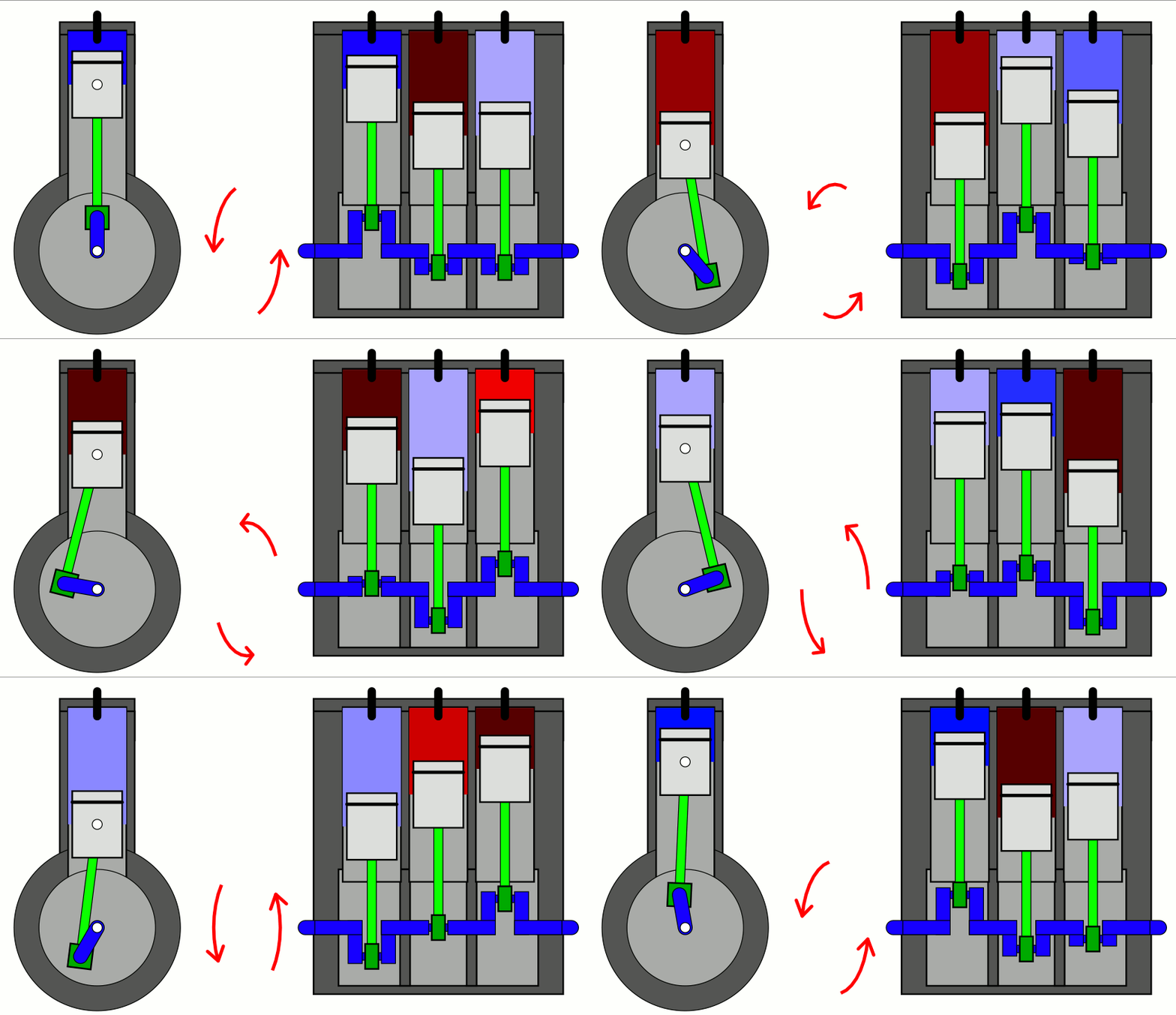
three-cylinder engine animation
An uneven cylinder count in a three-pot engine means there’s an unequal amount of countering opposing forces.
Wikipedia – Michael Fray

Four is better than three

When you have an odd number of cylinders however, the math, geometry and physics involved gets a bit tricky. Because of this, engines with an odd number of cylinders simply don’t run as smooth.

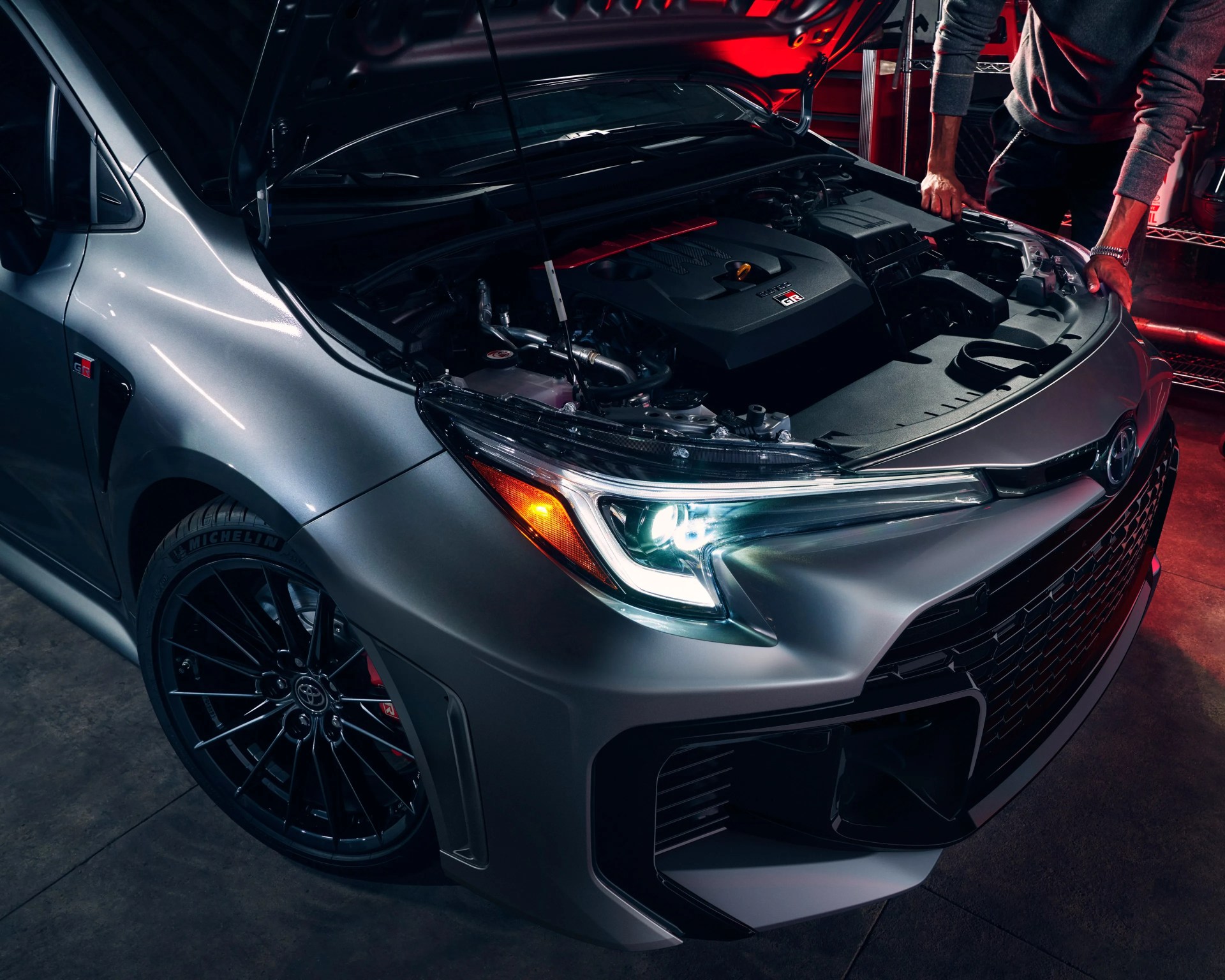
Silver Toyota GR car with open hood showing engine and black alloy wheels in a garage.
Although the GR Corolla’s turbo-three performs well, it isn’t without its shortcomings.
Toyota

Odd-number cylinder engines require lots of additional compensation for uneven forces, such as counterweights and balancers, to reduce vibrations. When it comes to complex machines, vibrations not only equal discomfort, but also wear and material fatigue over time.

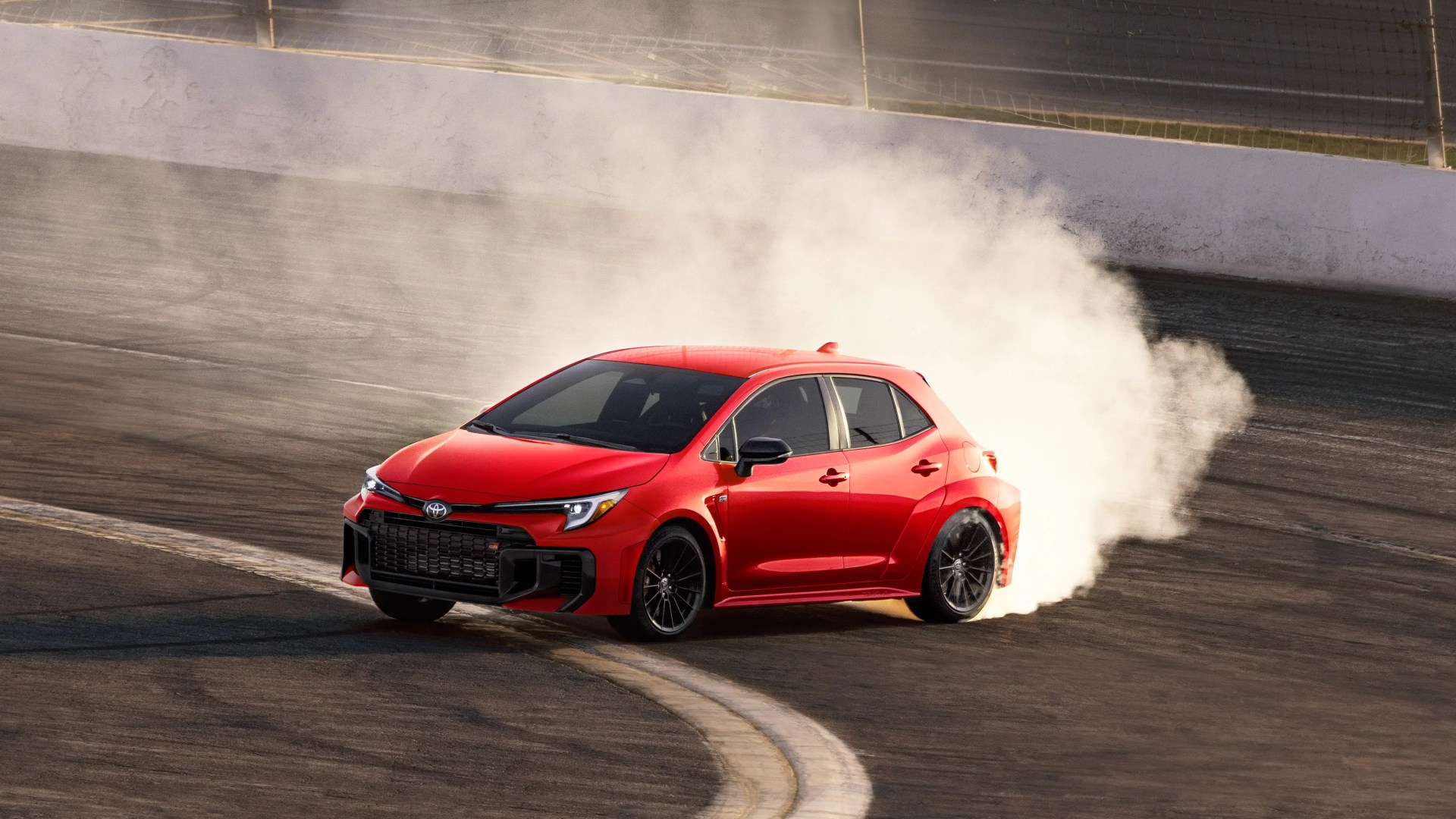
Red Toyota GR hatchback drifting on a race track with smoke coming from the rear tires.
The GR Corolla can already dance and sprint, could you imagine what an extra 100 horses can do?
Toyota

Although automakers, like Toyota, Volkswagen and Volvo, have proven that odd cylinder engines work, they’re just much more complex and costly. Which is one of the other main reasons why Toyota’s working with a next-gen four-cylinder.

A four-cylinder simply runs better and smoother than a three- or five-. They aren’t, however, immune to the need for additional balance shafts and counterweights; the even number of cylinders allow for an equal canceling of each other’s opposing forces.

Want to stay up to date on the latest product news and releases? Add Gear Patrol as a preferred source to ensure our independent journalism makes it to the top of your Google search results.

add as a preferred source on google