
This Little-Known Italian Brand Beat BMW to One of Its Most Important Moto Innovations

Even before BMW put its paralever to market, a small operation had a fix for riders’ shaft drive motorcycle woes.

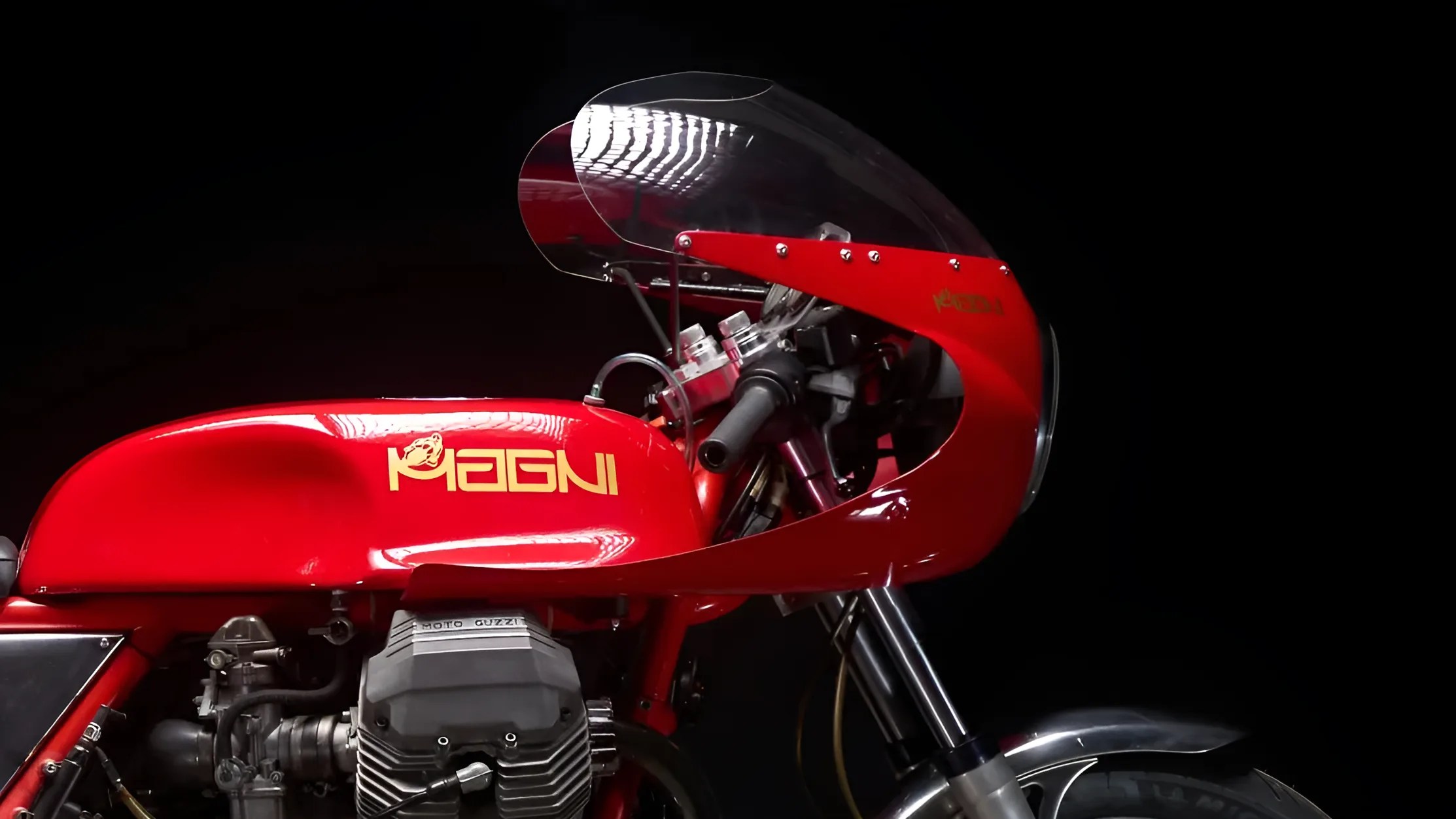
Red Magni motorcycle fuel tank and front fairing with clear windscreen and visible Moto Guzzi engine parts.Moto Bogotaro via Bring a Trailer

If you buy from a link, we may earn a commission. Learn more

Although shaft-drive motorcycles are celebrated for their low maintenance and long-term durability compared to their conventional chain-driven counterparts, they’re not without their compromises.

In addition to higher power loss at the rear wheel because of added complexity and extra friction, those that don’t properly accommodate their final drive exhibit a behavior called “jacking.” Put short, the suspension lifts (and can even lock) under acceleration, making the bike taller, less stable and less predictable.

BMW notably introduced its paralever design in 1988 as a means to remedy the problem on bikes like its adventurous boxer-powered GS. At the time, magazines like Cycle World even recognized it as a production first.
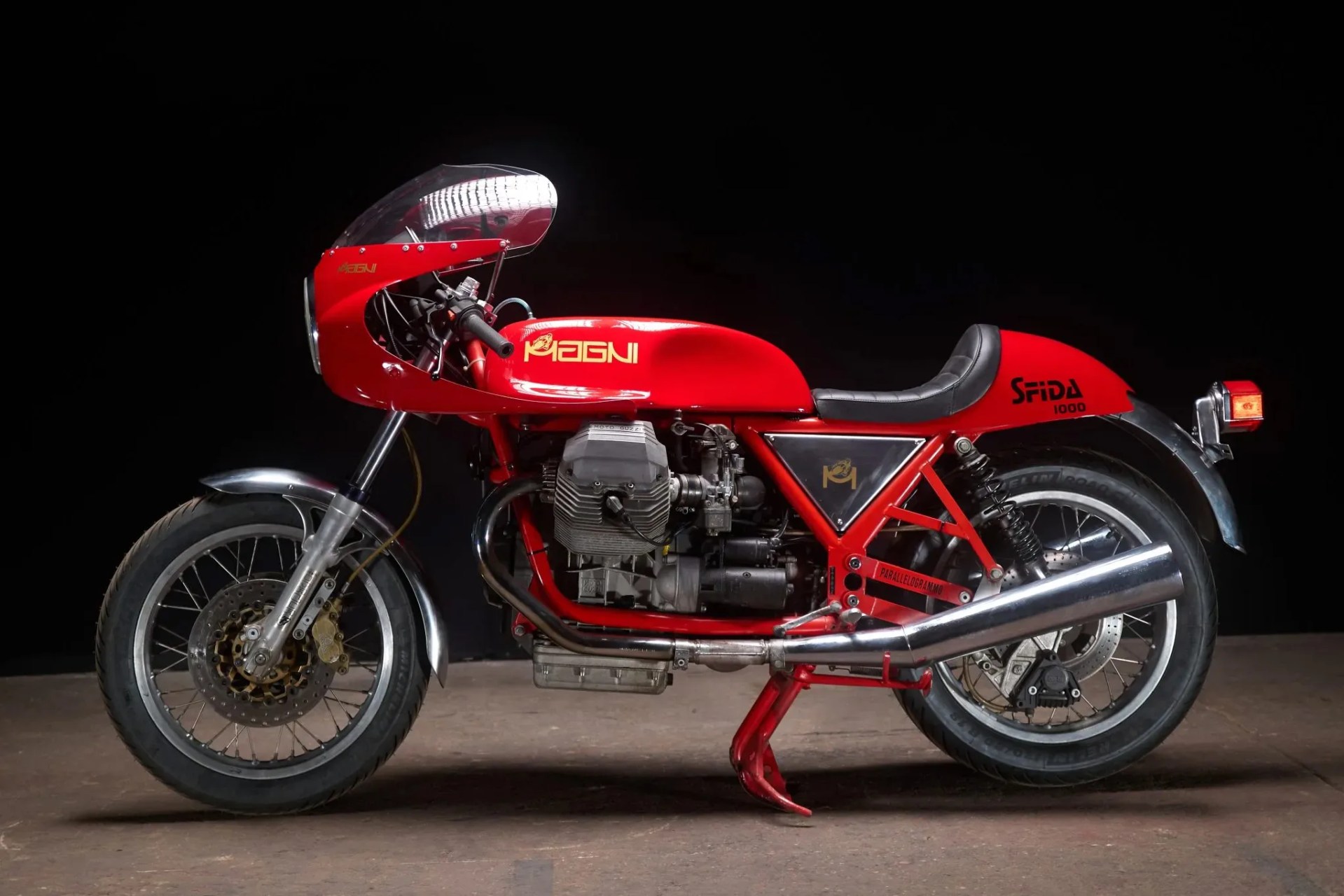
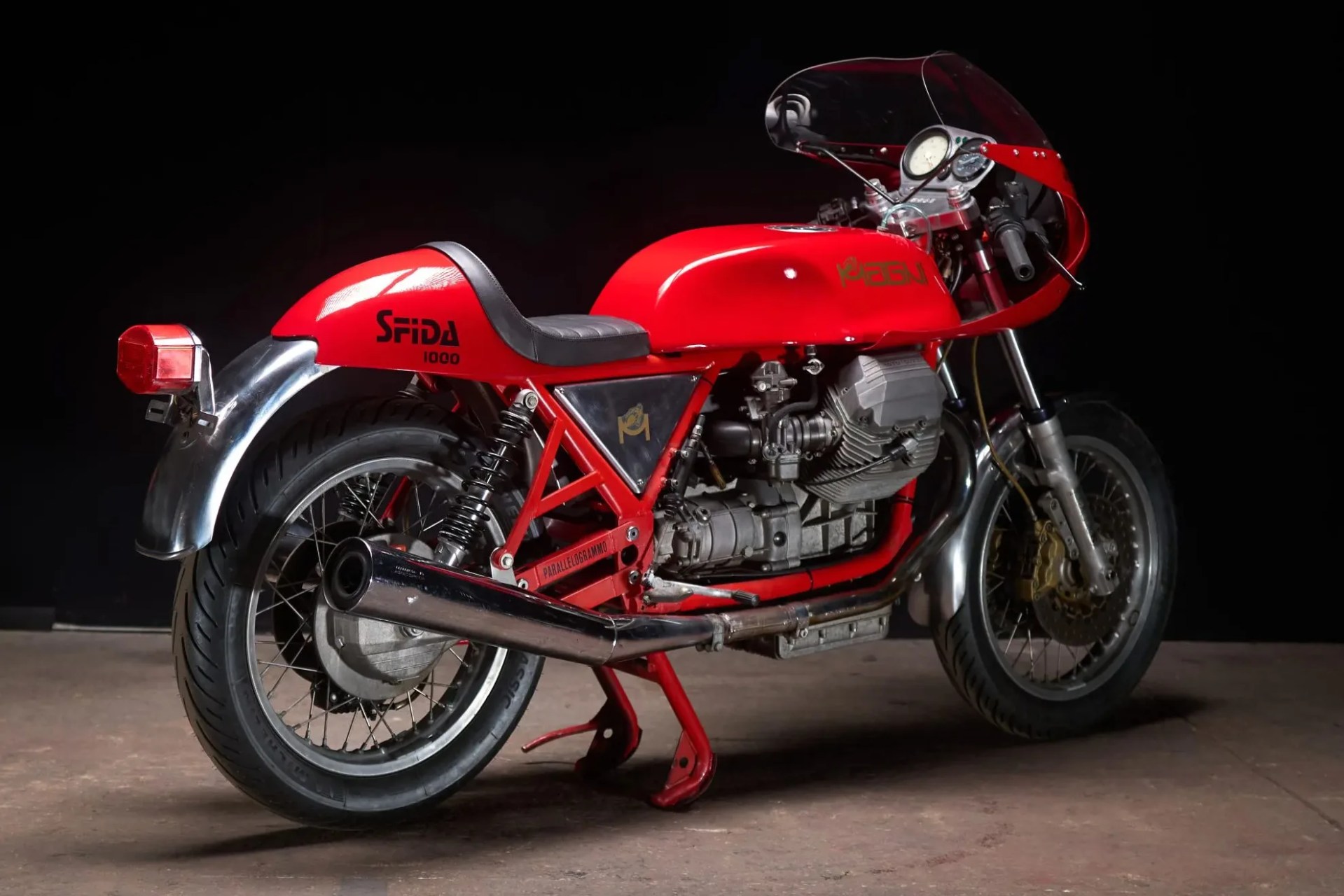
Red Magni Sfida 1000 motorcycle with black seat and chrome exhaust on a dark background.
Magni introduced its parallelogrammo swingarm (pictured on the above Sfida) with its LeMans in 1985.
Moto Bogotaro via Bring a Trailer

However, while it was an undeniably effective solution, a little-known Italian outfit actually managed to field a fix of its own just a few years before.

An Italian geometry lesson

It’s called Magni, and it was founded in 1977 by an Italian engineer named Arturo Magni. Having spent time in the pits at Gilera and MV Agusta helping each brand to world championship wins, he decided to translate his race expertise into limited-production motorcycles.
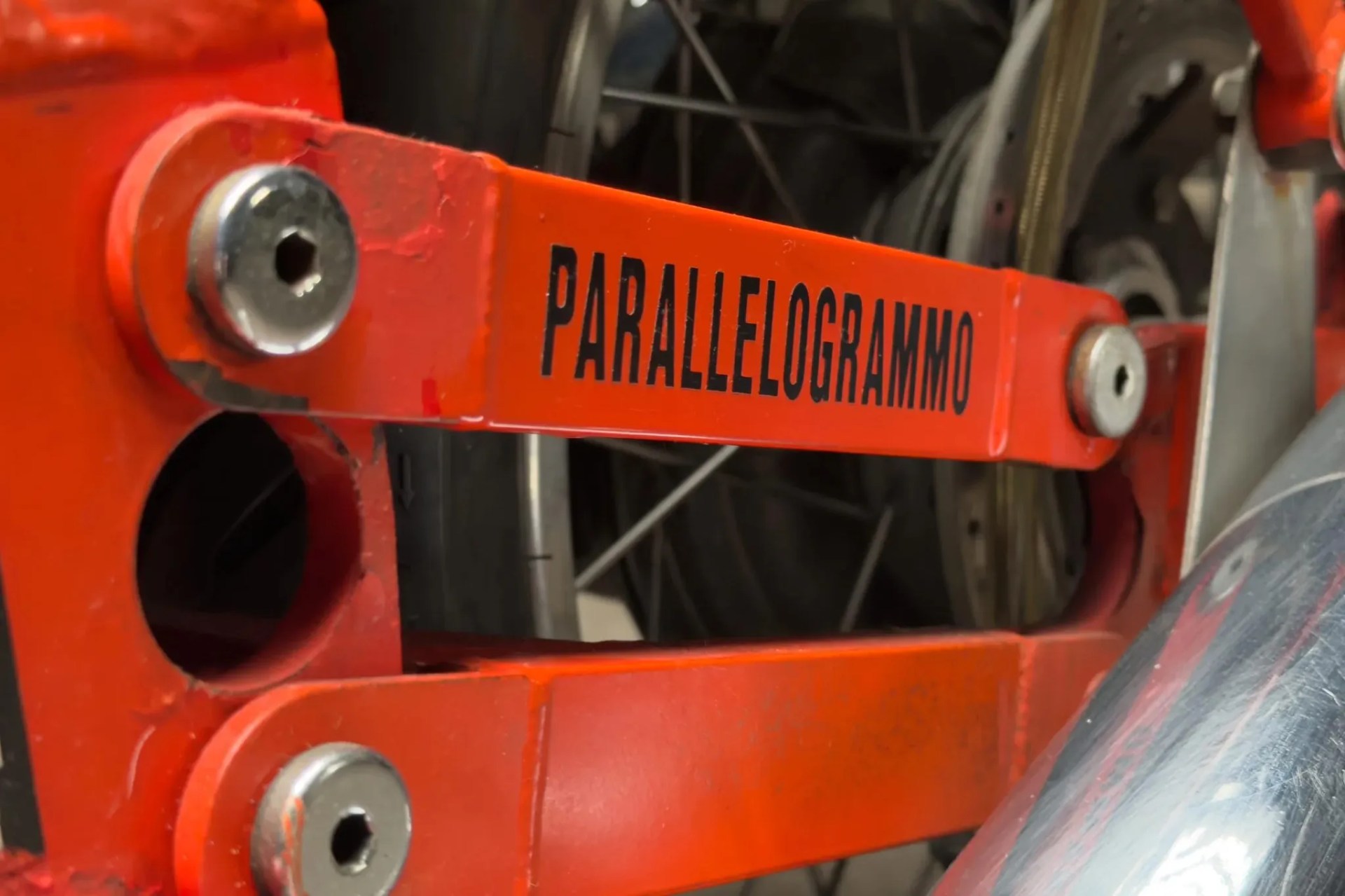
Close-up of an orange metal part with bolts and the word "PARALLELOGRAMMO" printed in black.
The second linkage stabilized the swingarm, preventing the final drive from rotating.
Moto Bogotaro via Bring a Trailer

Accordingly, though Magni got its start offering upgrade kits and performance conversions for its founder’s alma mater, the company eventually broke into fielding fully built bikes of its own.

Inline-fours from the likes of Honda and MV served as the initial donor platforms, but Magni eventually expanded its projects to BMW and beyond.

It was with its first Moto Guzzi-based bike in 1985 — the LeMans (based on the bike of the same name) — that the Italian outfit introduced a game-changer: the parallelogrammo swingarm. Though some racing motorcycles had vetted similar tech as early as the 1950s, Magni’s offering marked the first attempt at commercial application.

Red vintage Moto Guzzi motorcycle with black seat and chrome exhaust on a dark background.
Magni continued to use its design on later Guzzi-based production bikes like the Arturo, Classico and Sfida.
Moto Bogotaro via Bring a Trailer

In practice, it used an additional set of linkages to counteract the torque exhibited on the swingarm. By keeping the final drive from rotating, it ensured the rear wheel’s contact patch remained constant on the road rather than jacking the bike.

Suffice to say, it was forward-thinking stuff to see on a production offering. BMW didn’t introduce its design for another three years, as the paralever first found its way onto the 1988 R80GS and R100GS. Moreover, Moto Guzzi’s fix came later still, as its CARC system made its way to the market in the early 2000s.

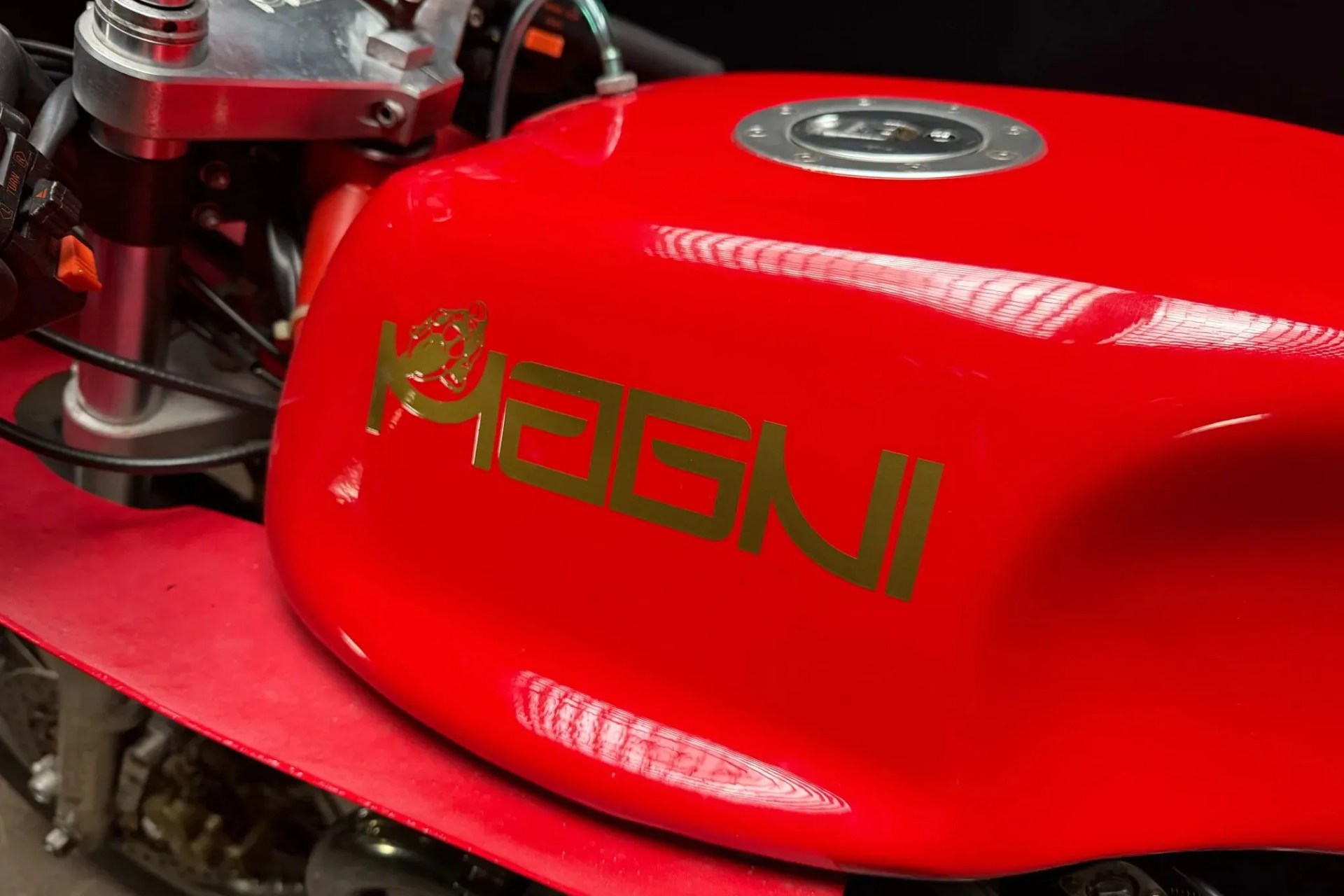
Glossy red motorcycle fuel tank with gold "MAGNI" logo and silver fuel cap.
Magni was a passionate racing engineer, and it’s pretty clear by the brand’s logo.
Moto Bogotaro via Bring a Trailer

The café you see before you

After the debut of the LeMans, Magni didn’t stop experimenting with Moto Guzzis. If anything, the project kick-started a long-lasting relationship.

As such, in the wake of that initial effort, the outfit continued to work with the LeMans transverse engine. From there, Magni followed it up with the Classico 1000 and the Arturo 1000, each a retro-styled bike oozing with classic appeal and powered by Moto Guzzi’s V7 twin.

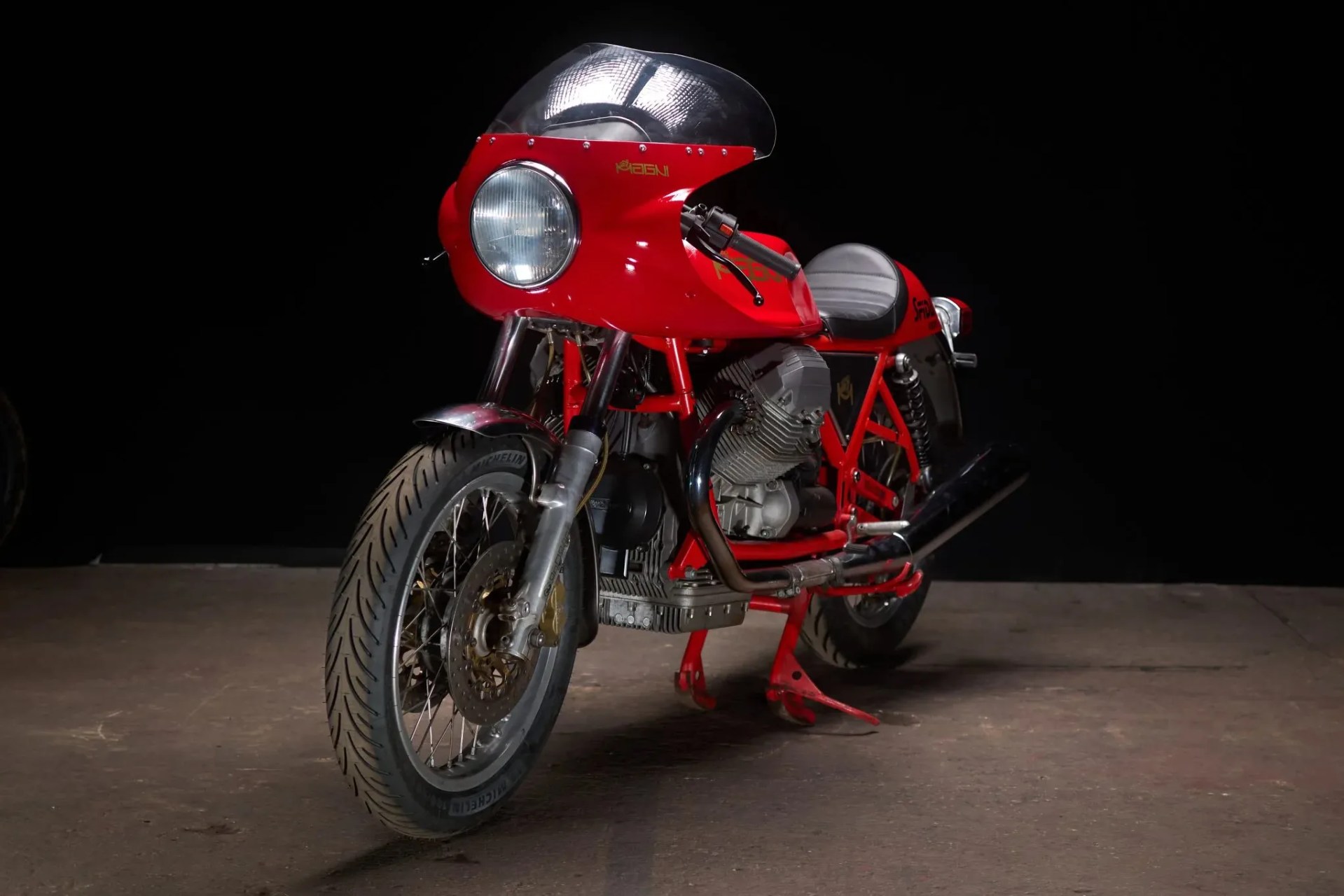
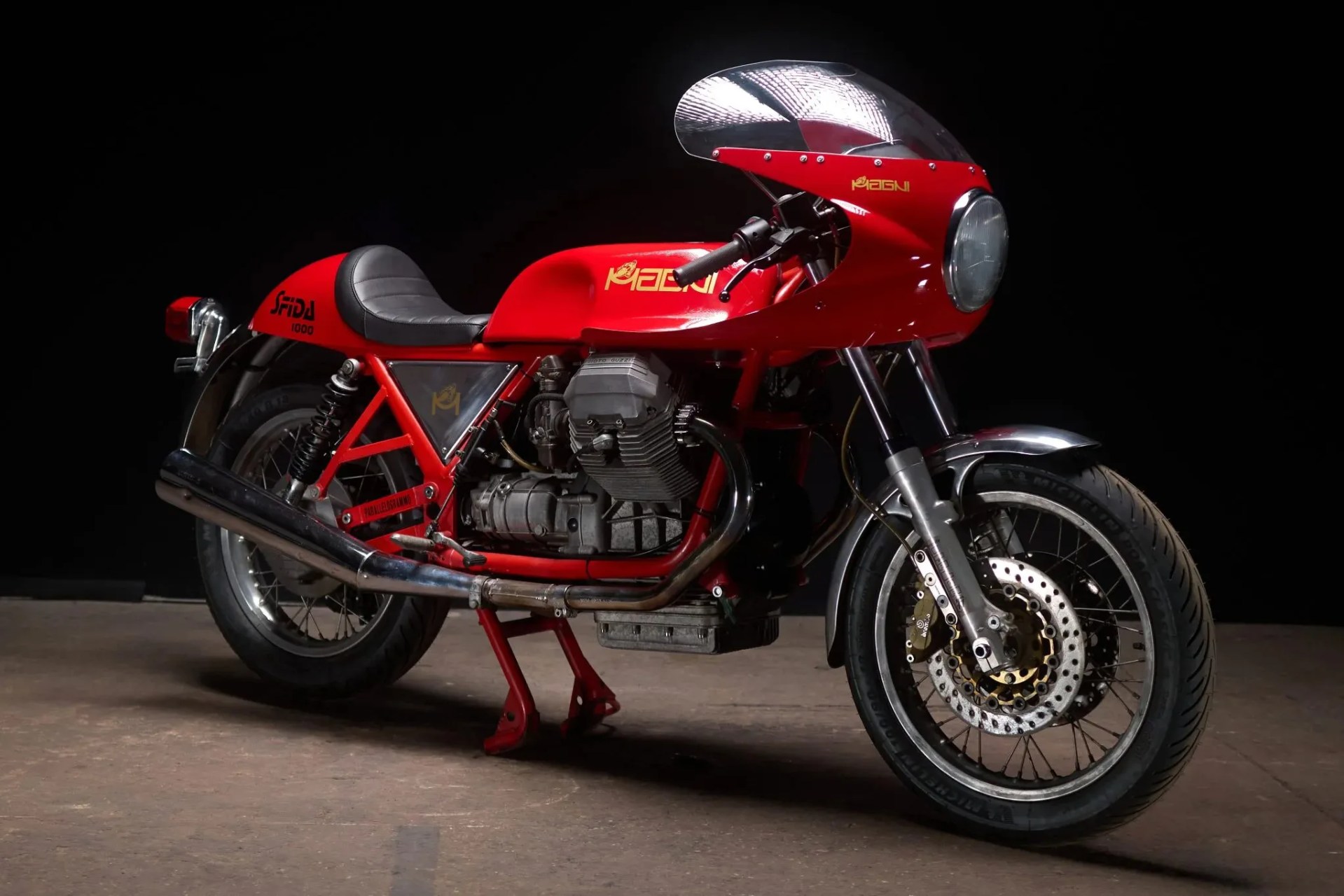
Red vintage racing motorcycle with a large front fairing and black exhaust pipes on a concrete floor.
The Sfida 1000 referenced the stunning Italian bikes of the 1960s.
Moto Bogotaro via Bring a Trailer

However, the outfit really found its footing with the gem you see before you. Dubbed ‘Sfida’ (Italian for challenge), it was a bike that first rolled onto the scene in 1989, and it was meant to capture the old-school cool of 1960s Italian café racers.

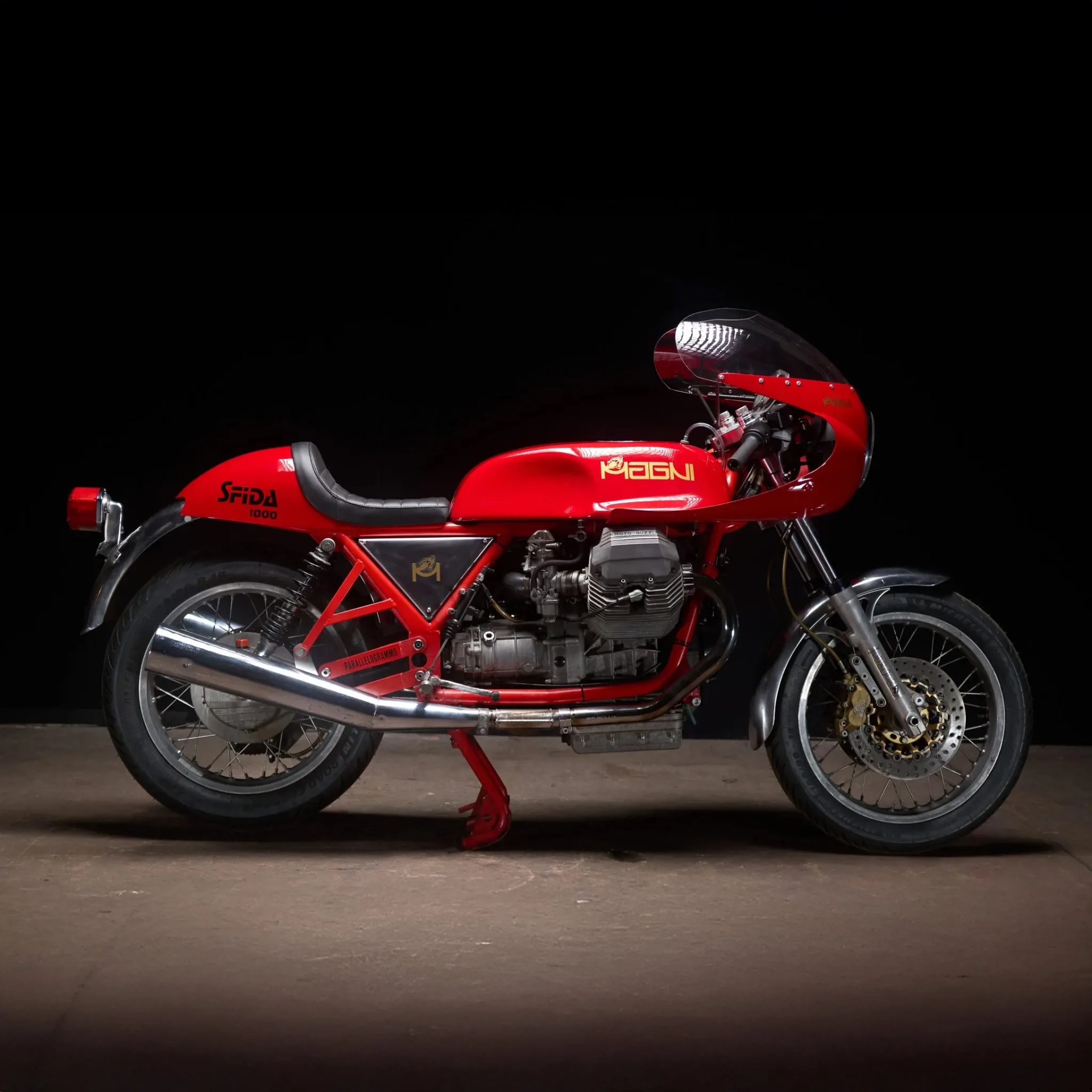
Accordingly, along with a striking half fairing and a rounded rear cowl, it also sported a solo headlight, plenty of chrome and eye-catching script. Power came from a 1,000cc 2V V-twin, while braking and suspension were taken care of thanks to Brembo and Forcelle Italia.

Like its predecessors, the Sfida, of course, sported Magni’s trademark parallelogrammo swingarm. As such, in addition to looking like the bikes of the golden age of grand prix racing, it also touted similar tech advancements.

Red vintage Moto Guzzi Sfida 1000 motorcycle with black seat and chrome exhaust on a concrete floor.
Some sources put production at just 50 Sfidas altogether for the 1991 model year.
Moto Bogotaro via Bring a Trailer

A rare opportunity

Being low-run, hand-built performance specials, Magni motorcycles don’t come up for sale often. In fact, some sources put Sfida production at just 50 bikes altogether.

However, as of this writing, the stunner pictured here today is currently up for auction on Bring a Trailer. Showing approximately 3,000 miles, it boasts fresh service and paintwork.

Red Magni Sfida 1000 vintage motorcycle with black seat and chrome exhaust on a dark background.Moto Borgotaro via Bring a Trailer

1991 Magni Sfida 1000

Want to stay up to date on the latest product news and releases? Add Gear Patrol as a preferred source to ensure our independent journalism makes it to the top of your Google search results.

add as a preferred source on google
,