
This Microwave May Soon Be America’s Newest Culinary Status Symbol

The Panasonic NN-SF57RM pairs inverter cooking technology with a restrained Japanese aesthetic that puts other countertop microwaves to shame.

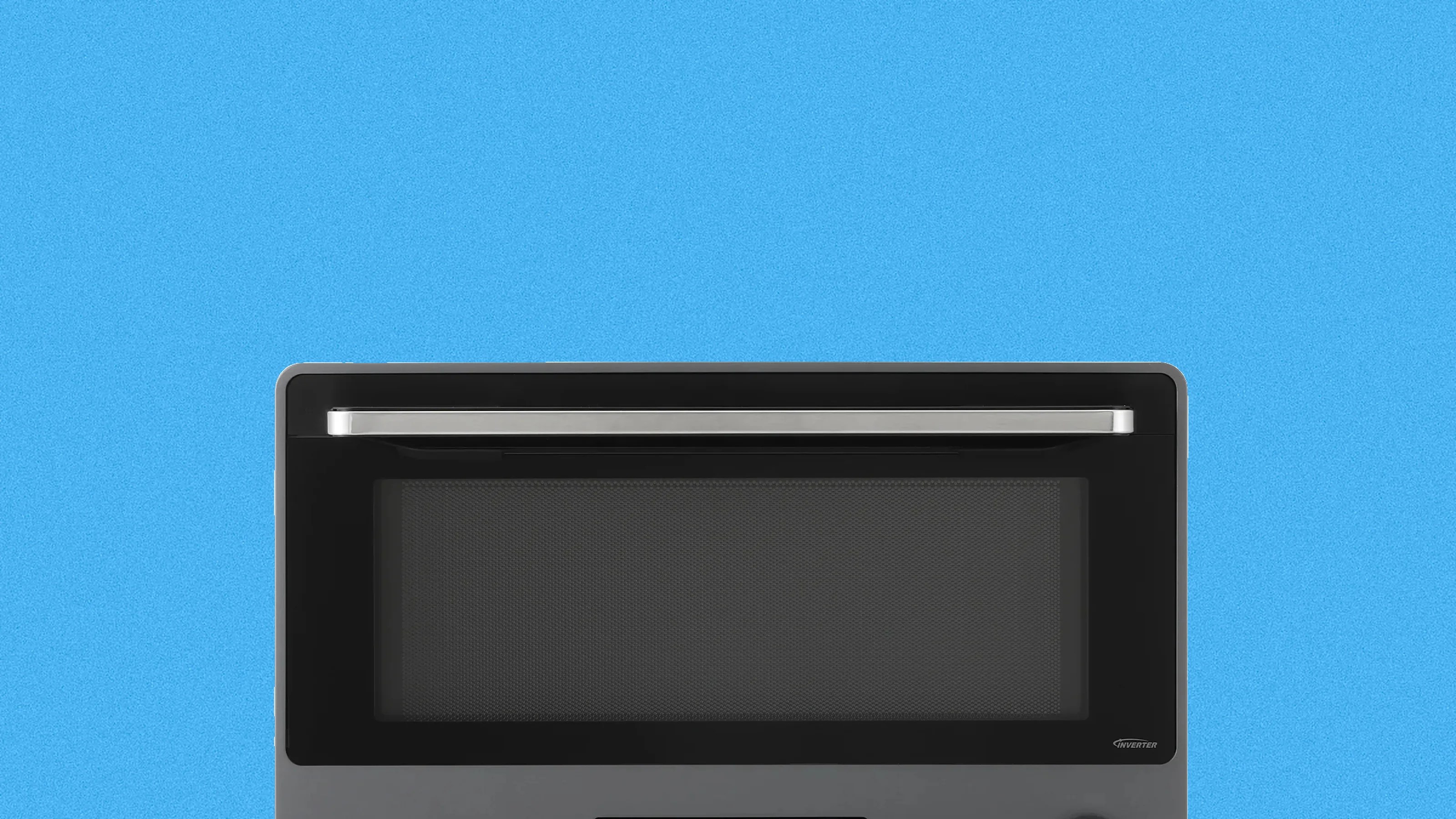
Top portion of a stainless steel microwave oven with a black door and silver handle against a blue background.Panasonic

If you buy from a link, we may earn a commission. Learn more

The microwave has had a strange arc in American kitchens — first celebrated as a technological miracle, then eventually shunned as a symbol of shortcut culture and reheated mediocrity.

The shift and sentiment is directly reflected in the various locations the machine has been exiled to in most American kitchens. From the dark corners of the counter to built-in cabinets below eye level to poorly camouflaged nests above cooking ranges and vents, few homeowners are thrilled to have a microwave shown prominently.
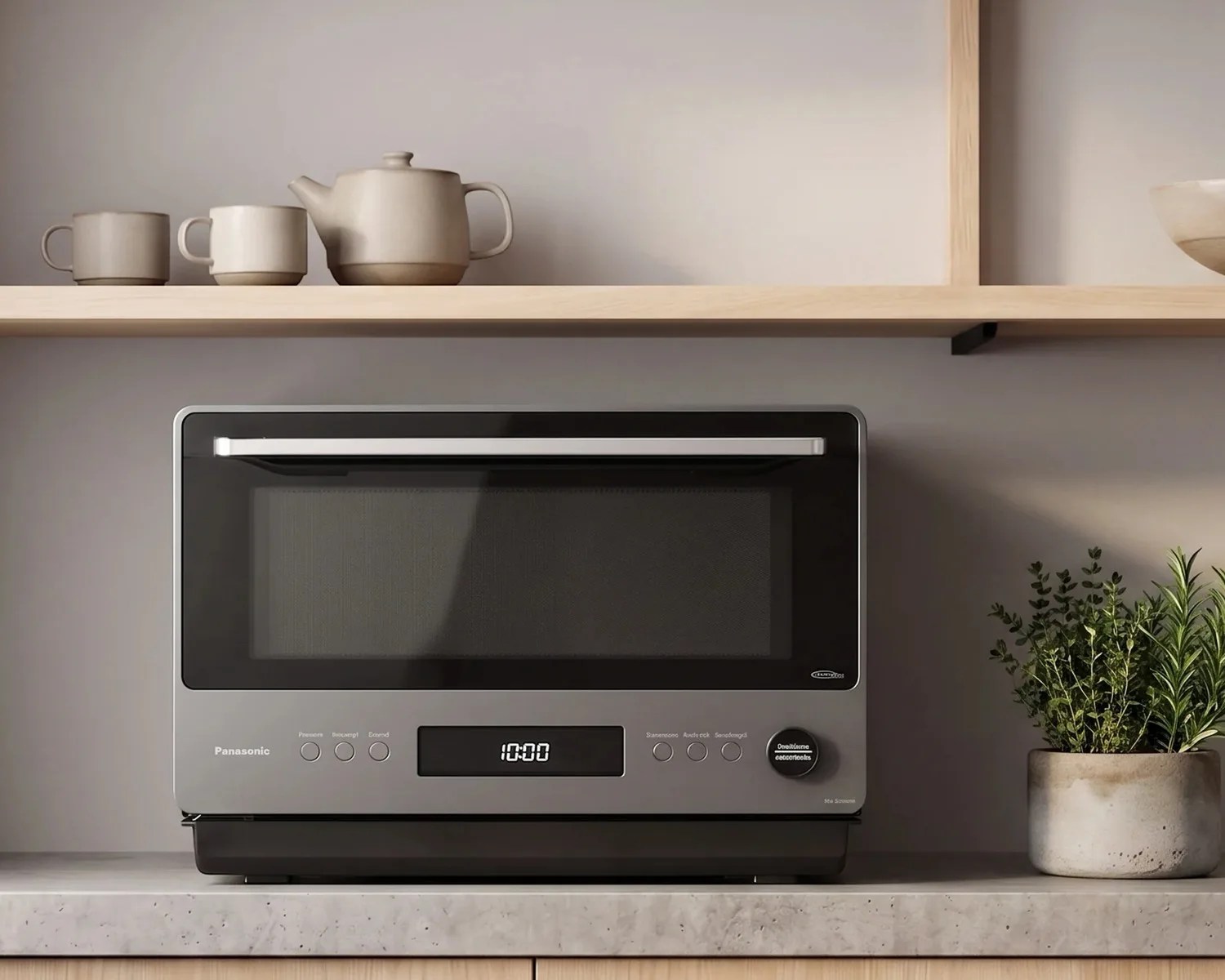
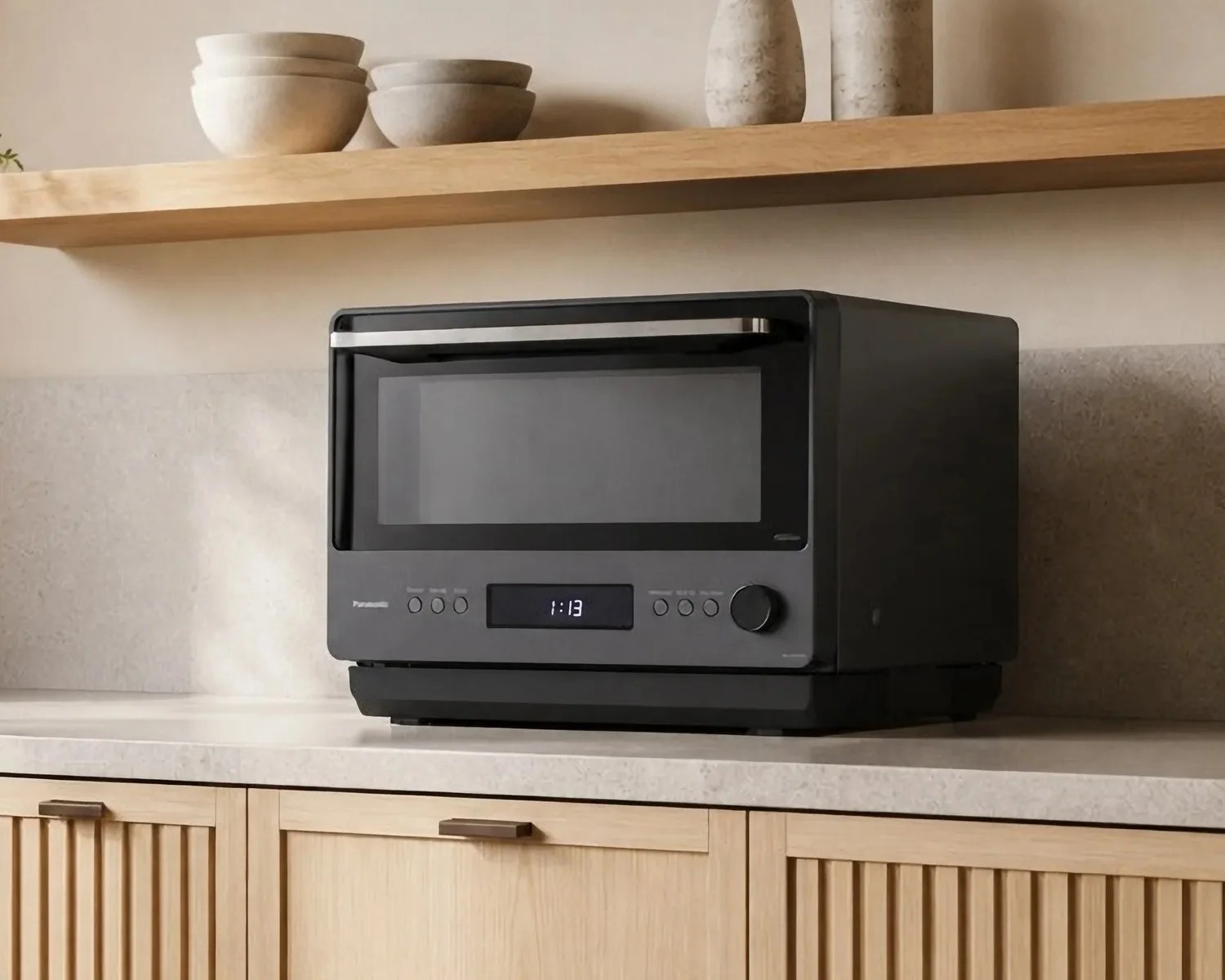
Gray Panasonic microwave oven with digital display on a marble countertop under a wooden shelf with ceramic teapot and cups.
The graphite finish and understated controls are a sharp departure from the typical microwave aesthetic.
Panasonic

Over the last half-decade, though, the humble machine has staged a genuine comeback. Chefs, including David Chang, have made public cases for the microwave as a serious cooking tool, and passionate home cooks have followed.

But the appliances themselves haven’t necessarily taken the hint – either in precision performance, or in their aesthetic appeal.

Panasonic’s Japanese Countertop Microwave NN-SF57RM — a Japanese machine that’s finally made its way west and is even available on Amazon — is now the American microwave market’s most obvious exception.

East meets west
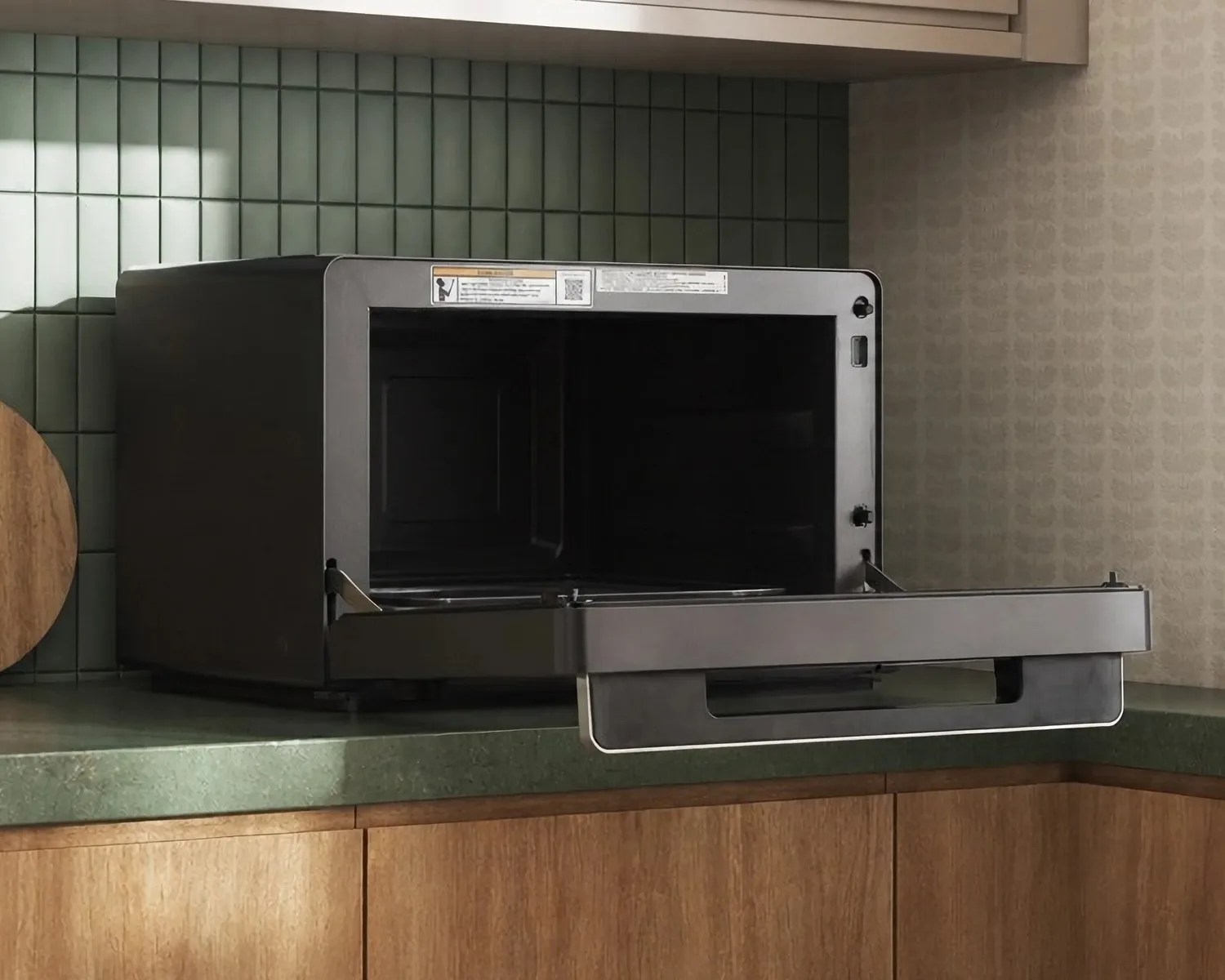
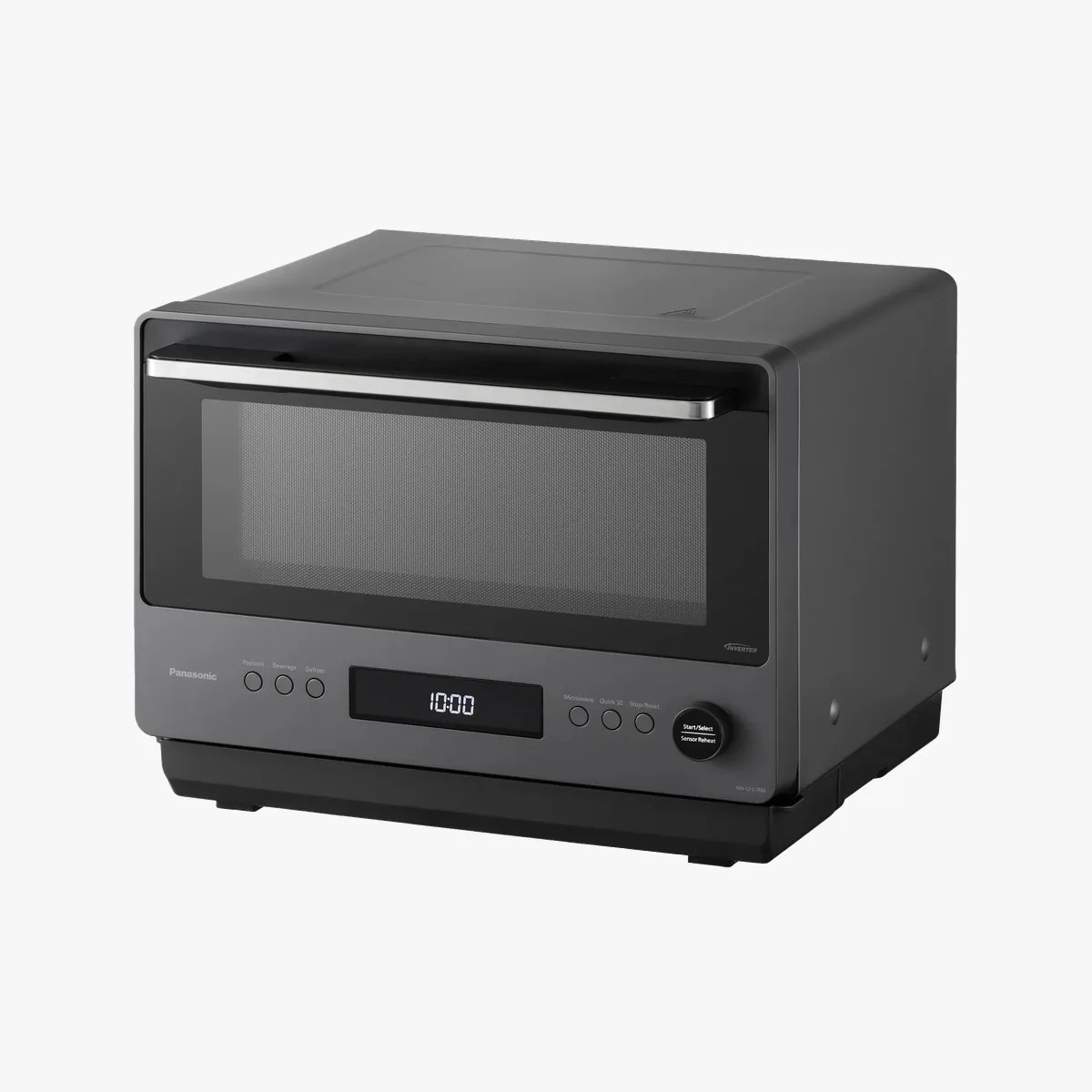
Black microwave oven with open door on green countertop in kitchen corner.
The clean exterior hides one of the biggest changes inside: no turntable. Instead of a spinning plate, Panasonic relies on inverter technology and thermal sensors for even heating.
Panasonic

In case you didn’t know, the microwave is an American invention.

The Smithsonian traces its origins to a 1945 discovery by Raytheon engineer Percy Spencer, who noticed radar waves had melted a chocolate bar in his pocket.

American brands ran with the technology for decades, chasing wattage and stuffing units with preset buttons — popcorn, pizza, beverage — that nobody actually uses. The machines grew bigger, louder and uglier. As is often the case, Japan took a different approach.
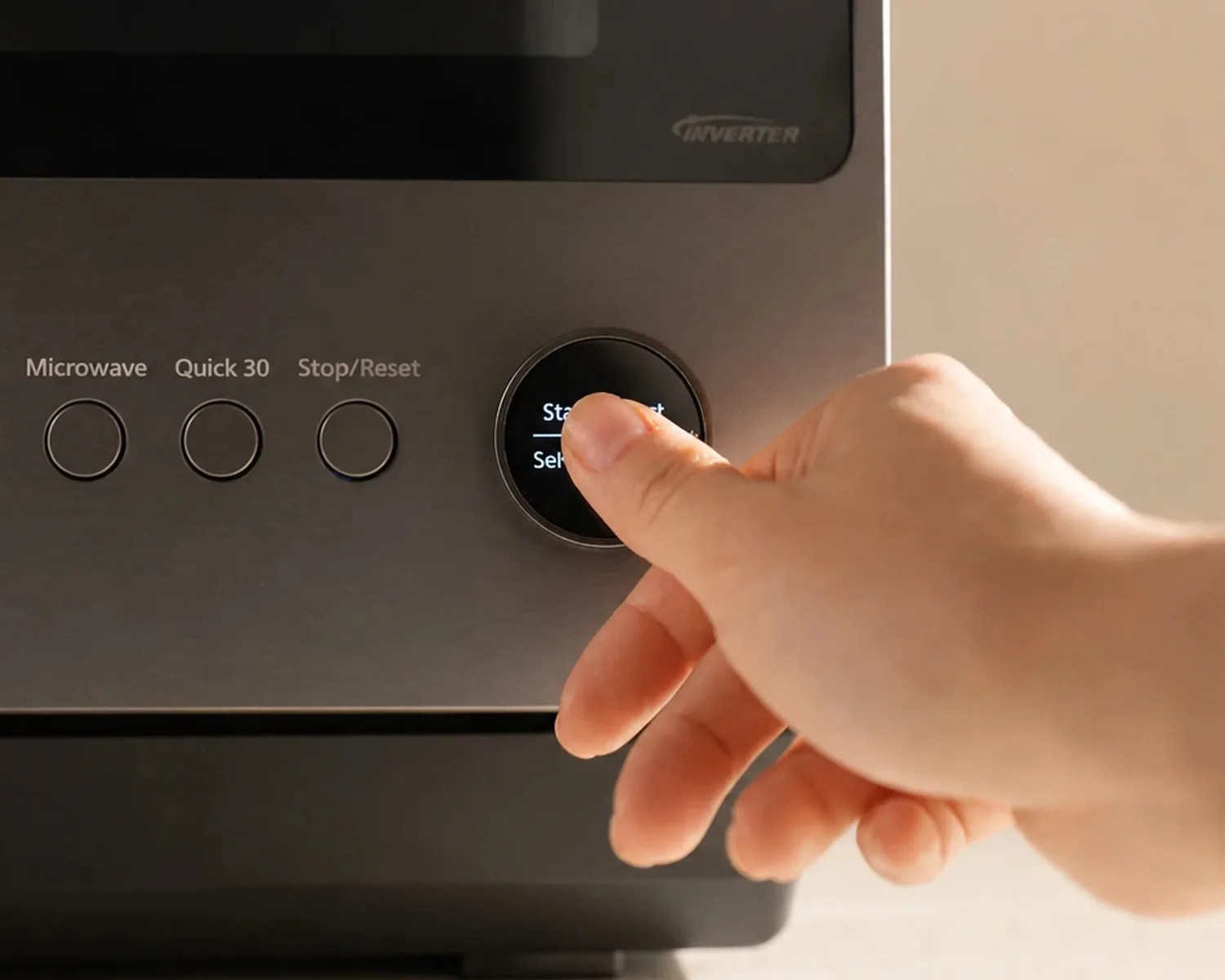
Hand adjusting the round control knob on a stainless steel microwave oven panel.
This isn’t just a styling exercise — the redesigned interior changes how the microwave cooks.
Panasonic

Panasonic’s NN-SF57RM is the product of that divergent philosophy. The 1.0-cubic-foot unit runs at 1,200 watts and pairs that output with Inverter Technology, which delivers a continuous stream of power rather than the on-off cycling that causes uneven cooking in conventional microwaves.

The practical result: food heats through uniformly, without the cold center and scalded edges that have made microwaved leftovers a grudging compromise. A Genius Sensor 2.0 reads food temperature at 64 points and adjusts time and power automatically, so you’re not standing there punching in guesses.

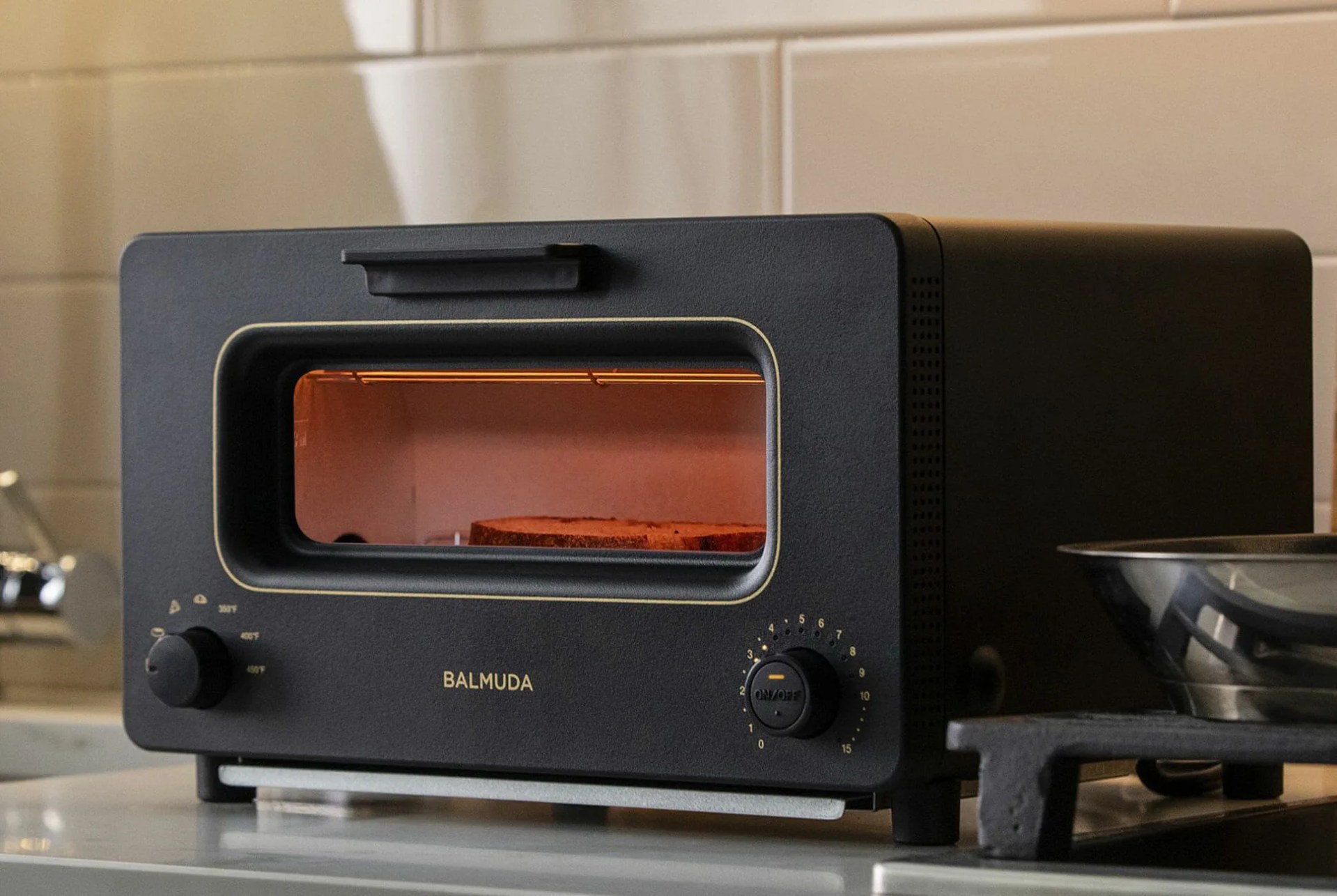
balmuda toaster geaar patrrorl leaad full
The closest consumer product parallel here is what Balmuda did for the toaster (shown above).
Balmuda

The design also immediately reflects its Japanese-market origin. The exterior is clean and minimal — flat-panel controls, a pull-down door, and a form factor that doesn’t apologize for existing on your counter.

The closest parallel here is what Balmuda did for the toaster. The Balmuda Steam Toaster arrived as a Japanese-engineered reimagining of an appliance most people had written off, using steam injection to breathe new life into bread in a way no $30 pop-up toaster could approximate. 

Its success rested on a simple premise: a mundane kitchen tool, rebuilt from first principles, could justify a premium price if the results were genuinely better. The NN-SF57RM makes the same argument for the microwave — that the appliance was never the problem, only the engineering behind it.

Availability and pricing

Black Panasonic microwave oven with digital display on a kitchen countertop under a wooden shelf with bowls and vases.
At $430, Panasonic is positioning this as a premium countertop appliance rather than a commodity microwave.
Panasonic

The NN-SF57RM is available directly from Panasonic and on Amazon for $430.

For comparison, The Wirecutter pegs the best-in-class microwave at around $300, which means Panasonic is asking for a meaningful premium over the established competition.

What you’re paying for is the Inverter 2.0 system, the smart sensor, and the design refinement — none of which come standard at that lower price point.

But for design-minded cooks who have already invested in quality cookware, take reheating seriously, and don’t have another option for integrating a microwave into their kitchen other than displaying it on the counter, at least there’s now an option that checks all the boxes.

Want to stay up to date on the latest product news and releases? Add Gear Patrol as a preferred source to ensure our independent journalism makes it to the top of your Google search results.

add as a preferred source on google