
Harley-Davidson’s RMCR, Arguably Its Best-Looking Bike in Years, Inches Closer to Reality

A recent trademark application indicates the brand’s stunning café racer concept may actually be headed for production.

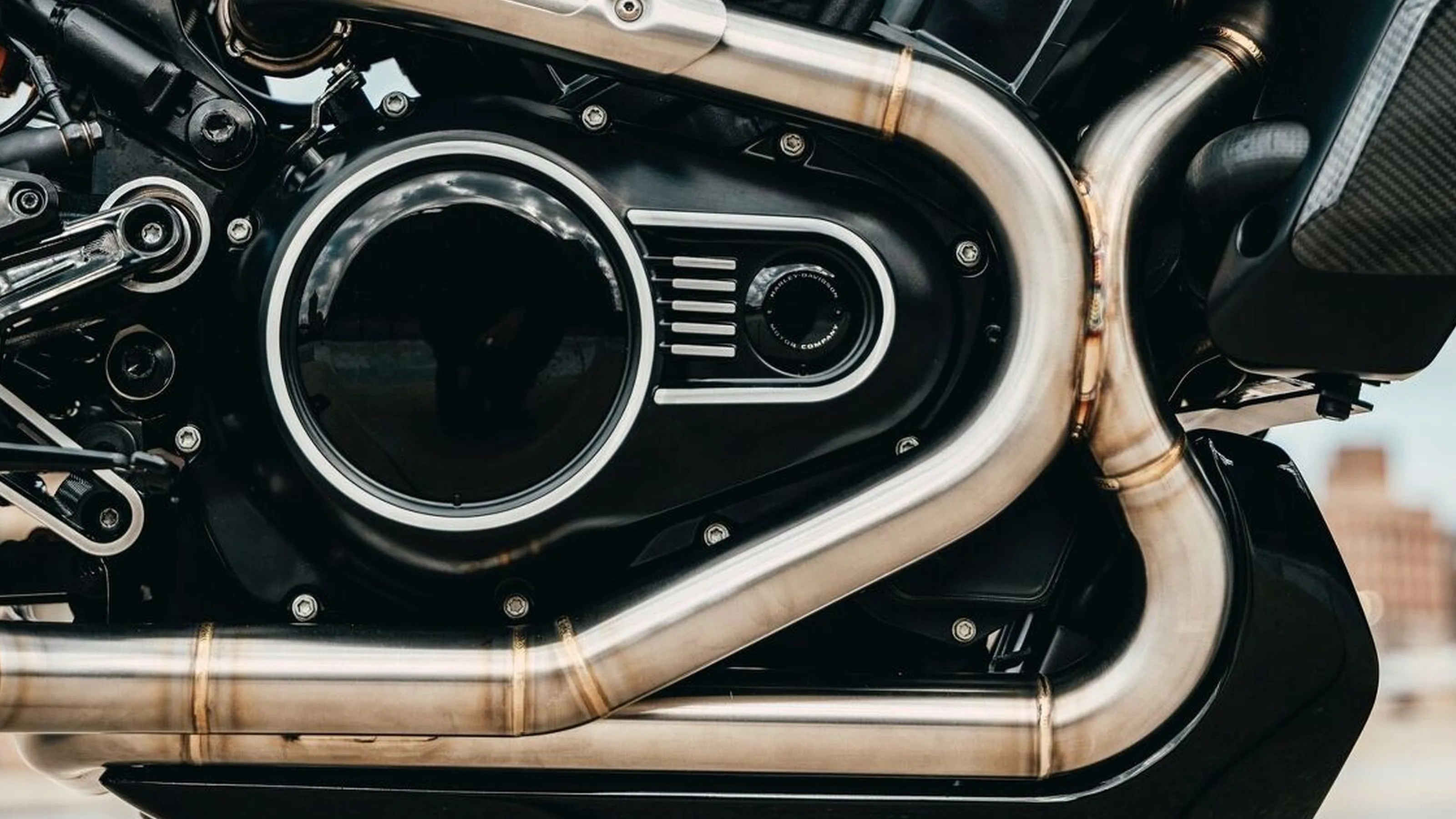
Close-up of a motorcycle engine with polished metal exhaust pipes and a black cover featuring a circular design.Harley-Davidson

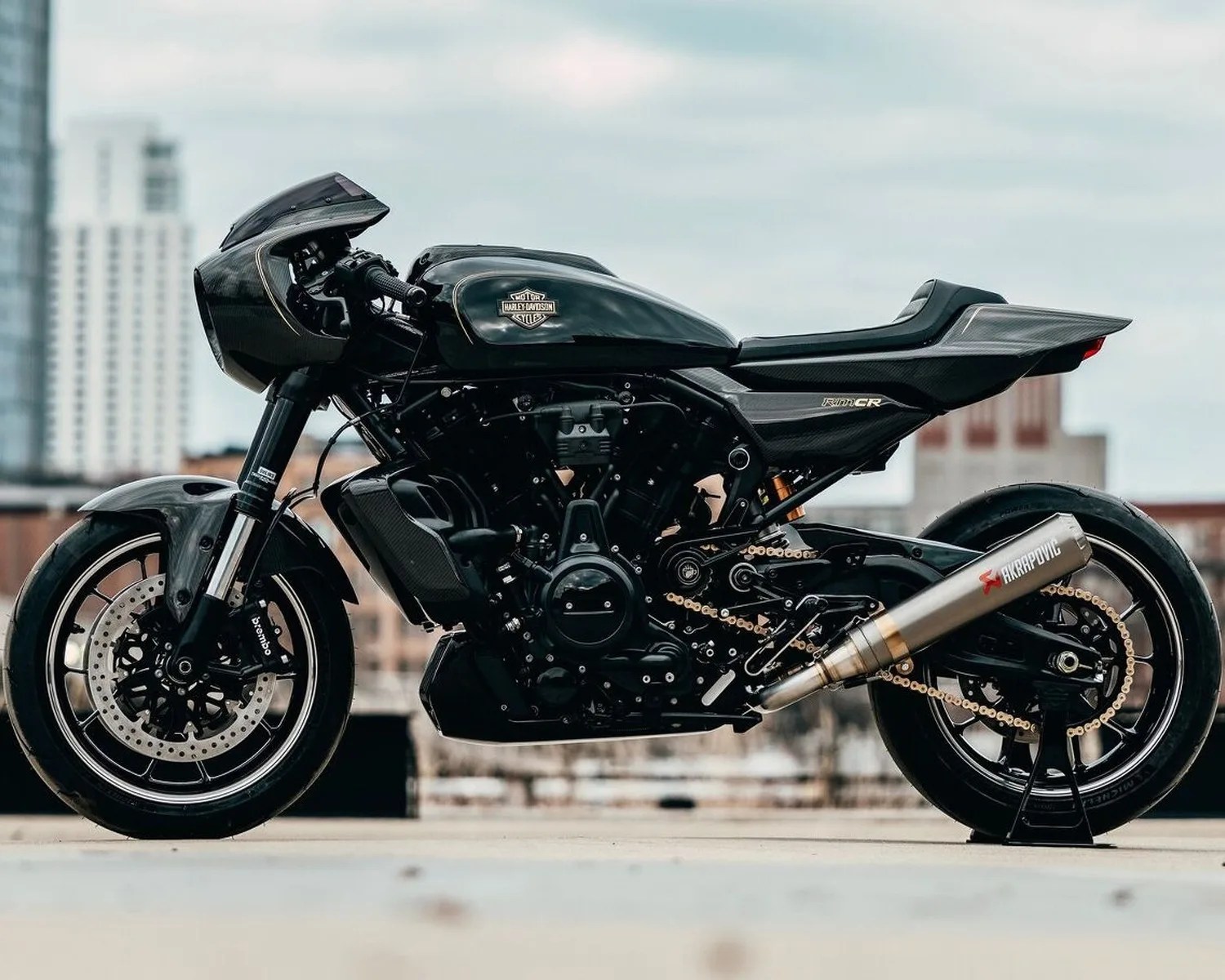
Back in March, I wrote breathlessly about Harley-Davidson’s Revolution Max Café Racer concept, which popped up at Milwaukee’s Mama Tried Motorcycle Show with minimal advance fanfare.

At the time, the darkly dazzling beauty, inspired by the XLCR that Willie G. Davidson helped bring to life in the 1970s, seemed destined to be a one-of-one flight of fancy.
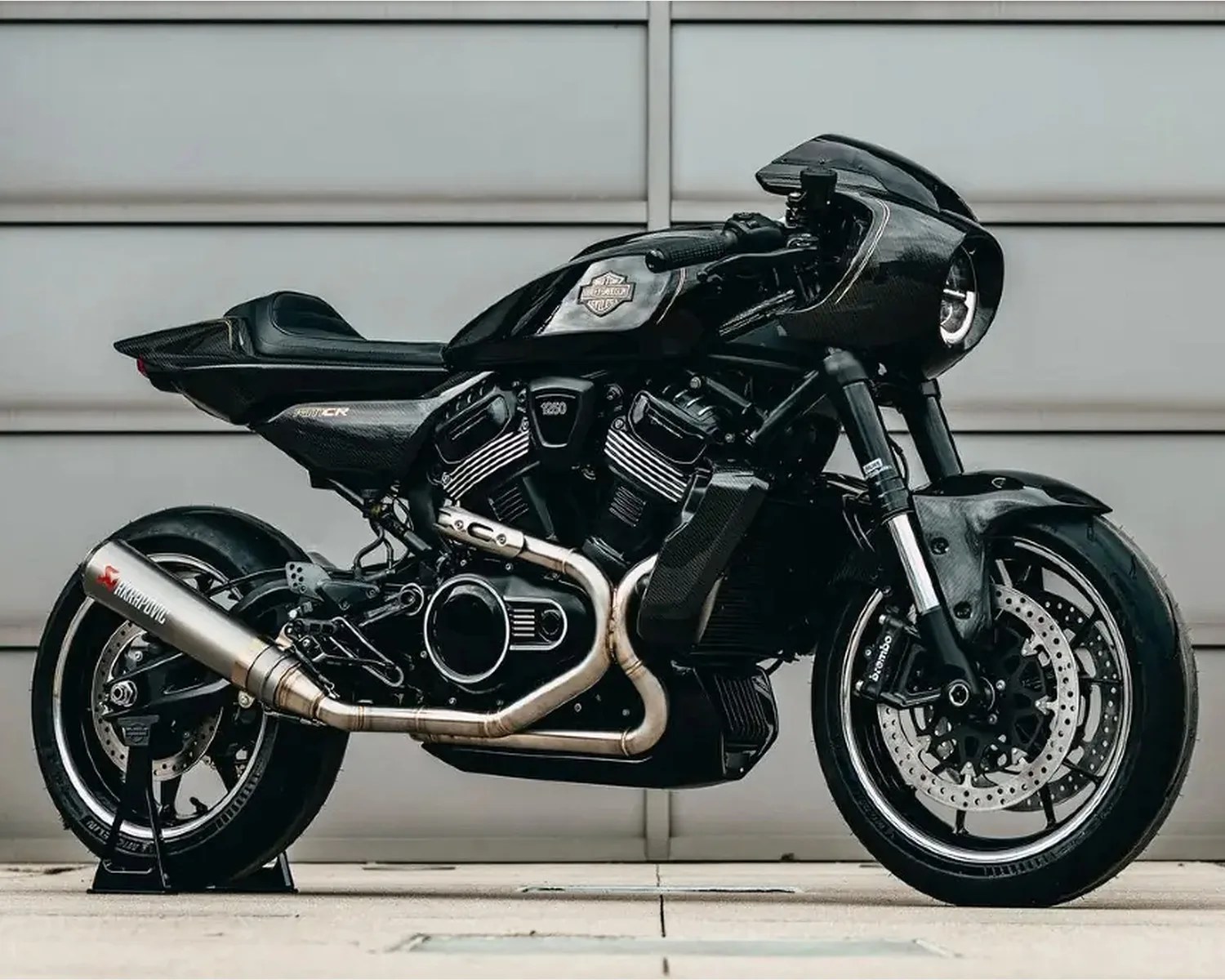
Black Harley-Davidson motorcycle with carbon fiber bodywork and Akrapovic exhaust on a stand.
A recent trademark filing delivers hope that the super-cool RMCR concept could become a production model.
Harley-Davidson

However, the brand recently filed trademark applications for “RMCR” and “RMXR,” hinting that this bike and another Revolution Max-powered option might actually be more than a daydream.

Will this eye-popping concept come to fruition? Let’s take a closer look.

High-octane java

As the name suggests, the RMCR is powered by the brand’s potent 1250cc Revolution Max engine. 

In the bike it was originally designed for, the adventure-ready Pan America, it makes a robust 150 horsepower and 94 ft-lbs of torque, far exceeding the XLCR’s 57hp and 67.9 ft-lbs. 
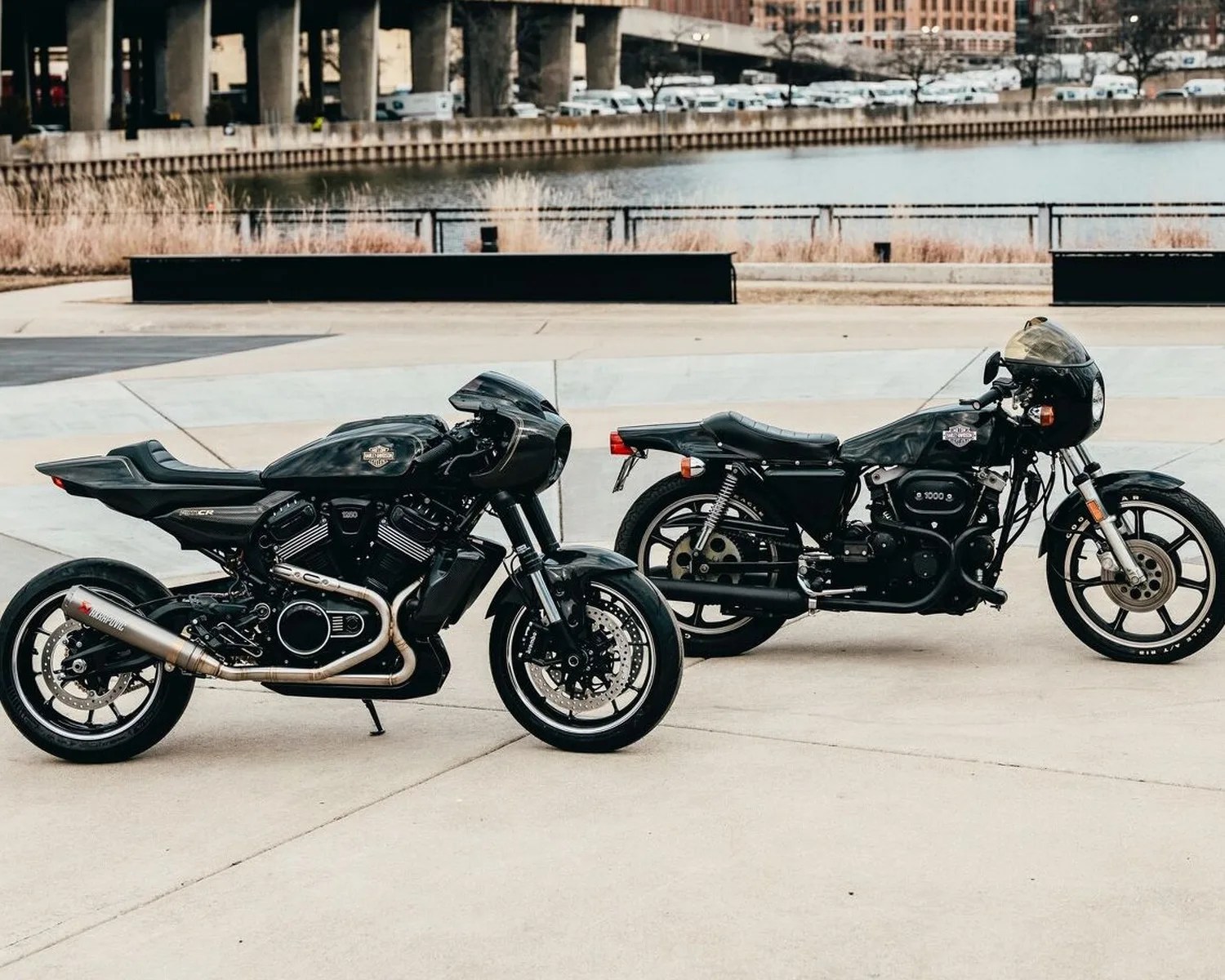
Two black Harley-Davidson motorcycles parked on a concrete surface near a body of water.
The RMCR is inspired by the XCLR (right), which Harley produced from 1977 to 1979.
Harley-Davidson

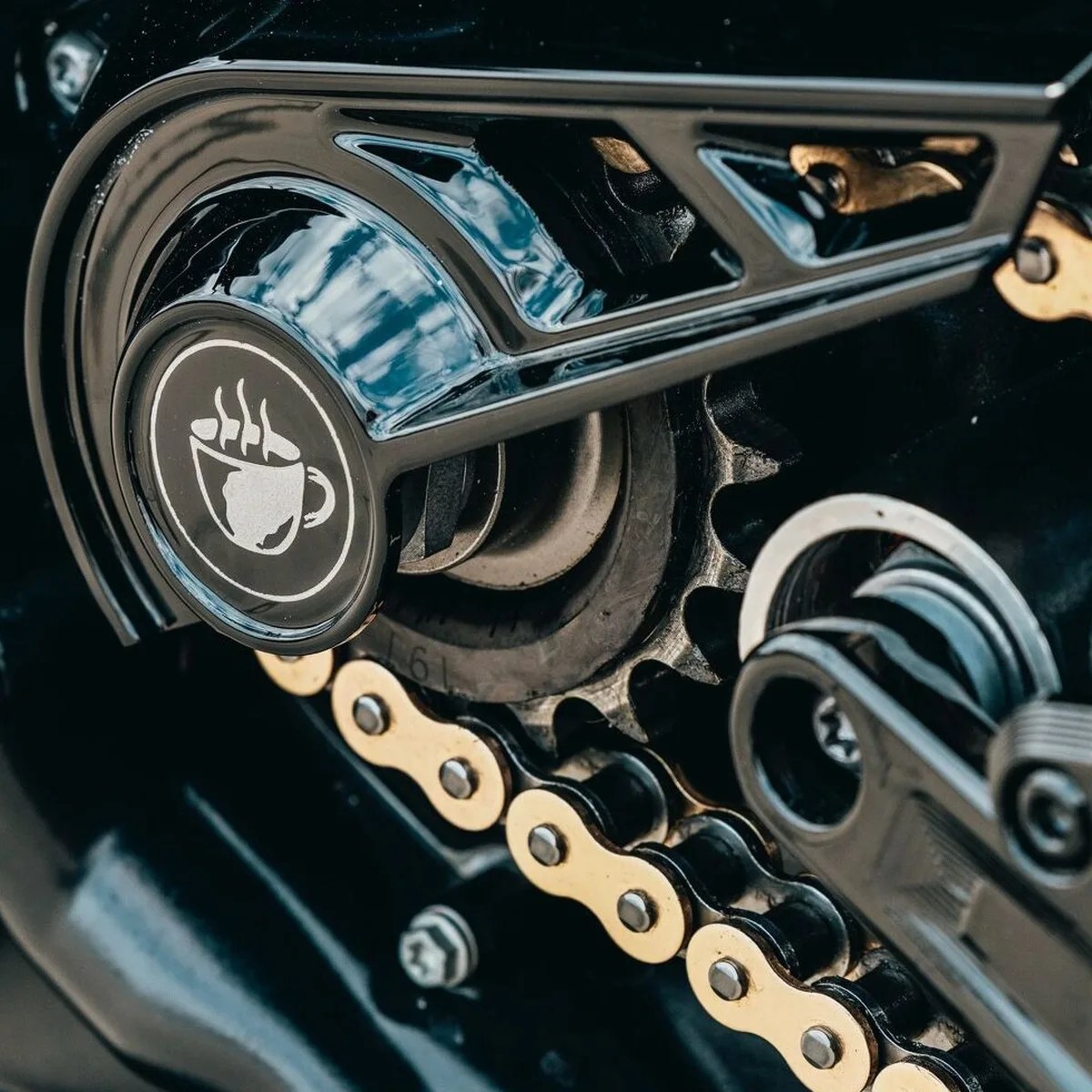
Appearance-wise, it’s a stunner. The pinstriped carbon fiber-accented bodywork looks immaculate, and the details, including a coffee cup icon on the rear hub cover, add rare charm. 

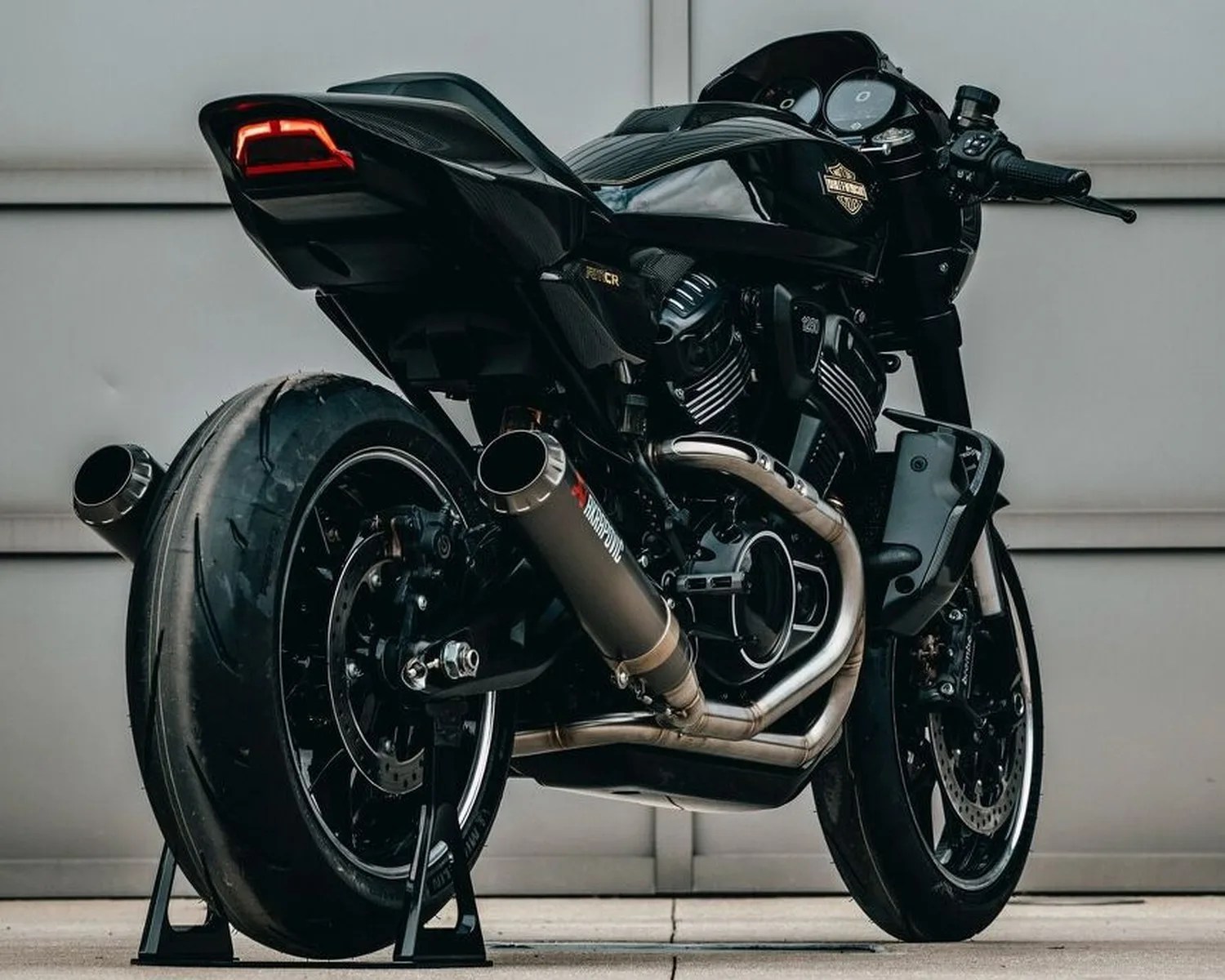
Meanwhile, the custom 2-into-2 Akrapovič-topped exhaust system upgrades the signature rumble.

Black Harley-Davidson motorcycle with carbon fiber fairing and Akrapovic exhaust on a city rooftop.
Among the standout details are the custom 2-into-2 Akrapovič-topped exhaust system.
Harley-Davidson

Before we get too excited, it’s important to note that a trademark is not a guarantee of production, but merely a step along the way. 

However, it does indicate the brand is invested enough to put in the necessary paperwork, and it’s clearly on the radar of new-ish CEO Artie Starrs.

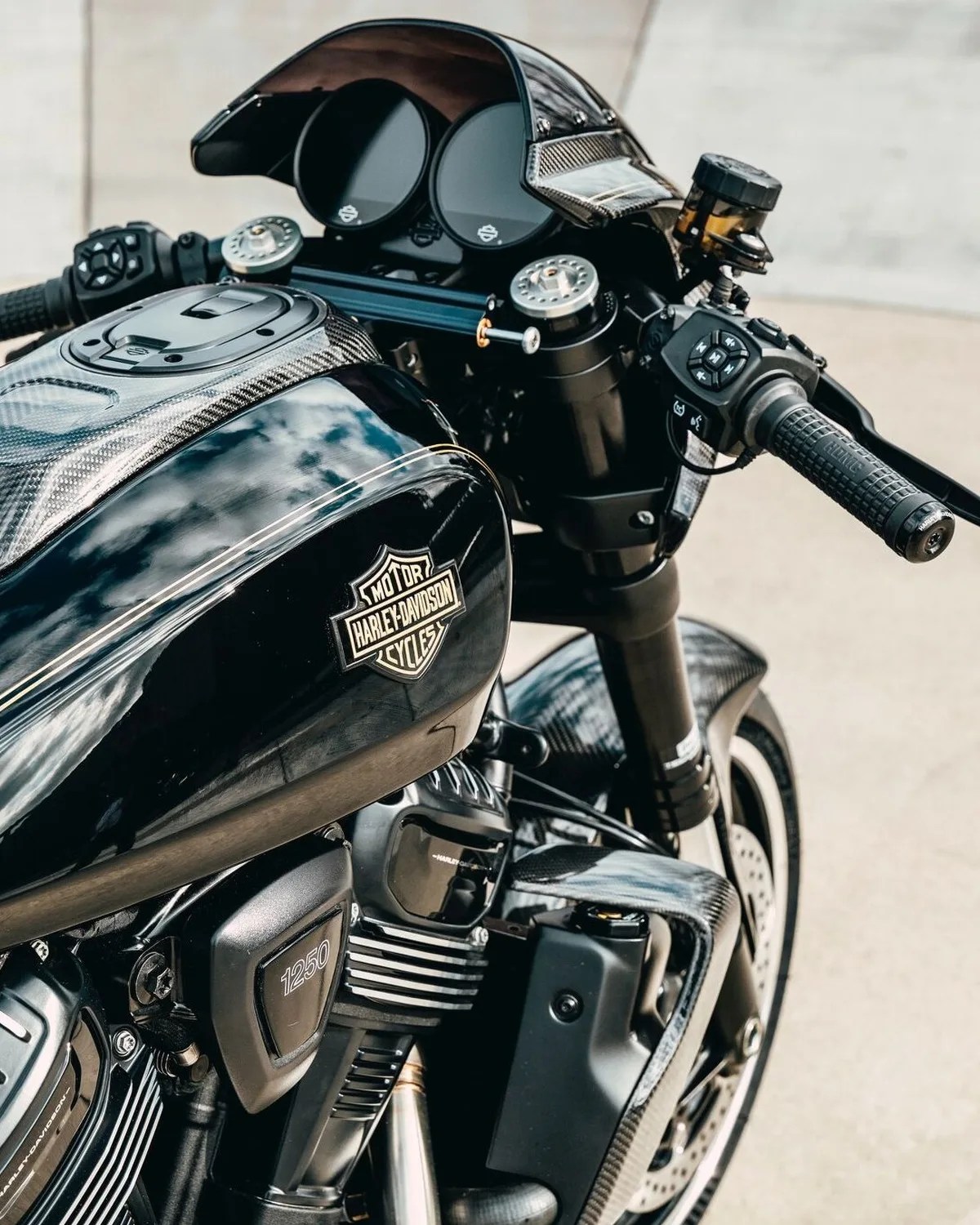
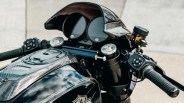
Close-up of a black Harley-Davidson motorcycle fuel tank and handlebars with carbon fiber accents.
The bike also boasts carbon-fiber accents on the fairing, top of the tank, front fender and elsewhere.
Harley-Davidson

According to motorcycle.com, Starrs referenced it during the company’s first-quarter presentation, amid laying out the Back to the Bricks business plan that seems to be helping the brand turn a corner. 

“It’s got an extraordinary buzz and feedback from our riding community,” he said.  “And I think that would be the type of motorcycle — in terms of large displacement powertrain — that you can expect us to get feedback from riders, and you might see that from us in the market.”

Close-up of a motorcycle chain and sprocket with a black cover featuring a white steaming coffee cup icon.
Should the RMCR come to fruition, it will be interesting to see if this hot cup of coffee detail makes the production cut.
Harley-Davidson

Less is known about the RMXR project, but the name connects it with the XR750 flat tracker and the XR1200 and XR1200X models from earlier this century.

The XR1200 bikes used the air-cooled Sportster platform, but the RM in the trademark points to this bike’s power coming, like the Café Racer, from the liquid-cooled Revolution Max engine. 

Black Harley-Davidson motorcycle with dual Akrapovic exhaust pipes and wide rear tire on stands.
While a production bike will likely differ significantly from the one-off, here’s hoping it retains the custom feel.
Harley-Davidson

Should the bikes actually come to fruition, industry insiders predict the RCMR would be a 2027 model and the RXMR to be a 2028 model.

Price-wise, considering the most affordable Pan-Americas, the 1250 Special and 1250ST, start at $19,999, I’d be surprised if they don’t flirt with that figure.