
Pack It Up, This Is the Ultimate Space Watch

At least when it comes to tracking spacetime.

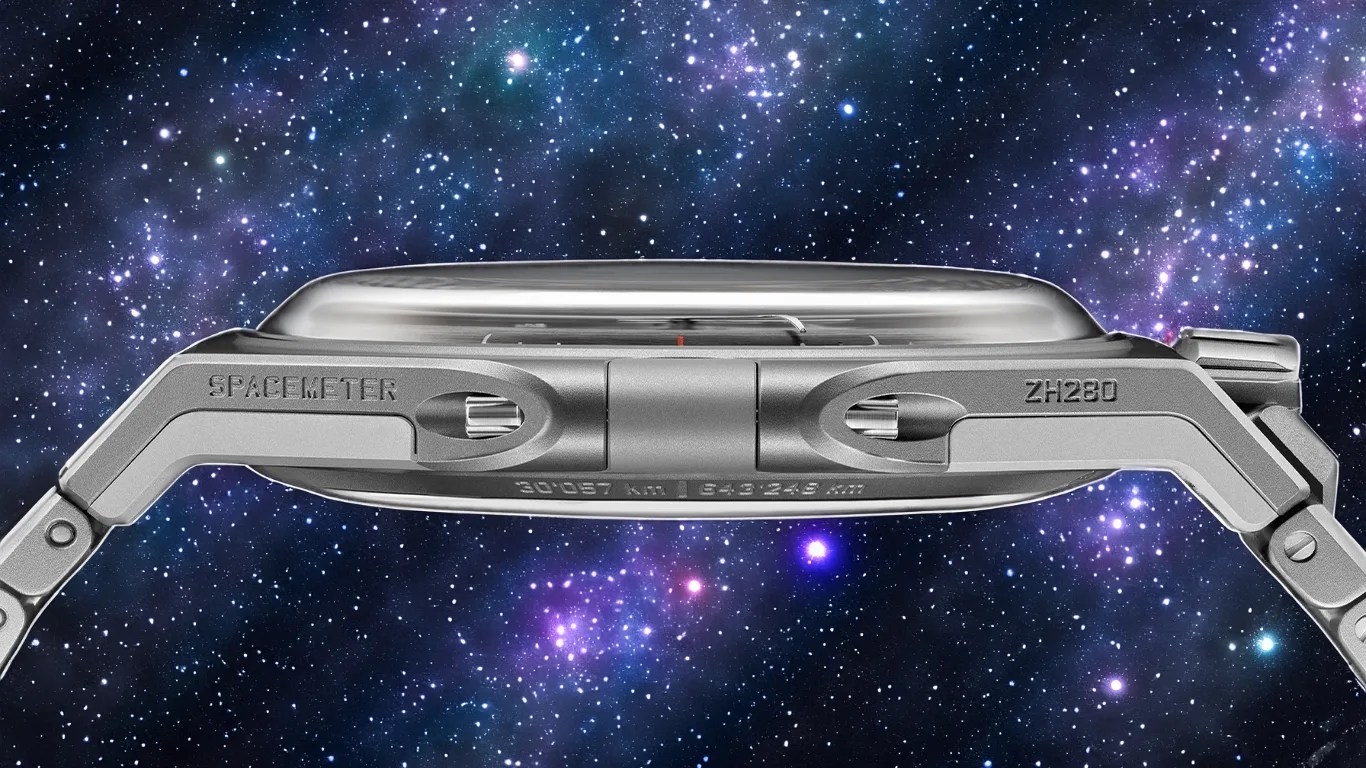
Side view of a silver Urwerk Spacemeter watch with a metal band against a starry space background.Urwerk

If you buy from a link, we may earn a commission. Learn more

There are two broad categories of watches which one could rightfully label as “space watches.”

One category is watches that have actually been worn in outer space, like the Omega Speedmaster, the Seiko “Astronaut,” the Breitling Cosmonaute, etc. The other is watches with celestial complications that track the movement of celestial bodies like the moon and stars, or measure time using various types of alternate space-based calculations, like equation of time or sidereal time. Jaeger-LeCoultre is especially good at this sort of thing.

But if you want a watch that measures how you, the wearer, are actually moving through space and time, then you’re going to have to get an Urwerk. Specifically, you’ll need the brand’s aptly named new model, the SpaceMeter.
Matte silver metal wristwatch with an octagonal case, three subdials, and a linked bracelet
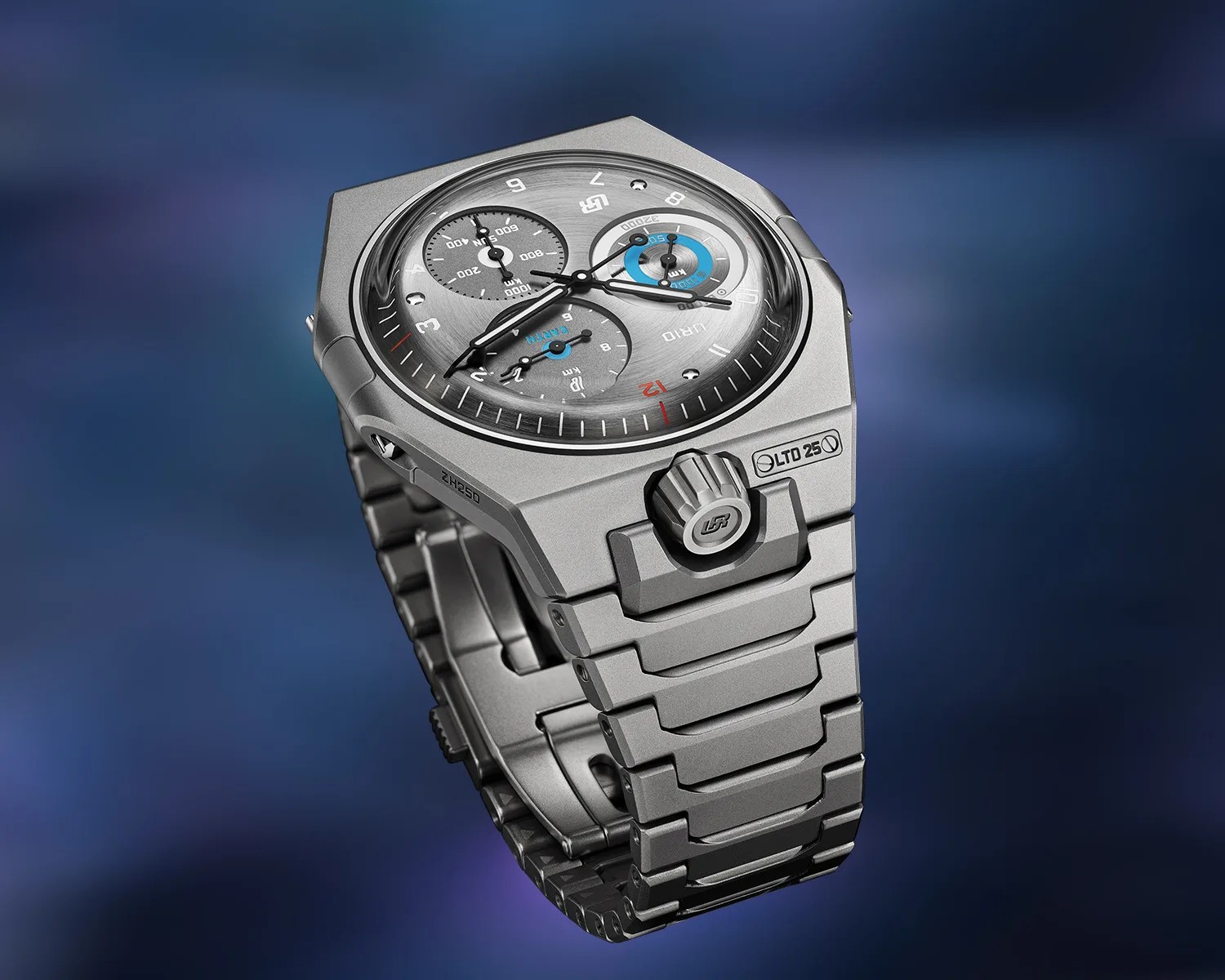
Urwerk’s latest watch looks somewhat traditional for a change, but appearances can be deceiving.
Urwerk

Look ma, hands

Urwerk’s entire brand is based around creating unique, unorthodox ways of reading and interacting with time. As such, the brand’s watches have avant-garde designs, with most featuring wandering satellite complications or other unusual setups for reading the time. I don’t recall ever seeing an Urwerk with center-mounted hands before, but that’s what we’ve got with the UR-10 SpaceMeter.

At first glance, this looks like a pretty normal watch. There are traditional hour and minute hands, along with three subdials. But again, this is an Urwerk, so you can pretty much throw anything traditional out the window.

Those two hands in the middle of the dial do indeed tell the time in a 12-hour format, but that’s as far as the normalcy goes. The three subdials track the movement of the Earth through space in real time, creating a unique and innovative way of measuring spacetime and giving the wearer a unique perspective of their place in the universe (if you want to get that deep with it, otherwise, it’s just cool).

Matte gray metal wristwatch with black dial, blue and white subdials, and integrated metal bracelet on a wrist.
Earth’s rotation and revolution around the sun are measured in real time on the dial of the SpaceMeter.
Urwerk

The way it works is as follows. The subdial at 2:00, labeled Earth in blue, measures the time it takes for the Earth to make its daily rotation, with the value in distance rather than time. It’s labeled in increments of 500m, with one revolution of the dial tracking 10km of rotation. In other words, in the time it takes the hand to make its way all the way around the subdial, the Earth will have rotated 10km (measured at the equator).

At 4:00, the white-sun-labeled dial tracks the Earth’s orbit around the sun, with each marker representing 20km traveled and a full revolution translating to 1,000km of the Earth’s orbit. Lastly, a third counter at 9:00 measures both distances simultaneously on color-coded blue and white scales, this time tracking rotation up to 1,000km and revolution to 64,000km in order for the math to work out and keep the two measurements synchronized.

This is all very cool and unlike anything else around, but there’s even more happening on the back. Flip the watch over and you’ll find a 24-hour scale with a red pointer hand tracking 24-hour time. The scale is labeled every six hours with the distances traveled for both rotation and revolution.

Close-up of a silver URWERK UR-110 wristwatch with a black turbine-style caseback and a metal bracelet.
The watch utilizes Urwerk’s gloriously overbuilt Double Flow Turbine system to slow down the unidirectional rotor when it spins in the wrong direction.
Urwerk

Inside the scale is a nice view of Urwerk’s new Double Flow Turbine, the latest evolution of its innovative rotor air braking system. Since the Urwerk Cal. UR-10.01 automatic movement inside the SpaceMeter uses a unidirectional winding rotor, Urwerk devised a system to slow the rotor down when it free spins in the opposite direction — i.e., the way that doesn’t wind the mainspring — as it causes unnecessary wear and tear when it does so.

The system consists of two propellers that spin in opposite directions, creating a flow of air that slows down the rotor when it starts free-spinning. Why not just use a bidirectional rotor on the movement and negate the need for a proprietary turbine system? Because that would be easy, and Urwerk doesn’t do things the easy way. Plus, the turbine system is insanely cool.

Pricing and availability

The funky turbine-equipped movement with its exclusive space-time-measuring complication is certainly the main calling card of the UR-10 SpaceMeter, but the rest of the watch is pretty cool, too. For example, the angular case is highly unique, and not just for its 12:00 crown.

The 45.4mm x 44mm case measures just 7.13 thick (not including the sapphire crystals on either side) and is made of two pieces. The top part of the case is in sandblasted titanium, while the caseback is sandblasted steel. There is no midcase, and the two sides of the case are fitted together via screws in the sides of the watch. The integrated bracelet is in sandblasted titanium to match the more visible half of the case.

The SpaceMeter is available with either a black or gray PVD dial, and each is limited to just 25 pieces. Pricing, like all Urwerks, is quite pricey, coming in at $94,000. But maybe that’s a small price to pay for the only watch currently available that measures Earth’s distances across the time-space continuum (if you’re loaded, anyway).

Silver metal wristwatch with black dial featuring multiple subdials and a linked bracelet strap.Urwerk

Urwerk UR-10 SpaceMeter

Specs

Case Size 45.4mm
Movement Urwerk Cal. UR-10.01 automatic spacemeter
Water Resistance 30m

Want to stay up to date on the latest product news and releases? Add Gear Patrol as a preferred source to ensure our independent journalism makes it to the top of your Google search results.

add as a preferred source on google
, ,