
Subaru’s New Manual Transmission Could Put a Clutch Pedal in the Cars that Need it Most

A recent patent suggests that the automaker could be working on a simulated shifting setup with provisions for a third pedal.

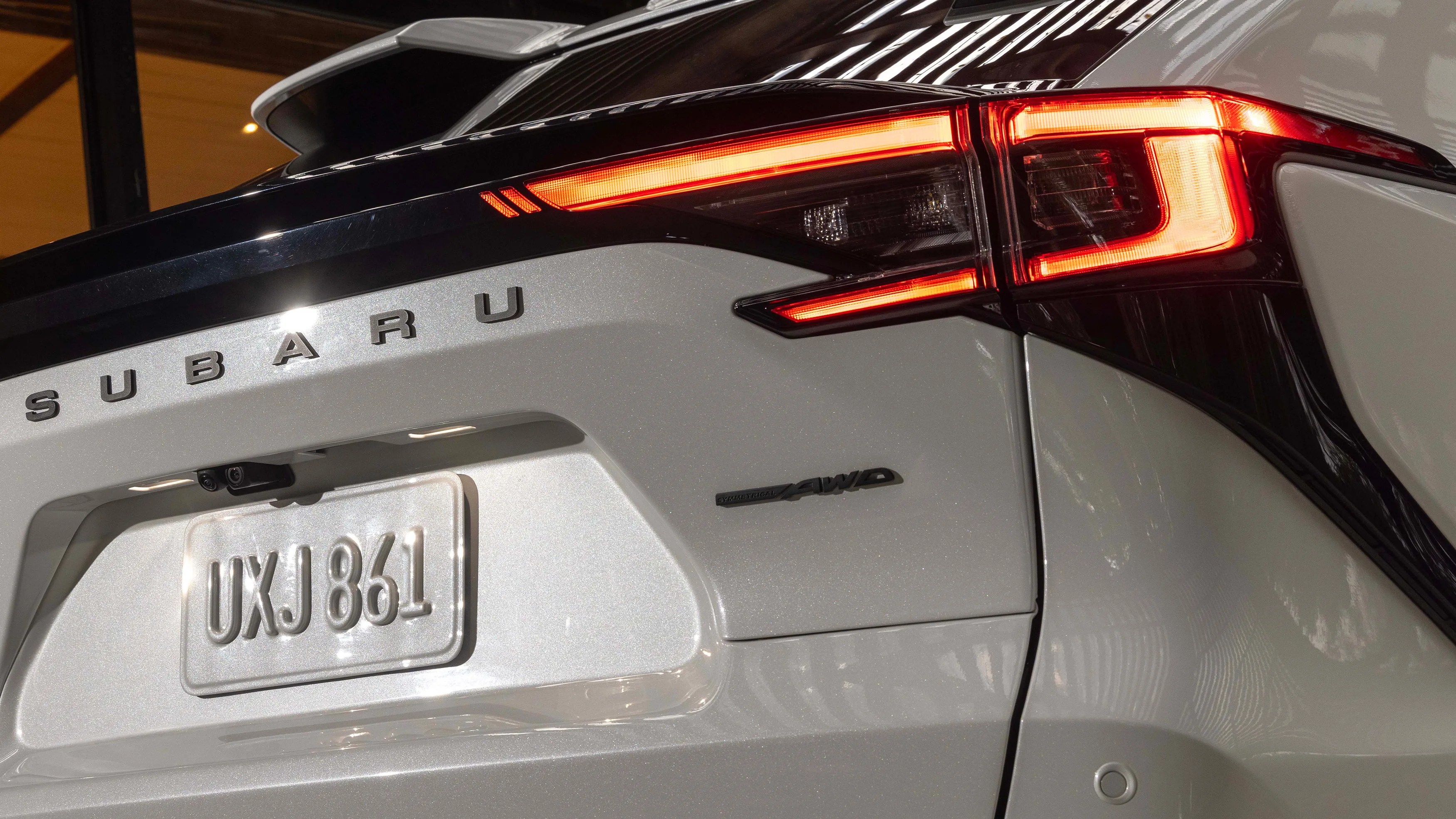
Rear view of a white Subaru car showing illuminated taillight, license plate UXJ 861, and AWD badge.Subaru

As much as many car enthusiasts object to EVs because of their eerie silence and inherent battery weight, the absence of an engine isn’t the only thing that’s turning off such buyers.

It’s the lack of driver input. Between the arrival of advanced assist features and the ongoing disappearance of the manual transmission, nowadays, it’s only becoming increasingly difficult to stay engaged in the act of, well, driving.
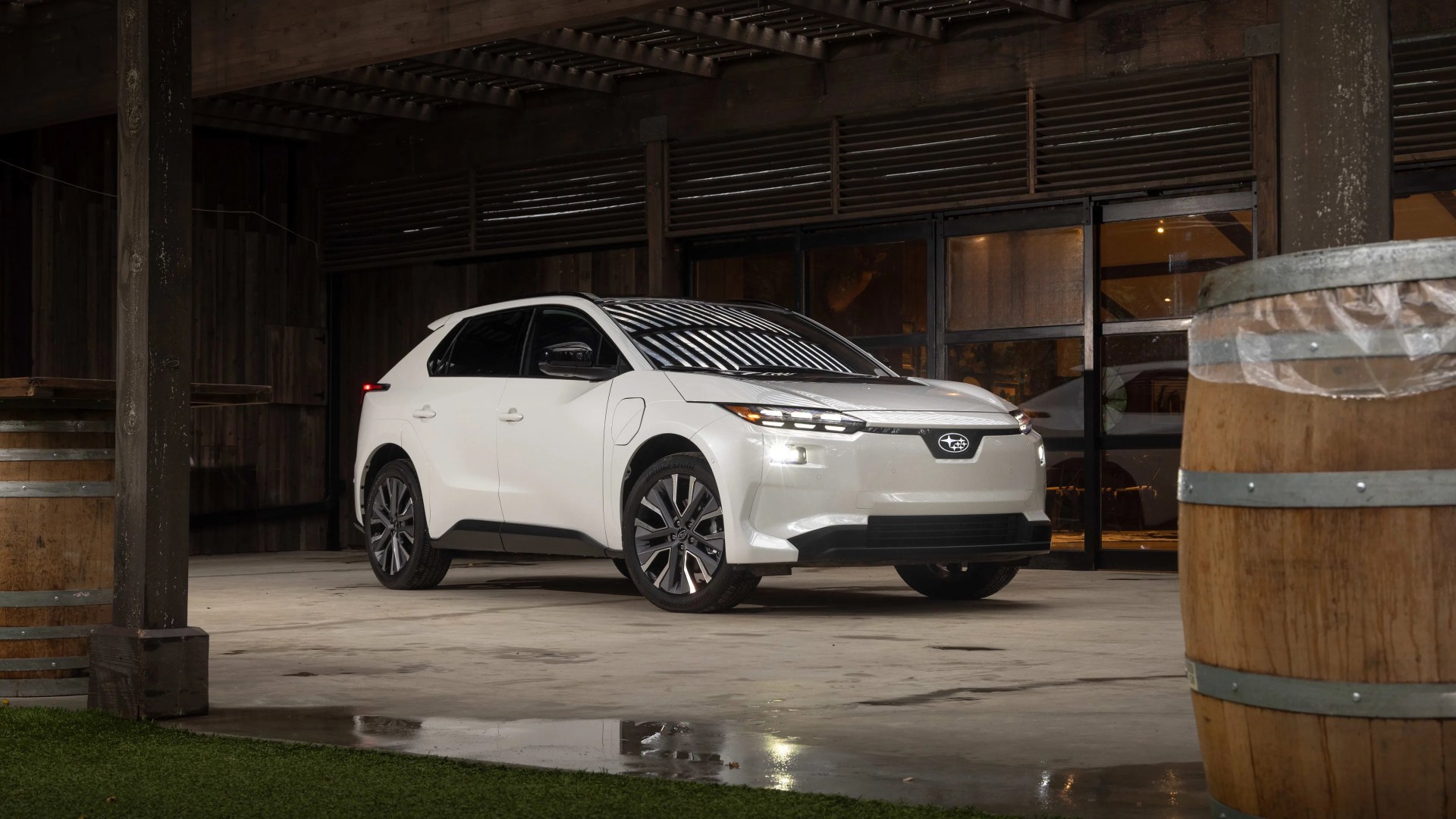
White Subaru electric SUV parked indoors on a concrete floor with wooden barrels and a wooden structure in the background. The vehicle has a sleek, modern design with black accents and illuminated headlights.
As impressively tech-filled as they are, EVs like the Solterra don’t make driving engaging in the ways it used to be.
Subaru

However, Subaru has a creative fix that promises to solve this problem — and not just through software. Rather, the Fuji Heavy Industries-owned automaker is working on a way to give EVs more excitement through a new take on simulated shifting.

A row-your-own EV experience

The idea has surfaced in the form of a patent recently published with the United States Patent and Trademark Office, as discovered by CarBuzz. Through the document, Subaru lays out a simulated manual transmission with an H-pattern shifter and a third pedal.
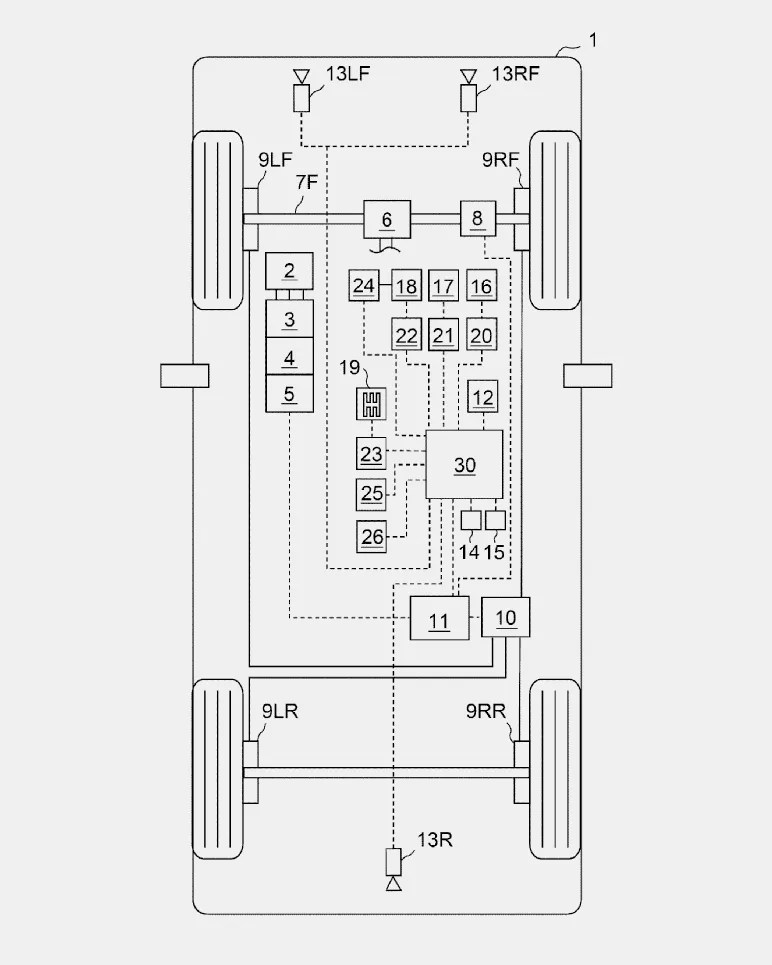
Top-down schematic of a vehicle showing wheels, axles, and interconnected electronic control units and sensors.
Rather than a real gearbox and physical linkages, each component would be connected to a series of sensors and a control module.
USPTO

While each component would be connected to a series of sensors and a control module rather than an actual gearbox, the design nevertheless sounds pretty promising. For instance, output for the drive motor is regulated by the position of the shifter, so it’s not just a dummy lever to keep your hand busy.

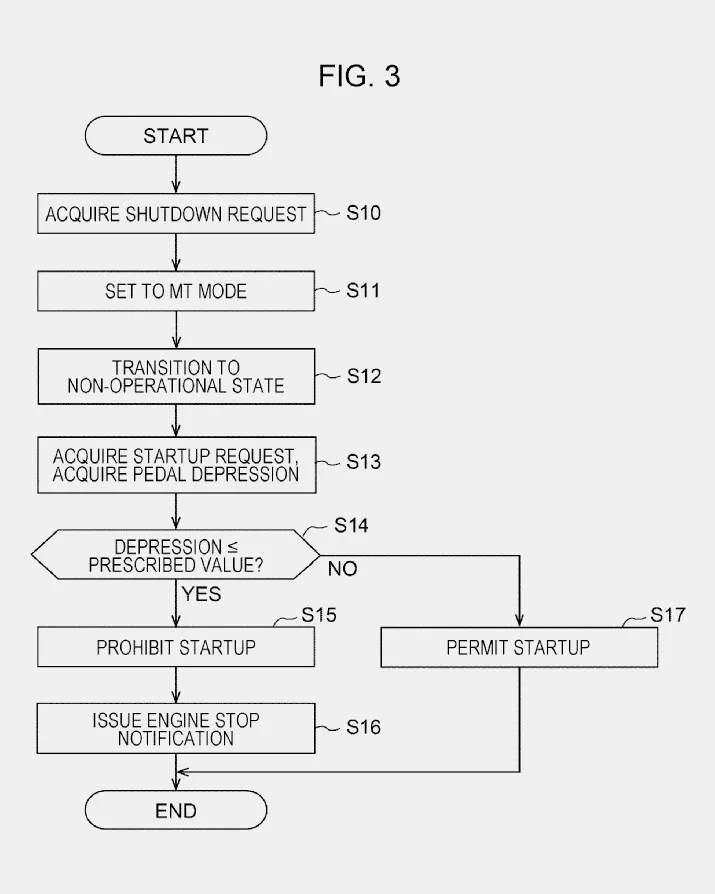
Moreover, as part of Subaru’s design, the simulated shifter would also feature a built-in safety device to prevent unintentional ‘jackrabbit starts.’ In practice, this means that, much like a traditional gas-powered manual car, drivers would have to engage the pedal upon startup.

Flowchart showing a shutdown and startup process with steps including acquiring shutdown request, setting MT mode, transitioning to non-operational state, checking pedal depression, and permitting or prohibiting startup.
As is the case with a gas-powered manual car, you have to press the clutch in to start it.
USPTO

Now, in the absence of physical linkages and a true clutch, nothing requires that the shifting hardware be used at all times. For this reason, Subaru has envisioned its simulated manual experience as also offering an optional automatic mode that lets the driver relax.

Though it’s hard to say what the take rate would be on vehicles equipped with or marketed for something like this, there’s no denying that the notion certainly adds a degree of appeal.

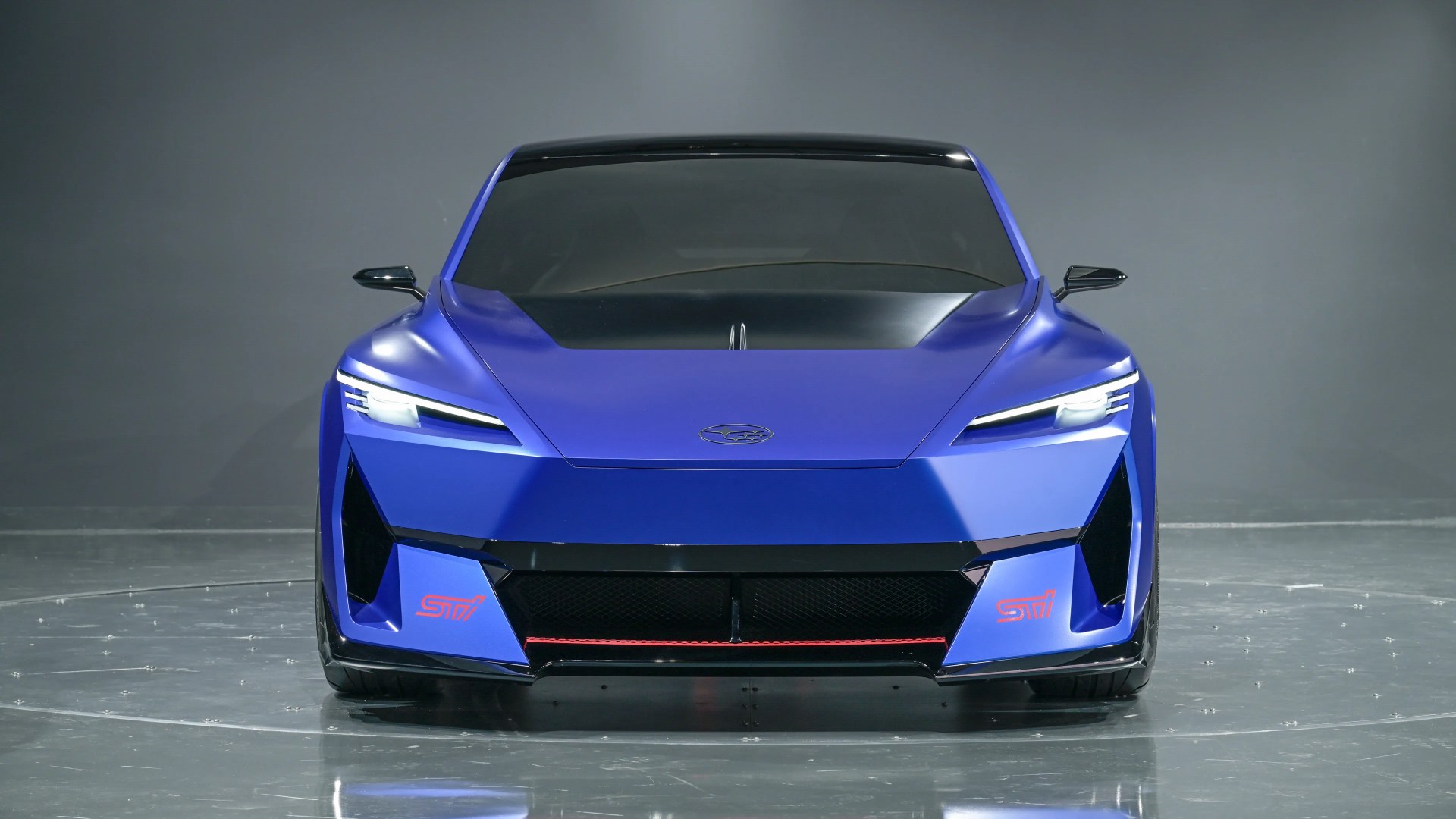
Blue Subaru STI sports car with sleek angular front and black hood in a studio.
The Performance-E STI concept offered a vision of all-electric Subaru STI performance.
Subaru

Don’t simulated manuals exist?

We’re already seeing simulated manual transmissions pop up throughout the industry in more ways than one, but Subaru’s design promises something different to what others currently offer.

That said, a few years ago, Toyota fitted a prototype Lexus UX crossover with a similar setup to one found in the patent detailed above. Though not a production offering, the row-your-own capabilities previewed later concepts like the awesome stick-shift AE86 EV.

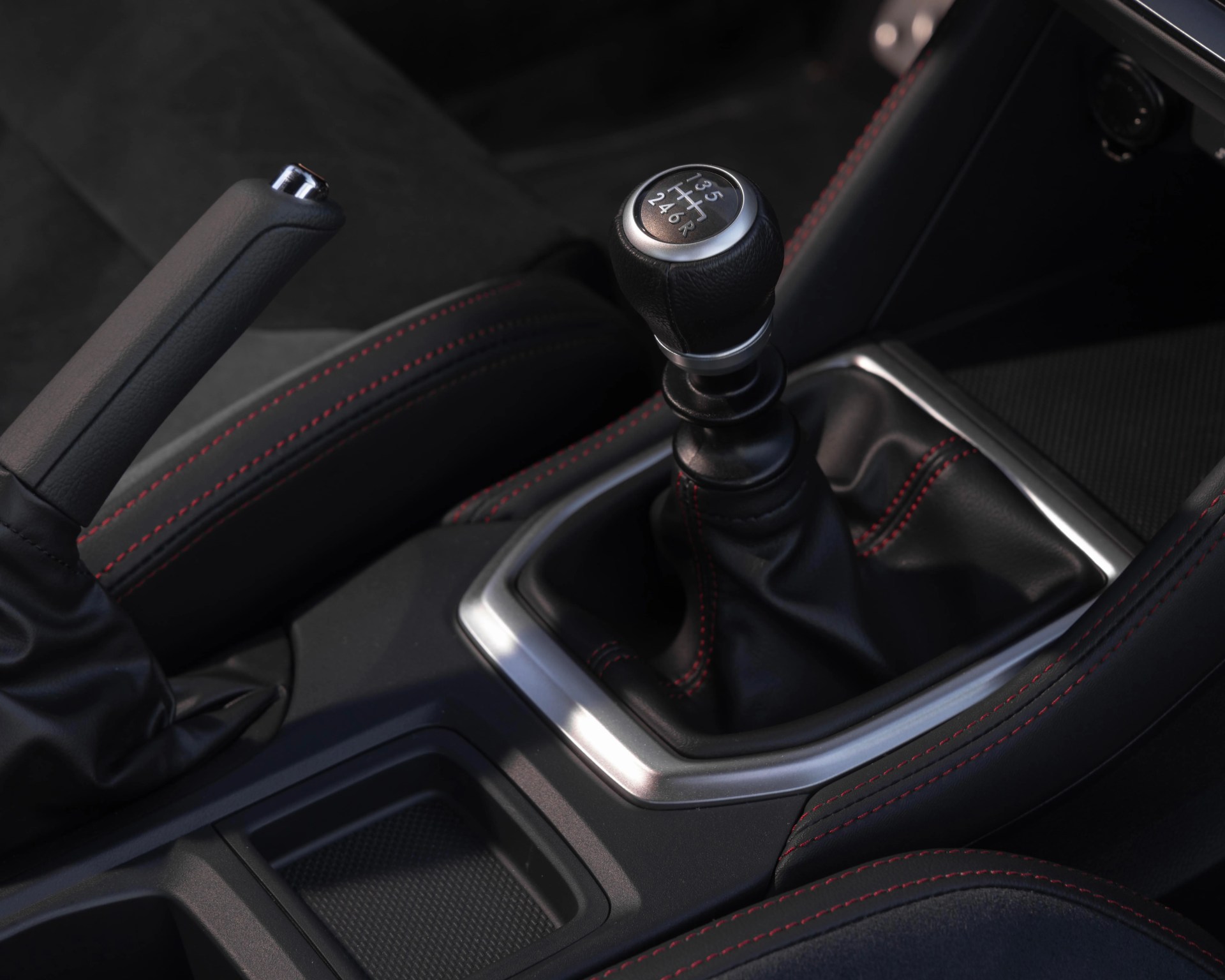
Black leather manual gear shift knob with silver trim and red stitching on car center console.
A manual remains a high priority for man enthusiasts, and Subaru seems to be listening.
Subaru

The simulated manual options hitting the market don’t bring quite the same degree of driver input. For instance, Hyundai’s Ioniq 5 N and Ioniq 6 N each replicate the experience of an 8-speed DCT through carefully programmed torque delivery and auditory cues, but they don’t feature an H-pattern shifter or a clutch pedal.

Even considering the absence of a third pedal, Hyundai’s system left Porsche impressed. While previously averse to simulating the manual experience, there’s now a possibility that the German automaker could integrate such features into its EVs going forward.

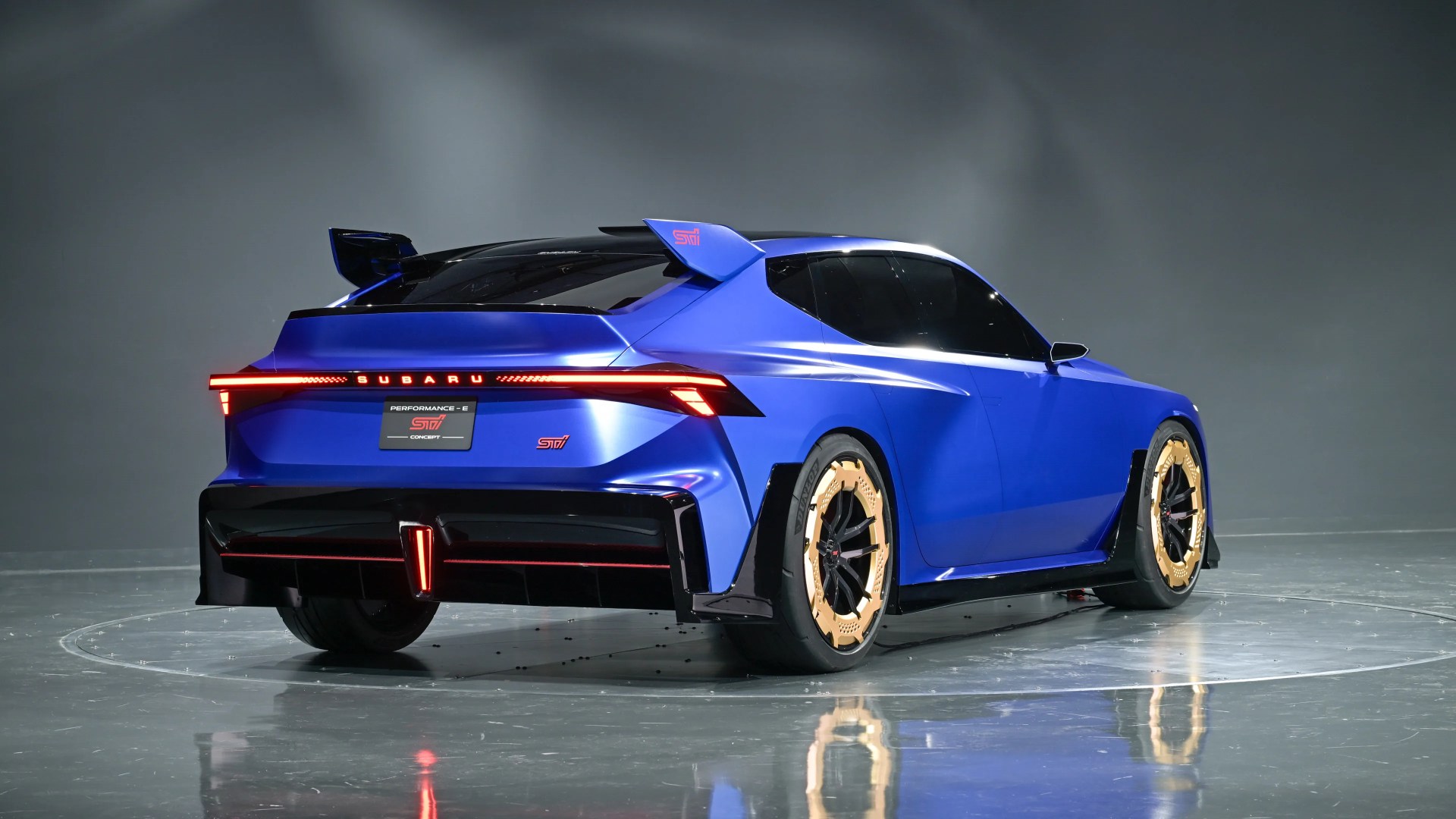
Blue Subaru Performance-E STI concept car with gold-accented wheels and rear spoiler in a studio.
Concepts like the Performance-E STI would be an ideal proving ground for a simulated manual setup.
Subaru

What’s more, simulated manual is making its way into hybrids, too, as Honda designed the new Prelude to reproduce the feeling of a gearbox despite not featuring a conventional transmission. Together, Linear Shift Control and S+ Shift simulate the feeling of gear changes with rev matching and downshifts.

In any case, having teased a series of STI concepts in Tokyo (one of which was an EV), Subaru is clearly exploring the future of its performance cars. It’s too early to say whether this design will ever reach production, but a third pedal for an all-electric powertrain is one way to ensure that enthusiasts stay plugged in.

Want to stay up to date on the latest product news and releases? Add Gear Patrol as a preferred source to ensure our independent journalism makes it to the top of your Google search results.

add as a preferred source on google
,