
This Rare Kawasaki Motorcycle Helped Bring Turbos to Two Wheels

Long before building the world’s first factory-supercharged production bike, Team Green explored another kind of forced induction.

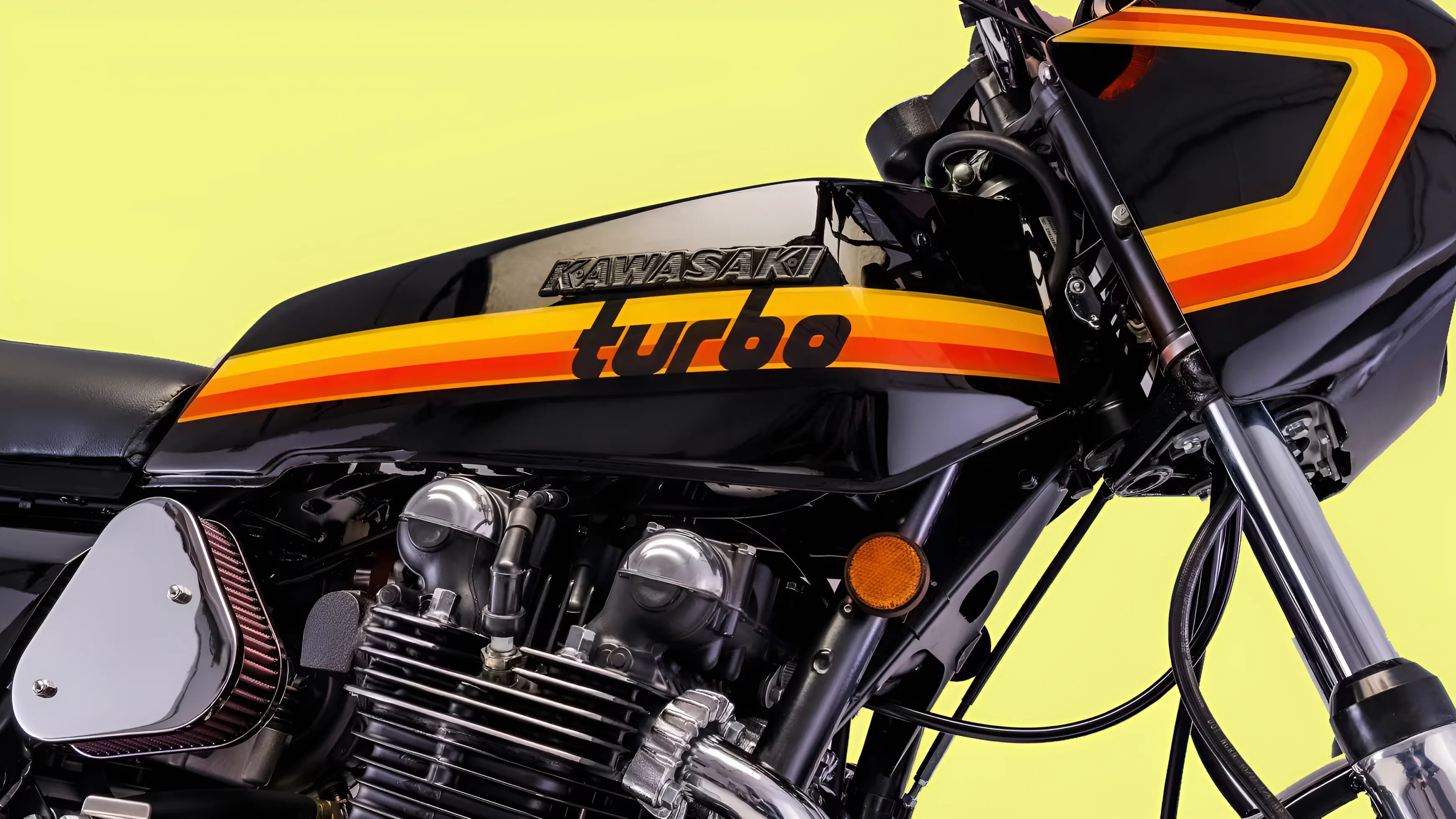
Close-up of black Kawasaki Turbo motorcycle fuel tank with orange and yellow stripes and engine parts against a yellow background.Mecum Auctions

Back in 2015, Kawasaki made history with the debut of the Ninja H2R. The halo-grade hyperbike was not only the world’s first factory-supercharged motorcycle, but also the most powerful production offering you could buy at the time.

While it was undoubtedly a monumental engineering effort, admittedly, it’s par for the course for Kawasaki. That wasn’t the first time that Team Green has pioneered performance upgrades for two-wheeled applications.
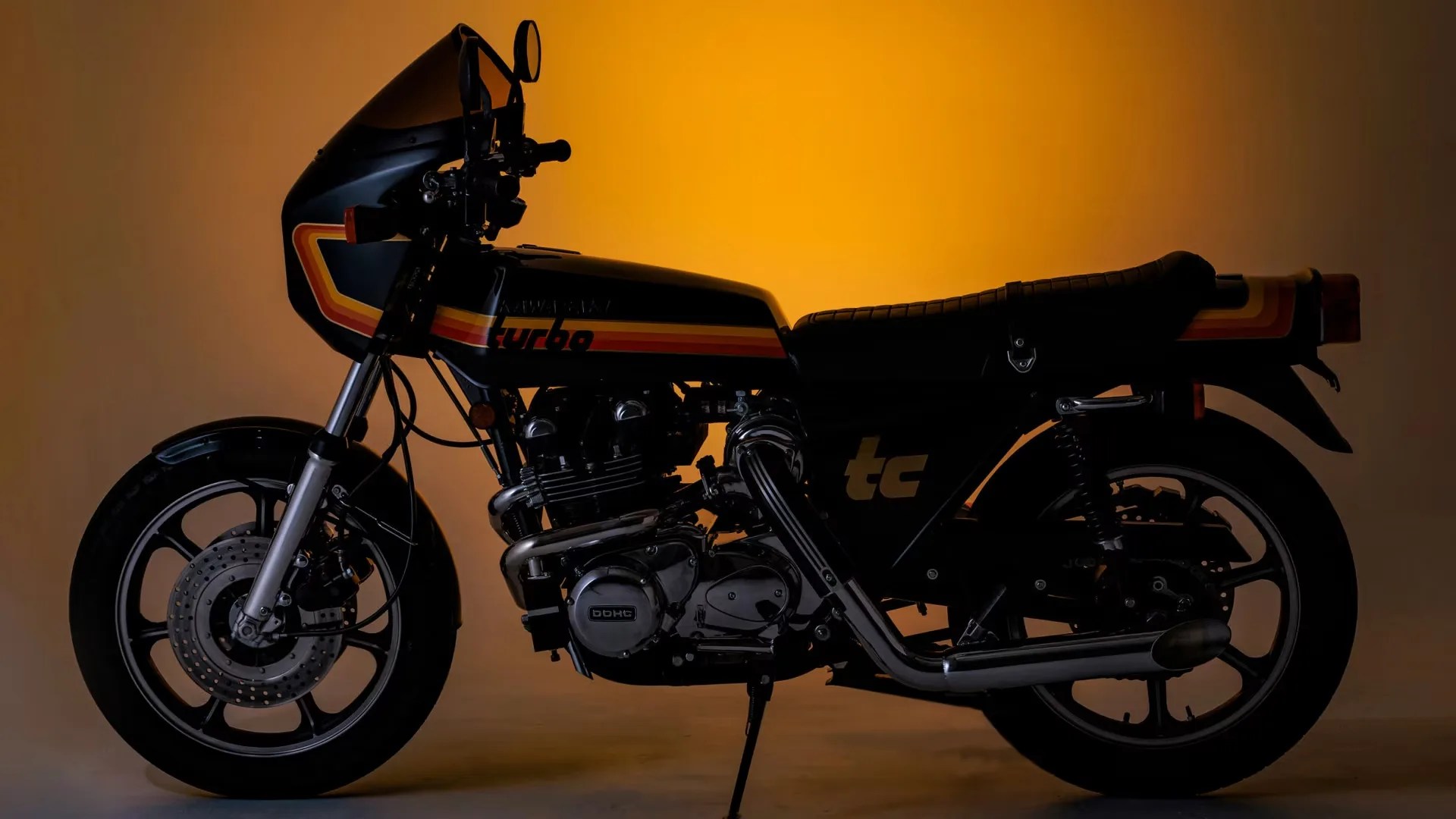
Black Kawasaki Turbo motorcycle with orange and yellow stripes against an orange background.
The TC emerged as an effort to give the Z1-R a competitive edge over rivals.
Mecum Auctions

Not hardly, as long before the launch of the revolutionary blown Ninja, another Kawasaki rocked the world with its forced induction.

Boosting Z1-R sales with a snail

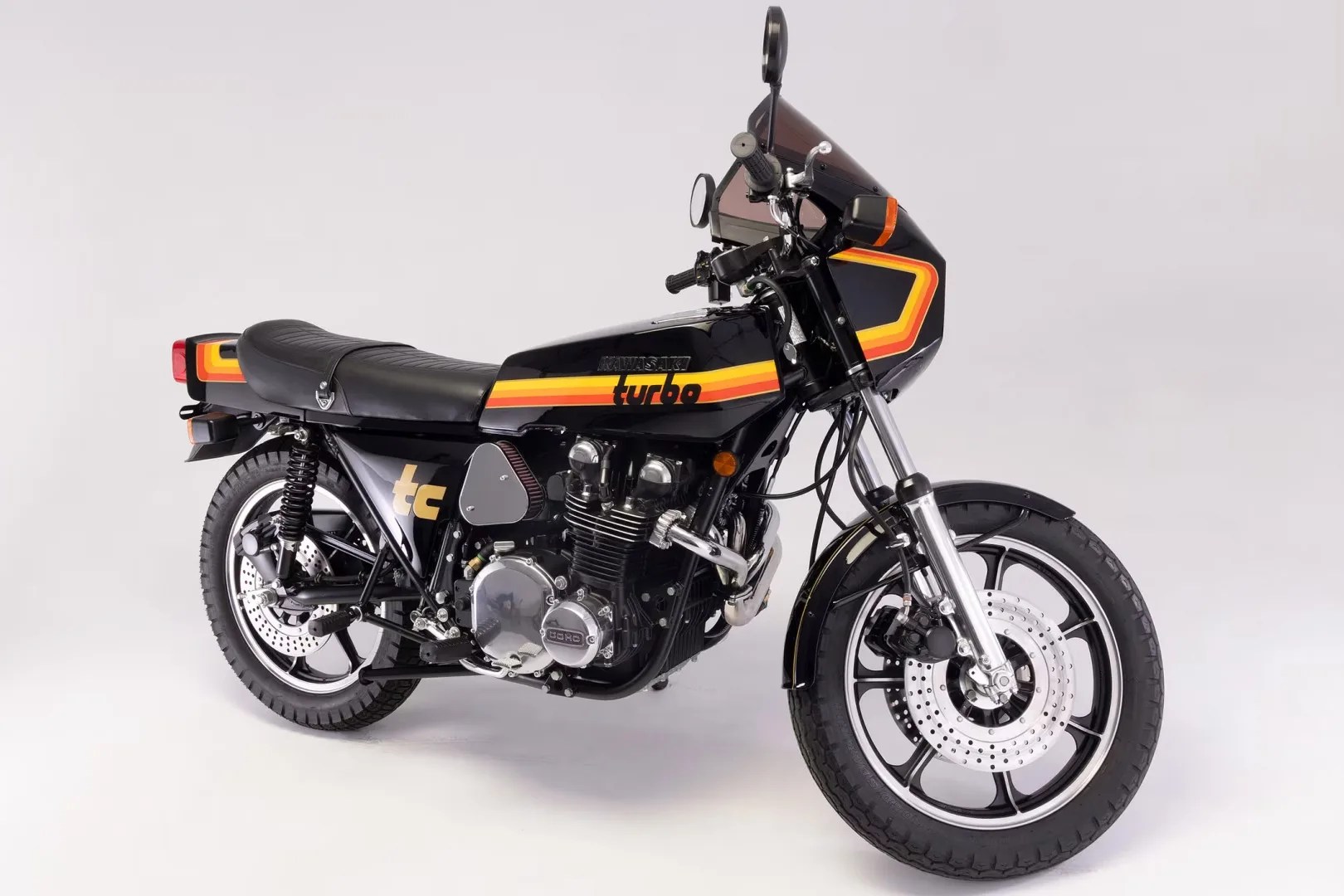
It was called the Z1R-TC, and it took to the streets in 1978 as what many motorcyclists consider to be the first turbocharged production offering. At the time, the flagship Z1-R was struggling on the sales floor, and Kawasaki needed something exciting to get riders in the door.
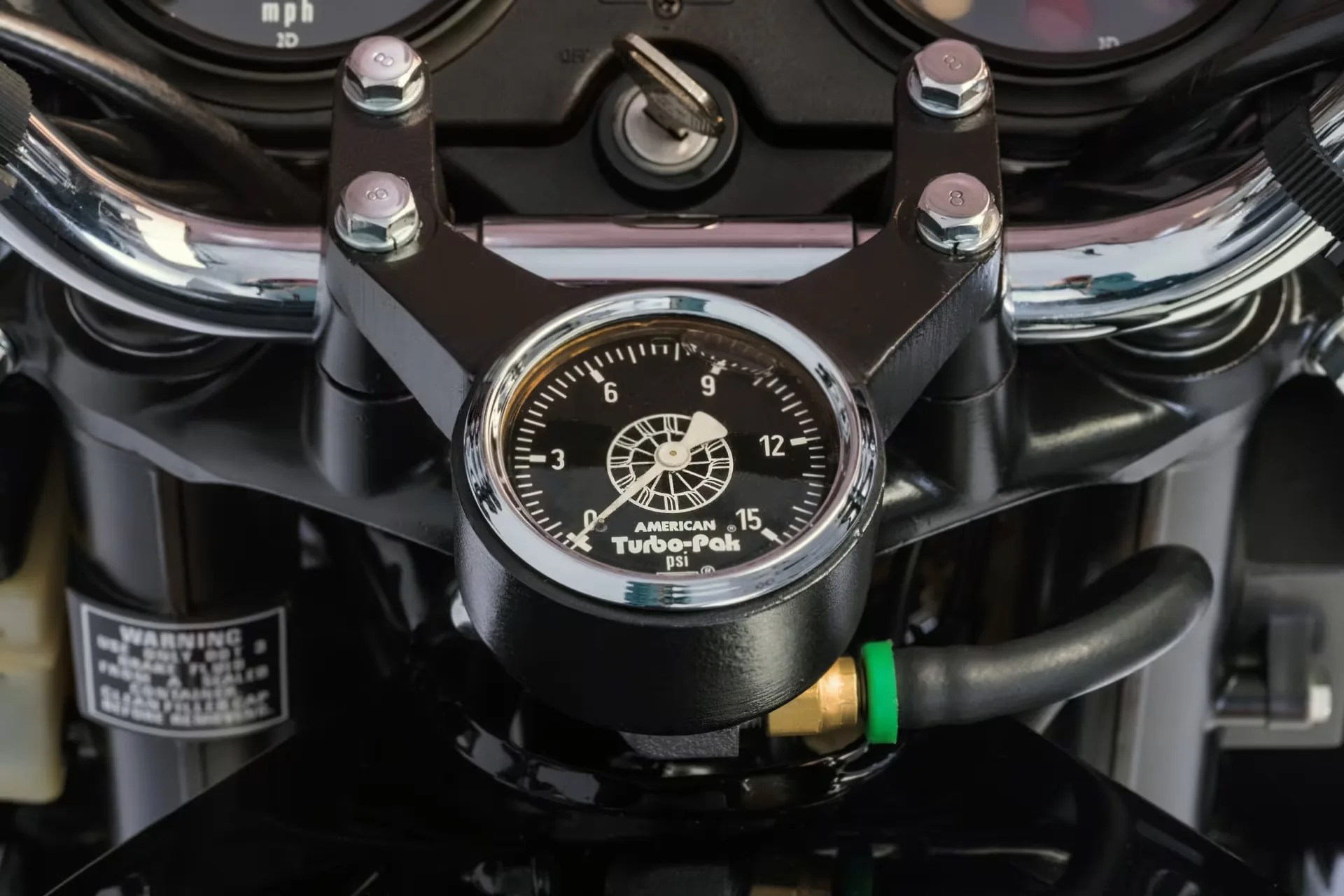
Black American Turbo-Pak psi gauge mounted on a motorcycle handlebar with chrome bolts and a black hose attached.
Power-hungry riders could turn the boost up higher than 10 psi, but it came at the risk of a blown engine.
Mecum Auctions

Having helped the brand build out its dealership in the decade prior and also established an outfit called the Turbo Cycle Corporation, a former company exec by the name of Alan Masek presented just the solution: power.

He struck a deal with Kawasaki for a run of Z1Rs wherein he would install turbocharger kits at his shop and subsequently sell the converted models through official dealers. 

Black Kawasaki turbo motorcycle with orange and yellow stripes and a black leather seat on a white background.
The TC didn’t bring improved brakes or suspension to account for its extra power.
Mecum Auctions

Upon arrival at TCC, each literbike received a Rajay turbocharger, an adjustable wastegate, as well as a high-flow fuel pump and a boost gauge. What’s more, Masek and co. ditched the stock Kawasaki four-carb setup in favor of a single 38mm Bendix unit and swapped in a new pipe.

On the road, it proved to be an extremely effective upgrade for acceleration. When set at 10 pounds of boost, the Z1R-TC made an authoritative 130 horsepower, a 40-pony increase over naturally aspirated Z1Rs that allowed drag racers like Jay Gleason lay down quarter-miles in the 10s.

Too much power for its own good

While TCC made a number of modifications to the powertrain, the outfit didn’t address the rest of the package. The Z1R-TC ran the same 8:1 compression, steel frame, brakes and Kayaba shocks as came from the Kawasaki factory on the stock Z1-R.

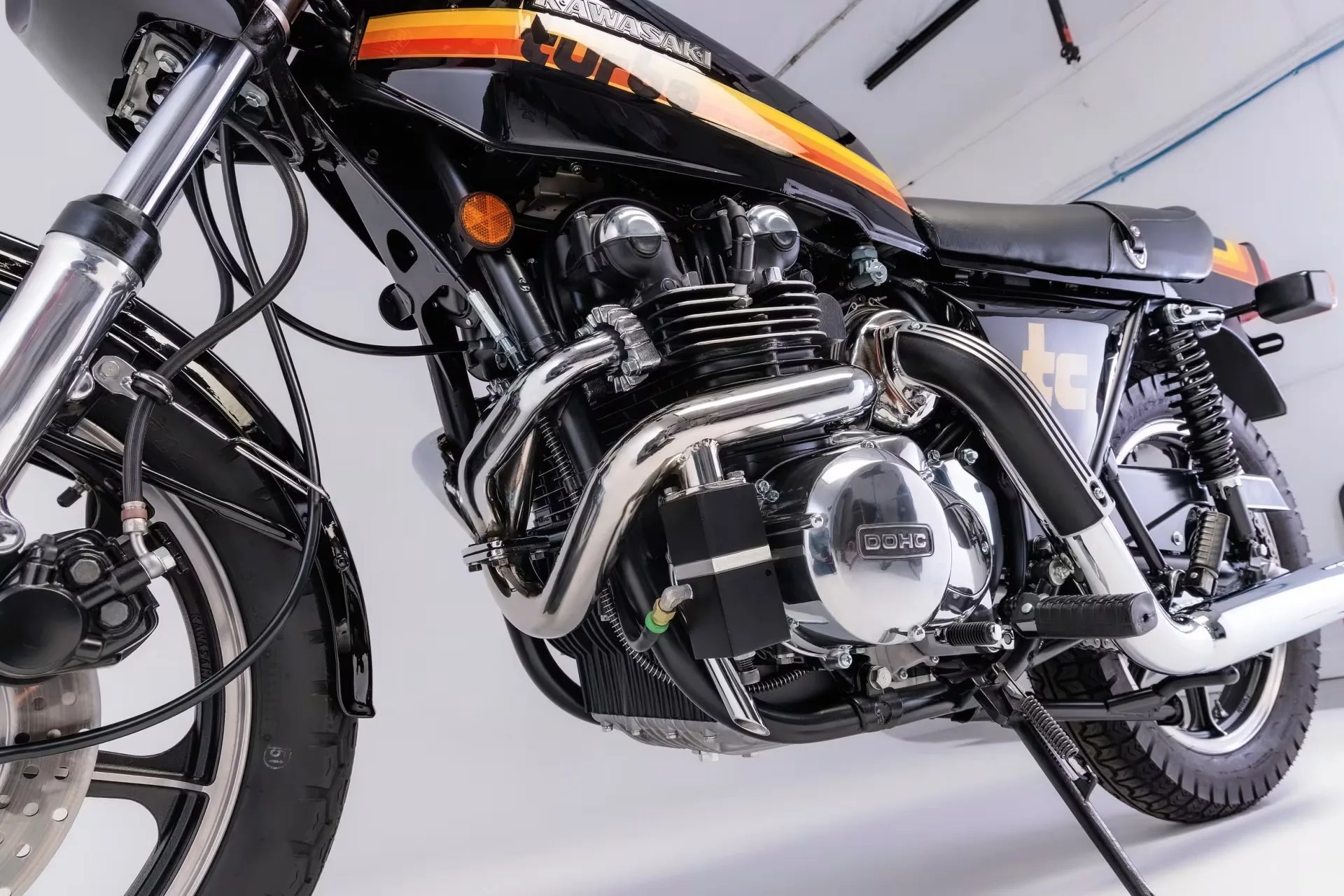
Close-up of a black Kawasaki motorcycle engine with chrome exhaust pipes and a black seat.
While the turbocharged Z1-R was undoubtedly quick, it made for a wild ride.
Mecum Auctions

Accordingly, with the added power of a forced induction kit, such a combination resulted in a bike that was an absolute animal to ride. The soft chassis proved prone to flexing, while inadequate suspension and incorrigible turbo lag made acceleration wildly unpredictable. 

Moreover, as the Z1R-TC was technically a TCC-modified creation, Kawasaki was careful to keep some distance. To get around EPA regulations, the company considered the bike an aftermarket special, and it didn’t offer buyers a warranty option, even if they could purchase one in showrooms.

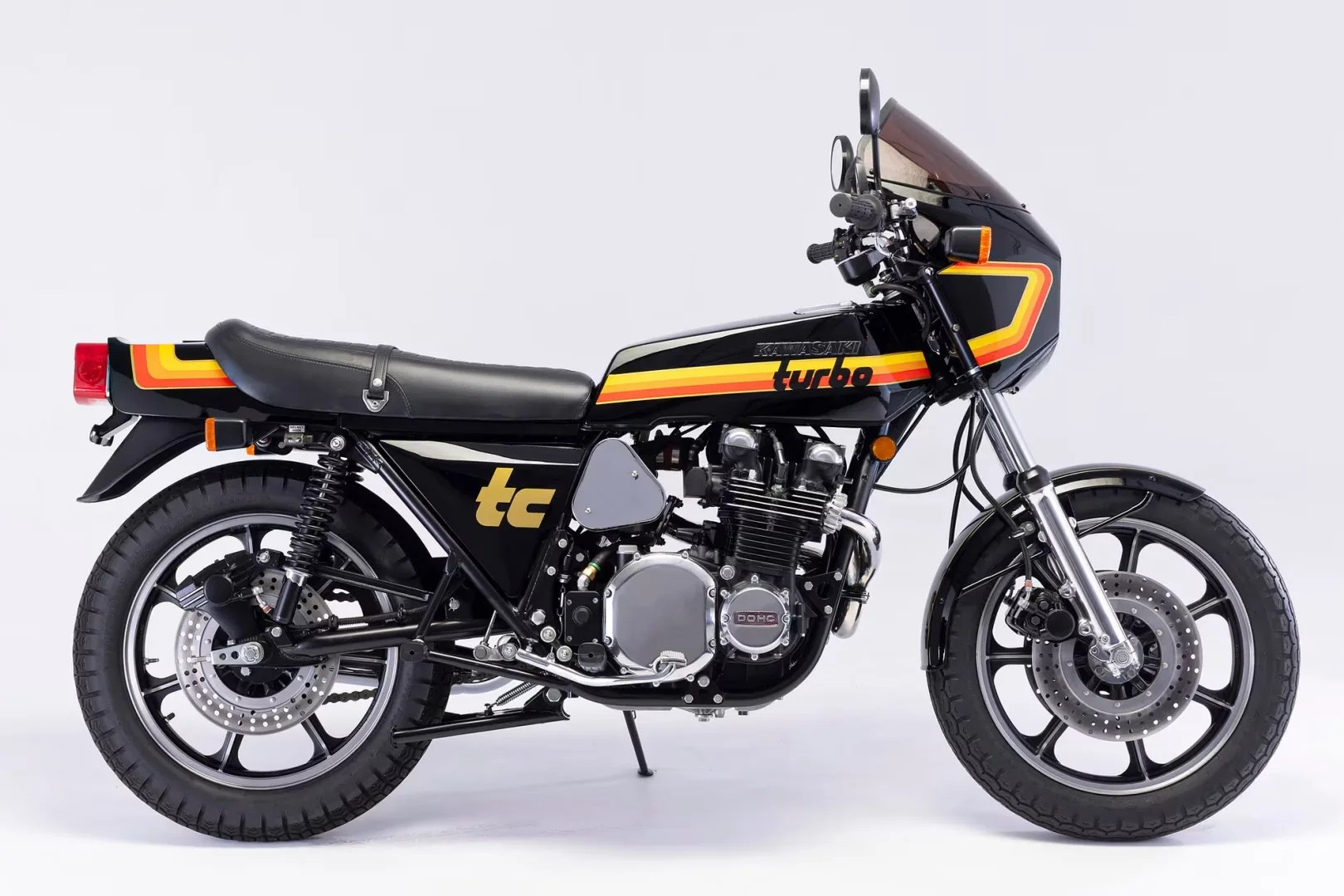
Black Kawasaki turbo motorcycle with yellow and orange stripes and black leather seat on a white background.
The Z1R-TC came at a hefty premium, but it looks too cool in that old-school paint.
Mecum Auctions

Given how easy it was to overcook the engine with too much boost, this made for a tough sell. At a time when a standard Z1-R would set you back around $3,695, MSRP came to a much richer $5,000.

An elusive bike crosses the block

Kawasaki’s Z1R-TC went on to inspire a series of other turbocharged motorcycles in the late 1970s and early 1980s, but it was ultimately a niche value proposition during its time on the market.

As a result, it’s estimated that around 500 examples were built in total, with 250 completed in 1978 and the remaining 250 in 1979. Of those, bikes like the one pictured here are especially desirable, as only 200 received the tricolor stripe on black colorway.

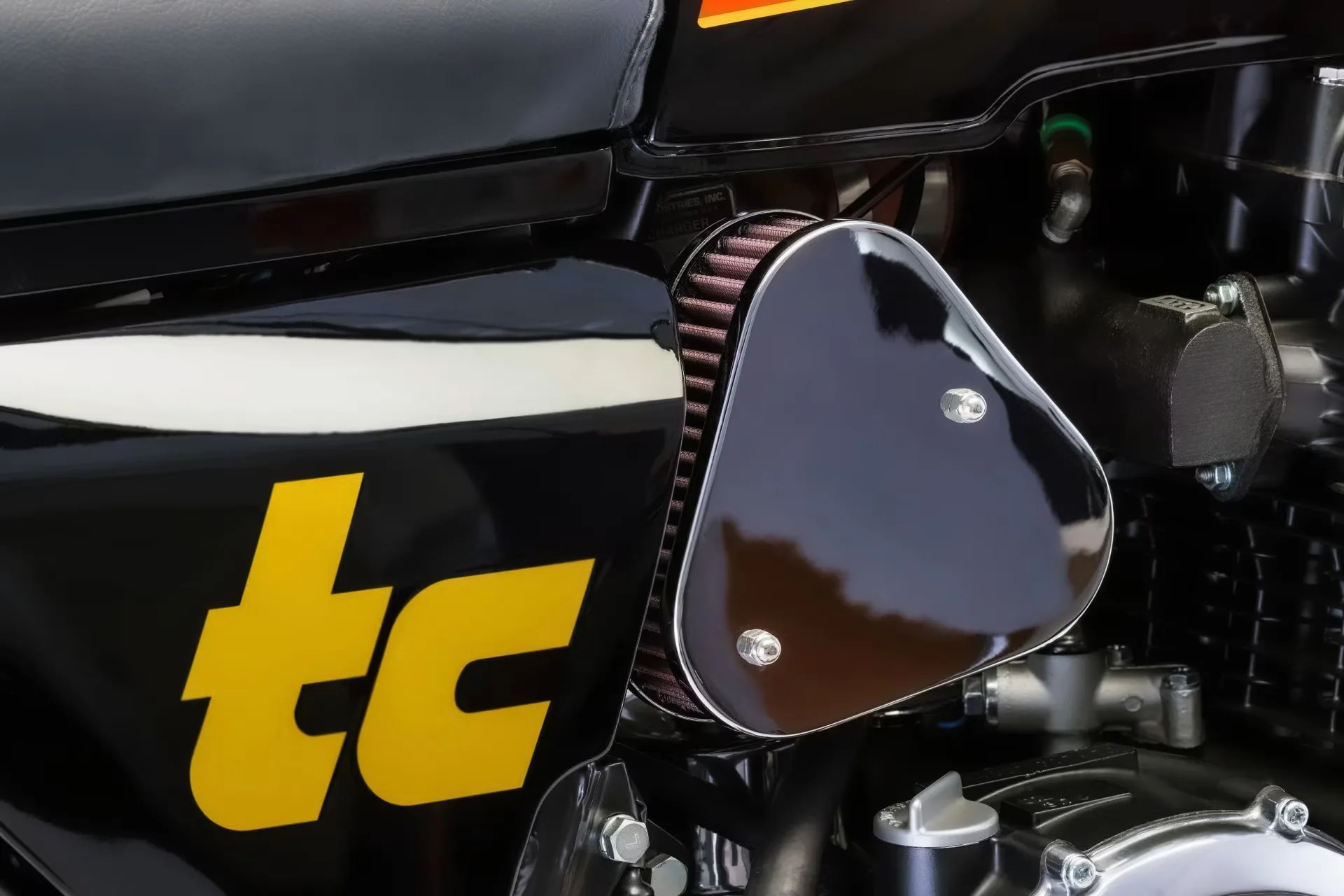
Close-up of a black motorcycle air filter cover with a yellow "tc" logo on the adjacent black body panel.
Only 200 examples are said to have received the black paint with the tricolor stripe.
Mecum Auctions

If you’re taken by the TC, don’t fret. While this particular motorcycle is crossing the block as part of Mecum’s 2026 Las Vegas auction, it’s joined by two others — Kawasaki’s early turbo effort finally seems to be getting its share of the limelight again.

Want to stay up to date on the latest product news and releases? Add Gear Patrol as a preferred source to ensure our independent journalism makes it to the top of your Google search results.

add as a preferred source on google
,