
This Forgotten Early-2000s German Motorcycle Was Once One of the Most Powerful Bikes on the Road

A four-cylinder auto engine with a Cosworth-developed head allowed this obscure two-wheeler to put down a healthy 260 horsepower.

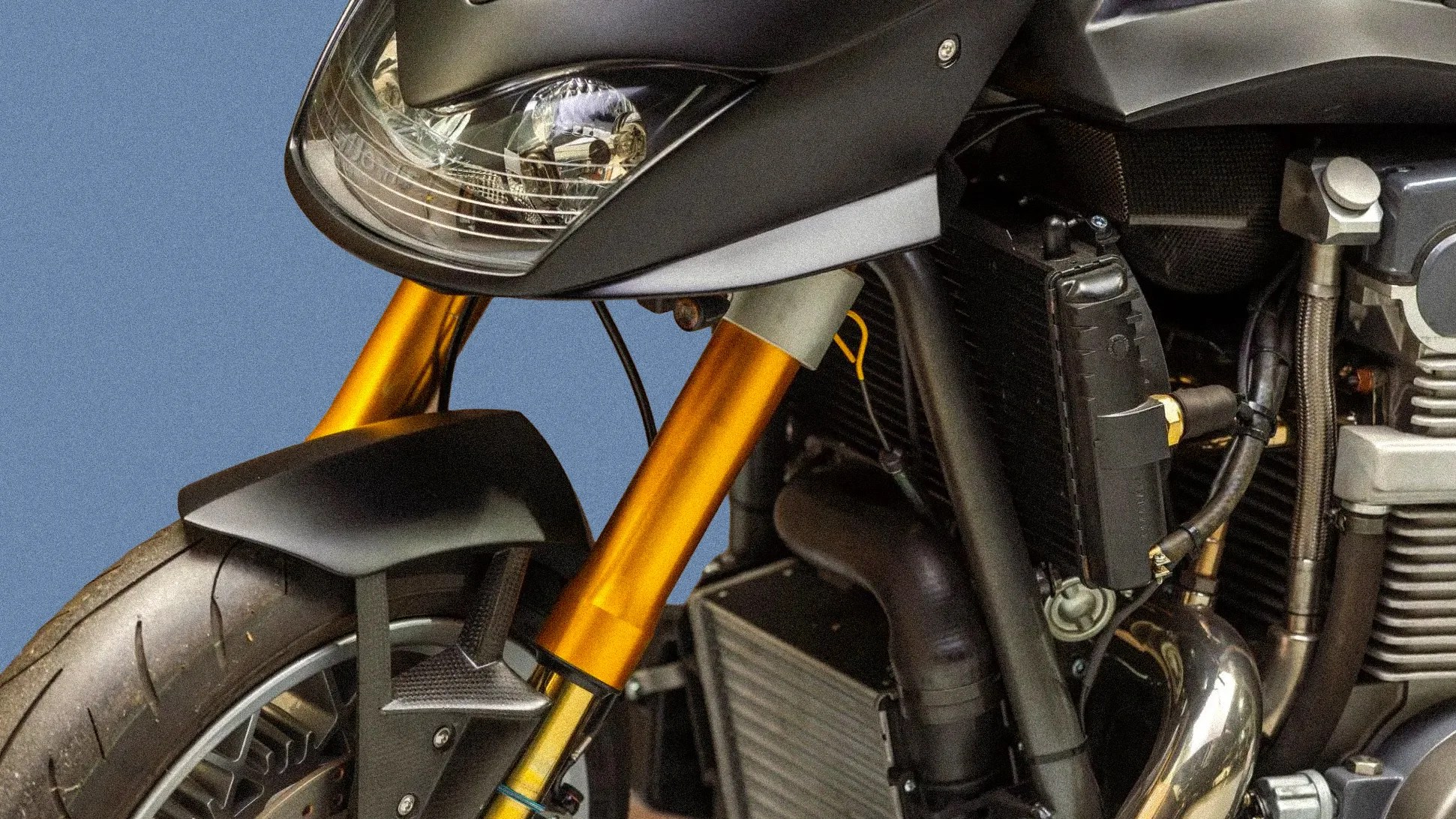
Close-up of a motorcycle front suspension with gold forks, black fender, headlight, and engine components.Bring a Trailer

While the worlds of cars and motorcycles often remain distinct in their creations, the rare occasions on which they do collide typically yield some truly special results.

Of course, if you’re familiar with Dodge’s Viper-powered Tomahawk or Boss Hoss’s various Chevy small block cruisers, you’re already all too aware of the potential for such two-wheelers to shock with big power and even bigger proportions.
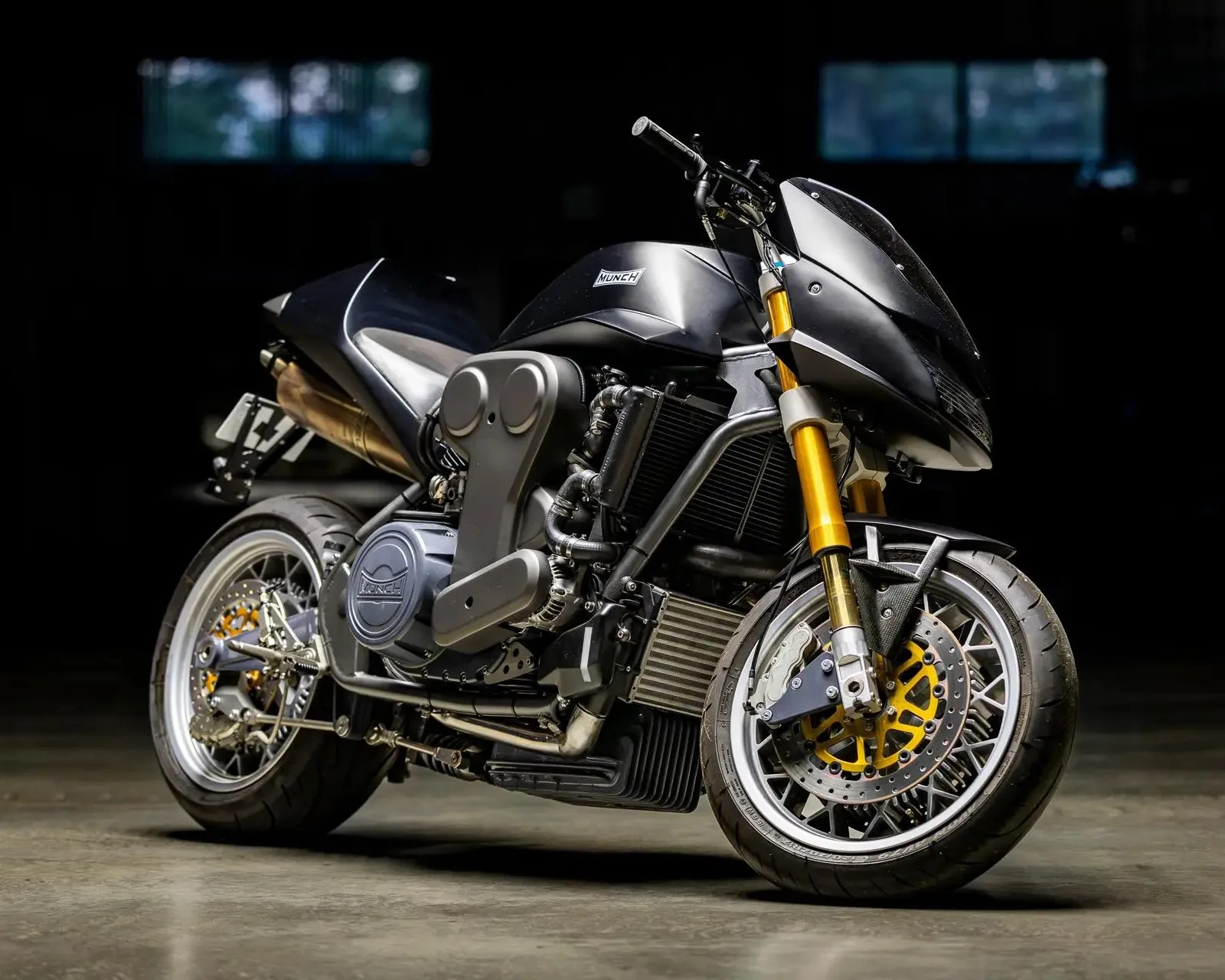
Black Munch motorcycle with gold front forks and silver spoked wheels on a concrete floor.
The Mammut 2000 was good for a claimed 260 horsepower.
Bring a Trailer

The muscle bike you see before you, however, comes not from the United States, but rather, Germany.

A mammoth two-wheeler

It’s called the Münch Mammut 2000, and it’s the second creation to come from German Friedel Münch. He first made a reputation for himself back in the 1960s by shoving a four-cylinder NSU car engine into the model’s namesake, the Münch Mammut.
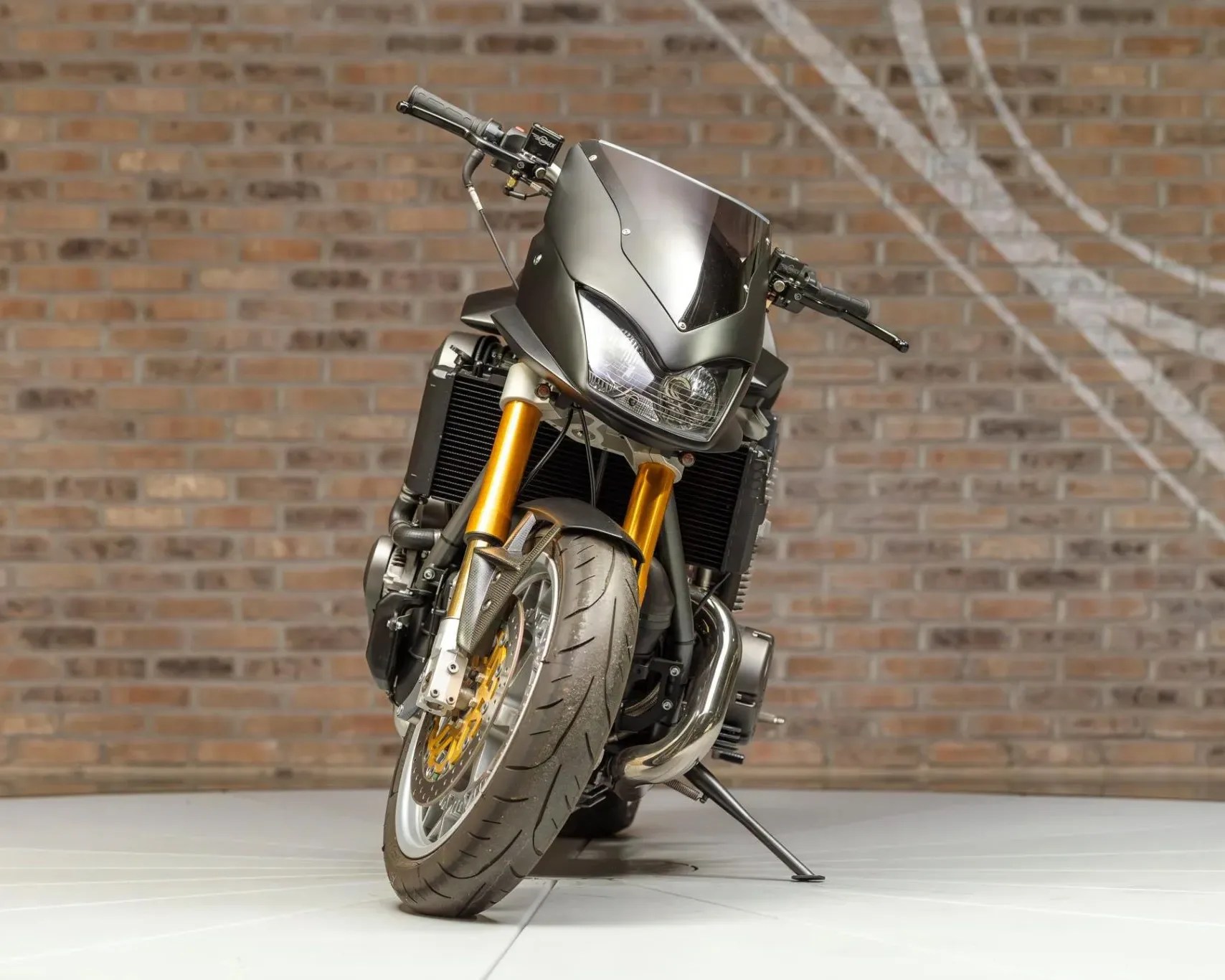
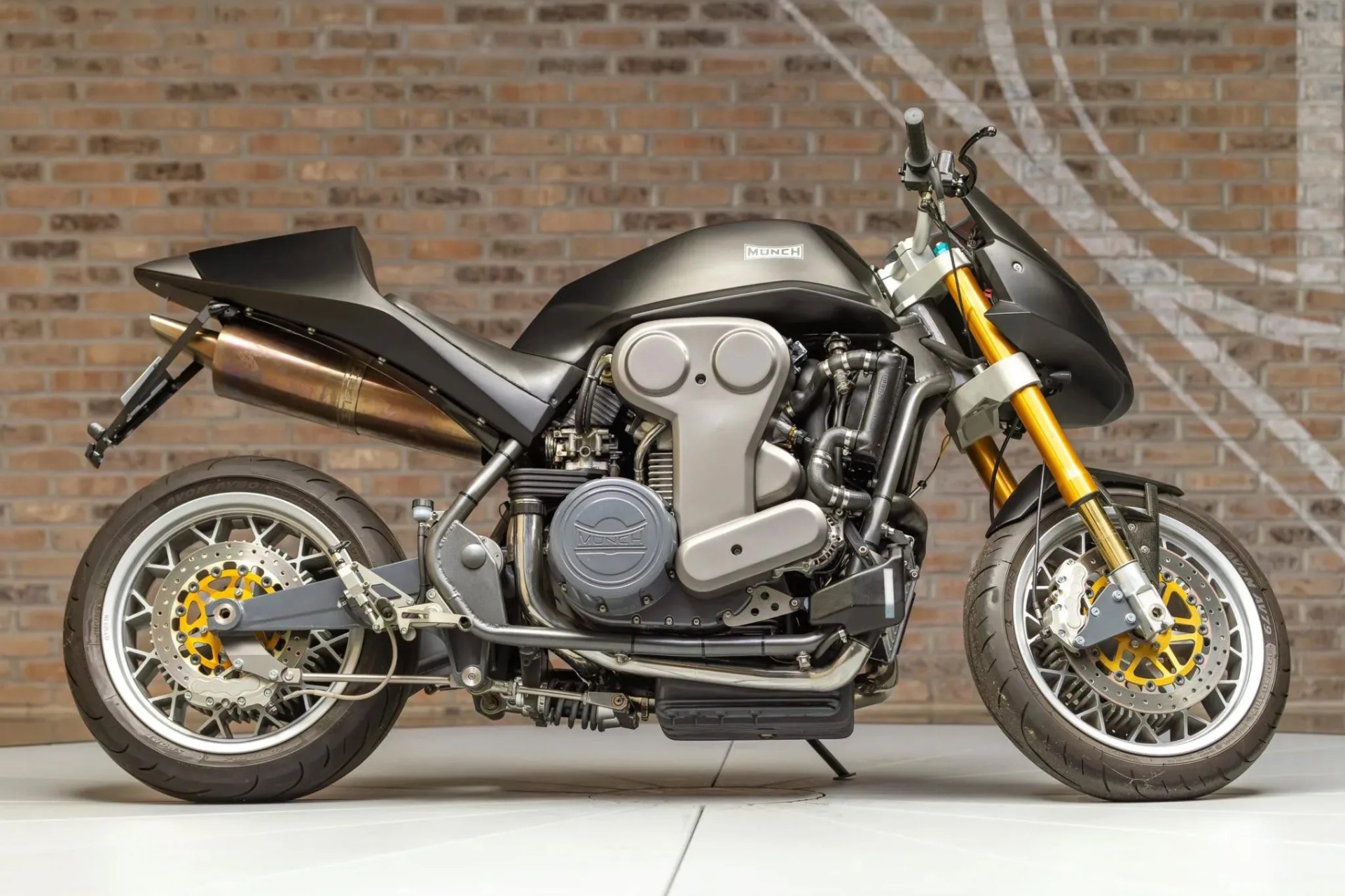
Matte gray sport motorcycle with gold front forks and a tinted windshield, parked on a light floor against a brick wall.
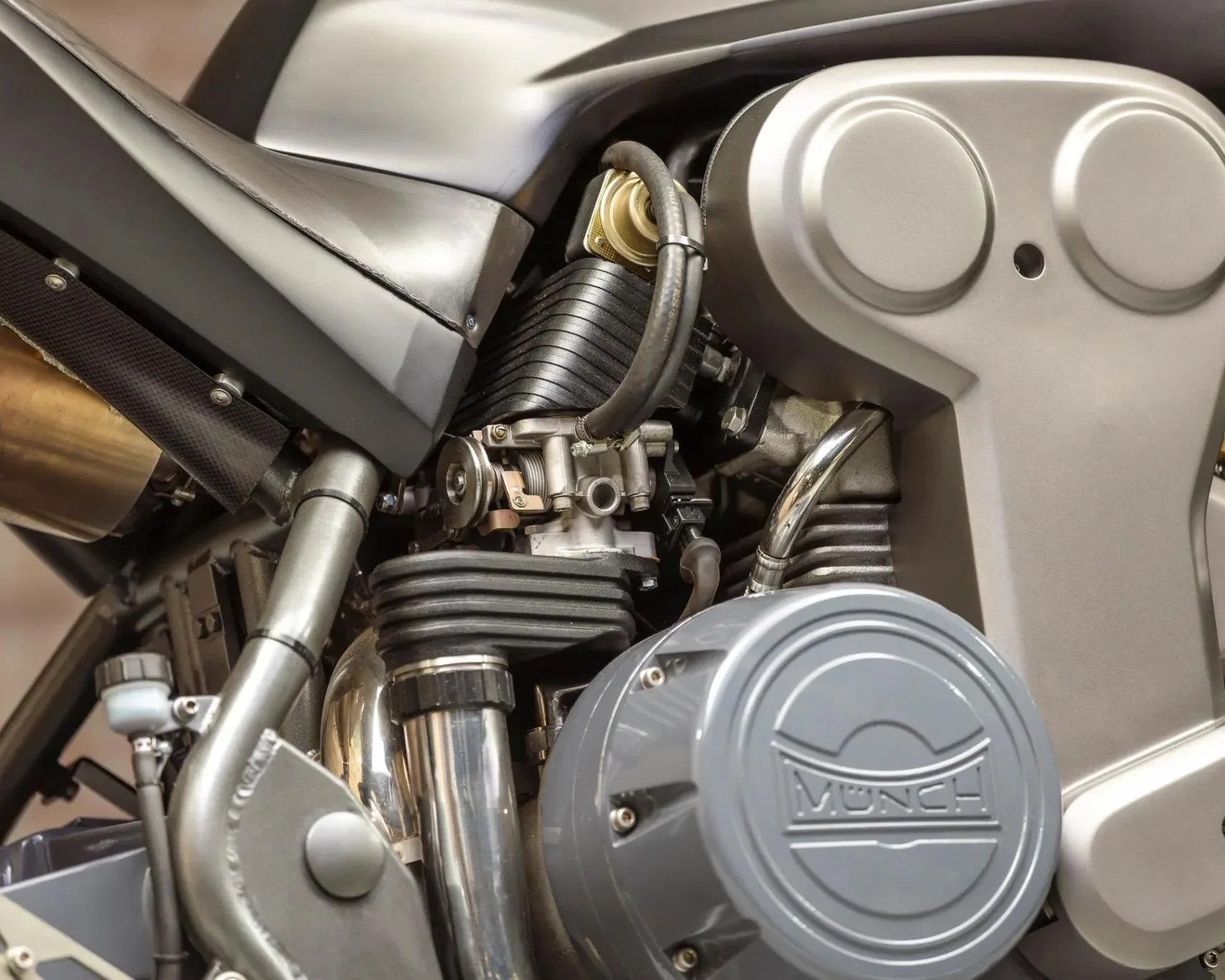
The bike employed a 1,998cc Opel EcoTec inline-four car engine.
Bring a Trailer

The Mammut 2000 was the result of Münch’s effort to re-enter the motorcycle industry after the turn of the millennium with the help of new backing. As with its predecessor, it employed a distinctive motorcycle powertrain that made it unlike anything else on the market.

Instead of a 1,200cc NSU engine, however, Friedel Münch’s Mammut 2000 took its power from a 1,998cc Opel EcoTec inline-four. When fed by a Schwitzer turbocharger and built with a 16-valve Cosworth head (yes, the same), it was rated for an authoritative 260 ponies.

Close-up of a motorcycle engine with a gray cover embossed with the word "MUNCH" and surrounding metal components.
At 779 pounds, the Mammut needed all of the stopping power afforded to it by eight-piston calipers and massive 320mm discs.
Bring a Trailer

As is to be expected of using such a massive powerplant, the Mammut 2000 was far from a lightweight at 779 pounds. For this reason, it rode on 43mm Öhlins forks up front and some dual WP under-engine shocks at the rear, with stopping power coming courtesy of some massive eight-piston calipers and 320mm discs.

Now, on the road, Münch kept the bike electronically limited to 156 mph to satisfy safety regulations. Without the tech, in sixth gear, it would theoretically top out at 172 mph. 

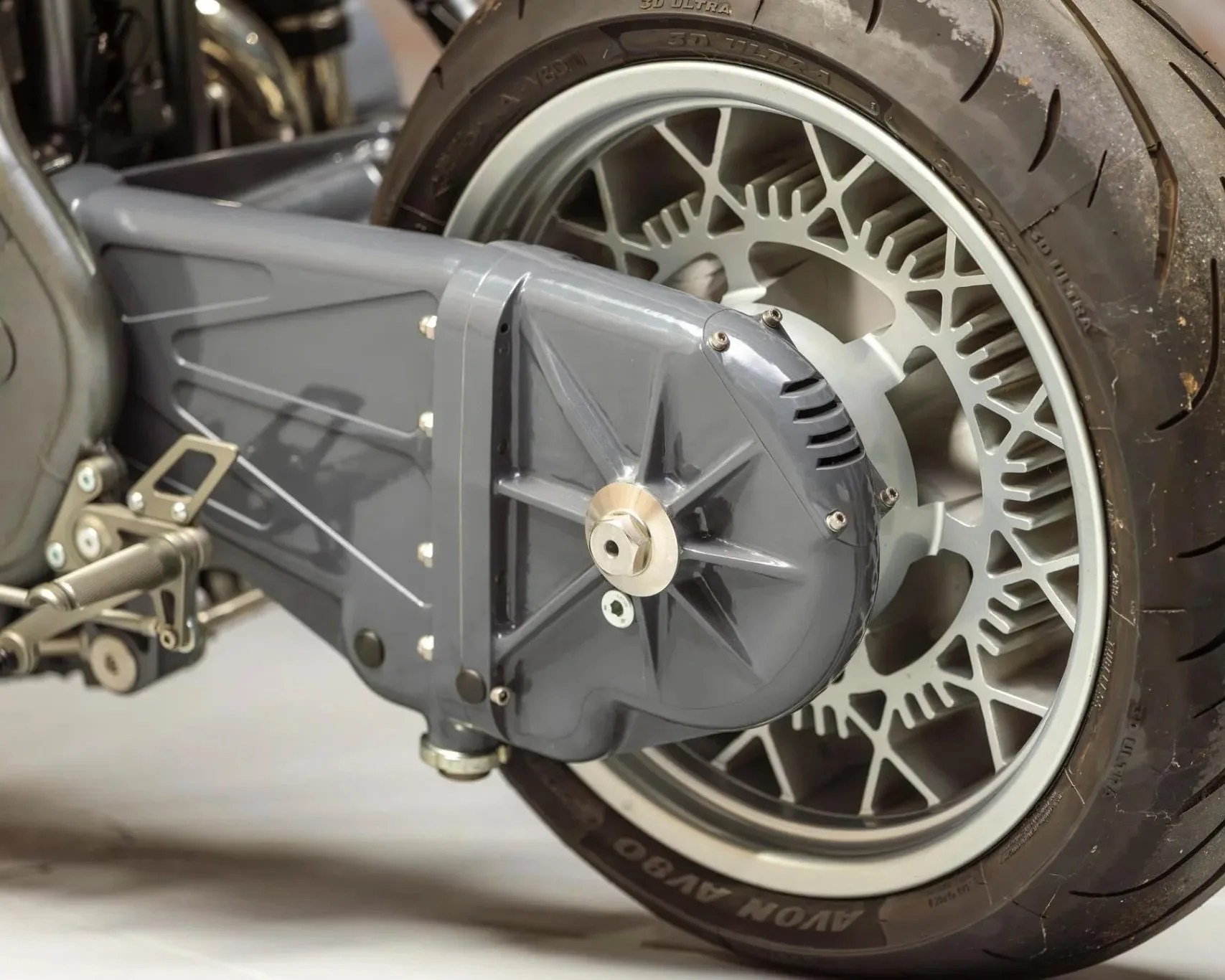
Close-up of a motorcycle rear wheel with a gray single-sided swingarm and a detailed silver alloy rim.
Check out that swingarm with its fully enclosed chain.
Bring a Trailer

Given that such a figure even falls below the industry’s gentleman’s agreement, the Mammut 2000 was a very real and grounded production possibility. It even supposedly cleared European D4 emissions standards.

Unrealized potential (mostly)

Of course, Münch did build the bike — for a brief time. Though the company originally intended to build a run of 250 examples, ultimately, a total of just 15 were completed. 

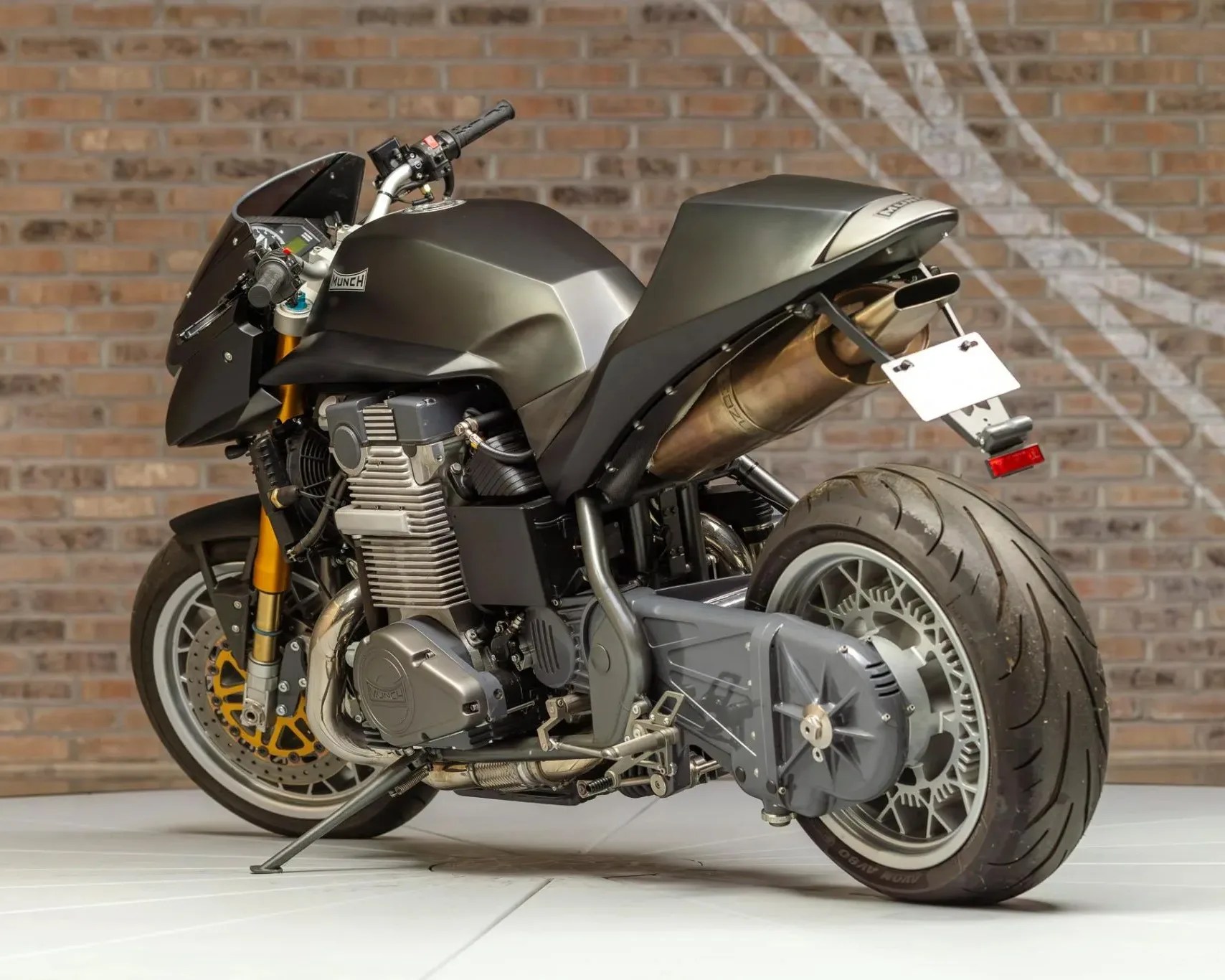
Matte black Munch motorcycle with exposed engine, gold front forks, and silver spoked wheels against a brick wall.
Though there was supposed to be a run of 250 bikes, just 15 are supposed to have been completed.
Bring a Trailer

At $82,000 the Mammut 2000 was incredibly expensive, yet production costs still made it unprofitable. In the years since, the remaining parts have been used to build a small number of additional post-production units. The bike featured today is one such example.

As part of a rare public offering, it was put up for auction on Bring a Trailer, though it failed to sell after reaching a closing bid of $23,750.

Matte black Munch motorcycle with gold front forks, large rear tire, and exposed engine against a brick wall.
At $82,000 new, the Mammut 2000 was an exclusive piece of machinery when it was on the market — and it wasn’t profitable.
Bring a Trailer

Considering that even a 1968 model (of which Münch made some 500 examples) fetched $77,000 at Mecum six years ago, the seller’s reserve was likely at least double that of the final bid — if not more.

After all, between the bike’s rarity, its factory-fresh condition and its 11-kilometer (~6.8-mile) odometer reading, its prime collector material. The fact that it remains among some of the most powerful motorcycles to hit the road — even today — only adds to its appeal. 

Want to stay up to date on the latest product news and releases? Add Gear Patrol as a preferred source to ensure our independent journalism makes it to the top of your Google search results.

add as a preferred source on google
,