
America’s Most Polarizing Muscle Car Is Chasing a New Kind of Performance

The Dodge Charger Daytona just got a dose of next-gen tech in an effort to establish a more important speed.

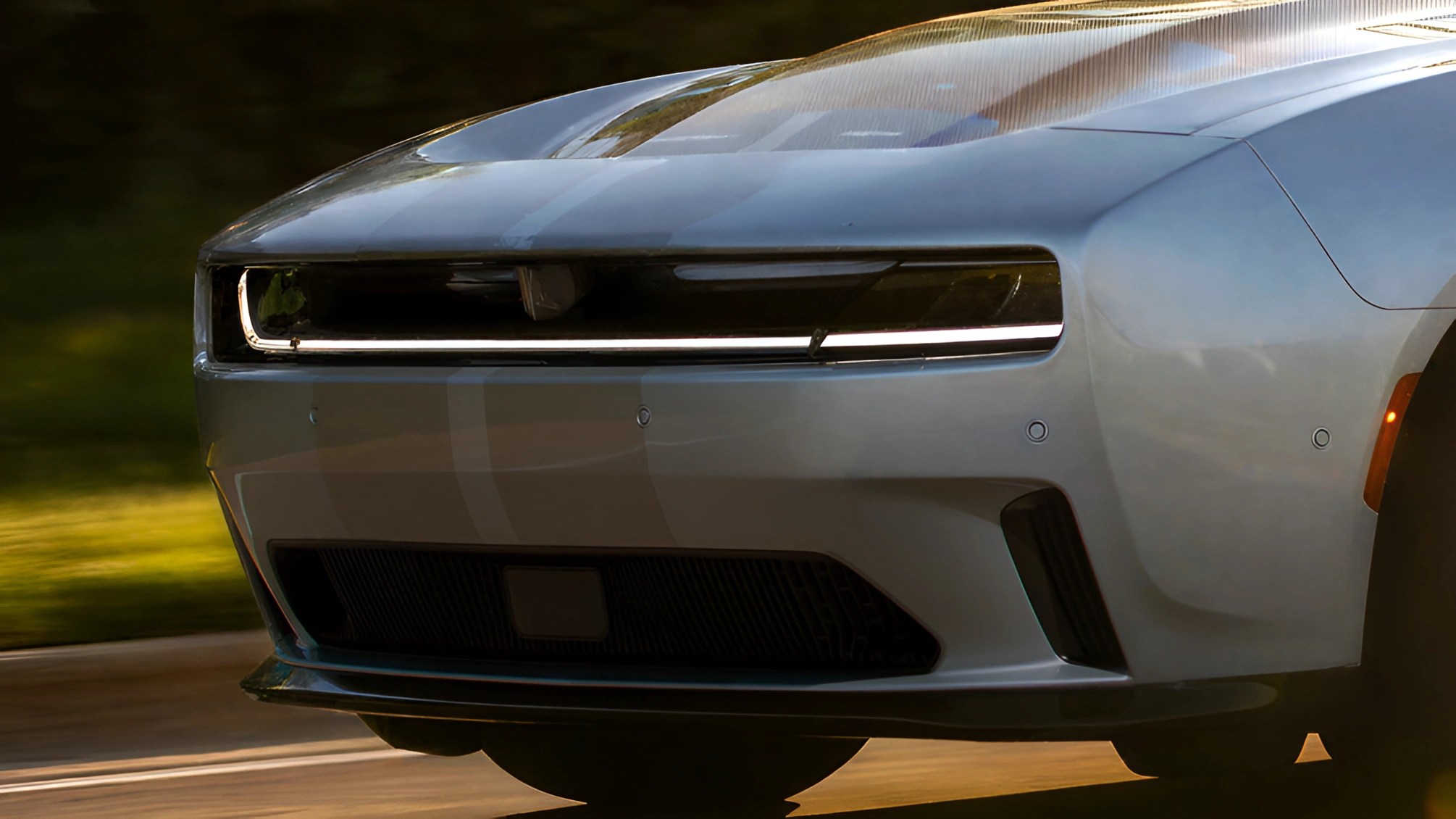
Front view of a silver car with a sleek horizontal LED headlight strip and a black grille below.Stellantis

While the Charger Daytona is meant to be the next generation of Dodge performance, it’s struggled because of its mammoth curb weight and stark departure from legacy.

As a result, fans have charged (sorry) the brand to restore the icon to its rightful V8 order. The Hemi isn’t back yet, but you better believe you’ll be hearing Hellcat whines soon enough.

Welcome to Moonshots: A series exploring the big ideas that could reshape the future of products. Discover more here.

All the same, it seems the Daytona won’t be going down without a fight. According to Stellantis’s latest announcement, the EV is now chasing a new kind of speed.
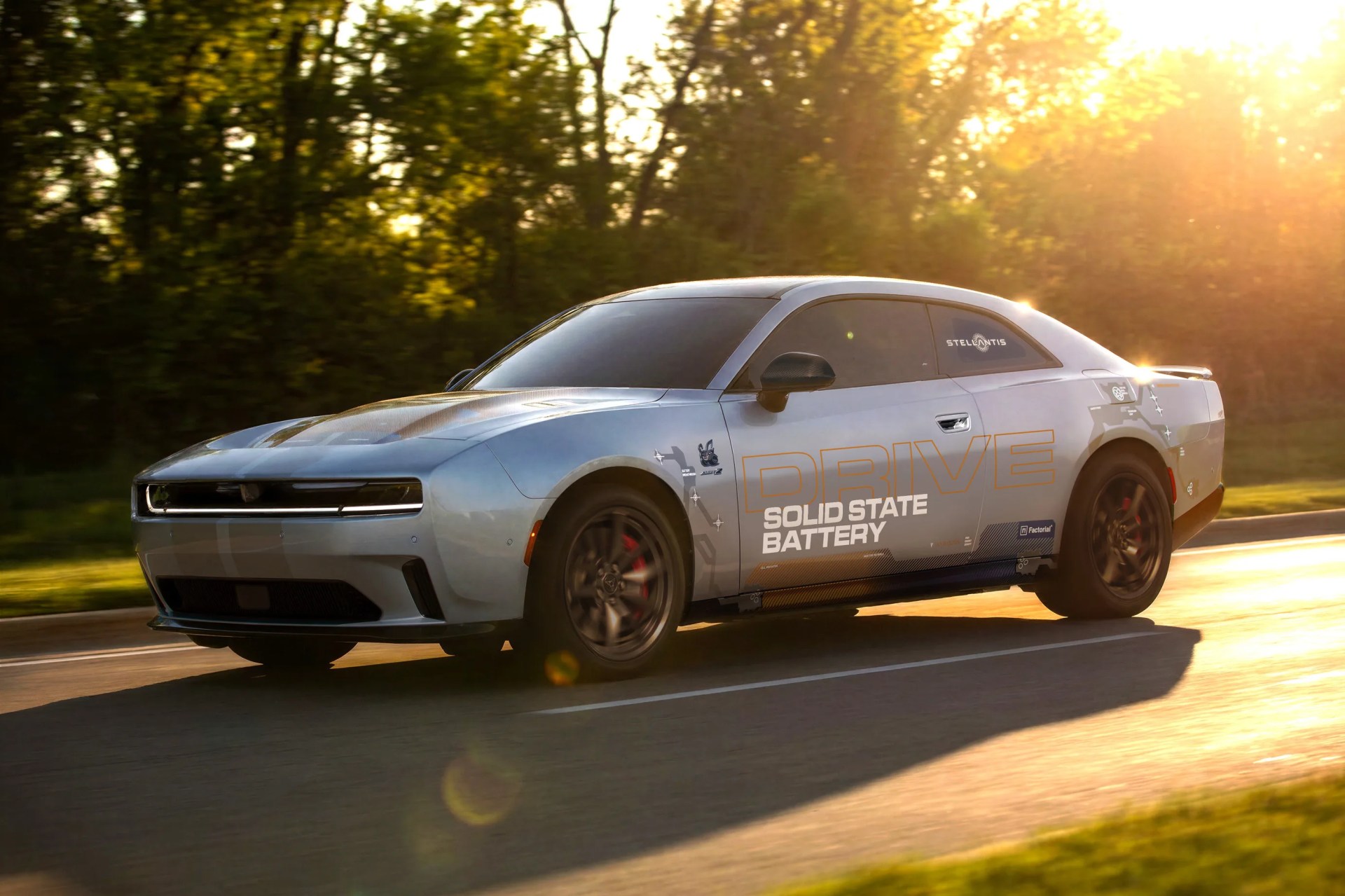
Silver electric muscle car with "DRIVE SOLID STATE BATTERY" text on the side driving on a sunlit road.
Stellantis and Factorial have finally fitted a FEST semi-solid-state battery pack to a Dodge Charger Daytona for the purposes of real-world validation testing.
Stellantis

A new Daytona test mule

Namely, faster charge times. As part of their ongoing battery development program, Stellantis and Factorial have finally fitted a FEST semi-solid-state pack to a Daytona for real-world testing.

While the technology has seen some application in the worlds of Chinese EVs and next-gen motorcycles, it has yet to land on a car stateside. In keeping with the novelty, it’s set to be a game-changer should it perform anything like past tests.
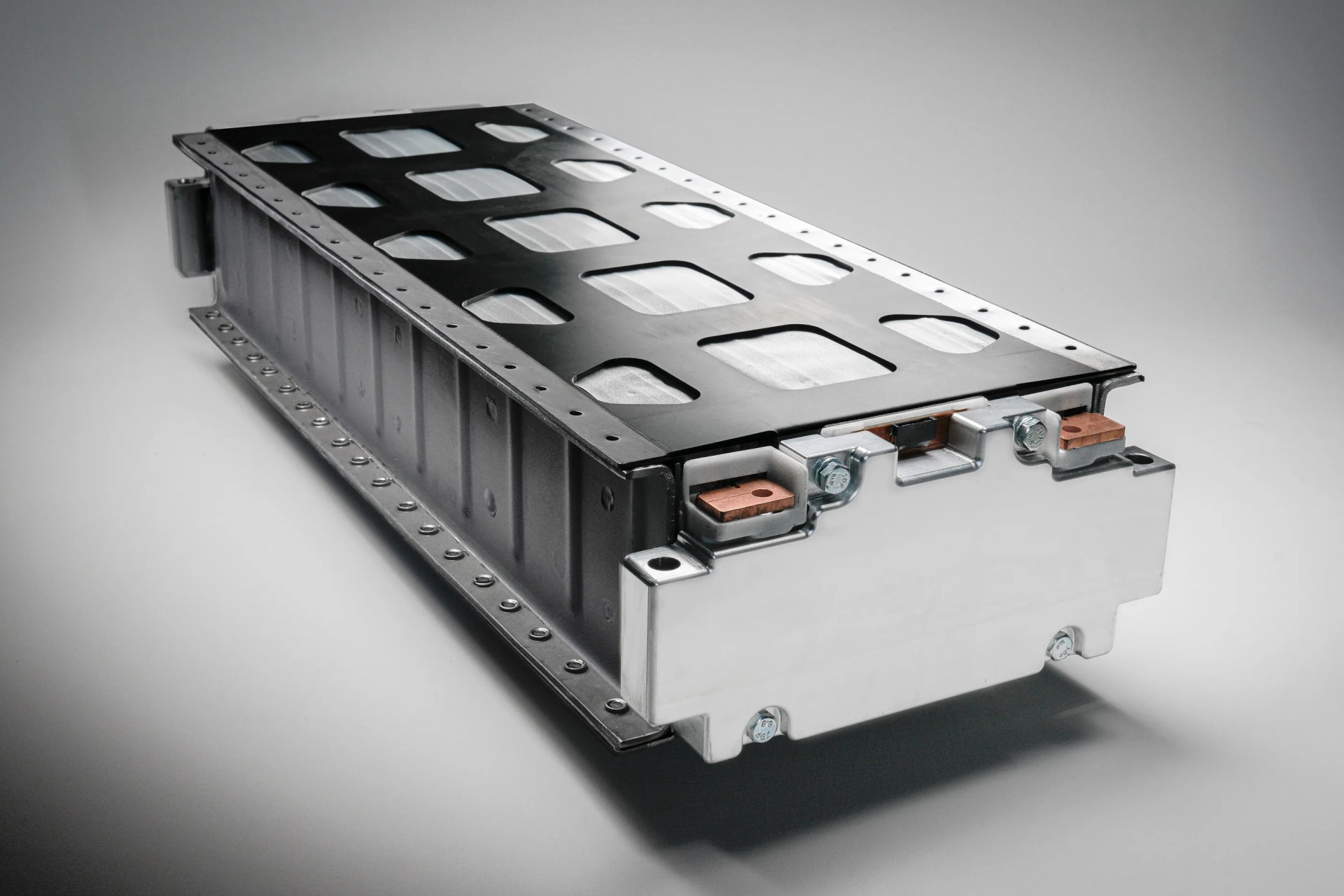
Rectangular silver and black metal battery pack with copper terminals on a gray background.
Factorial’s FEST technology touts a 33 percent reduction in battery size and a 44 percent reduction in weight while still delivering 50 percent more range.
Stellantis

As part of their validation effort last year, Stellantis and Factorial achieved a recharge from 15 percent to 90 percent in a mere 18 minutes. By contrast, the current production Dodge EV takes around 27 minutes to top up from 20 percent to 80 percent.

Even more importantly, the FEST cells achieved an energy density of 375 watt-hours per kilogram. Mind you, that was over some 600 cycles and at temperature extremes ranging from -22 °F to 113 °F.

For context, most EVs equipped with lithium-ion batteries typically average around 200-300 Wh/kg. As such, Factorial’s tech heralds some big performance gains. Beyond improved charge times, the cells promise to be more stable and lighter to boot.

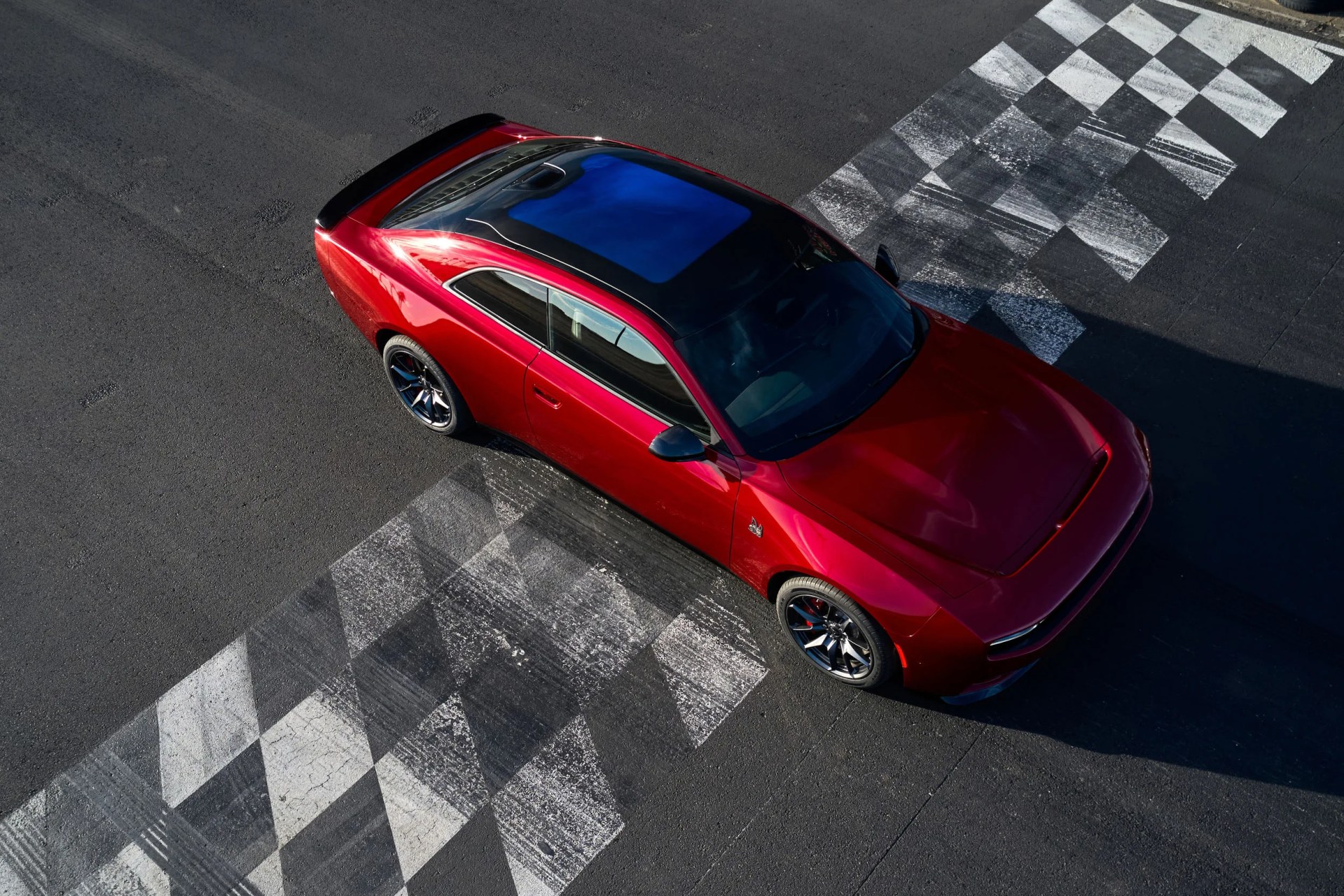
Red sports car with black roof and tinted windows on a checkered race track finish line.
The Charger Daytona could use a diet.
Stellantis

The change the Charger needs

Now, at this stage, the Charger in question is only being used to validate performance, safety and reliability. In other words, don’t expect one of these in a showroom anytime soon.

Still, assuming testing goes well, and Factorial’s FEST technology makes it to production, it would be an absolute godsend for vehicles like the Daytona. The weight savings alone promise a huge performance boost.

After all, improvements in energy density would mean that the Charger EV could run a smaller (and thus lighter) cell to achieve the same total 100.5 kWh capacity.

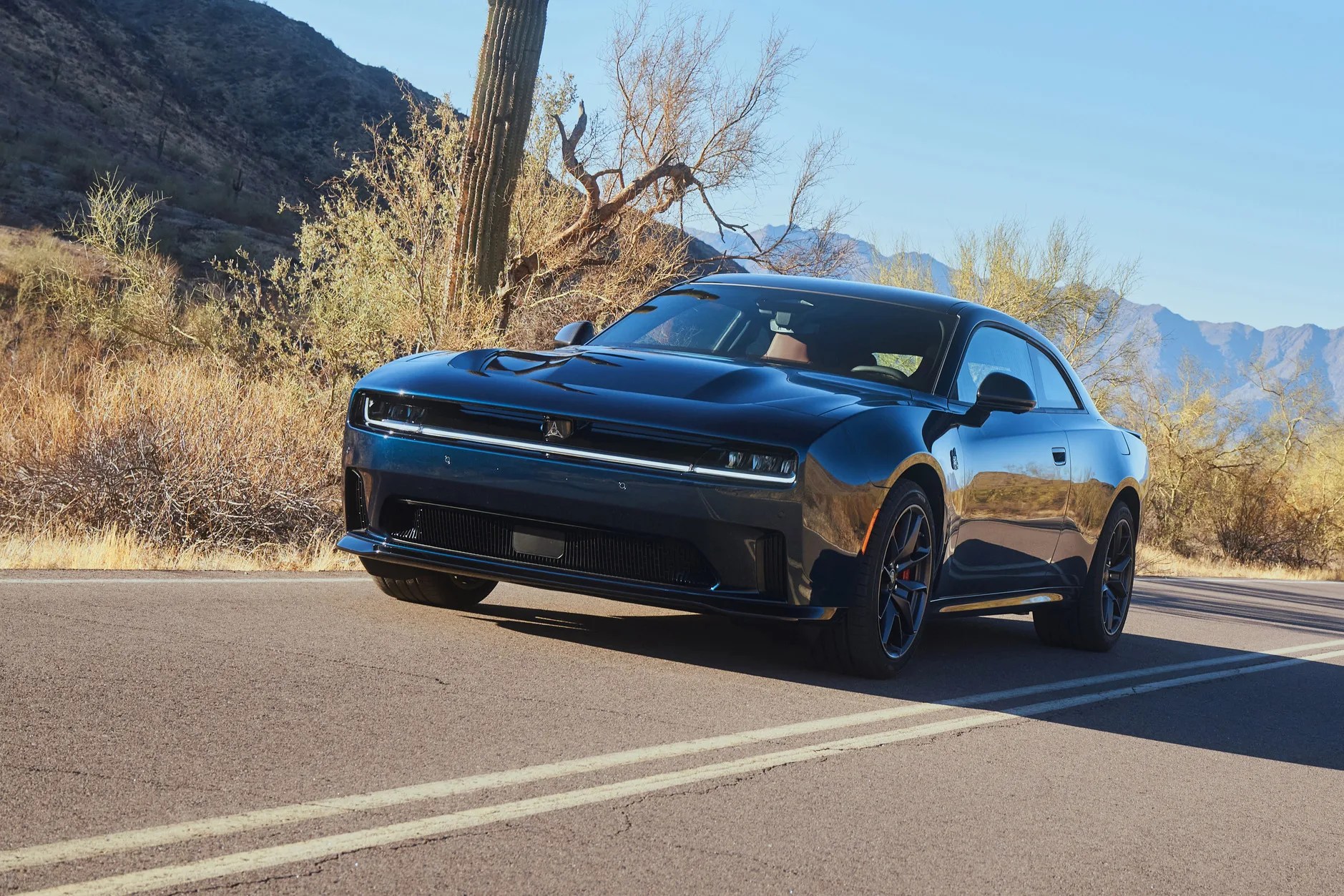
Glossy black modern coupe car parked on a desert road with mountains and cacti in the background.
The Scat Pack does 0-60 mph in 3.3 seconds. Just imagine how much quicker Dodge’s EV could be with a lighter battery underneath.
Stellantis

In terms of hard numbers, Factorial’s website calls out a 40 percent reduction. The outfit has also previously suggested that a comparably sized Tesla battery could drop from 1,000 pounds or more to as little as 565 pounds using its technology.

Suffice to say, then, that would amount to a meaningful cut in the case of the Daytona, as it currently tips the scales at 5,800 pounds or more. If Dodge could somehow manage to get the muscle car down to less than 5,000 pounds, it’d be approaching the previous-generation Hellcat.

And that’s not even addressing the benefits Factorial’s FEST cells promise in range. For example, when the outfit worked with Mercedes-Benz to conduct an EQS road test last year, the automaker recorded a monumental 749 miles on a single charge.

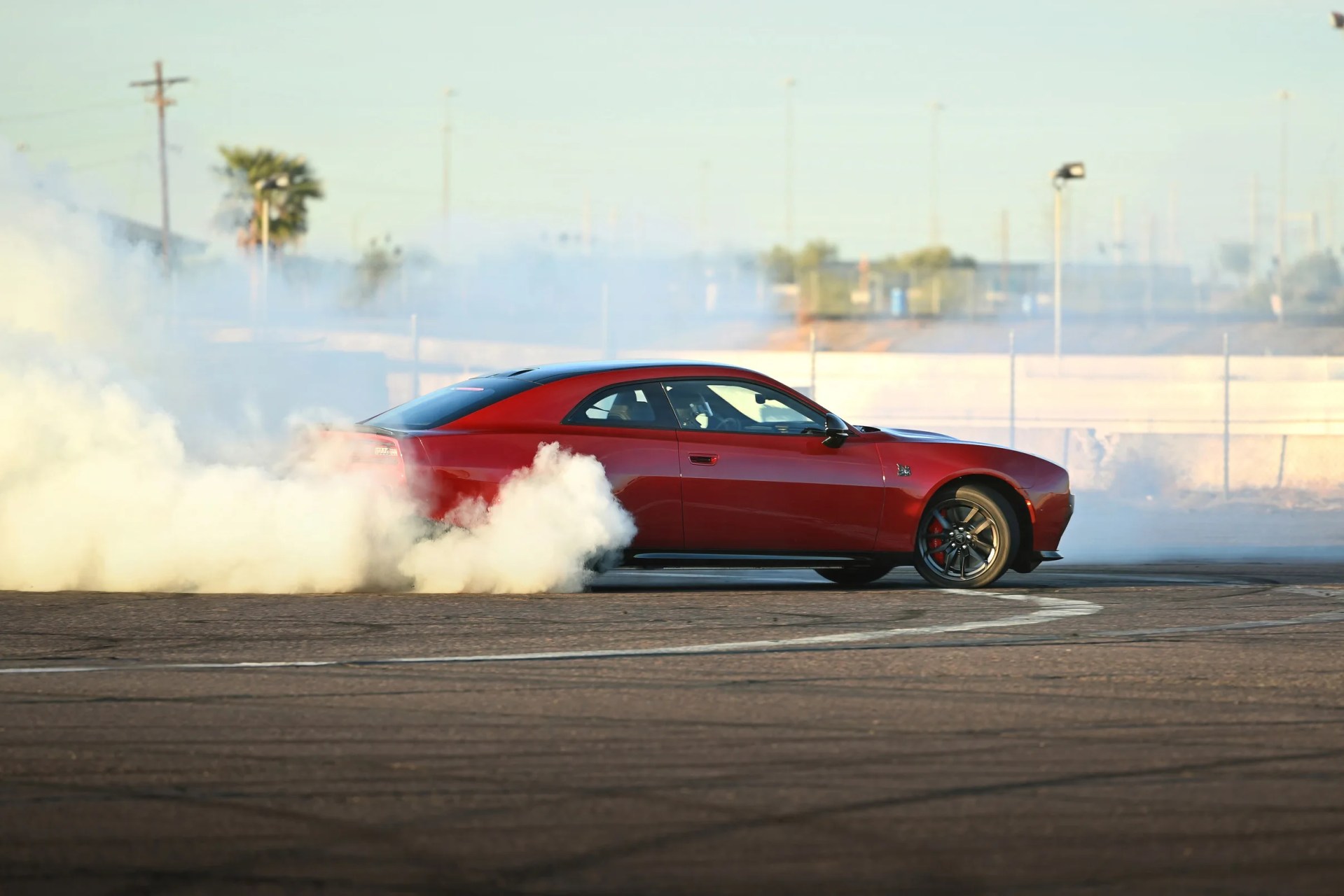
Red Dodge Challenger muscle car performing a burnout with smoke around the rear tires on a paved surface.
With the substantial range improvements of semi-solid-state battery tech, the Daytona would be much more than a one-trick, tire-shredding pony.
Stellantis

More to come

As Stellantis and Factorial have only just started real-world development, semi-solid-state battery Chargers are likely still some years away.

Nevertheless, it’s a meaningful development for the nameplate. The OG Daytona was the first vehicle in NASCAR to reach 200 mph, and its EV successor is now among the first to be pushing battery tech into the next era.

Want to stay up to date on the latest product news and releases? Add Gear Patrol as a preferred source to ensure our independent journalism makes it to the top of your Google search results.

add as a preferred source on google
, , , ,