
Ford Has a Patent for a Shifter That Could Give the Manual New Purpose

The Blue Oval has a design for a next-gen gear lever that does more than appeal to driving enthusiasts.

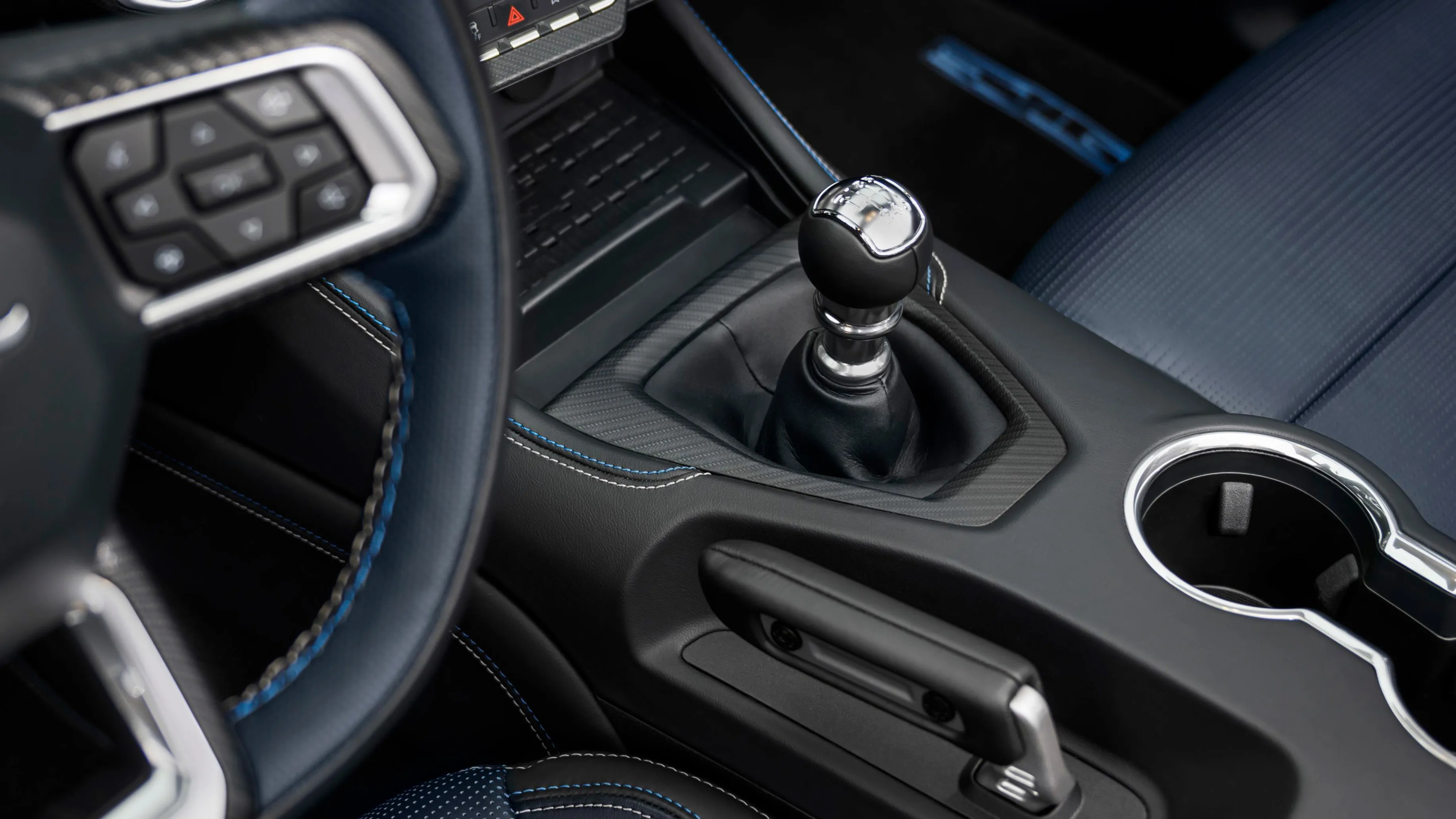
Black leather manual gear shift knob with chrome accents in a car interior with blue stitching and cup holder.Ford

With automatics, DCTs and various other modern alternatives making driving more convenient than ever, take rates for manuals have been down for quite some time. Moreover, the growth of the EV segment means that cars are increasingly doing away with conventional gearboxes altogether.

However, that’s not to say that the row-your-own gearbox is without a future. In a bid to boost driver engagement, oddly enough, automakers across the industry are exploring ways to reimagine the stick shift for new applications.

Welcome to Moonshots: A series exploring the big ideas that could reshape the future of products. Discover more here.
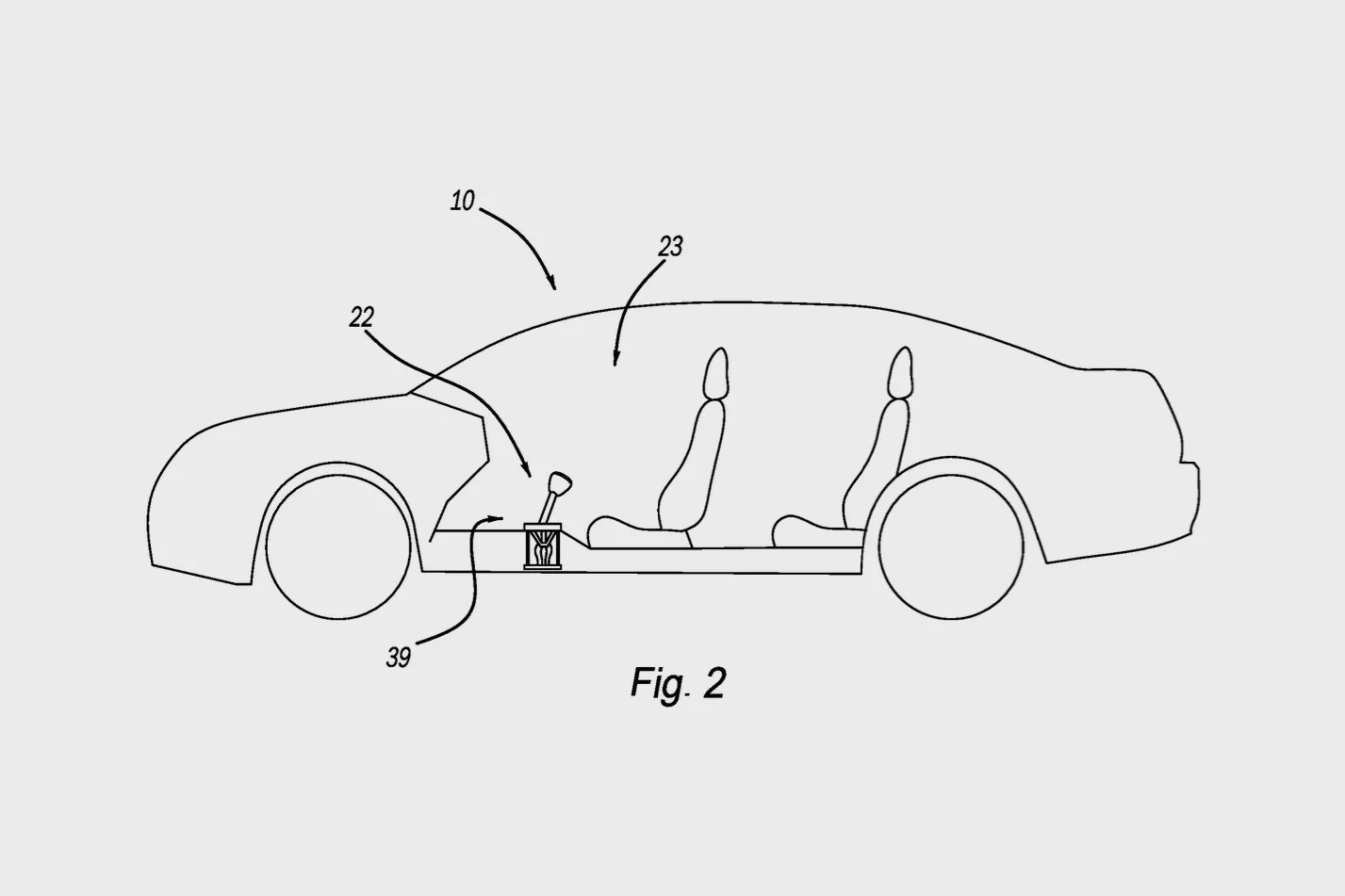
Side schematic of a car interior showing two seats and a gear shift lever labeled with reference numbers.
Ford has a patent that could put shift levers back in the hot seat.
Ford / USPTO

We’ve already seen how Subaru is eyeing up doing so with its nifty three-pedal patent. Now, it turns out that Ford has been working on something similar.

More than a simulated experience

The Blue Oval describes it as a “system for switching electric vehicles between operating states,” and it’s detailed in a patent filed with the USPTO, as first discovered by The Drive. The documentation is dense reading, but the design’s potential benefits aren’t difficult to grasp.
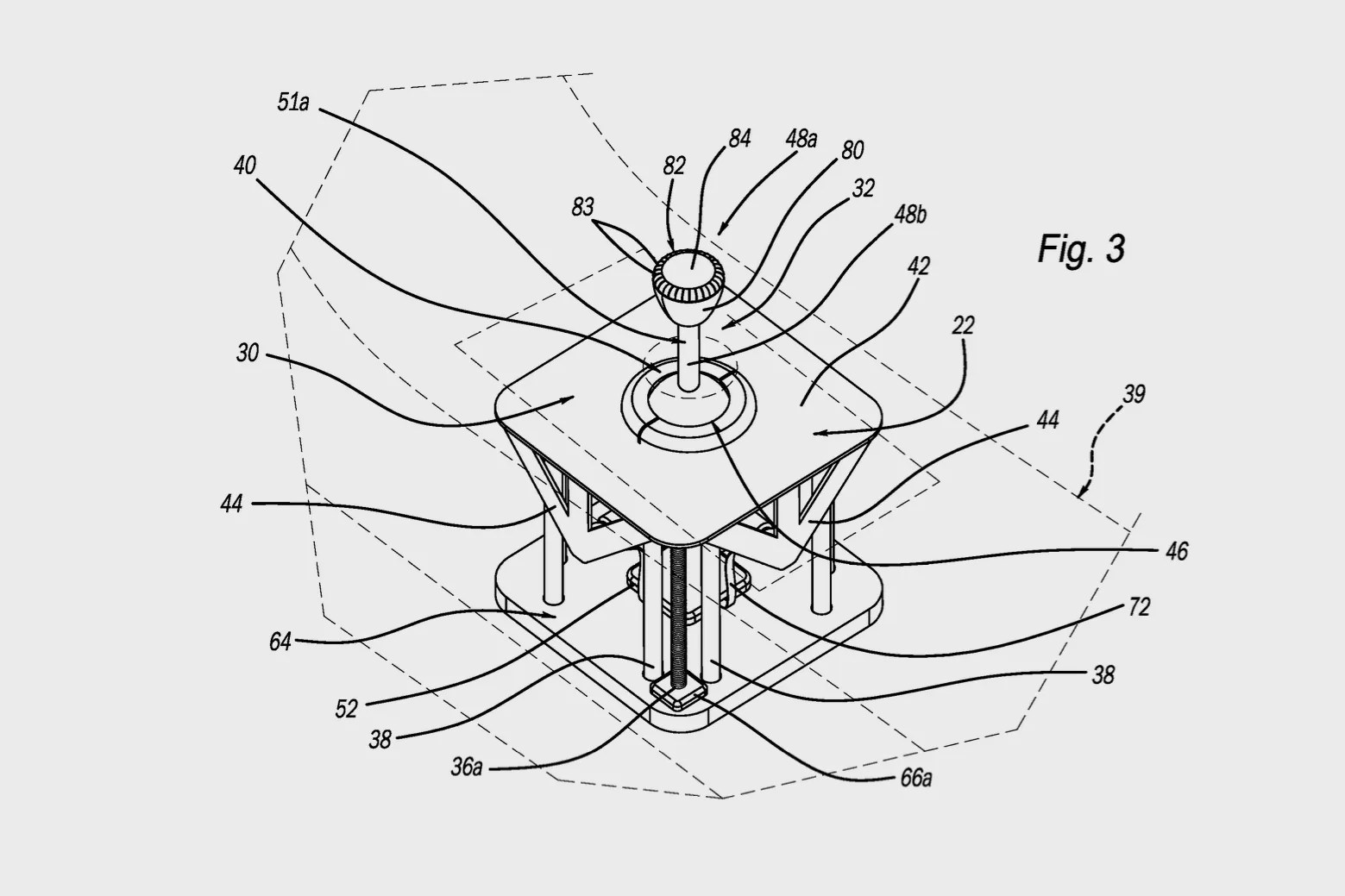
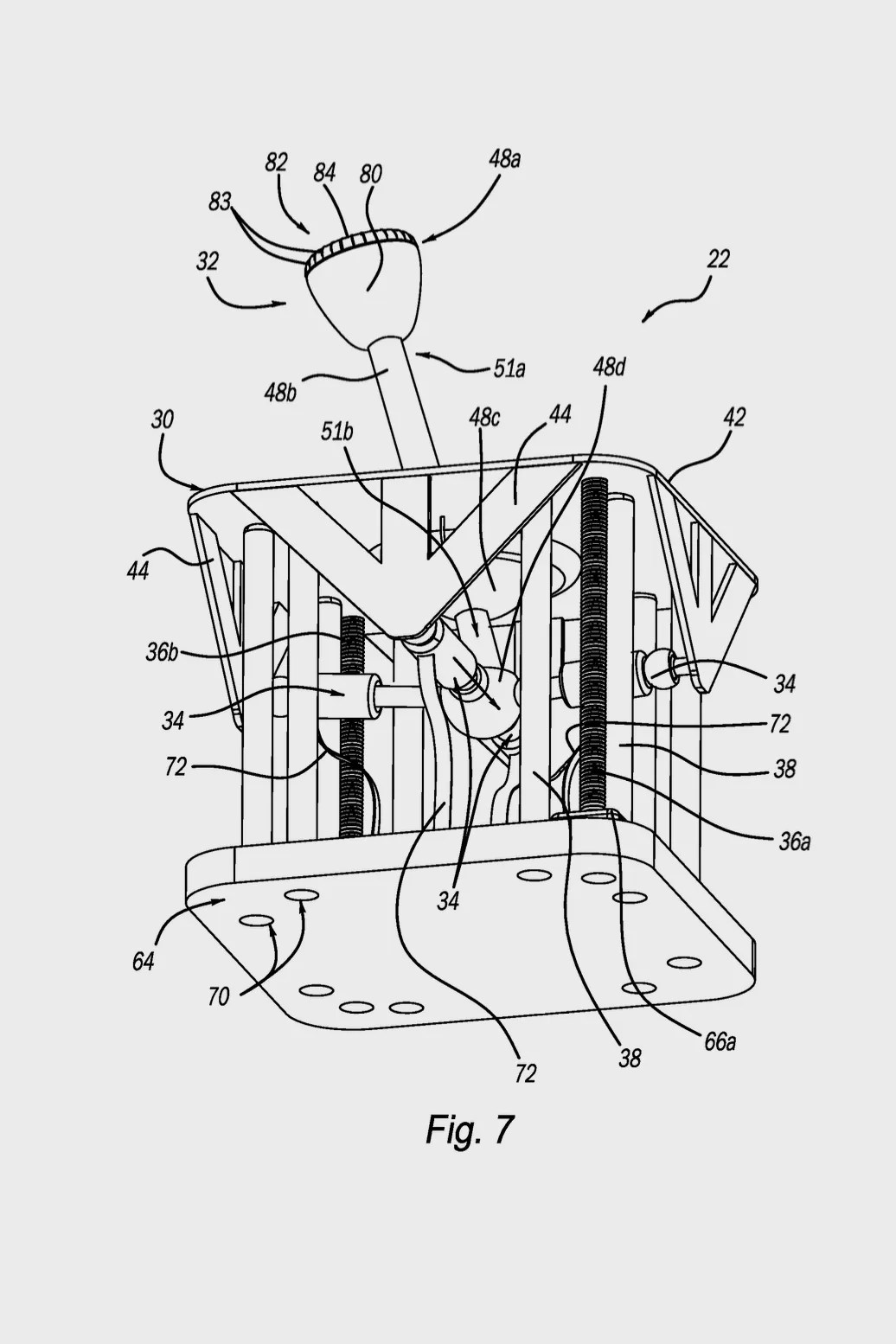
Technical drawing of a joystick assembly with labeled components including base, support structure, and control stick.
Though it’s effectively a joystick, Ford does envision the design coming with a plate to guide its movement.
Ford / USPTO

It’s essentially a dummy shifter that’d be engineered to operate as both a simulated manual and a multi-function input controller. As such, though Ford’s vision forgoes the faux-clutch pedal of the Subaru patent, it instead aims to bring more to the table than just an appeal to driving enjoyment.

In practice, this means that it would feature both position-based actuators and a rotating crown on the knob. When used in manual mode, the shifter’s alignment (be it in a traditional six-speed track or one of the Blue Oval’s other proposed pathways) would control torque allocation, mimicking gear changes like in a conventional transmission.

But here’s the twist — Ford also imagines the design offering control over other functions. With a turn of the top bezel, the user would be able to operate everything from aerodynamic and accessory settings to drive mode, display input and even gaming and camera controls through those same pathways and positions.

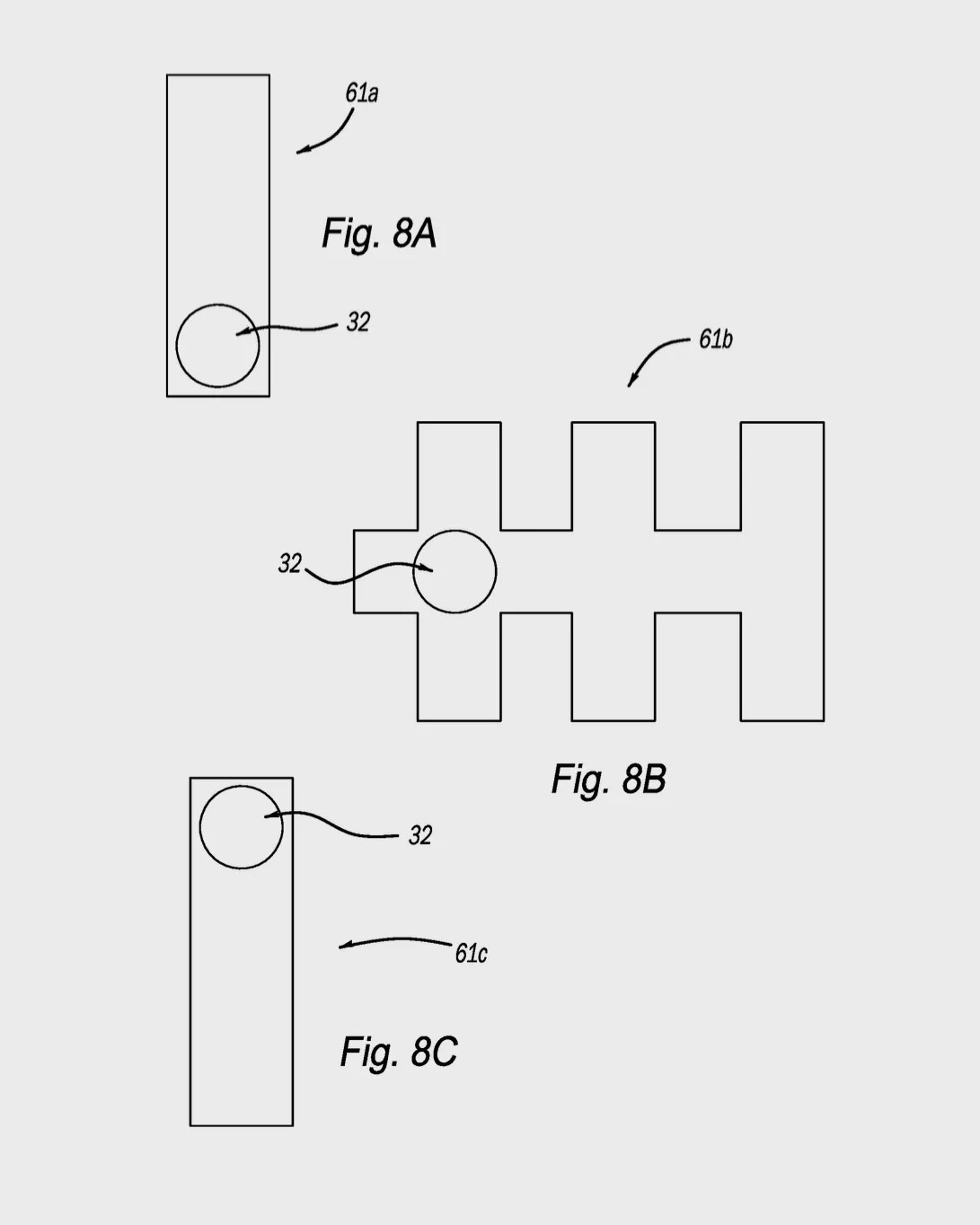
Three schematic diagrams labeled Fig. 8A, 8B, and 8C showing different rectangular and notched shapes each containing a circle labeled 32.
Though these positions would correspond to “gears,” they would also be used for other functions as well.
Ford / USPTO

Thus, while Ford’s design would take the form of an otherwise familiar shifter lever, its functionality would actually go much deeper. 

If for no other reason than the notion of adding some sweet 007-like gadgetry to your center console, it’s an interesting idea. More practically, though, it could give drivers an efficient, tactile alternative to scrolling through endless touchscreen menu displays.

Technical drawing of a mechanical assembly with labeled components including a handle, rods, springs, and a base plate.
Ford’s design would rely on a series of actuators to limit movement.
Ford / USPTO

The concept of a manual is evolving

While patents like this one from Ford offer no guarantee that we’ll see such technology enter production, they do bode well for the manual — if not for the “real” transmission itself, at least for the concept of one.

That’s because they show that sticks aren’t so much dying as they are evolving. In the absence of mechanical constraints, automakers can now look beyond the physical packaging and give the shifter lever a bigger purpose.

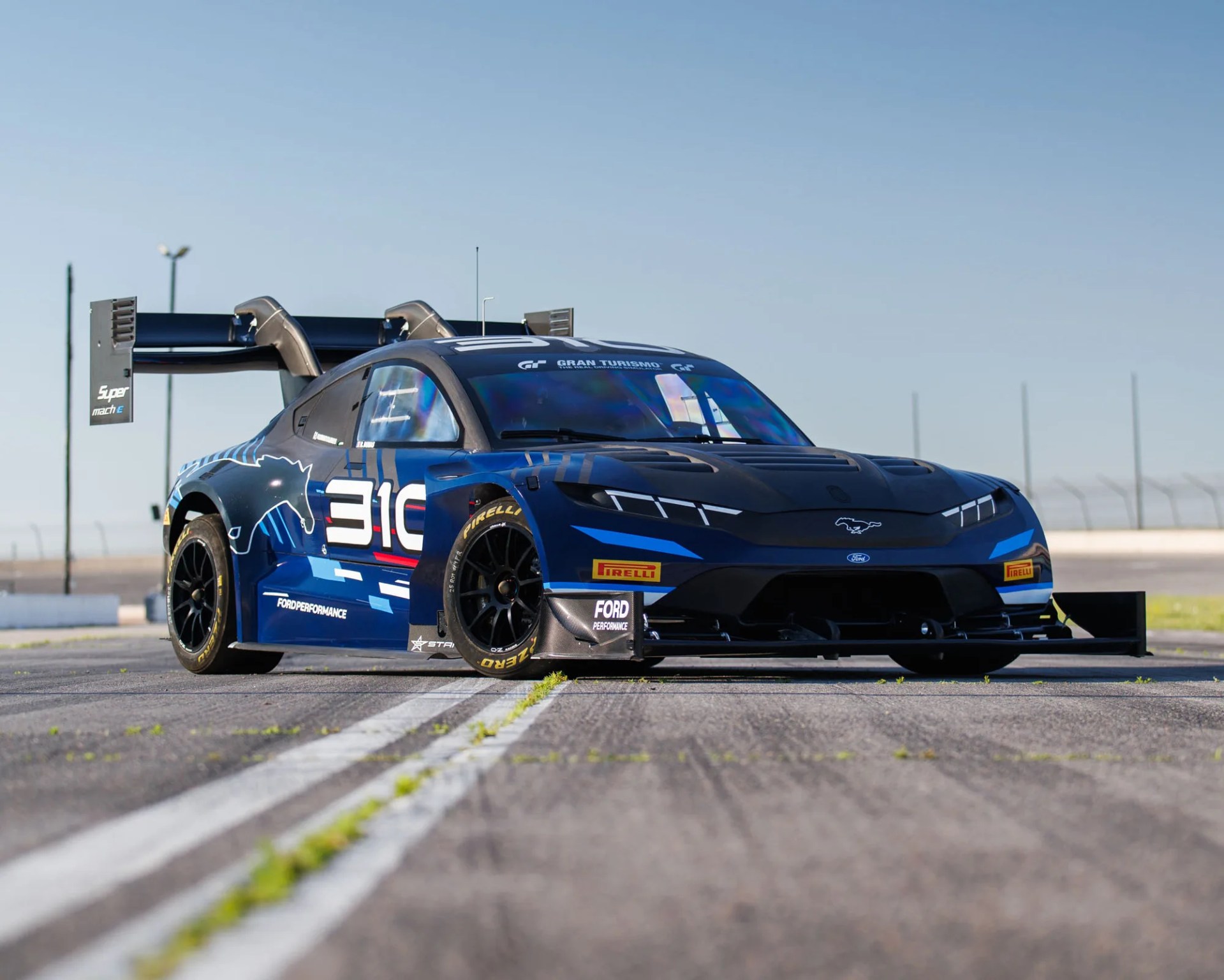
Blue and black Ford Mustang race car with large rear wing and Pirelli tires on a racetrack.
Ford’s Mach-E demonstrator could certainly benefit from a shifter to angle its wing.
Ford

To that end, in Ford’s case, it’s not hard to imagine how such a patent could see application.

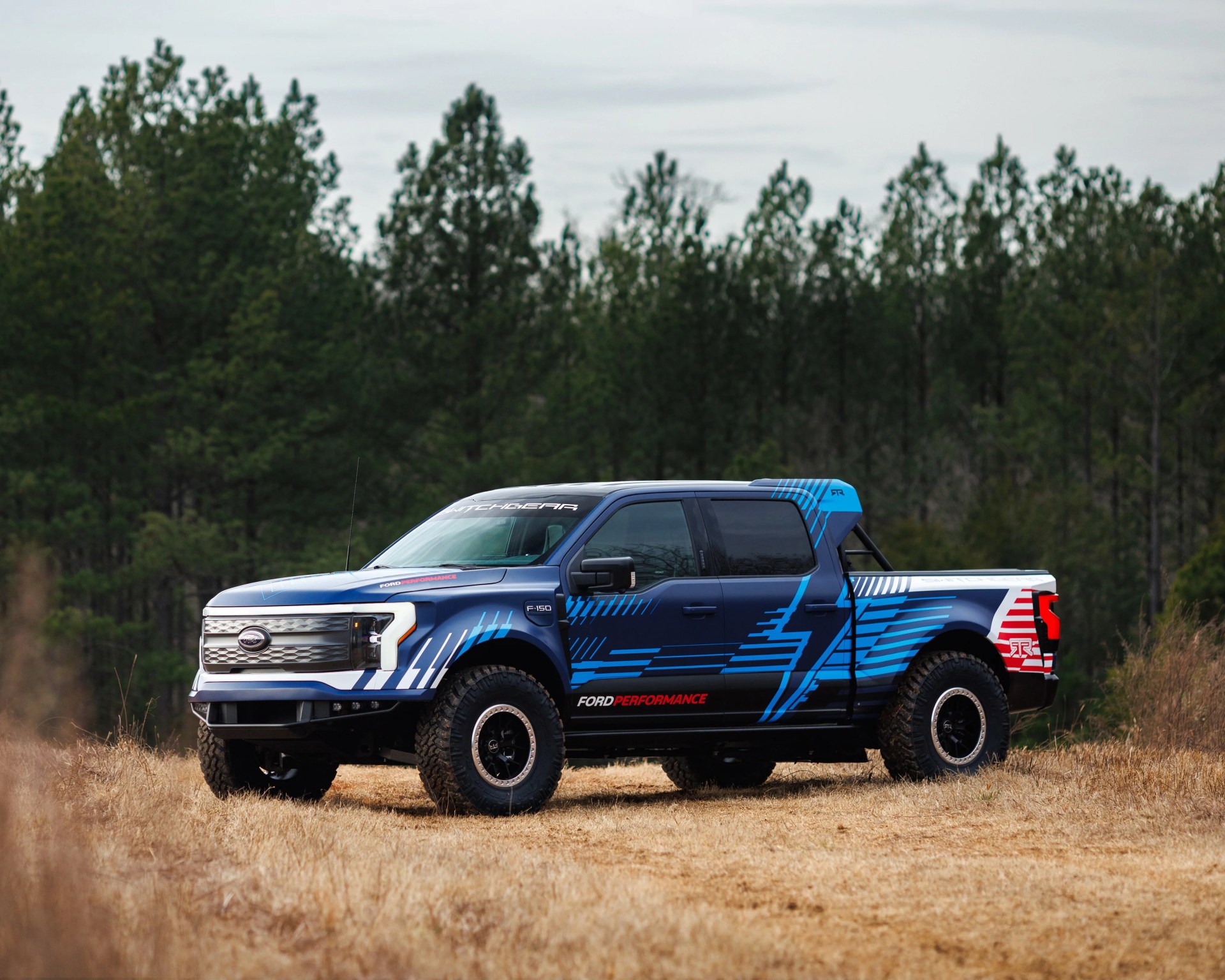
Whether it’s angling the rear wing on a high-performance track EV, switching drive modes on an off-roader or changing the camera’s field of view on a truck while towing, there are plenty of scenarios where it’d be helpful to have additional control immediately available on your gear lever.

More important than any one hypothetical, though, is the fact that this kind of design would make a case for including shifters — and, by extension, simulated gear changes — even in vehicles that don’t technically require them.

Blue Ford F-150 pickup truck with blue and white racing stripes and "Ford Performance" branding parked on dry grass with pine trees in the background.
Whether for changing drive modes or for towing, it’d be useful to have this kind of shifter in an EV truck.
Ford

After all, though manual modes appeal to the enthusiast crowd, integrating the physical lever with multiple functionalities would cater to a broader consumer market. Ultimately, that does make such a feature more justifiable on the balance sheet — especially when it comes to cost-cutting EVs like Ford’s upcoming UEV.

Want to stay up to date on the latest product news and releases? Add Gear Patrol as a preferred source to ensure our independent journalism makes it to the top of your Google search results.

add as a preferred source on google
, ,