
Cast-Iron’s Upscale Reinvention Has a Surprising New Face

Made In has officially entered the cast-iron wars, bringing a design language and manufacturing backstory that feels remarkably close to an American classic.

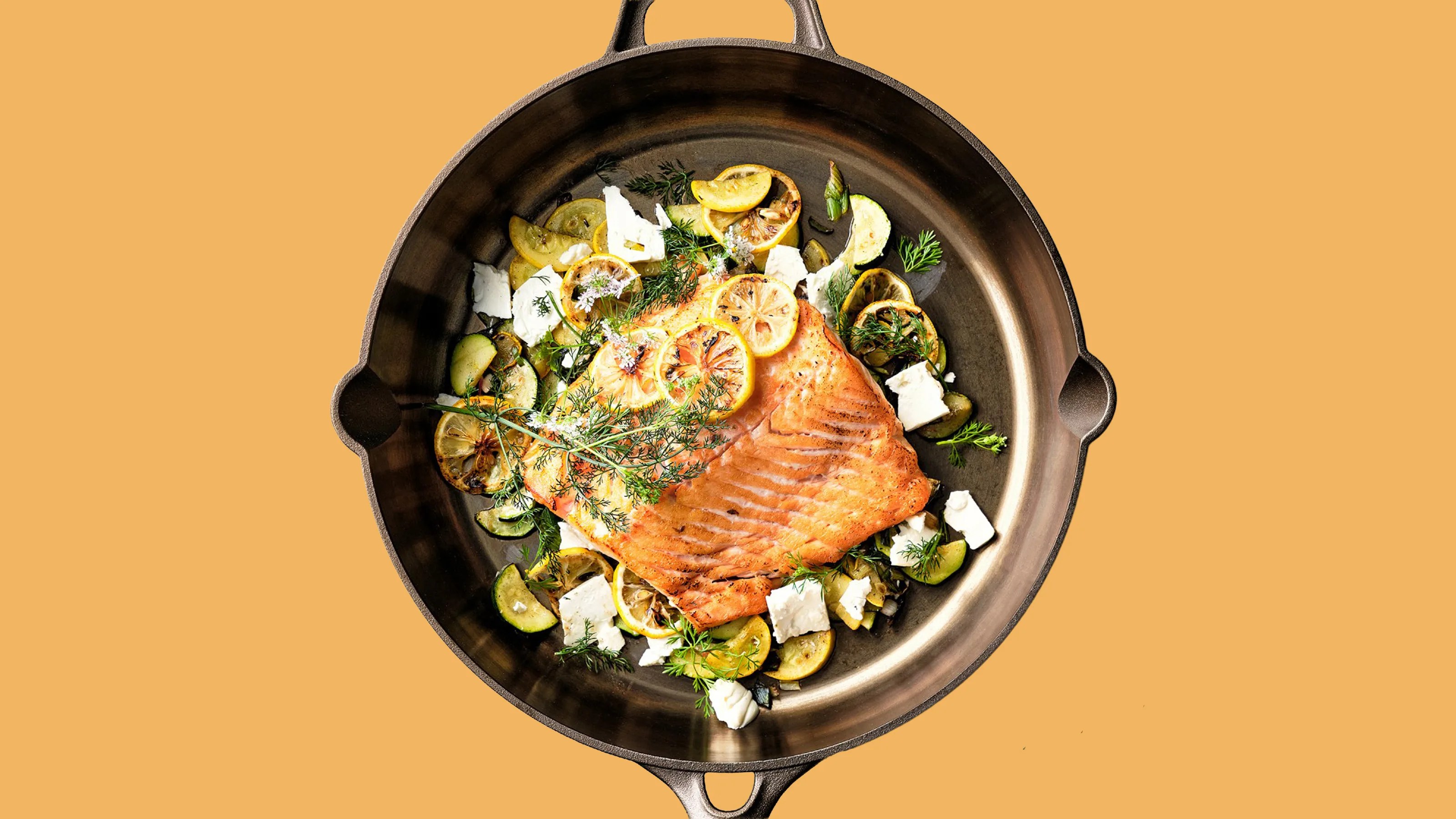
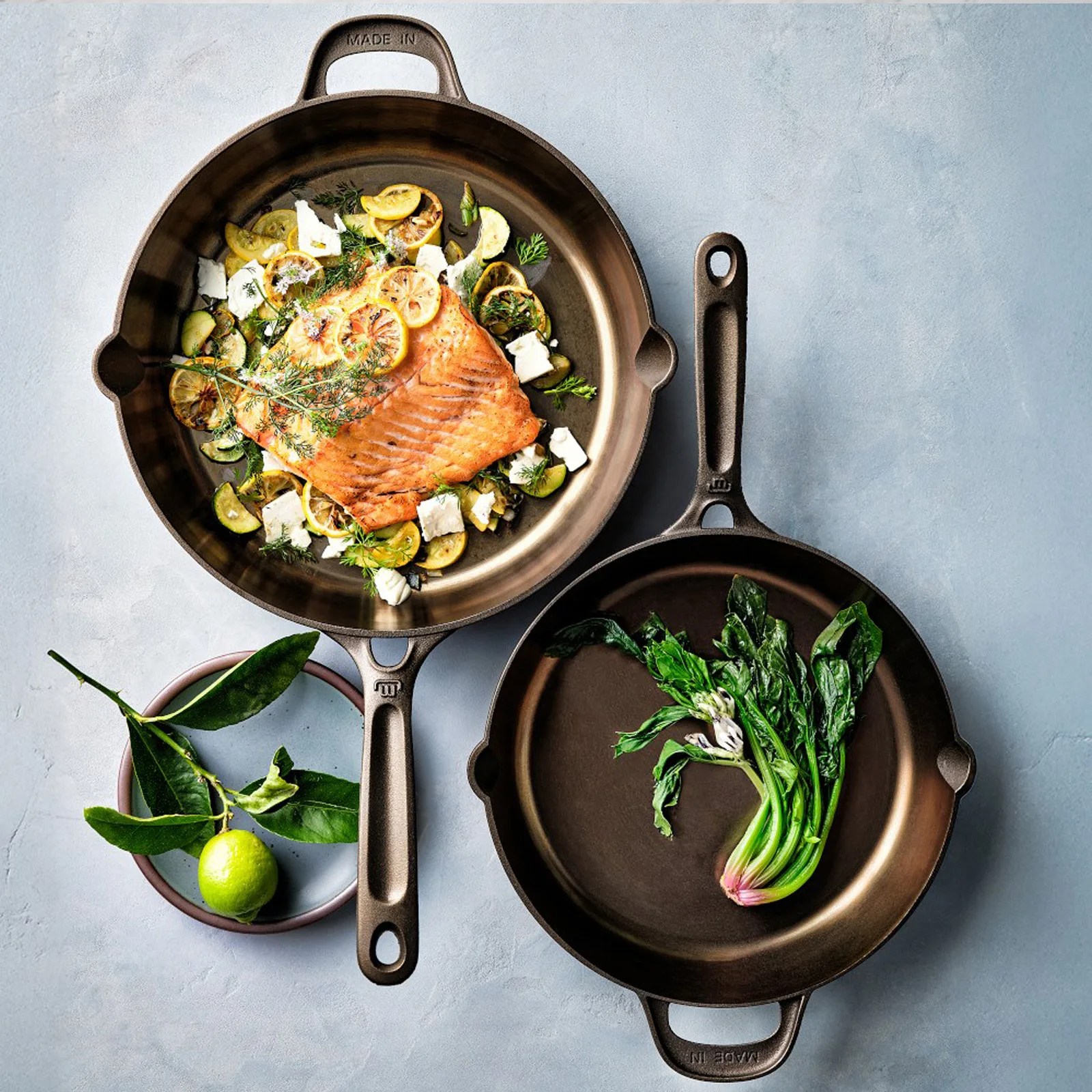
Cast iron skillet with cooked salmon topped with lemon slices, herbs, zucchini, and white cheese chunks.Williams Sonoma

If you buy from a link, we may earn a commission. Learn more

Made In Cookware has spent the better part of the last decade becoming one of the internet’s most recognizable premium cookware brands, building its reputation on chef-backed stainless steel pans, carbon steel and direct-to-consumer polish.

Now it’s officially entering another fiercely opinionated corner of the kitchen world: cast iron.

The company’s new Seasoned Cast Iron Collection, which also marks a broader expansion into physical retail via Williams Sonoma, arrives at a moment when premium cast iron has become increasingly crowded.

Welcome to Power MovesDiving deep into the product and brand moves that can change where a category is headed. Discover more here.
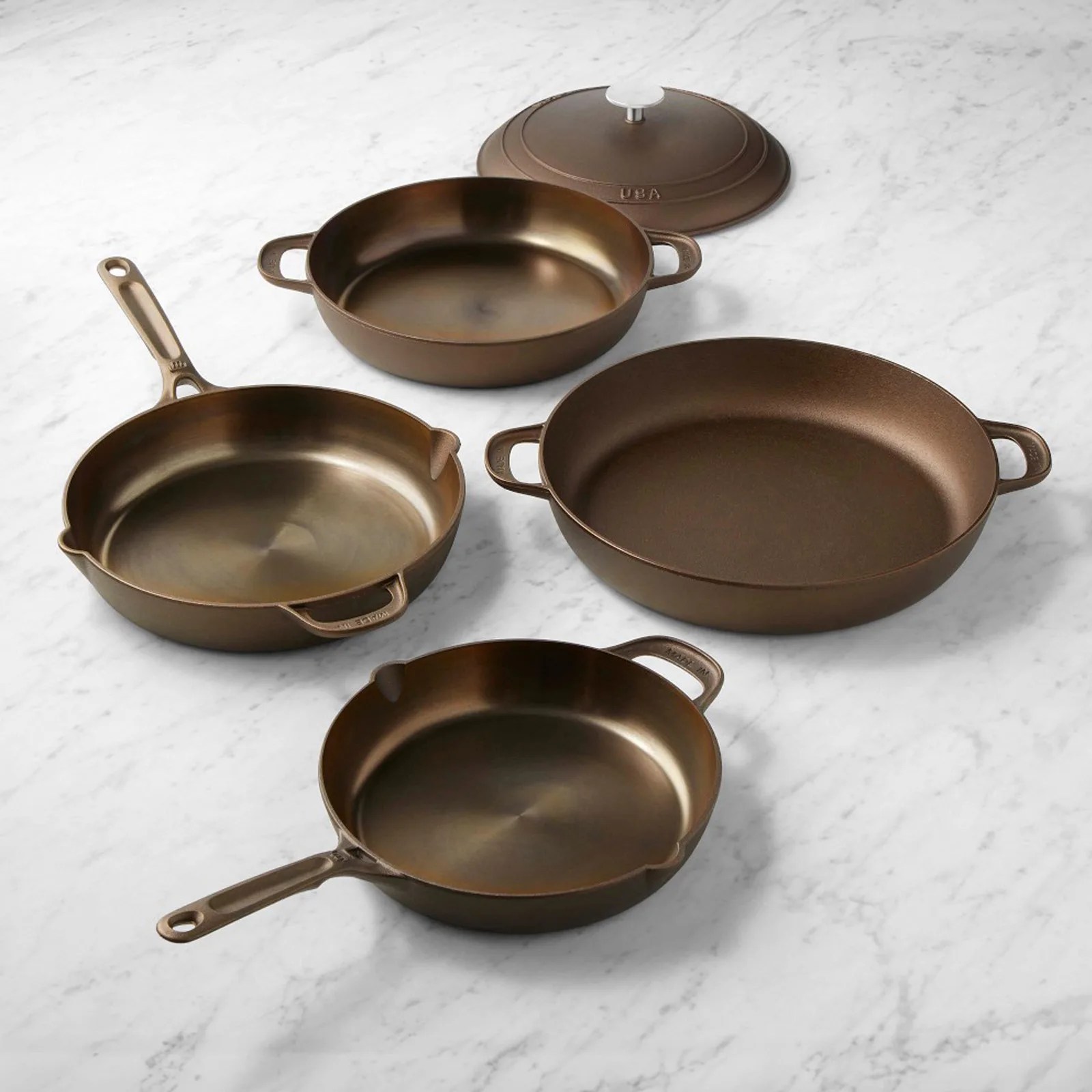
Set of five bronze cast iron skillets and a lid on a white marble surface.
The new collection includes skillets, a braiser, a Dutch oven and larger multi-piece sets sold exclusively through Williams Sonoma. No, you can’t even buy it through Made In’s own robust website.
Williams Sonoma

Legacy giants like Lodge and more recent revivals like Wagner share shelf space today with modern enthusiast-focused makers like Field Company, Smithey, Finex and even Yeti, which acquired cult-favorite Butter Pat in 2024.

That makes Made In’s arrival notable on its own. But once you start looking closely at the collection’s design, manufacturing location and pricing, another question naturally emerges: does this lineup feel familiar because it’s borrowing ideas from the modern cast-iron playbook, or because it may literally share roots with one of America’s most iconic skillet makers?
A new cast member

Two cast iron skillets, one with cooked salmon and vegetables, the other with fresh greens, on a light surface.
The new lineup enters a market already crowded with respected names like Lodge, Field Company, Smithey and Finex.
Williams Sonoma

The new collection includes a range of pieces that immediately position Made In as a serious player rather than a one-off skillet experiment. The lineup includes multiple Seasoned Cast Iron Skillets, a dedicated skillet set, a Dutch oven, a braiser and a larger five-piece cookware set.

At first glance, the skillets themselves land somewhere between traditional utility and modern premium styling. Unlike the smoother, more minimalist silhouettes favored by companies like Field Company, Made In’s pans feature dual side pouring spouts across all sizes and a noticeably larger helper handle with enough room to actually grip comfortably with an oven mitt.

That oversized secondary handle feels especially familiar. It carries the same kind of no-nonsense, utility-first energy that has long defined Lodge, the Tennessee company that arguably remains America’s most recognizable cast-iron manufacturer.

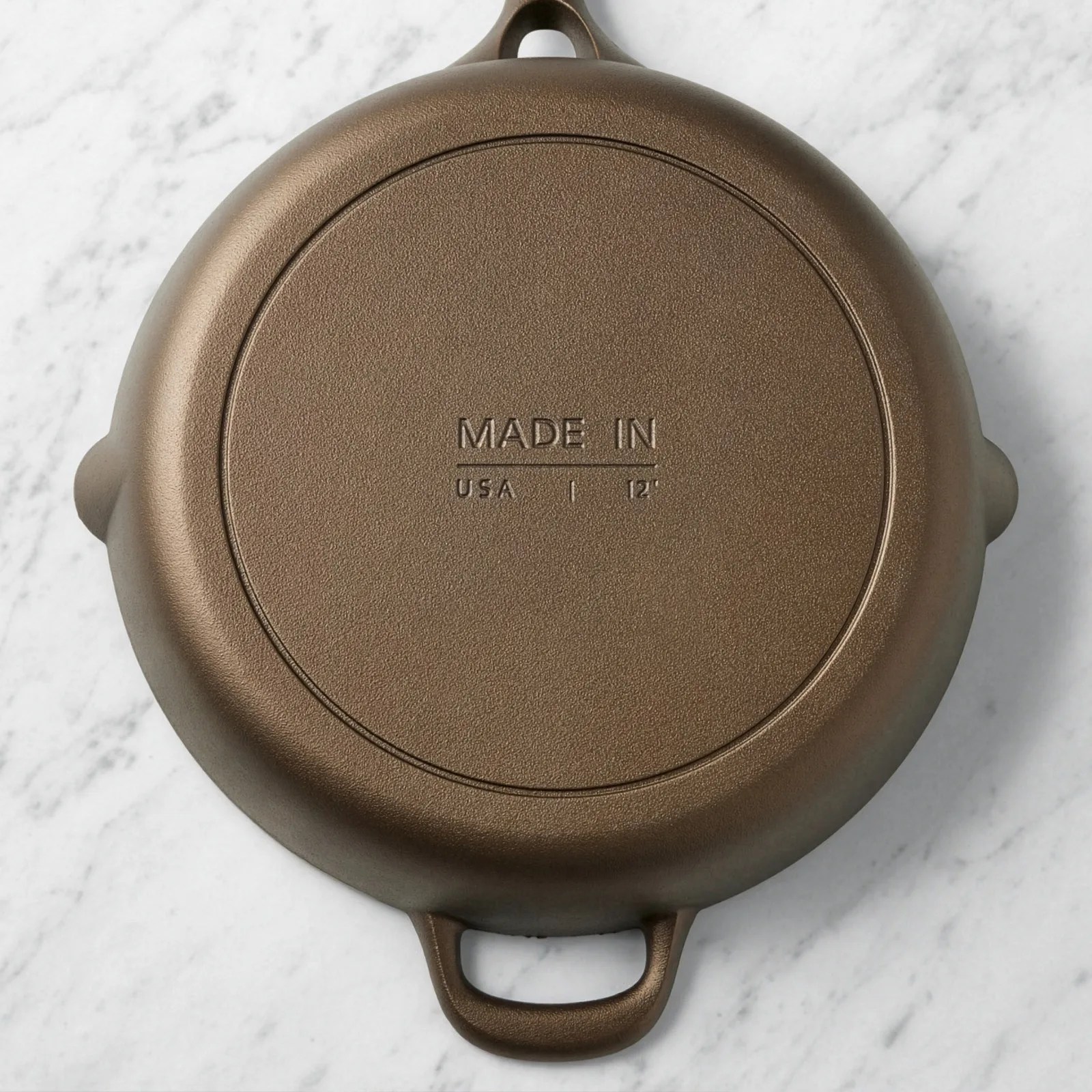
Bottom of a brown cast iron skillet with "Made in USA 12"" embossed on it, on a white marble surface.
Unlike some premium cast-iron competitors, Made In’s skillet design leans heavily into practicality and familiar ergonomics.
Williams Sonoma

Which makes another detail difficult to ignore: Made In says its cast-iron cookware is also manufactured in Tennessee.

That does not confirm any direct connection between the companies. But in a category where manufacturing geography and foundry heritage still matter to enthusiasts, the overlap naturally raises eyebrows.

At the same time, the deeper you dig into Made In’s actual manufacturing process, the more this collection starts looking less like a direct Lodge competitor and more like an attempt to enter the premium-machined cast-iron tier occupied by brands like Field Company, Smithey and the now Yeti-owned Butter Pat.

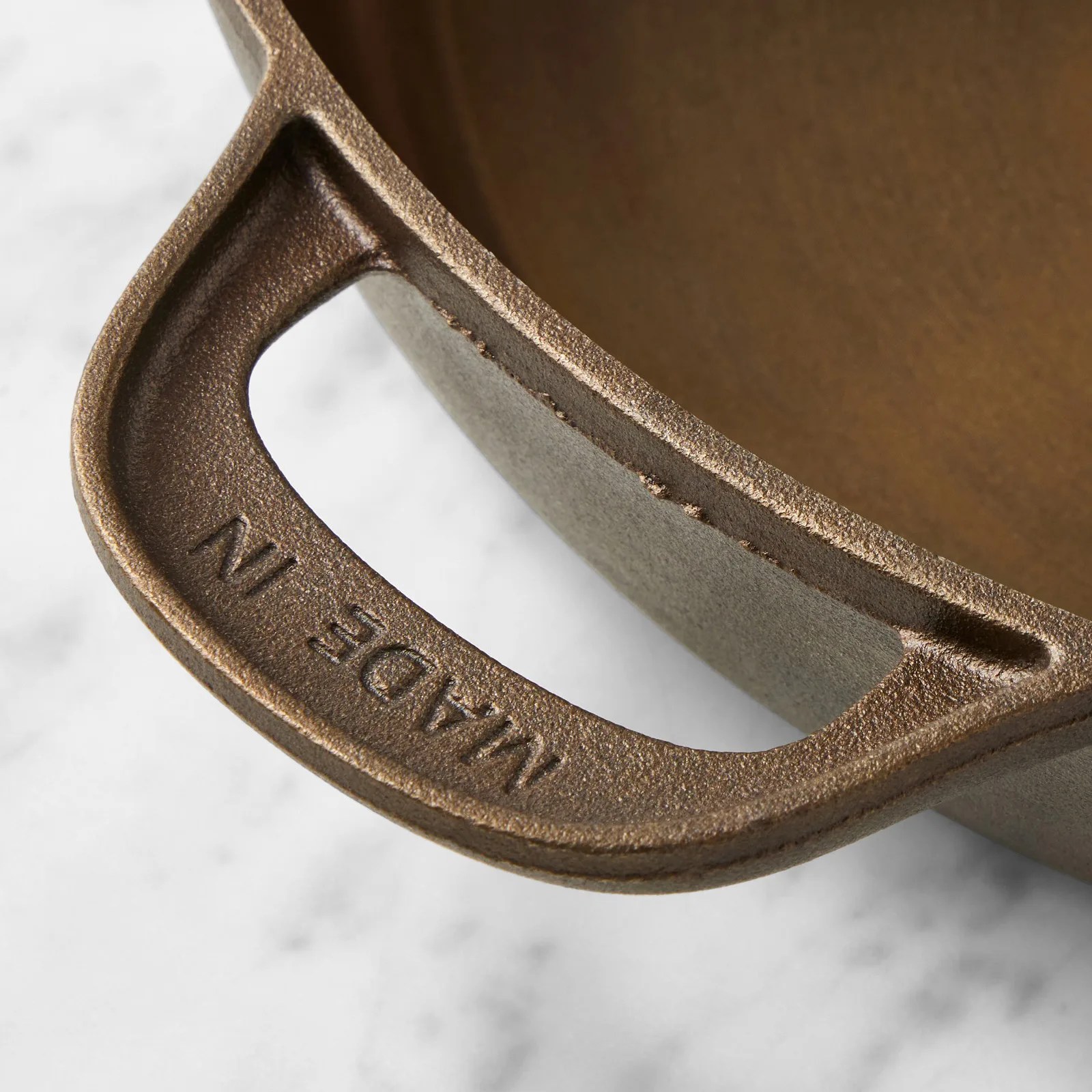
Close-up of a rough-textured cast iron handle with "MADE IN" embossed on it.
While most cast iron skillets look similar at first glance, small details like dual side pouring spouts and, more importantly, a larger helper handle with an exposed gap from the main pan have been trademark features of Lodge skillets. And Made In’s new skillets happen to mirror both design elements.
Williams Sonoma

According to the company’s launch materials, each pan is precision sand cast before being individually machined, buffed and lathed to create a satin-smooth cooking surface. That smoother finish is a major distinction from the rougher surfaces commonly associated with mass-market cast iron and one of the main reasons premium skillet makers argue their cookware performs differently over time.

Made In also claims the cookware goes through four times the manufacturing operations of a standard cast-iron pan, with every piece hand-seasoned using organic flaxseed oil.

Whether buyers view that as meaningful craftsmanship or diminishing returns likely depends on how deeply invested they already are in cast iron culture.

The company is also careful to frame the line less as a nostalgia play and more as chef-oriented performance cookware. In its own words, the goal was not to create “a heritage piece” or “a lifestyle object,” but rather a pan engineered around how chefs actually cook.

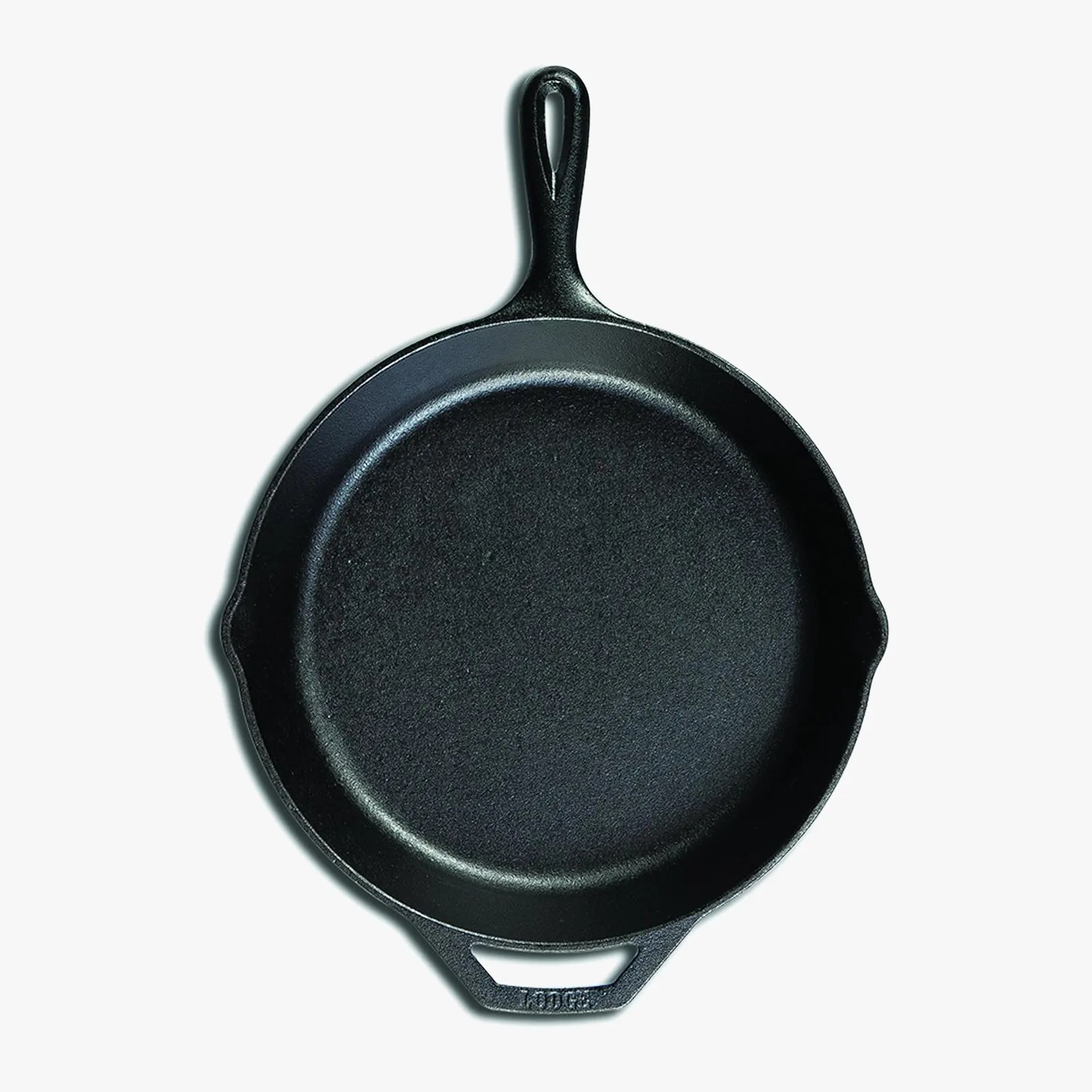
Black cast iron skillet with a long handle and a helper handle on a white background.
At nearly $200 for a 12-inch skillet, Made In’s new pan enters one of cookware’s most hotly debated premium categories. Lodge’s beloved budget classic costs just $30 by comparison.
Amazon

That philosophy shows up in several smaller design decisions. Made In says the pans use thinner sidewalls and a thicker base to retain heat while trimming unnecessary weight.

The interior cooking surface also curves without hard corners, so spoons can more easily follow the bowl during basting.

Still, the pricing conversation is impossible to avoid.

A 12-inch Made In skillet costs $199 and weighs roughly nine pounds. Meanwhile, a comparably sized Lodge skillet can often be found for closer to $30 while actually weighing less at roughly 7.69 pounds.

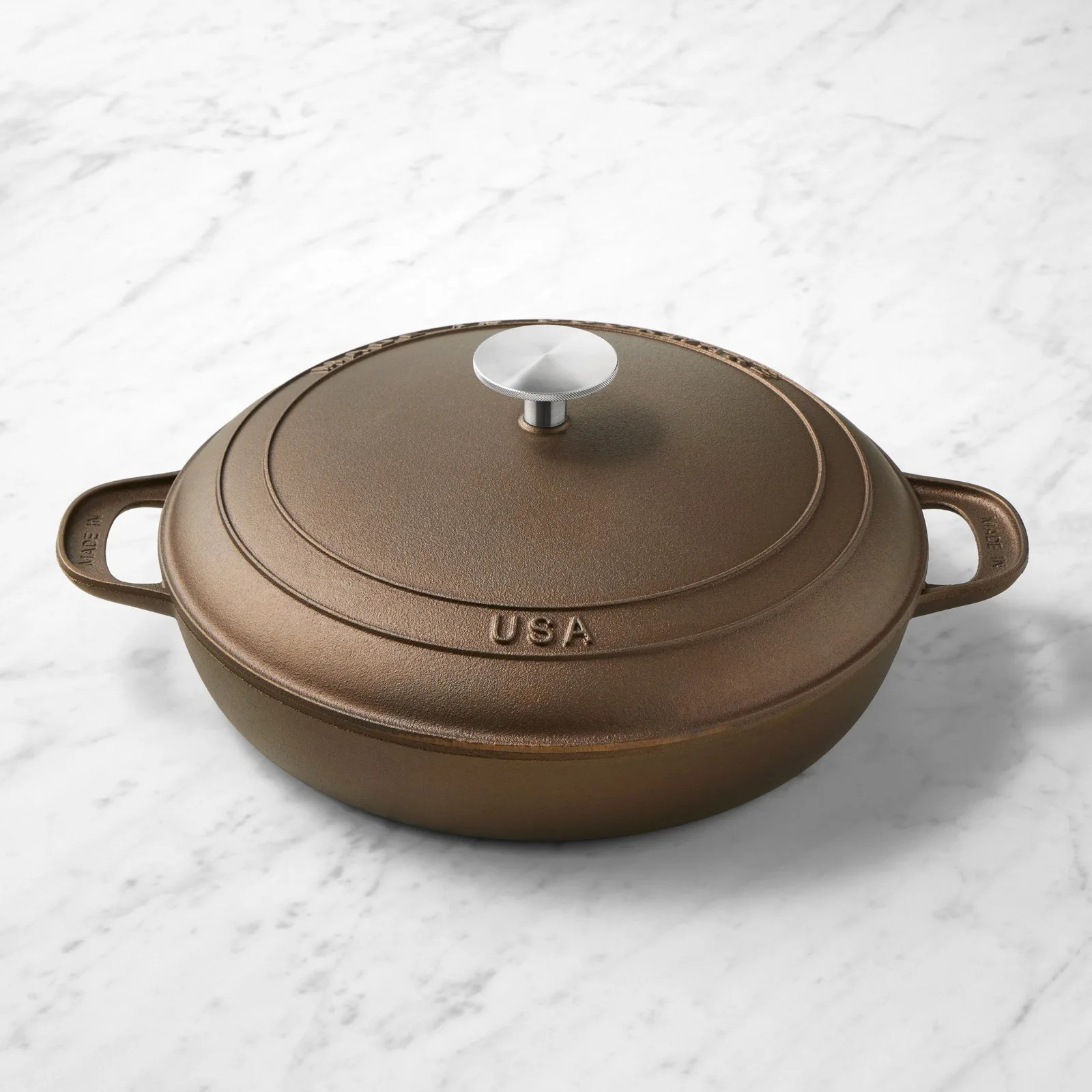
Brown cast iron Dutch oven with lid and metal knob on a white marble surface.
Made In chose Tennessee for its first cast-iron collection, a decision that, even more than the pan’s design similarities, immediately invites comparisons to Lodge.
Williams Sonoma

That tension may ultimately become the defining storyline surrounding this launch. Visually and geographically, Made In’s new cookware evokes one of America’s most iconic cast-iron brands. But manufacturing-wise, it’s clearly attempting to justify its pricing by competing in the smoother, more labor-intensive premium-machined category instead.

Whether consumers see that as thoughtful engineering or simply a luxury reinterpretation of a familiar American classic is likely to become one of the more interesting cookware debates of the year.

Availability and pricing

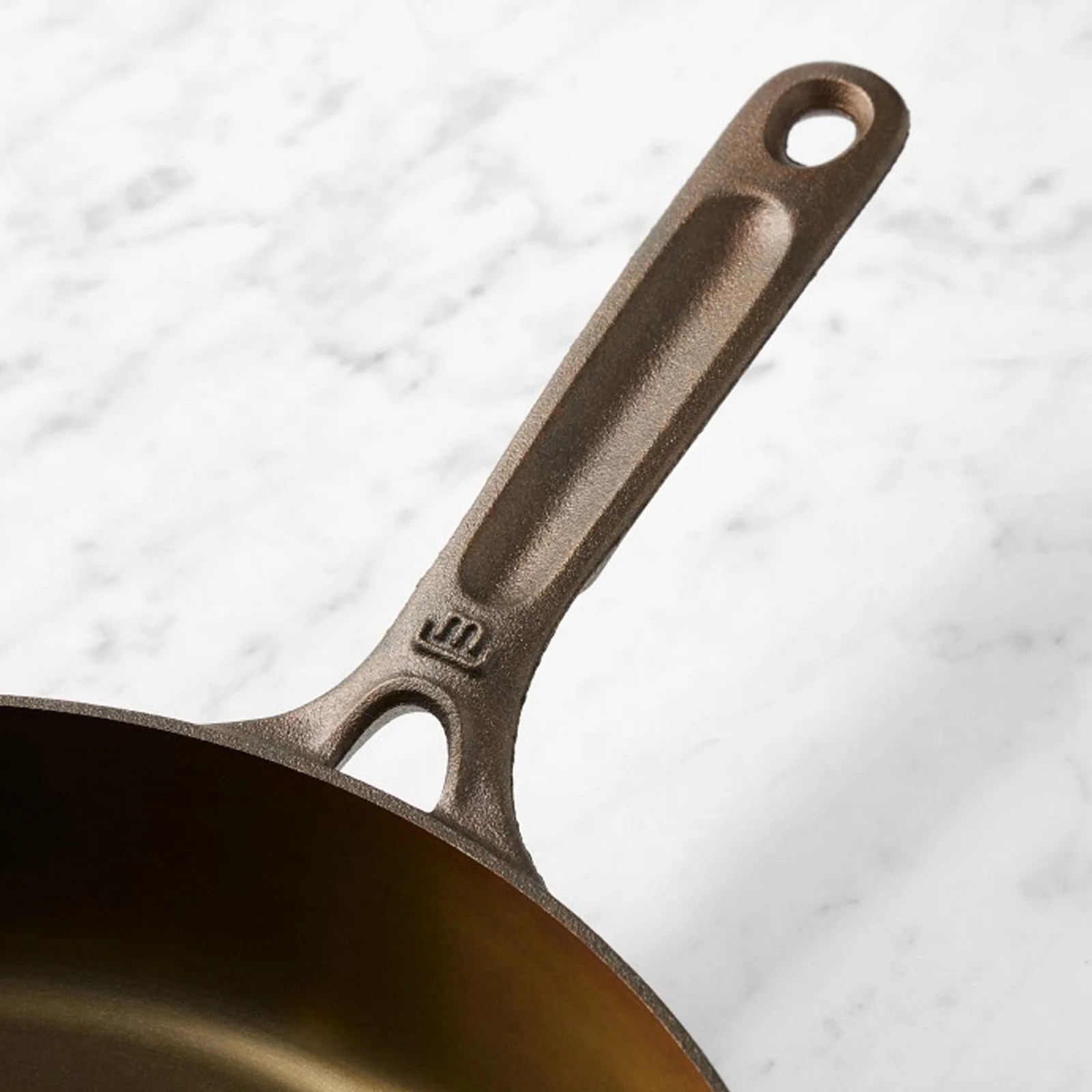
Close-up of a brown cast iron skillet handle with a hole at the end on a white marble surface.
The handle design of Made In’s skillets is the biggest departure from Lodge’s simpler, old-school handle.
Williams Sonoma

The new Made In Seasoned Cast Iron Collection is available exclusively through Williams Sonoma. Pricing starts at $130 for the 8-inch skillet and climbs to $200 for the 12-inch version. A larger 14-inch version in a different form factor costs $250.

There’s also a two-piece 10 and 12-inch skillet set that costs $329, while the 6-quart Dutch oven and 4-quart braiser retail for $300 and $230, respectively. The full five-piece set lands at $800.

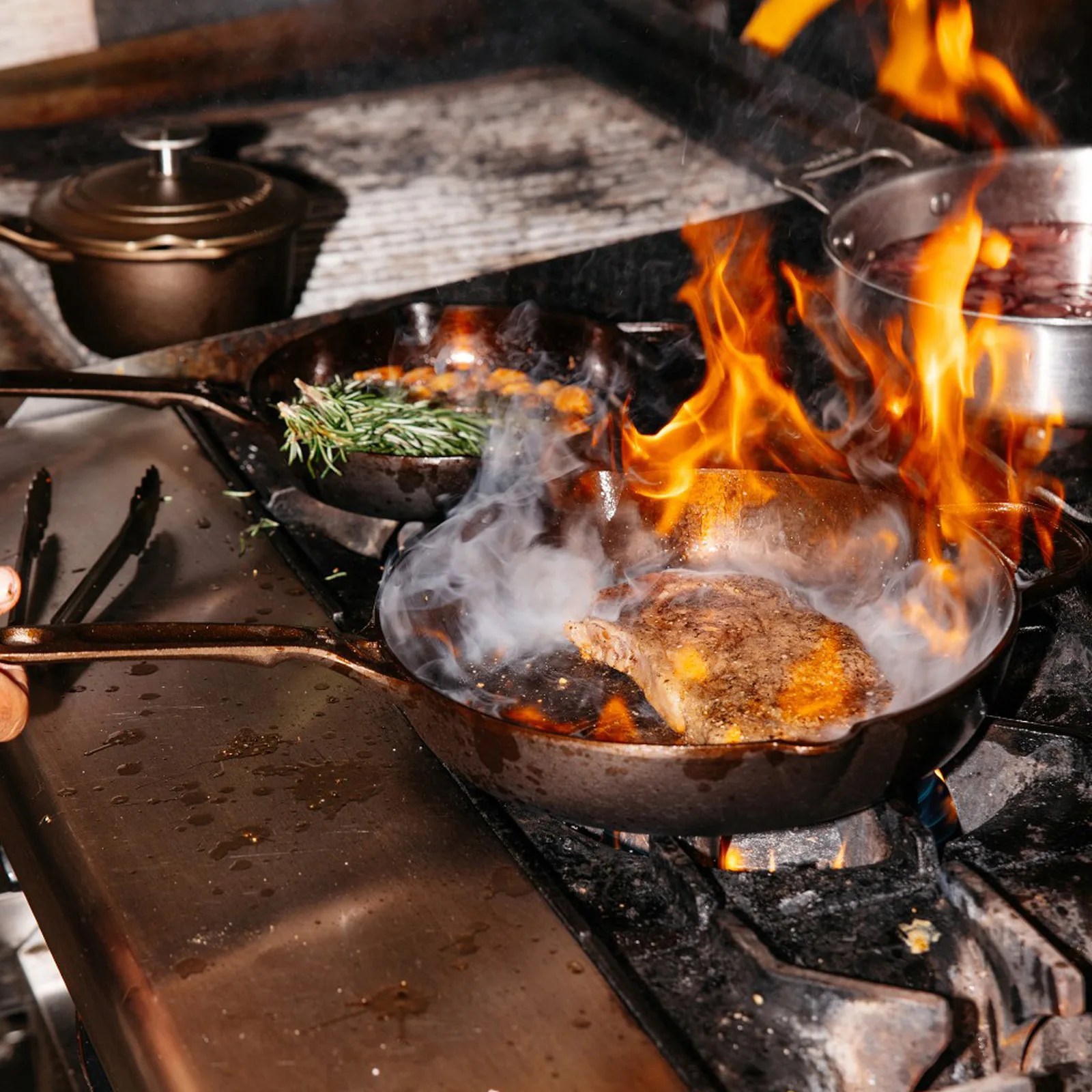
Cast iron skillet with steak cooking over open flame on a gas stove, with another skillet holding rosemary and garlic.Williams Sonoma

For comparison, similarly sized offerings from brands like Field Company, Smithey and Finex often occupy comparable premium territory. In contrast, Lodge continues to anchor the opposite end of the market with dramatically lower pricing.

Which means Made In isn’t trying to reinvent cast iron so much as it is attempting to secure a seat at the increasingly crowded premium table.

The more interesting question is whether consumers still believe cast iron is one of the few kitchen categories where paying six times more actually changes the cooking experience in a meaningful way.

Want to stay up to date on the latest product news and releases? Add Gear Patrol as a preferred source to ensure our independent journalism makes it to the top of your Google search results.

add as a preferred source on google
,