
Nike’s New Shoes Look Utterly Bizarre. But What They Do Is Even Wilder

Forget super shoes that make you faster. Nike’s newest footwear innovation might actually change the way you think.

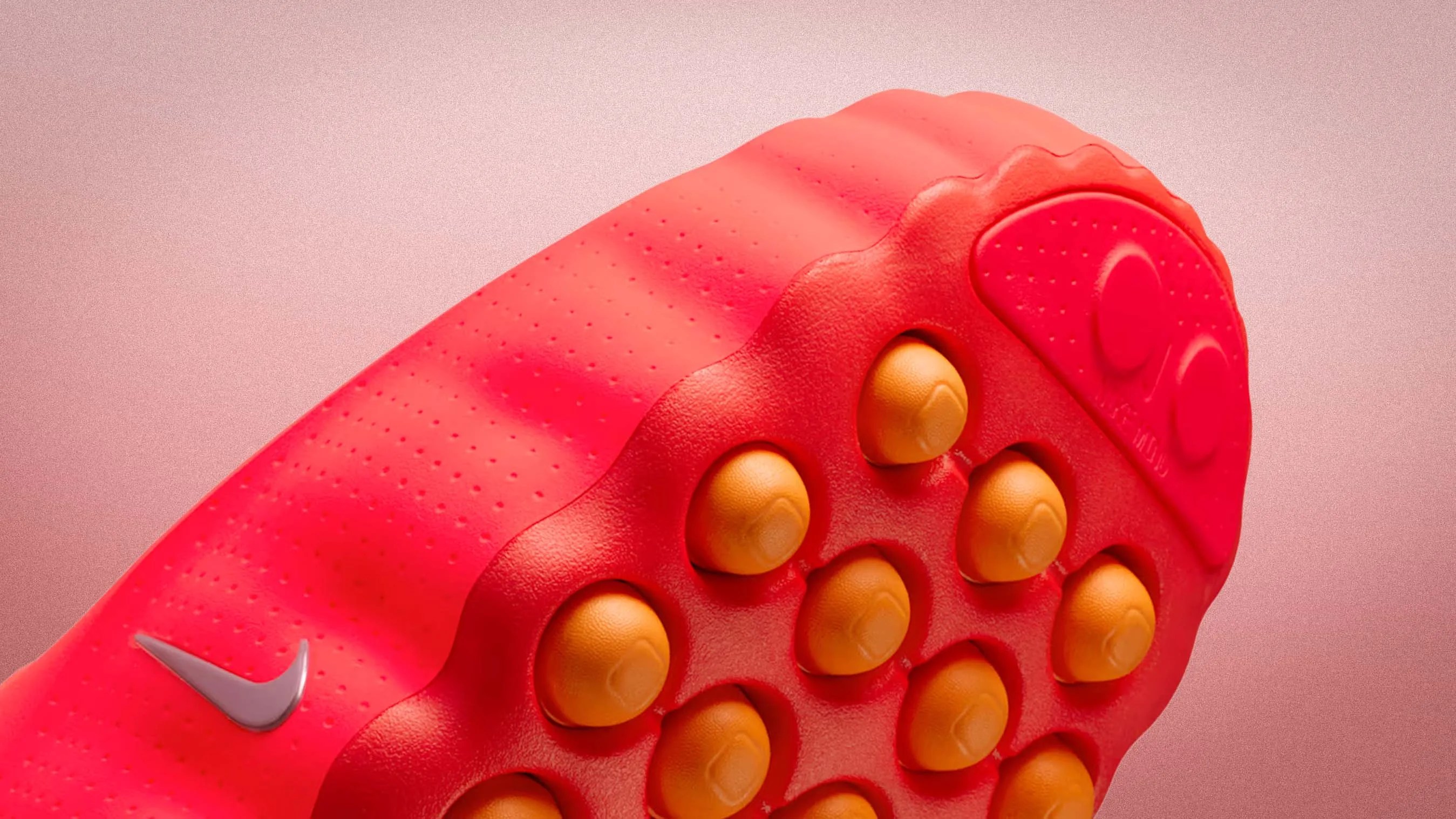
Close-up of a red Nike soccer cleat sole with orange studs and a silver Nike swoosh.Nike

If you buy from a link, we may earn a commission. Learn more

Five NBA championships. Two Olympic gold medals. An 18-time All-Star, with more than 33,000 points to his name (not to mention one 81-point game).

Just about any professional basketball player in history would happily trade CVs with the late Kobe Bryant.

And yet, what most fans remember wasn’t his speed, his footwork or even that signature fadeaway jumper.

It was his mind, codified to history as the Mamba Mentality. Perhaps more than anyone else to ever step foot onto a basketball court, Bryant had that rare innate ability to tune out the noise and focus on the present.

Now, with the release of its first “neuroscience-based footwear” lineup, Nike wants to help everyone channel that kind of mindset.
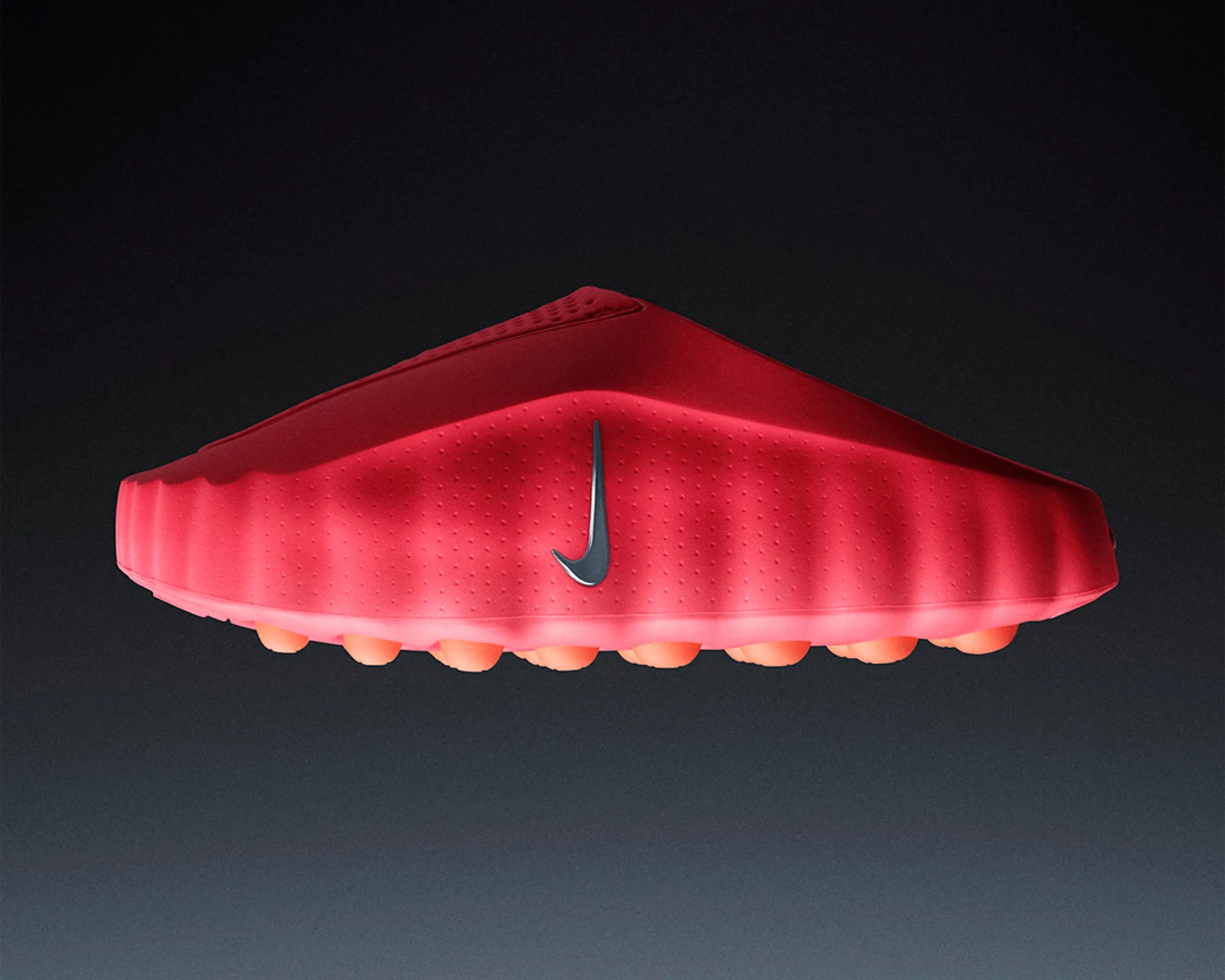
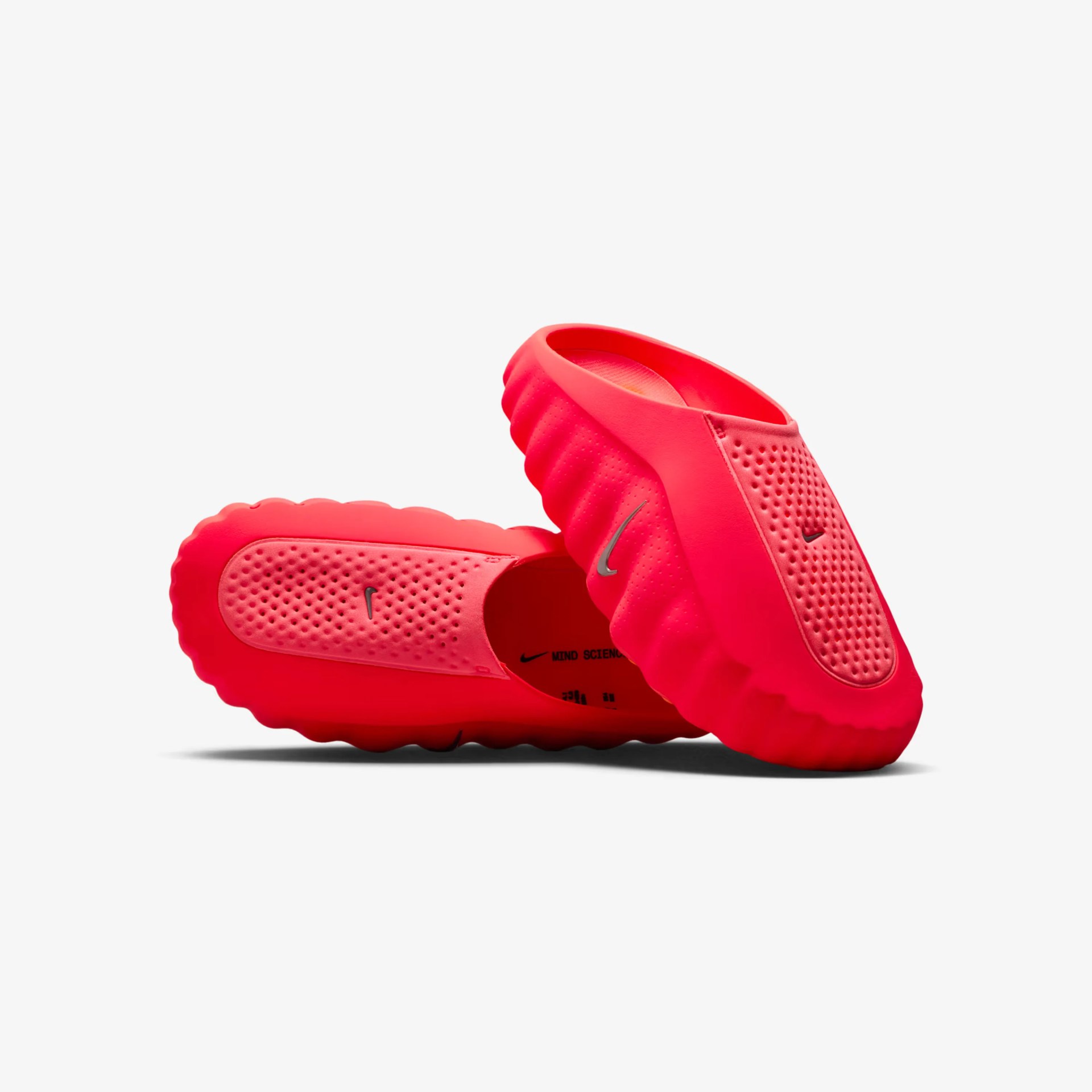
Red Nike slip-on shoe with textured upper and orange rounded sole studs against a dark gradient background.
Nike describes the Mind 001 (pictured) and Mind 002 as its first “neuroscience-based footwear.”
Nike

Head-to-toe design

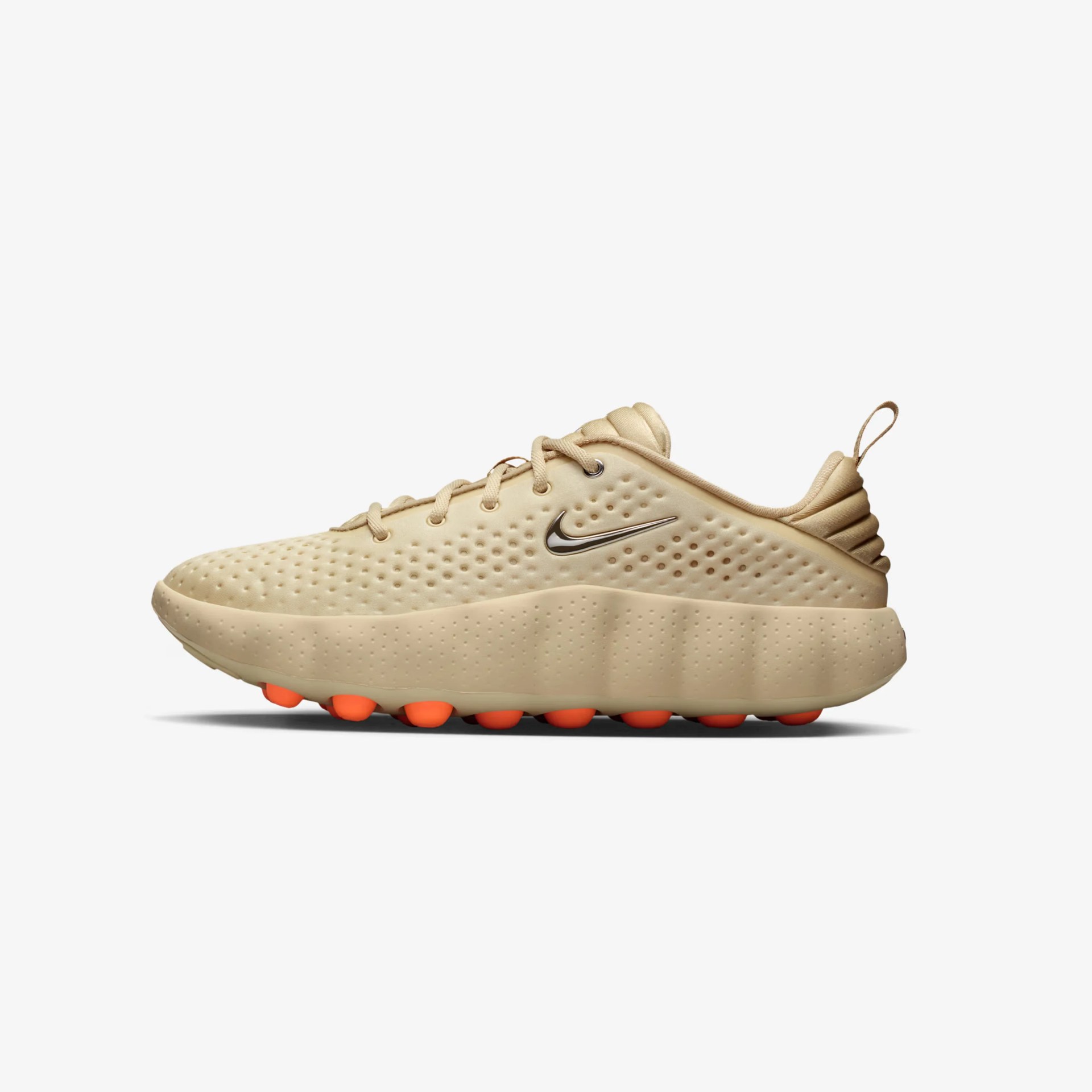
The collection encompasses two silhouettes: an on-trend mule for pre- and post-workout, as well as a conventional sneaker for more-dynamic warmups. But don’t go calling them “traditional.”

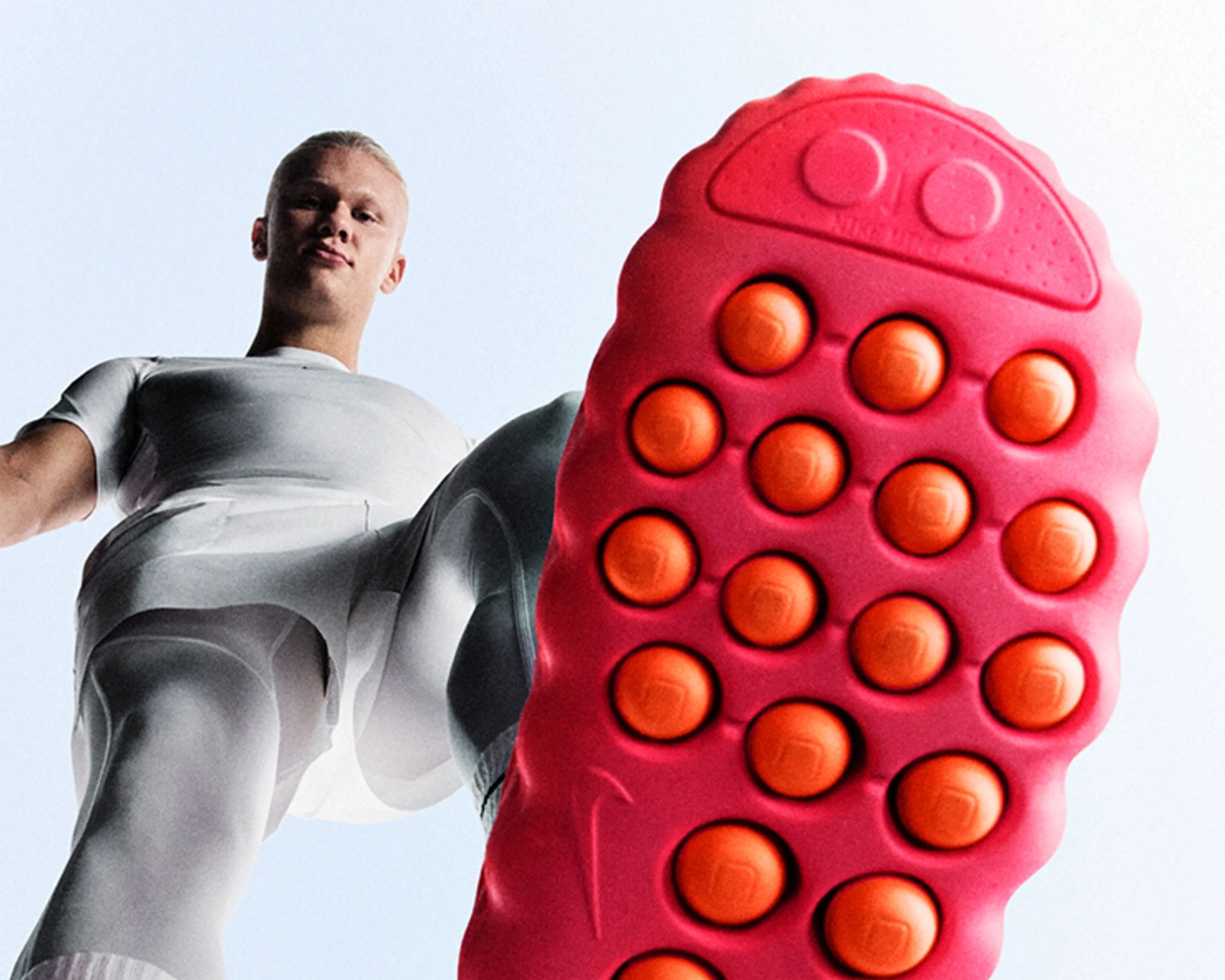
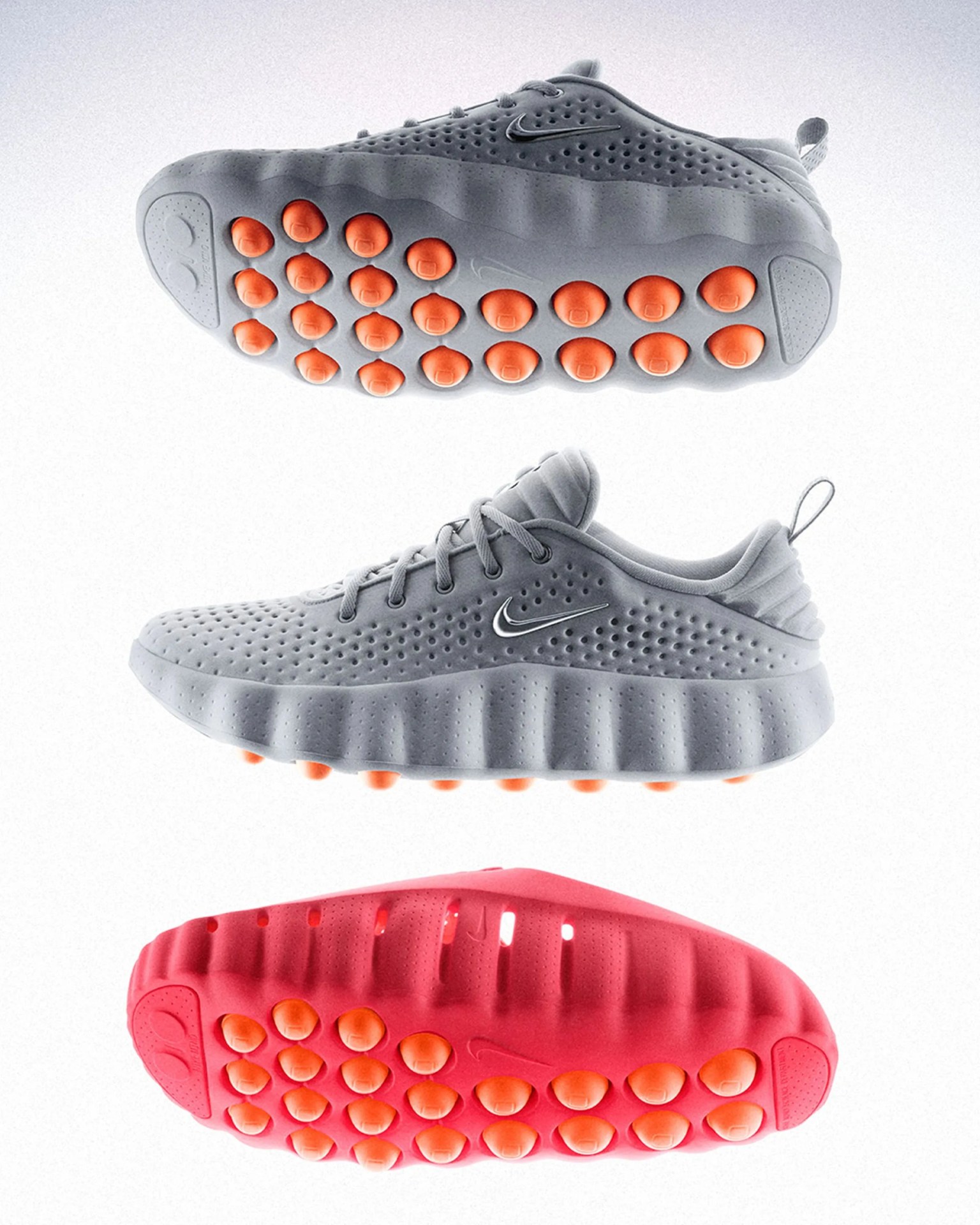
Both designs, named Mind 001 and Mind 002, feature 22 foam nodes underfoot that move independently and transmit sensory feedback from the body to the brain.

That said, they do more than simply massage the bottom of the wearer’s foot.

Gray Nike sneaker with perforated upper and orange circular traction pods on sole, shown from side and bottom views.
Each shoe contains 22 individual nodes that act as a sort of sensory antenna to enhance focus.
Nike

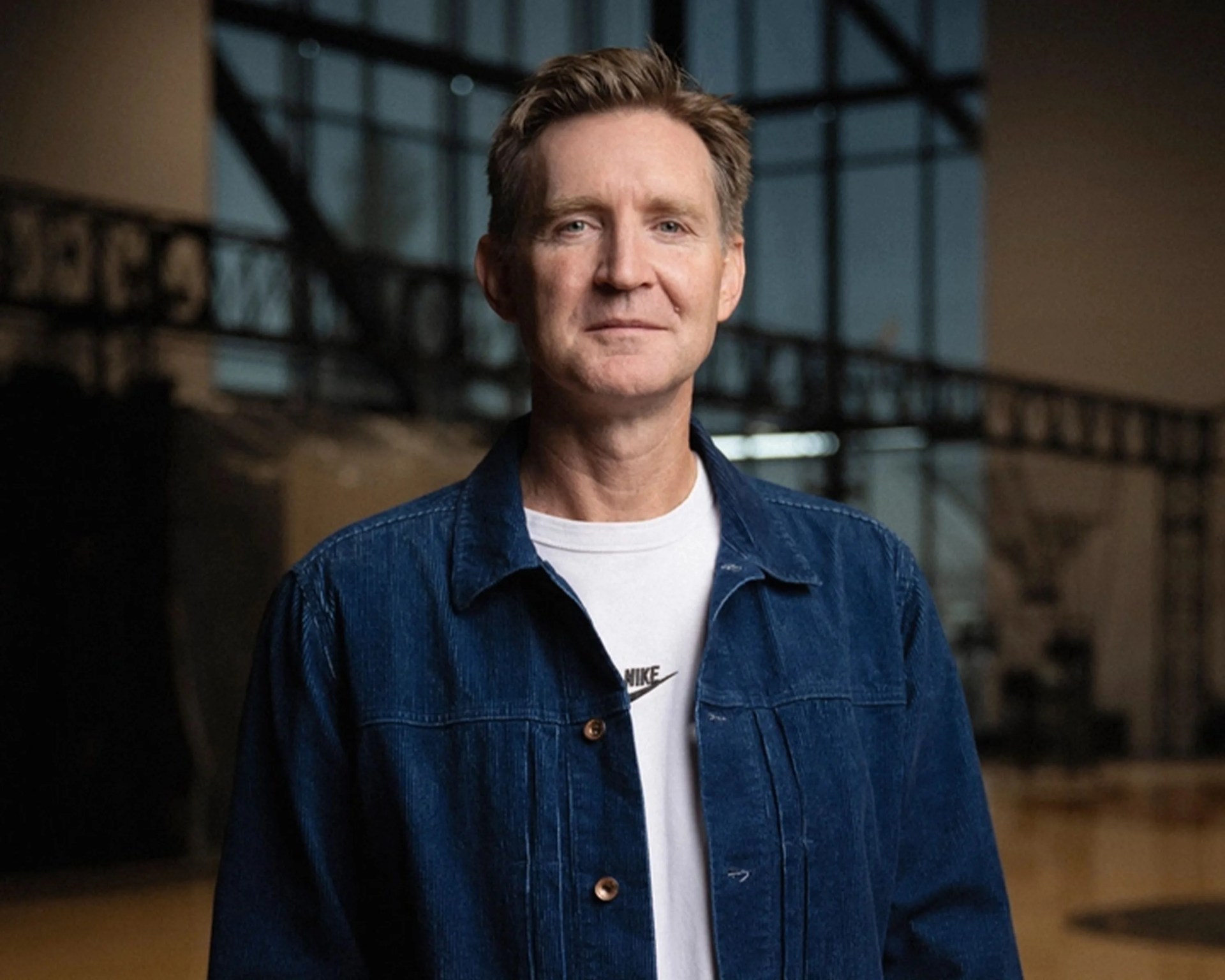
According to chief science officer Matt Nurse, a 23-year Nike vet who helped develop some of Kobe Bryant’s signature shoes, these nodes intuitively enhance someone’s sense of their surroundings, acting as a sort of sensory antenna.

Man wearing a blue denim jacket over a white Nike t-shirt standing indoors with blurred background.
Matt Nurse (pictured) has been with Nike for more than two decades. Now the company’s chief science officer, he previously worked on some of Kobe Bryant’s signature shoes.
Nike

“We [tested] it on an artificial grass surface in the lab in Beaverton and you can feel the blades,” Nurse tells Gear Patrol. “It’s a really, really unique sensation. You can’t even do that with a sock.”

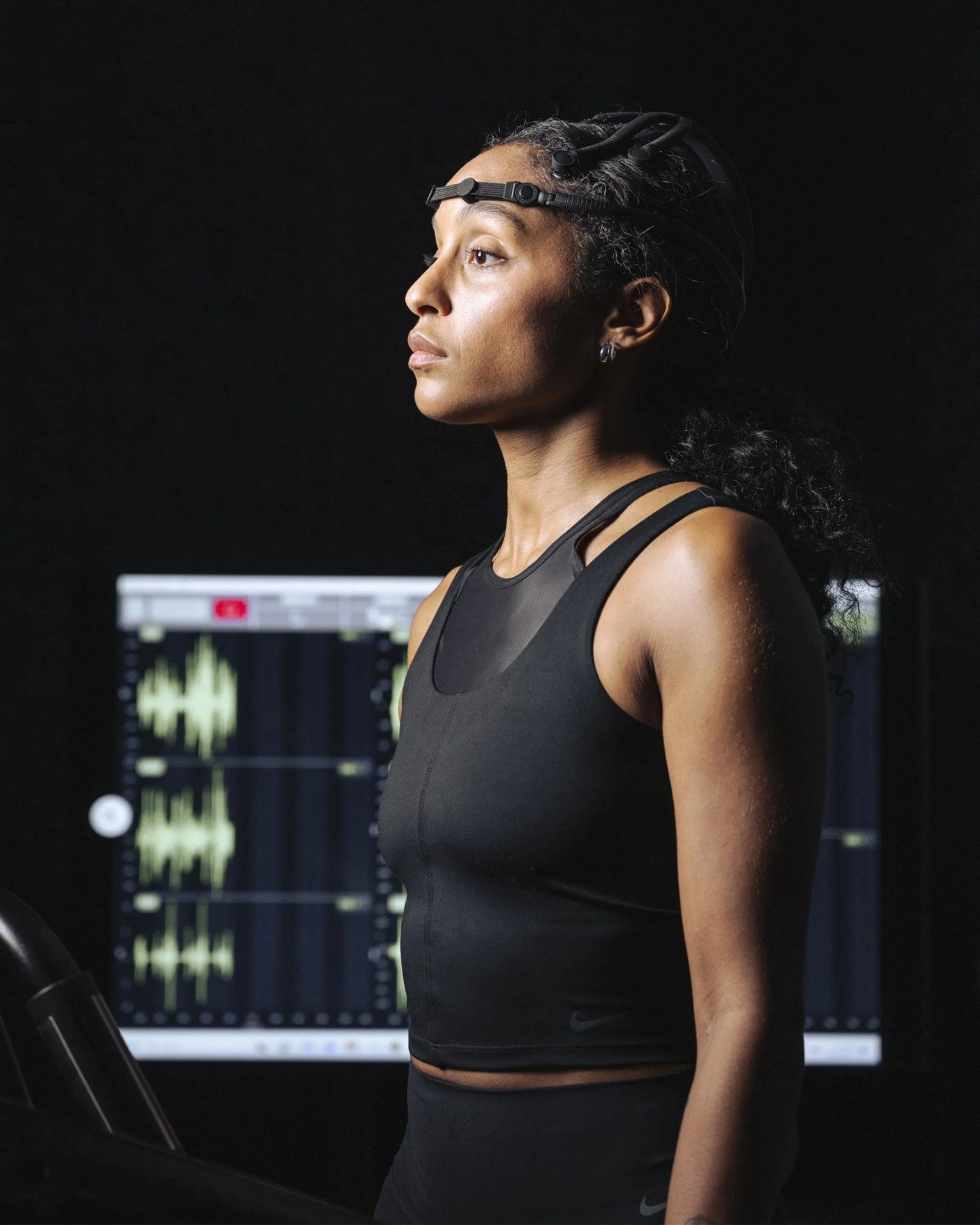
To test the impact of the nodes, Nurse and the rest of the Mind Science Department, a special group within the broader Nike Sport Research Lab, used a series of tools and techniques to measure brain activity with and without the Mind 001 and Mind 002 on-foot. Among them was electroencephalography, or EEG.

Woman wearing a black sleeveless athletic top and a headband with sensors, standing in front of a screen displaying waveform data.
Nike tested brain activity in the Mind 001 and Mind 002 using a variety of techniques, including electroencephalography (EEG).
Nike

“If I put you in a different color room and you’re able to say it’s different, that means we should be able to pick it up on the brain,” Nurse says.

“In the sensory cortex, where all the sensory information comes in, the activity there is increased while wearing Mind 001 and Mind 002 compared to a control shoe. That’s a good sign.”

Person wearing white athletic clothing with one foot raised, showing the sole of a bright pink shoe with orange circular grips.
Each node can move independently, and wearer’s can feel individual blades of grass, Nurse says.
Nike

“There’s still so much left to solve”

Now available, the innovation is actually just the first of four new technological advancements by Nike, all driven by the company’s pursuit to “create epic shit and make athletes better,” as Nurse puts it.

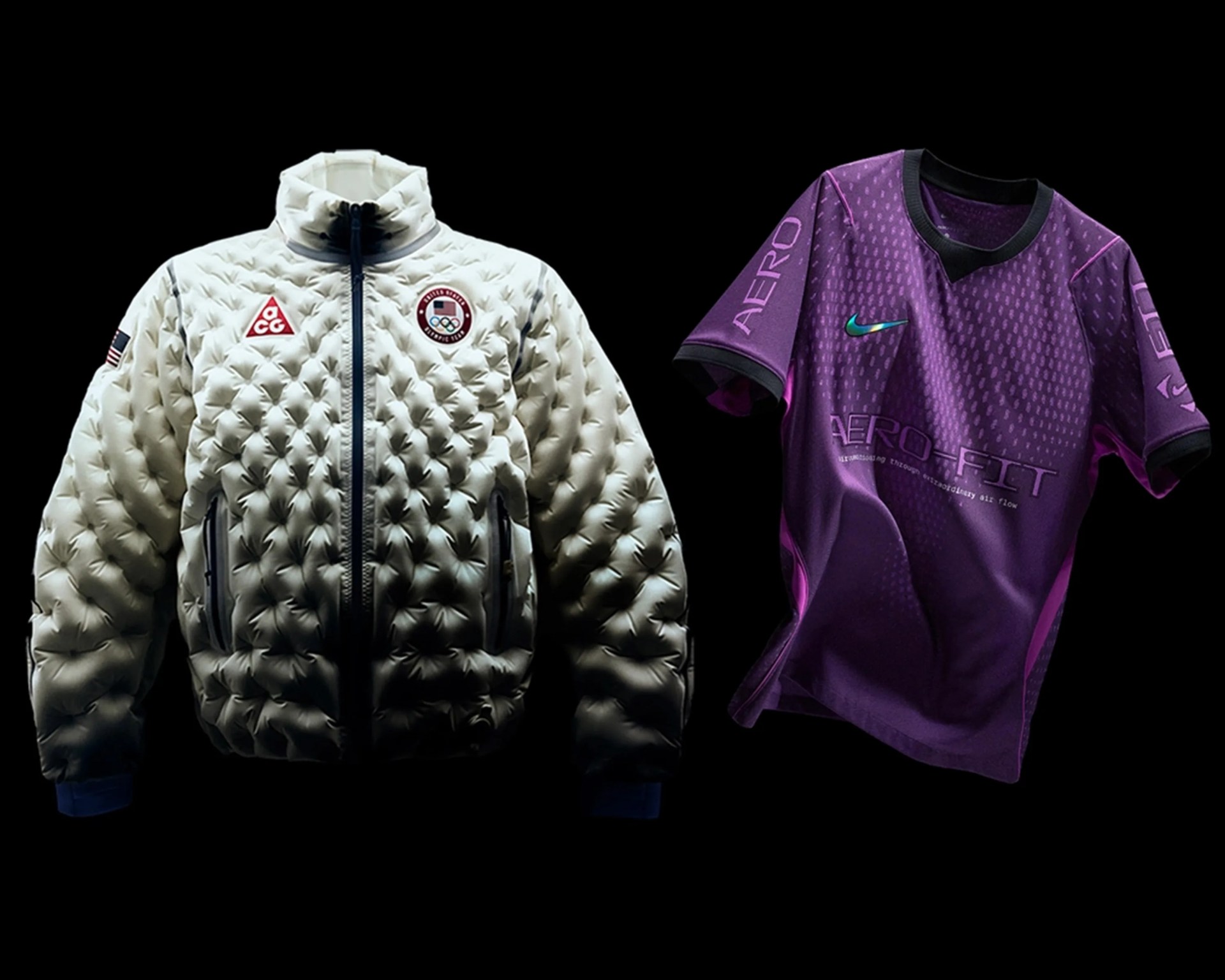
The next is an inflatable jacket that adapt to conditions on the fly and new apparel cooling system called Aero-FIT, debuting at the Winter Olympics and next World Cup.

White quilted jacket with USA Olympic and ACG logos next to a purple Nike Aero-FIT short-sleeve shirt with teal swoosh.
Nike also unveiled new innovations that will debut at the Winter Olympics and World Cup in 2026, later informing mass-produced products anyone can buy.
Nike
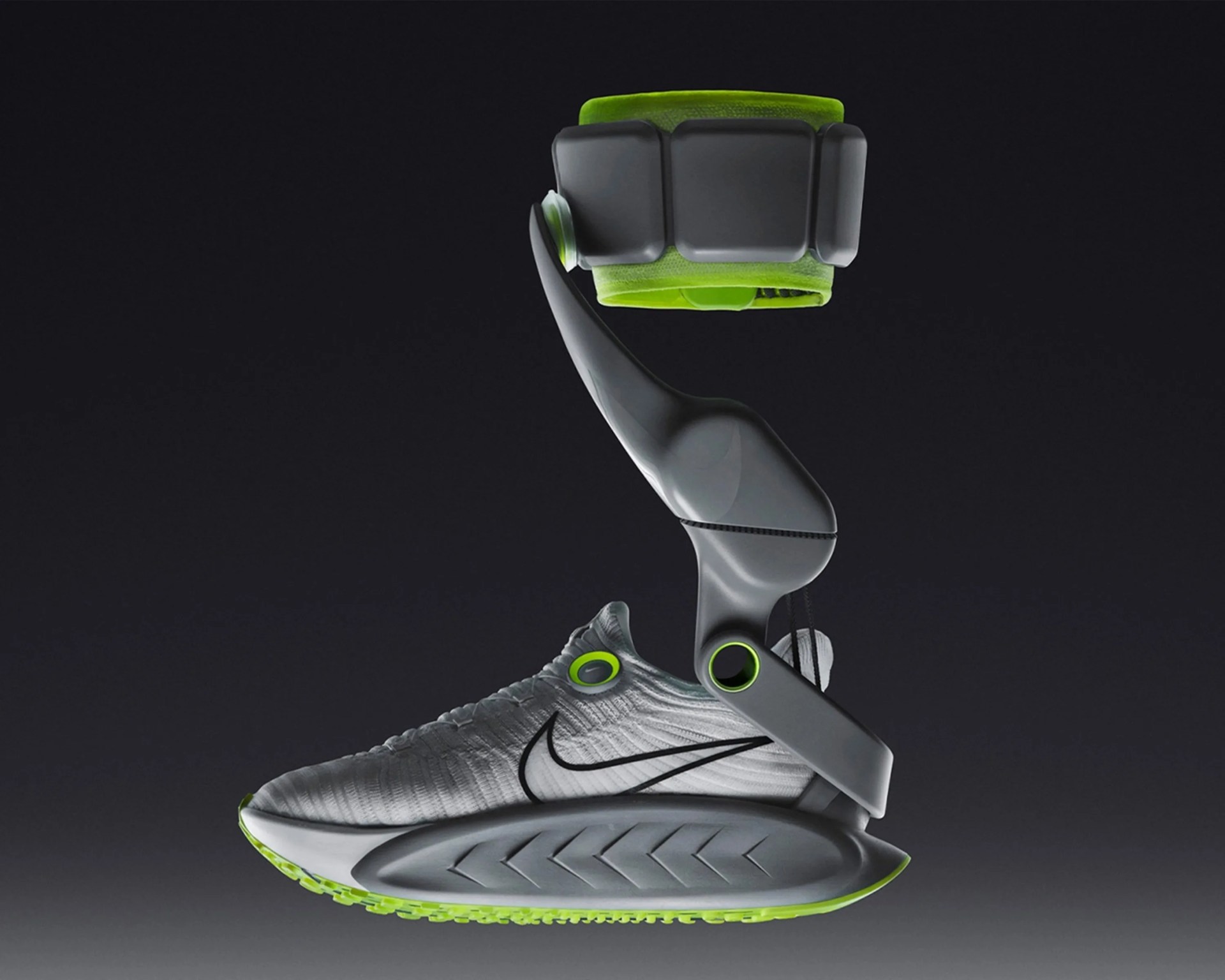
Gray and neon green Nike sneaker integrated with a futuristic robotic ankle brace against a dark background.
The company is also developing an exoskeleton to augment human movement like an e-bike.
Nike

Nike is also working on a wildly innovative new exoskeleton called Project Amplify to augment human movement like e-bikes do with cycling. The product is still in early development.

“There’s still so much left to solve,” Nurse says. “Every time we may be thinking we’re reaching a plateau, there’s new technology, new material science.

“People still have obstacles to sport. People still want to figure out the best way to get better. People still get hurt … As long as those challenges and barriers exist, we still have work to do.”

Availability and pricing

On sale from January 8, both models in the Mind series are available now in various colorways.

The mule version costs $95, with the laced shoe priced at $145.

Want to stay up to date on the latest product news and releases? Add Gear Patrol as a preferred source to ensure our independent journalism makes it to the top of your Google search results.

add as a preferred source on google