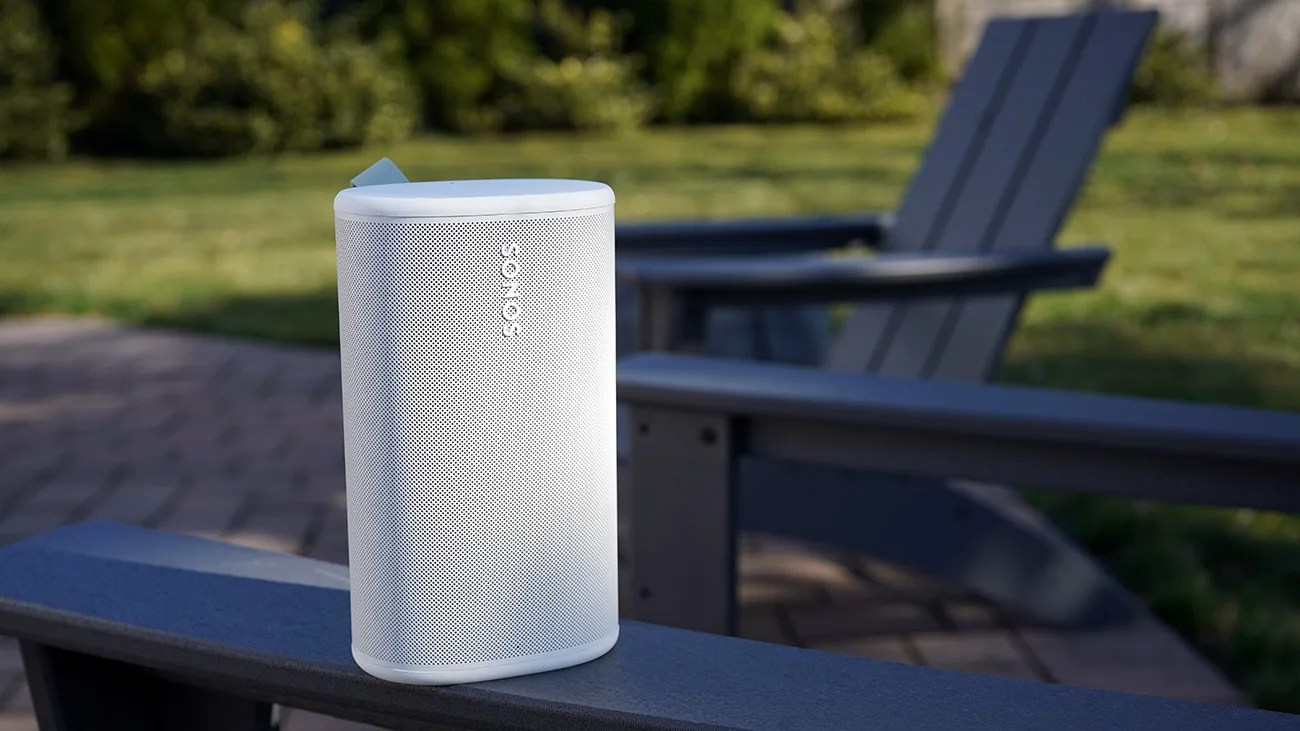


Admittedly, there was a lot of hoopla and marketing mumbo jumbo when Sonos revealed the Play earlier this month. The company called it the “spiritual successor to the Play:1” and its “most versatile speaker ever.”
In reality, the Play ($299) is just a smaller version of the company’s flagship portable speaker, the Move 2. Aside from size and sound quality, the two speakers have identical features and playback capabilities. Like, literally.
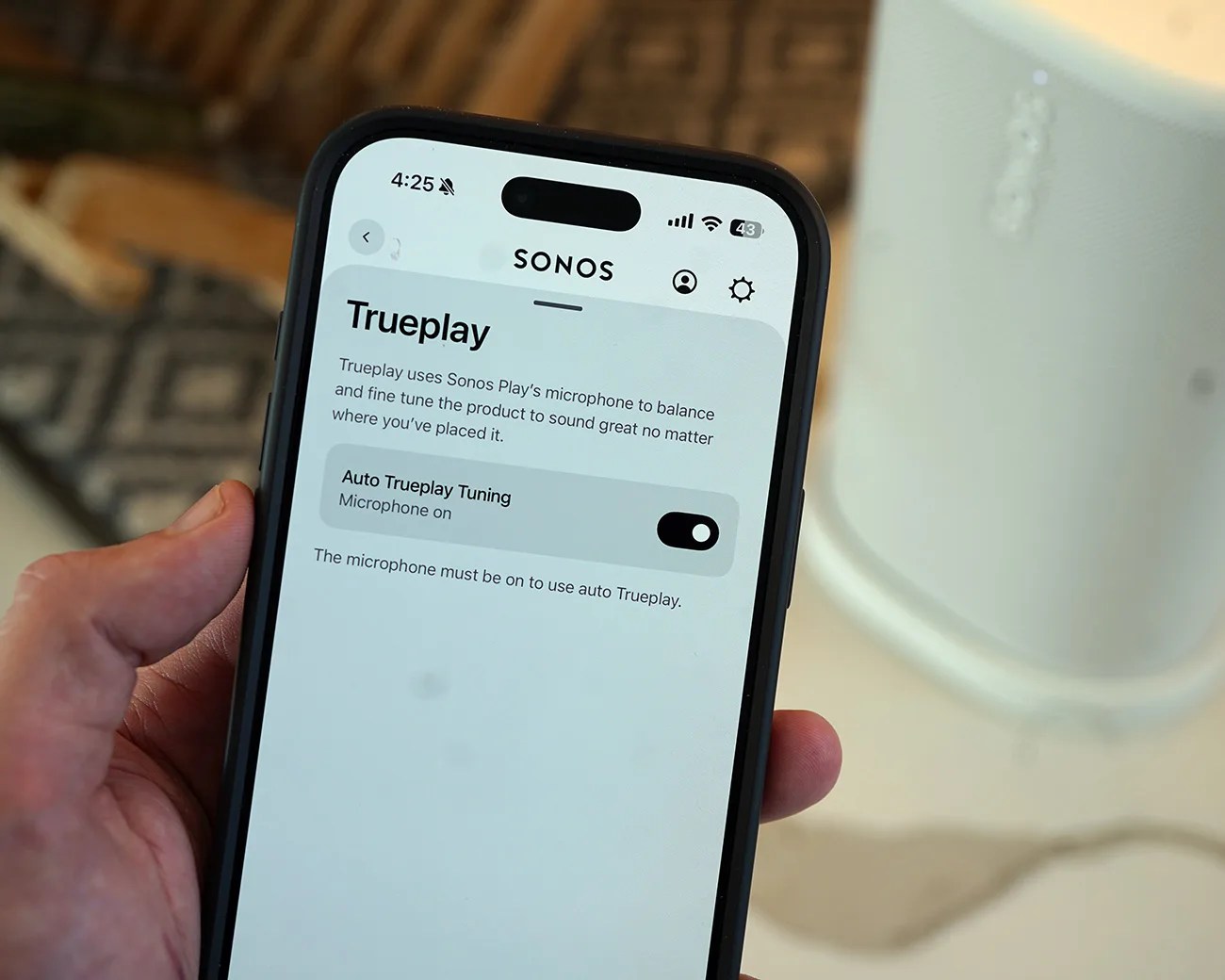
But that’s far from a bad thing. In fact, after testing the Play for the better part of two weeks, I can say that Sonos may have perfected what I’m looking for in a portable home speaker. It might even be the easiest Sonos speaker, powered or portable, to recommend now.
A home speaker (that’s portable)
In my mind, a “Sonos portable speaker” is a home speaker first, and a portable speaker second. So it connects to your home’s Wi-Fi and groups with the rest of your Sonos speakers so they can play in unison.
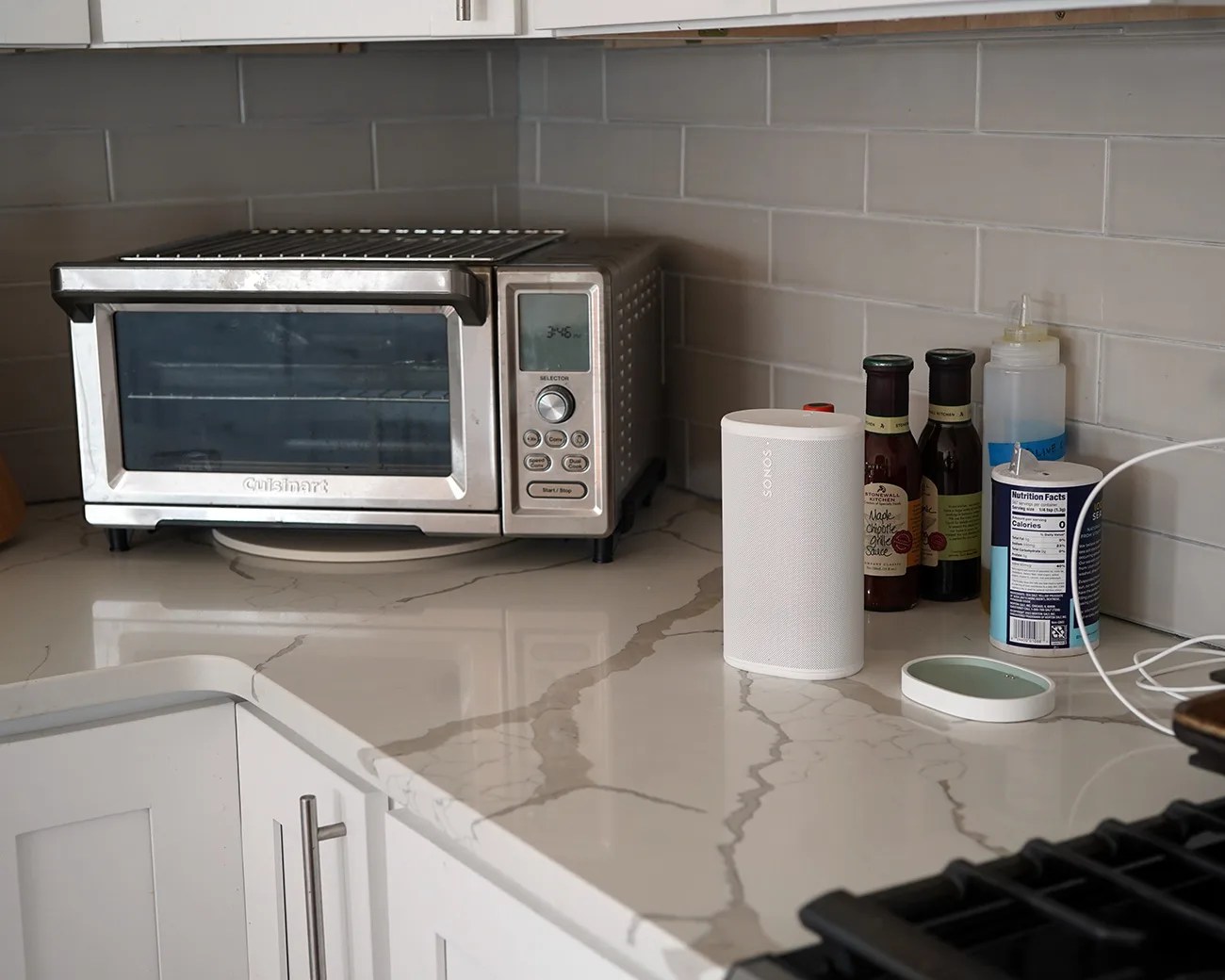
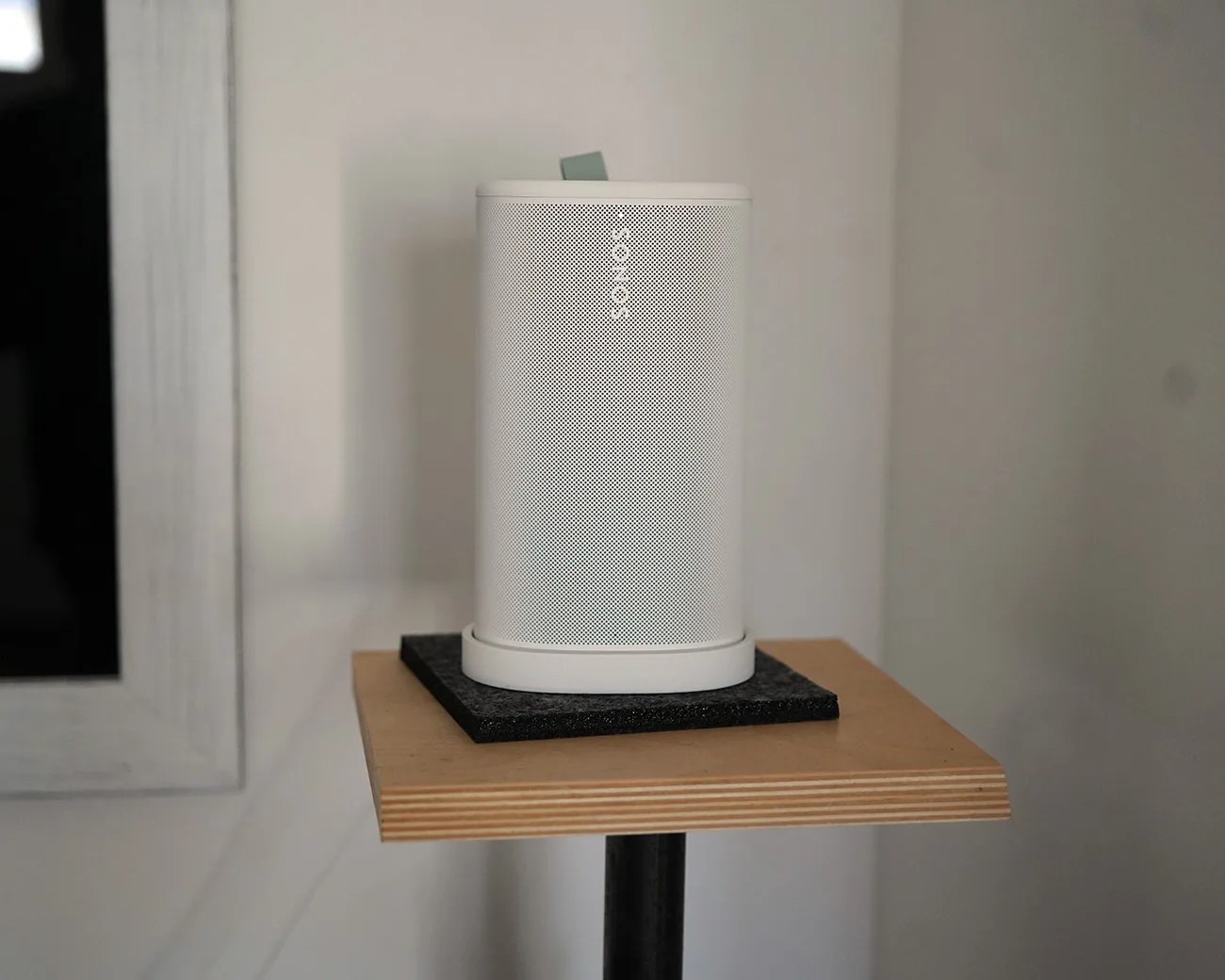
The big advantage of a portable Sonos speaker (like the Roam 2, Move 2 and now Play) is that you can take it off the charger and bring it anywhere in your home. You don’t need speakers in every room of your home; you just need to return the speaker to its charging station when you’re done.
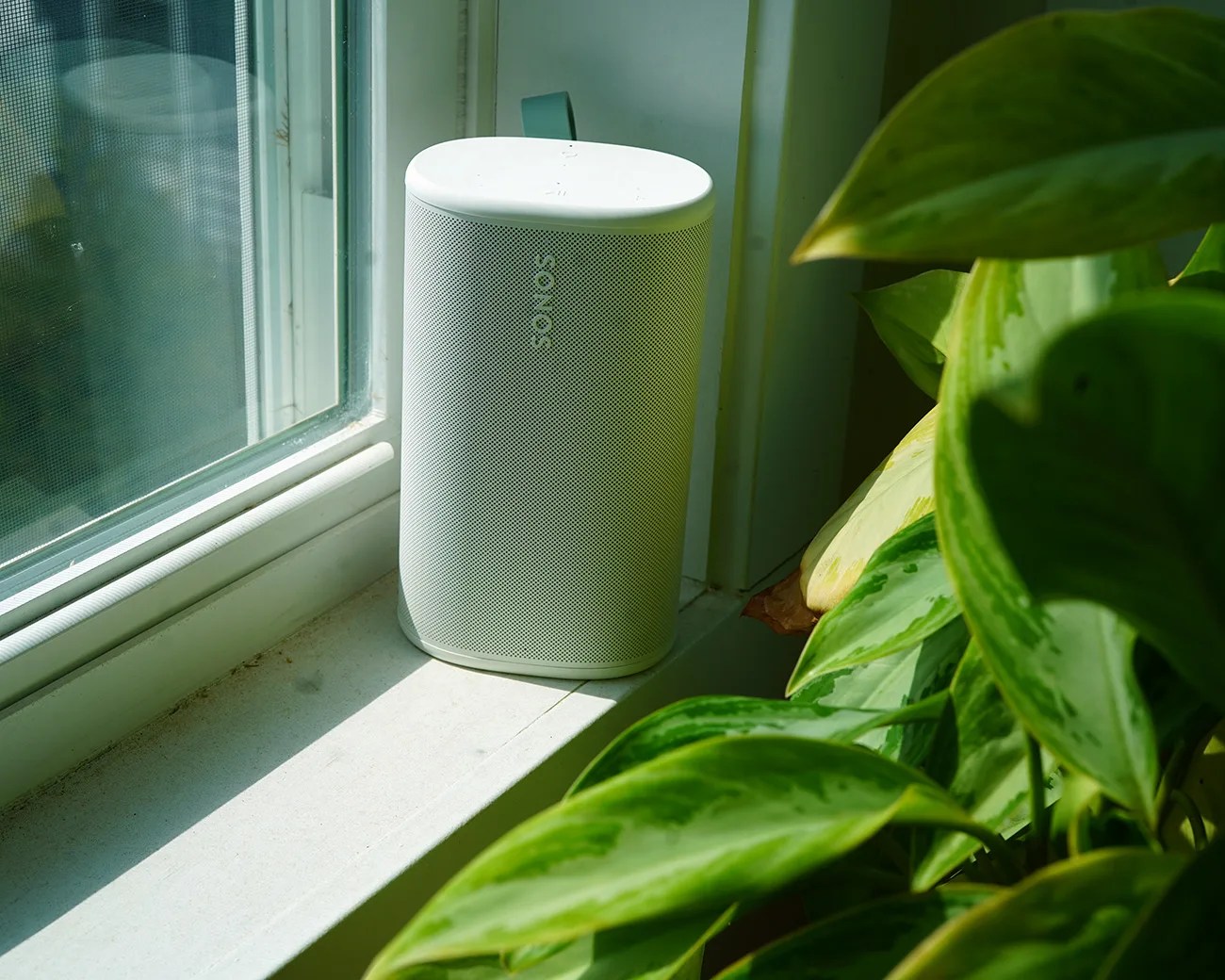
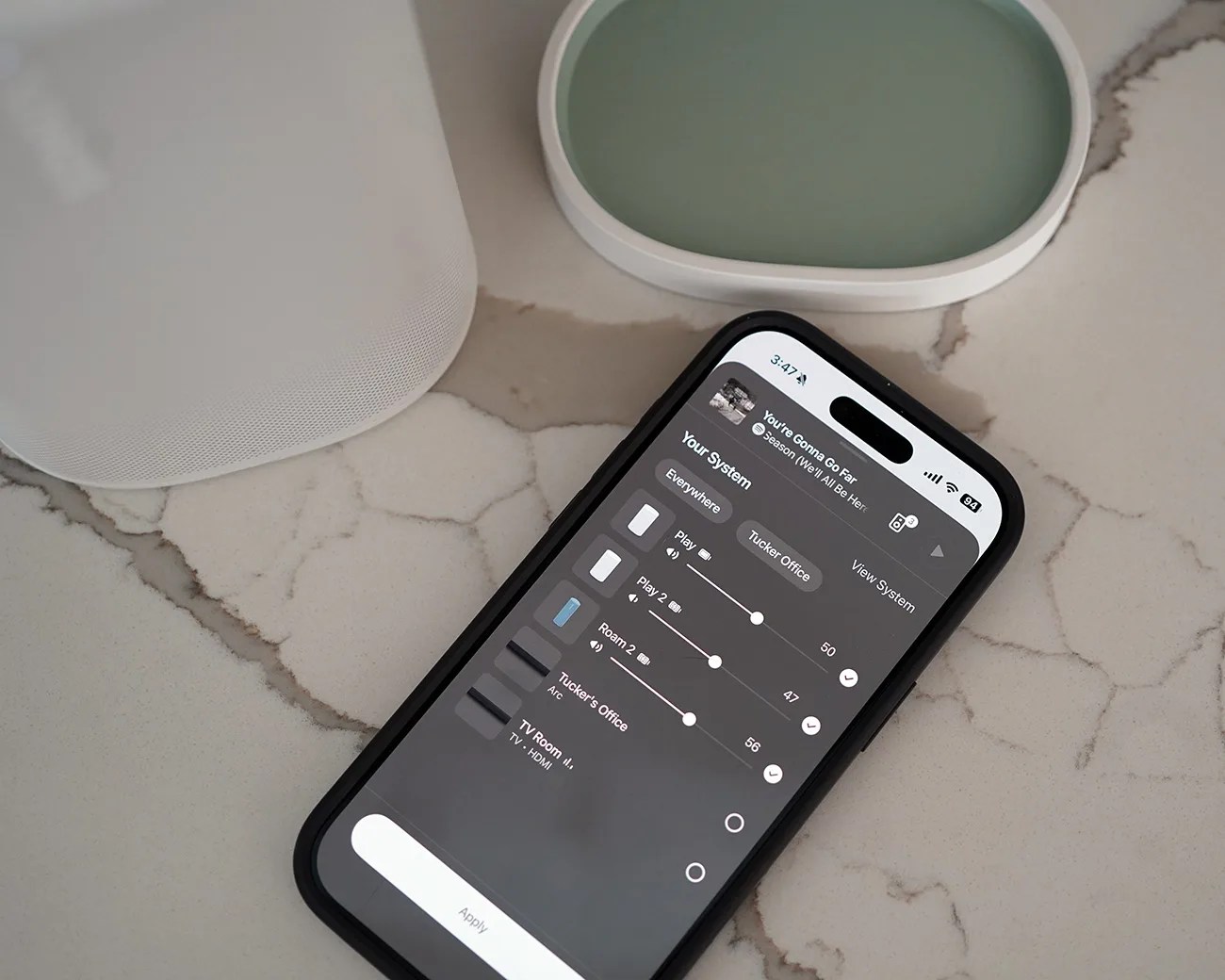
As someone who owns Sonos’s other two portable speakers, the Roam 2 and Move 2, I can say they all work essentially the same. However, what separates the Move 2 and the new Play is that Sonos includes the charging dock (or base station) in the box. This makes them feel more like portable speakers that are specifically designed for the home.
On the flip side, the Roam 2 only ships with a standard USB-C charger, meaning you have to plug it in each time to charge it … which just isn’t as smooth.
You can buy a wireless charging dock, but Sonos charges $49 for it, which bumps the price of the Roam 2 from $179 to $229, which edges closer to the price of the $299 Play, which comes with the necessary docking station.
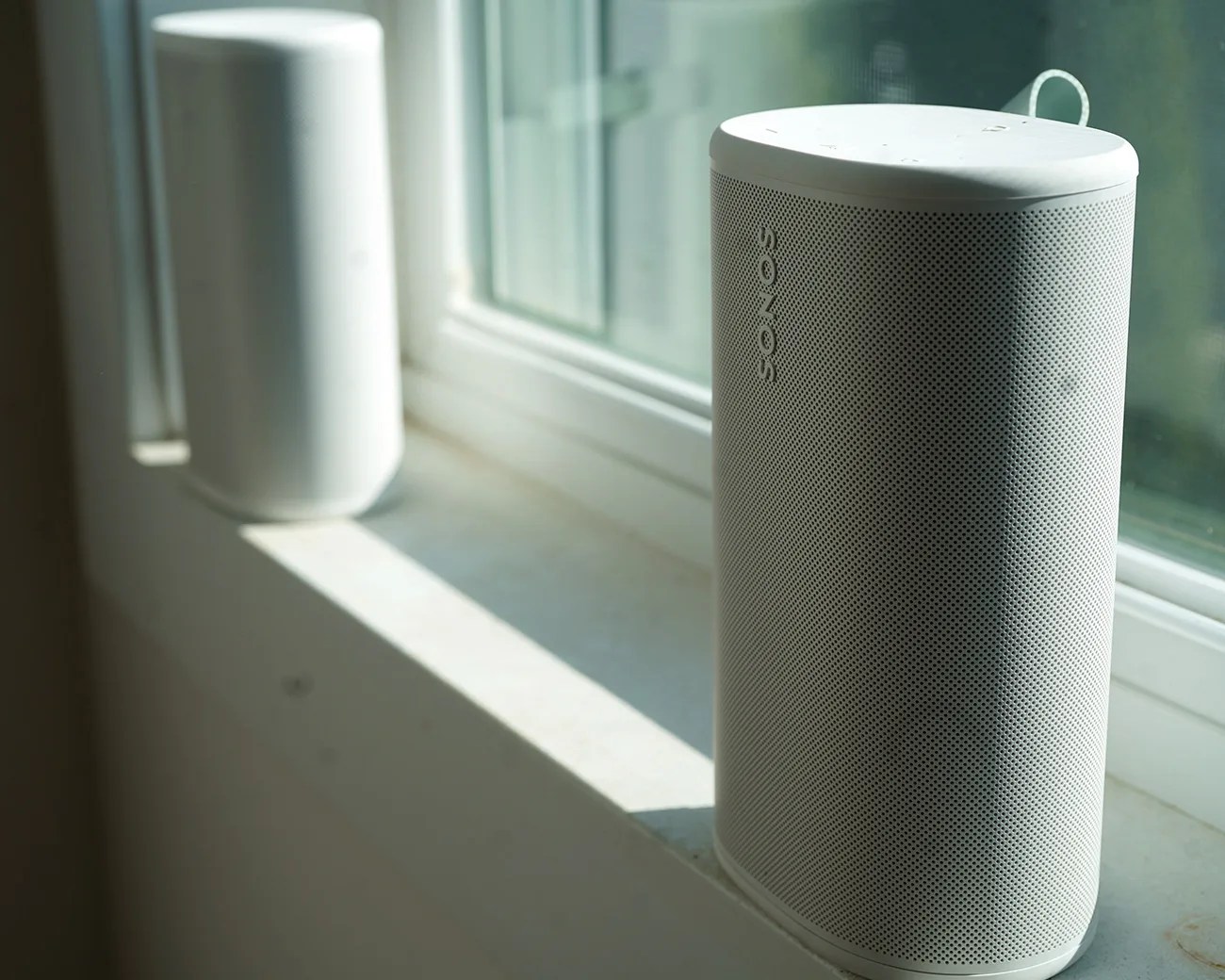
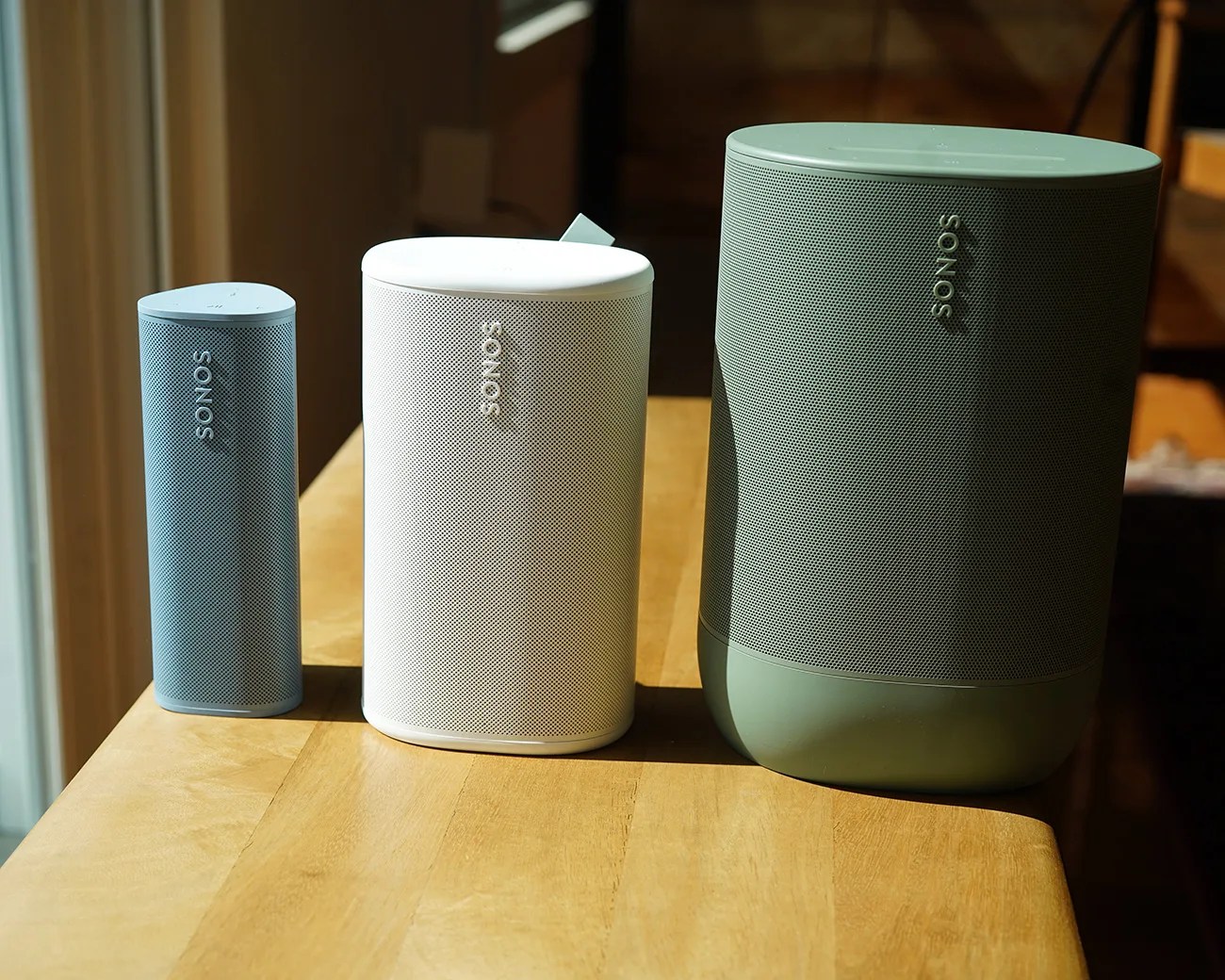
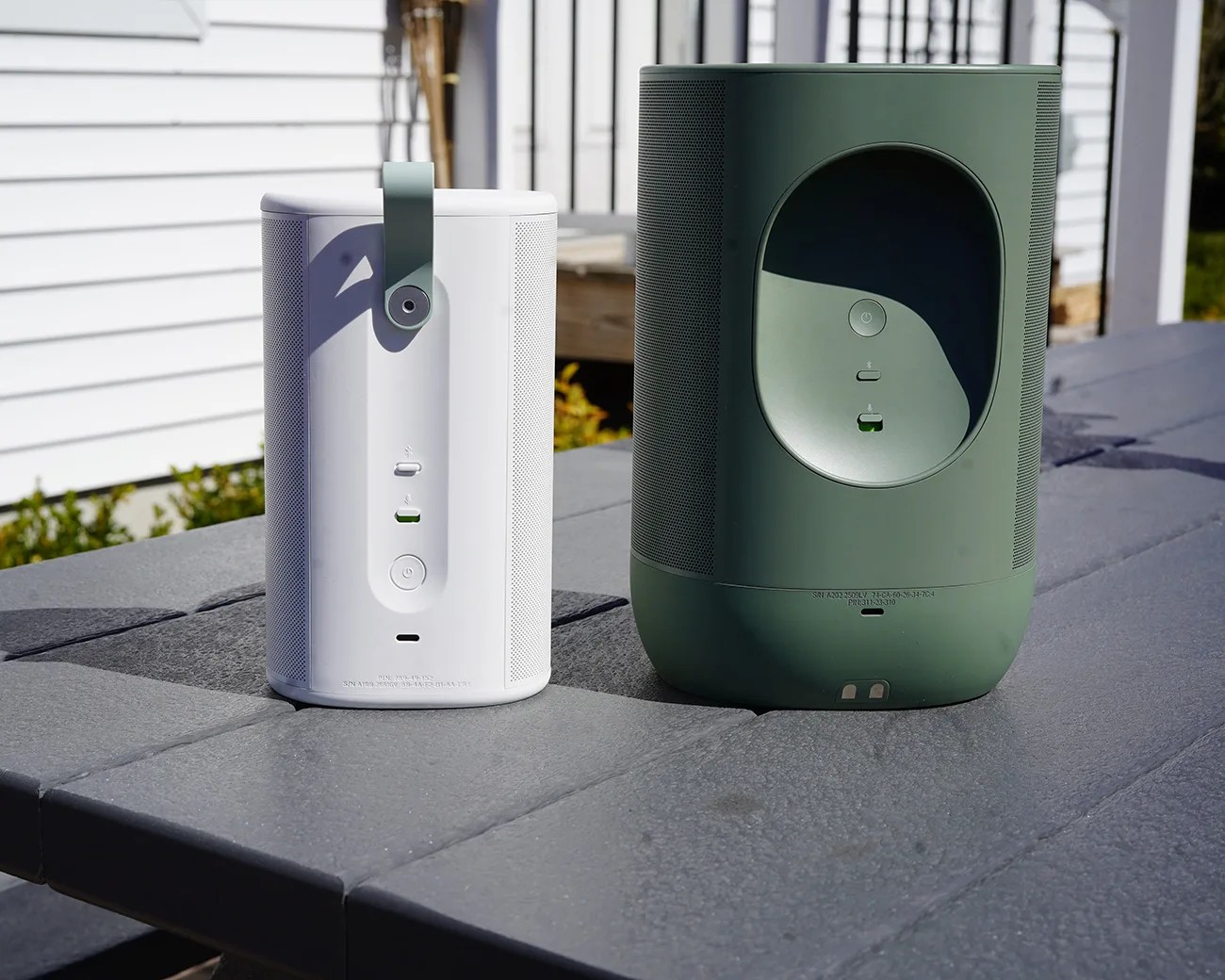
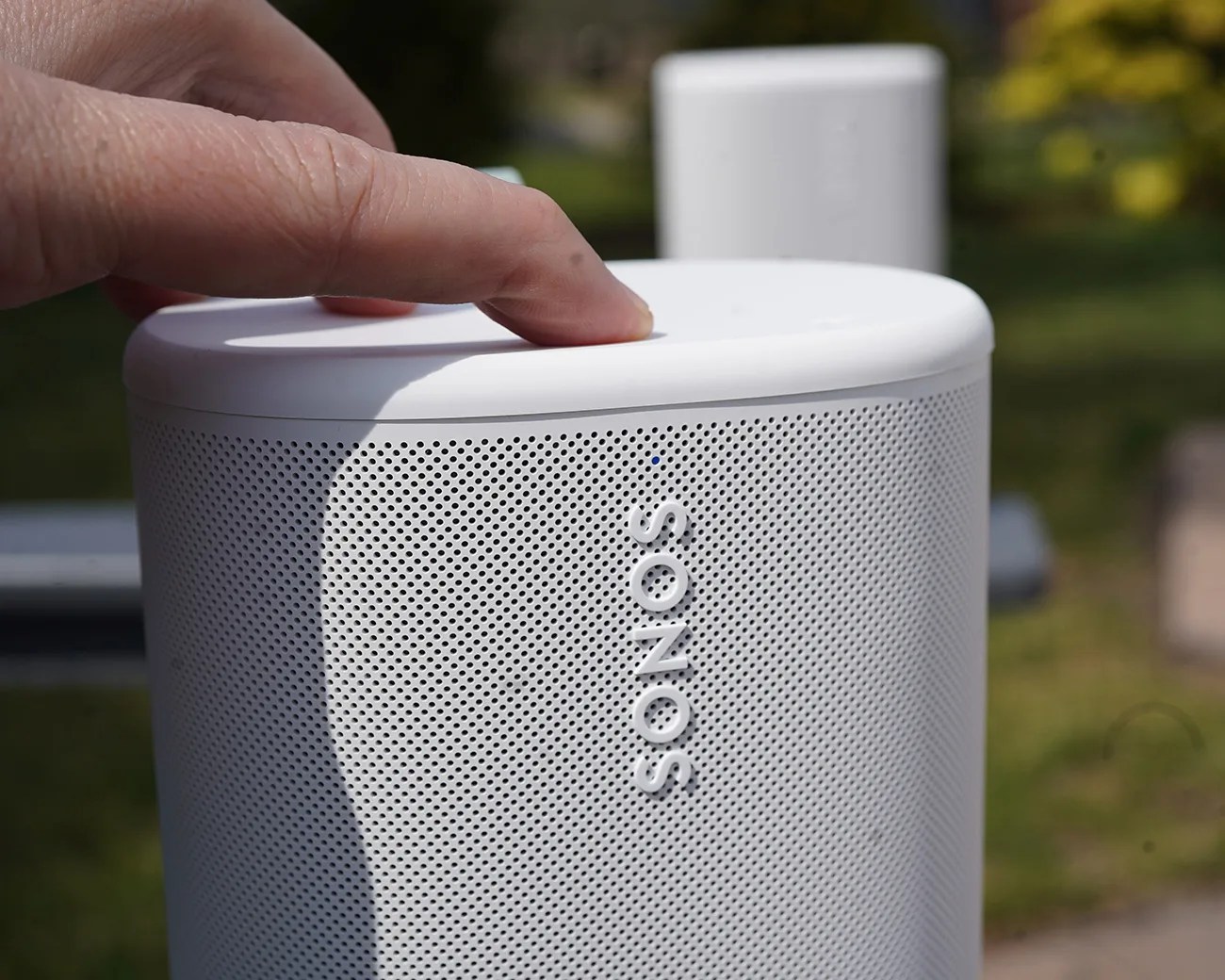
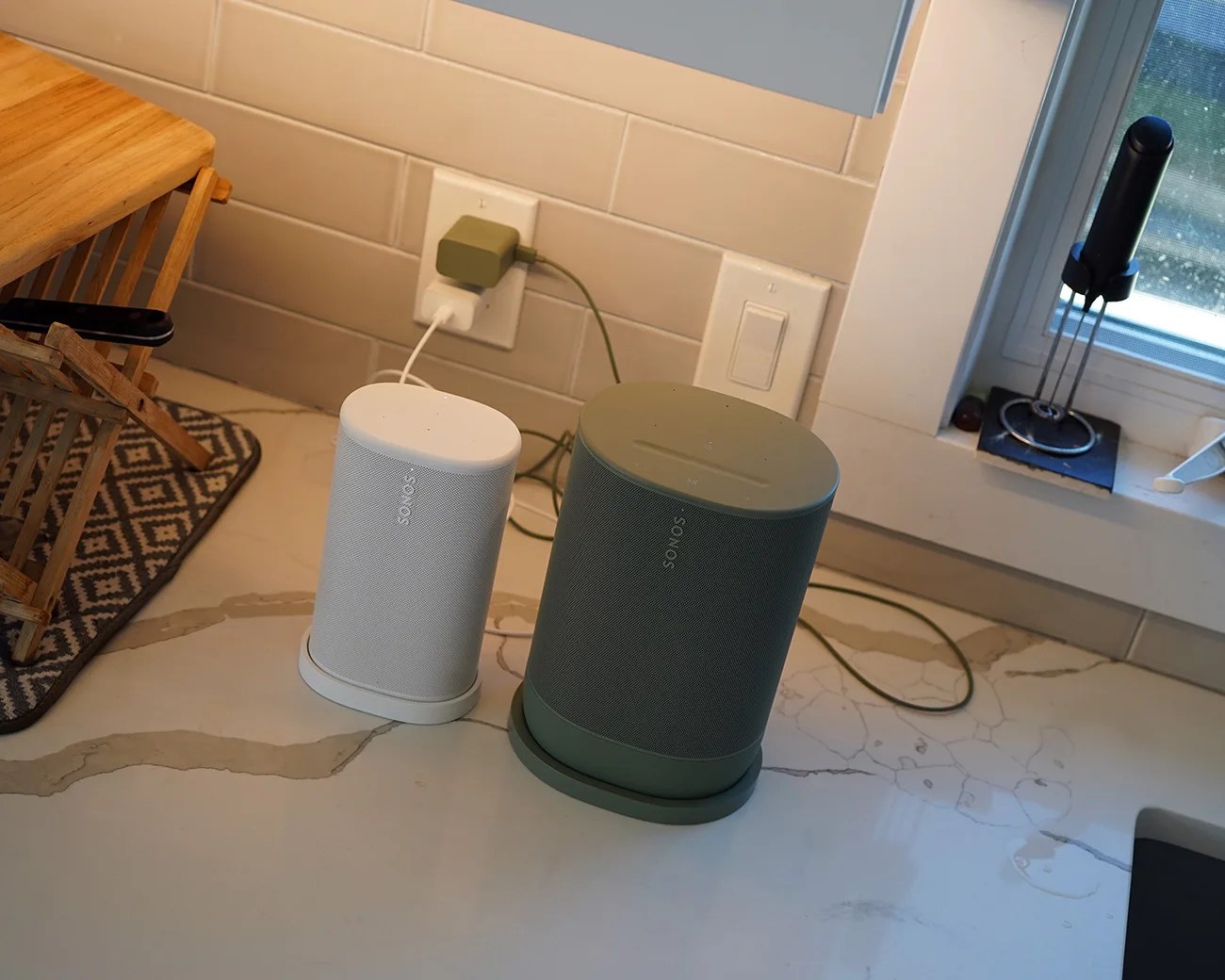
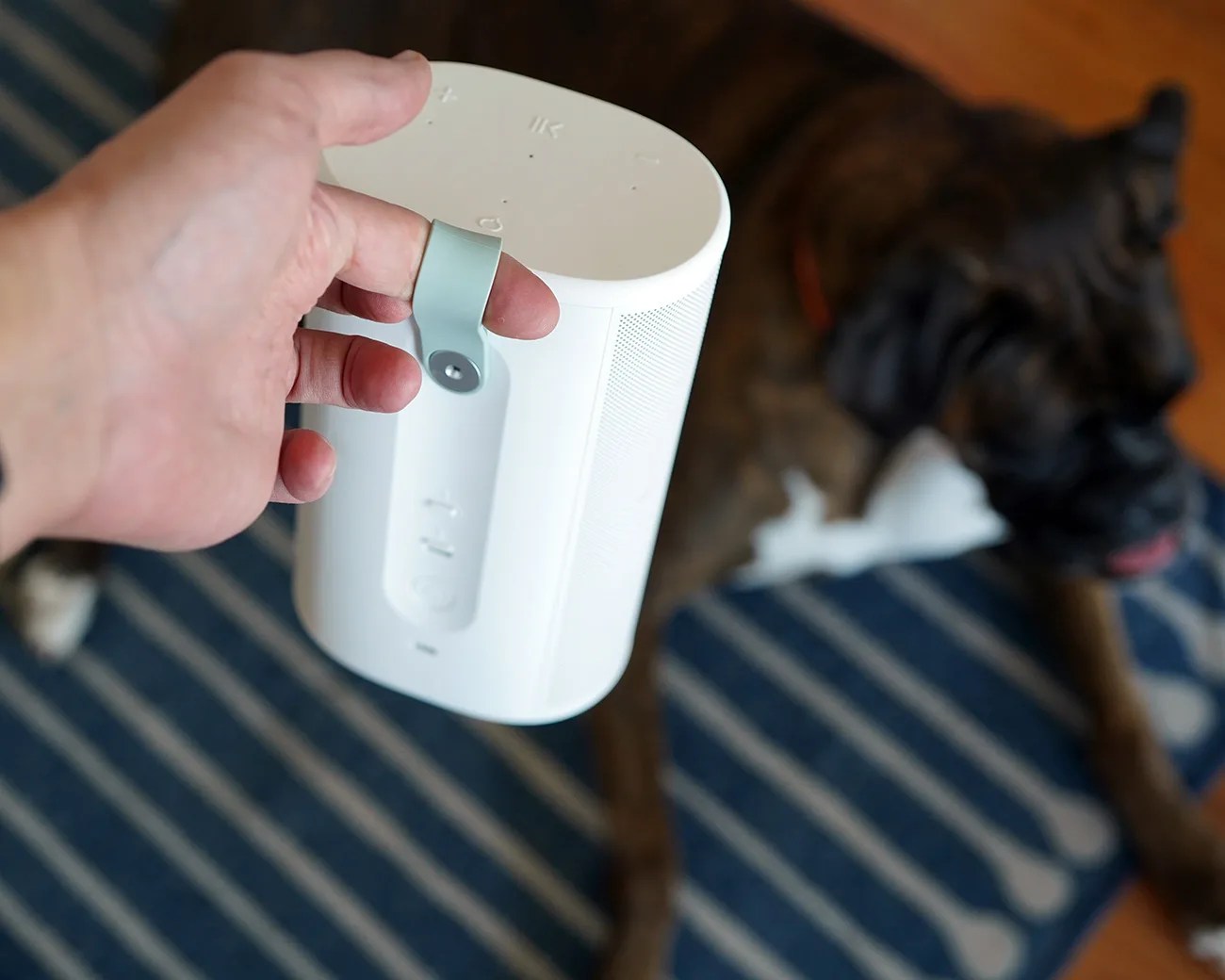
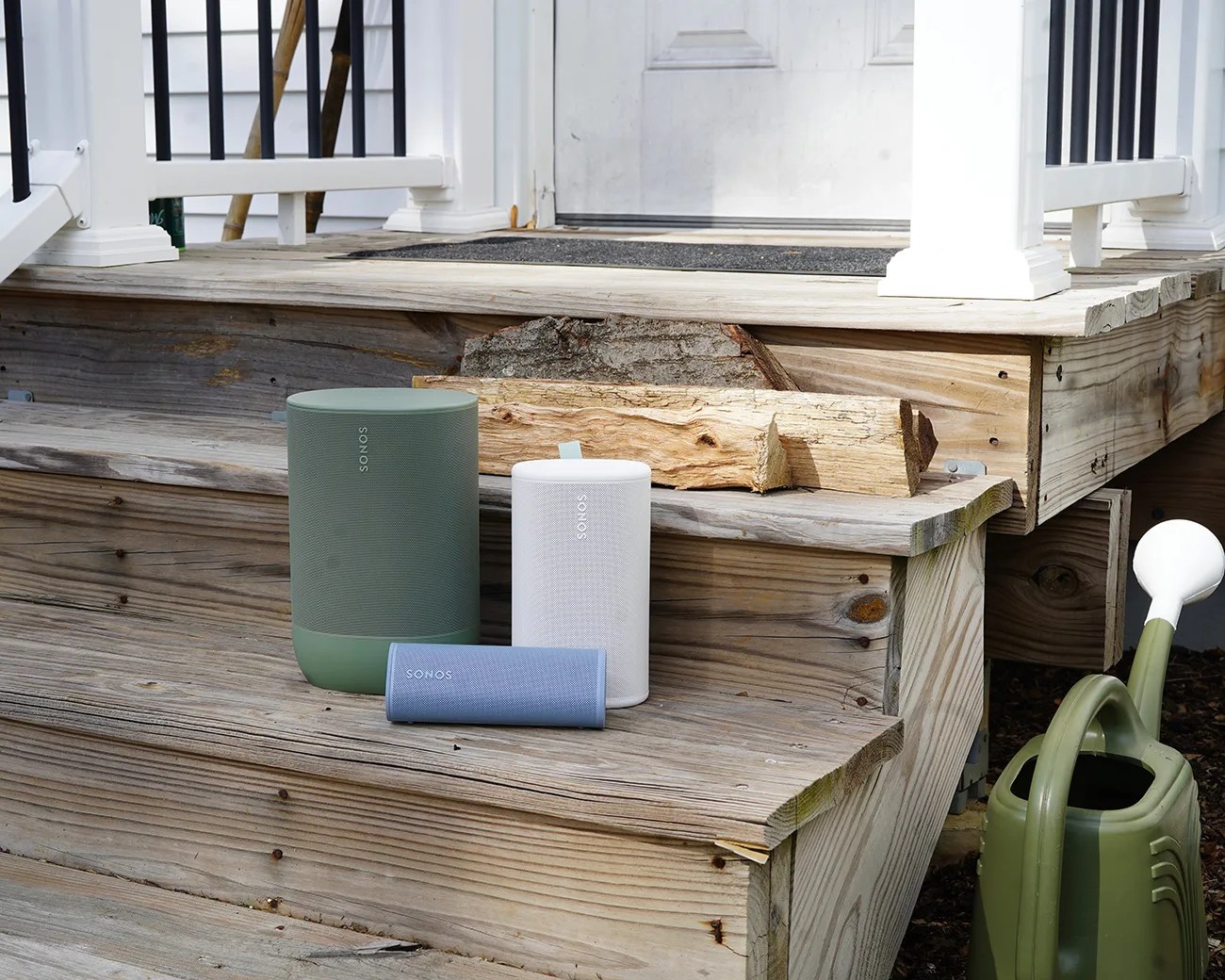
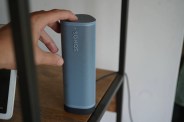
When compared to Sonos’s existing portable speakers, the Play definitely feels like the Goldilocks. It’s sized between the Roam 2 and the Move 2, and at less than three pounds, it’s lightweight enough to carry from room to room or bring it outside. It’s not a burden.
That’s my one big gripe with the Move 2. At almost seven pounds, it can feel like you’re lugging a little dumbbell up and down the stairs. It’s beefy and doesn’t feel like a “portable speaker” in the traditional sense.
Same features as the Move 2
As far as features and capabilities are concerned, the Play is very similar to the Roam 2 and Move 2. In fact, outside of its portability, the Play works quite similarly to the brand’s other new speakers, the Era 100 and Era 300.
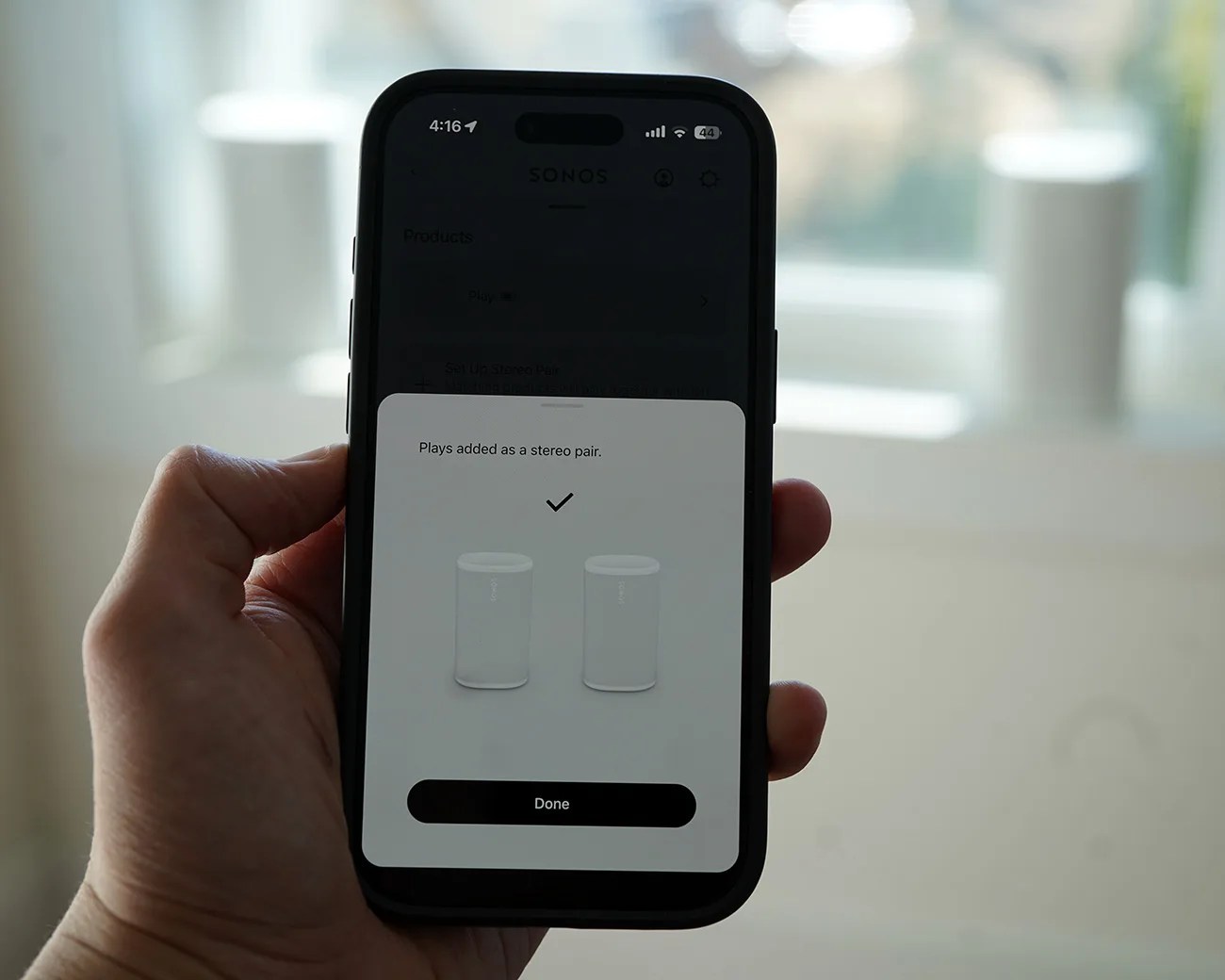
It can work as a smart speaker with either Alexa or Sonos Voice Control. It can be stereo-paired with another Play unit. It also supports Bluetooth streaming, which you’ll probably never use inside the home.
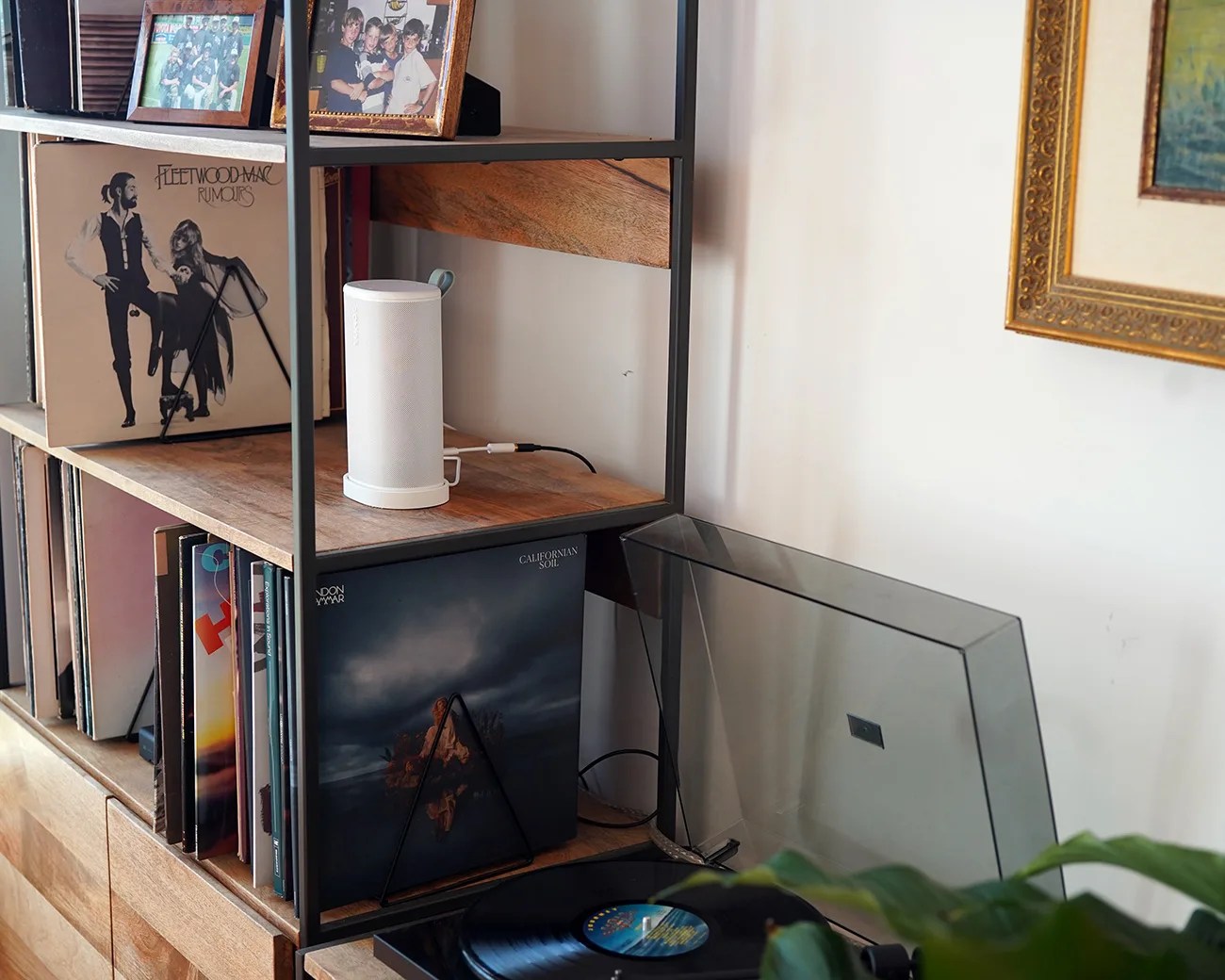
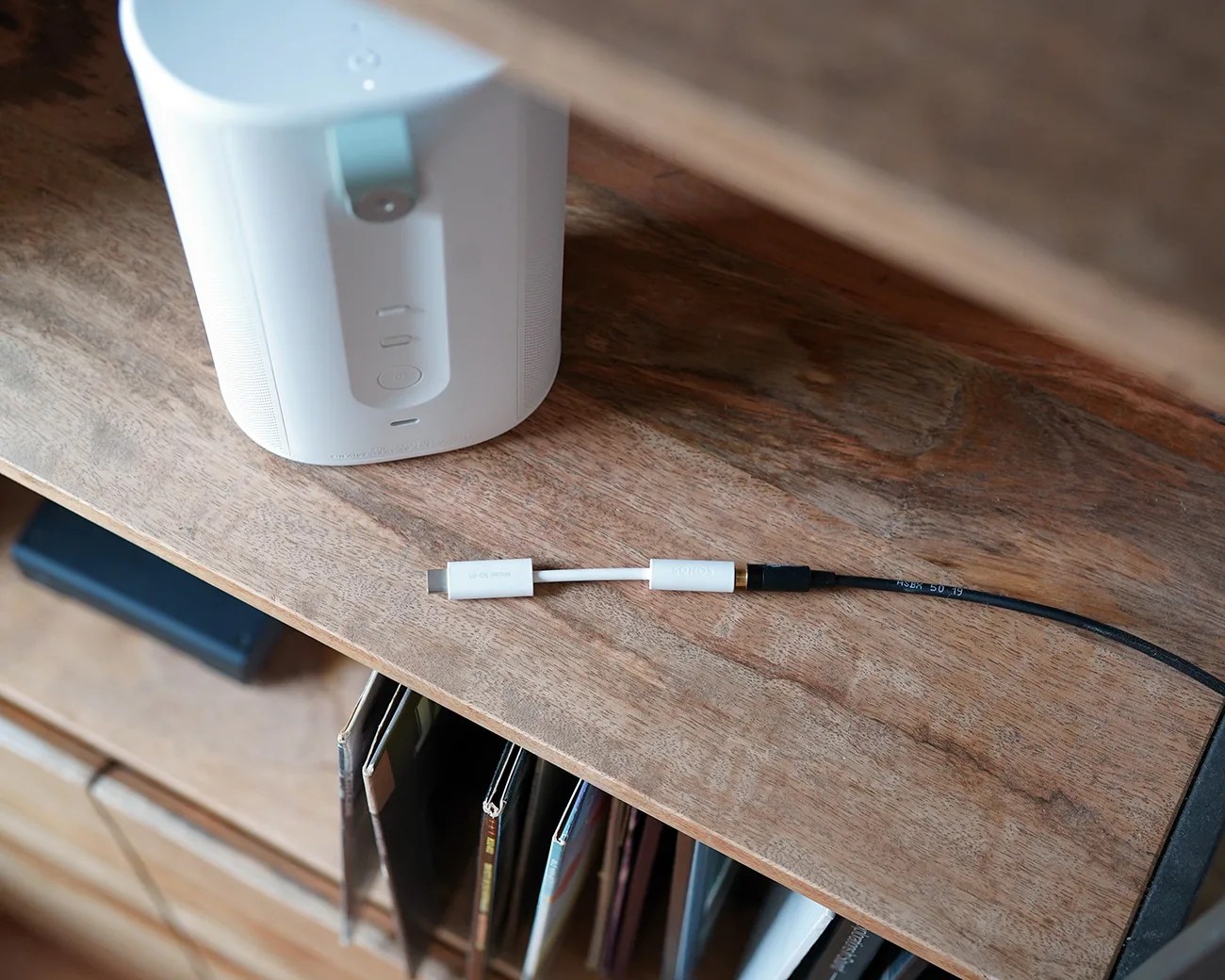
Additionally, like the Move 2 (and both Era speakers), the USB-C port on the back of the Play supports line-in audio. So if you have Sonos’s special line-in adapter ($20), you can hook the Play up to a turntable or computer.
If you have other legacy Sonos speakers, adding the Play is a simple way to get your vinyl playing on all of them in your home.
This is an important distinction for the Play and Move 2 versus the Roam 2. The USB-C port on Sonos’s smallest portable speaker doesn’t support line-in audio. It’s only for charging.
(Also, just like the Move 2, the Play can double as a portable power bank and charge your other small devices, too. Just plug a USB-C cable into its rear USB-C port and plug in your smartphone.)
Bluetooth grouping?
When Sonos says the Play is its “most versatile speaker,” it means it’s ultra-portable and feature-packed. But it’s also referring to the fact that the Play has one feature that, until today, no other Sonos speaker has had: grouping over Bluetooth.
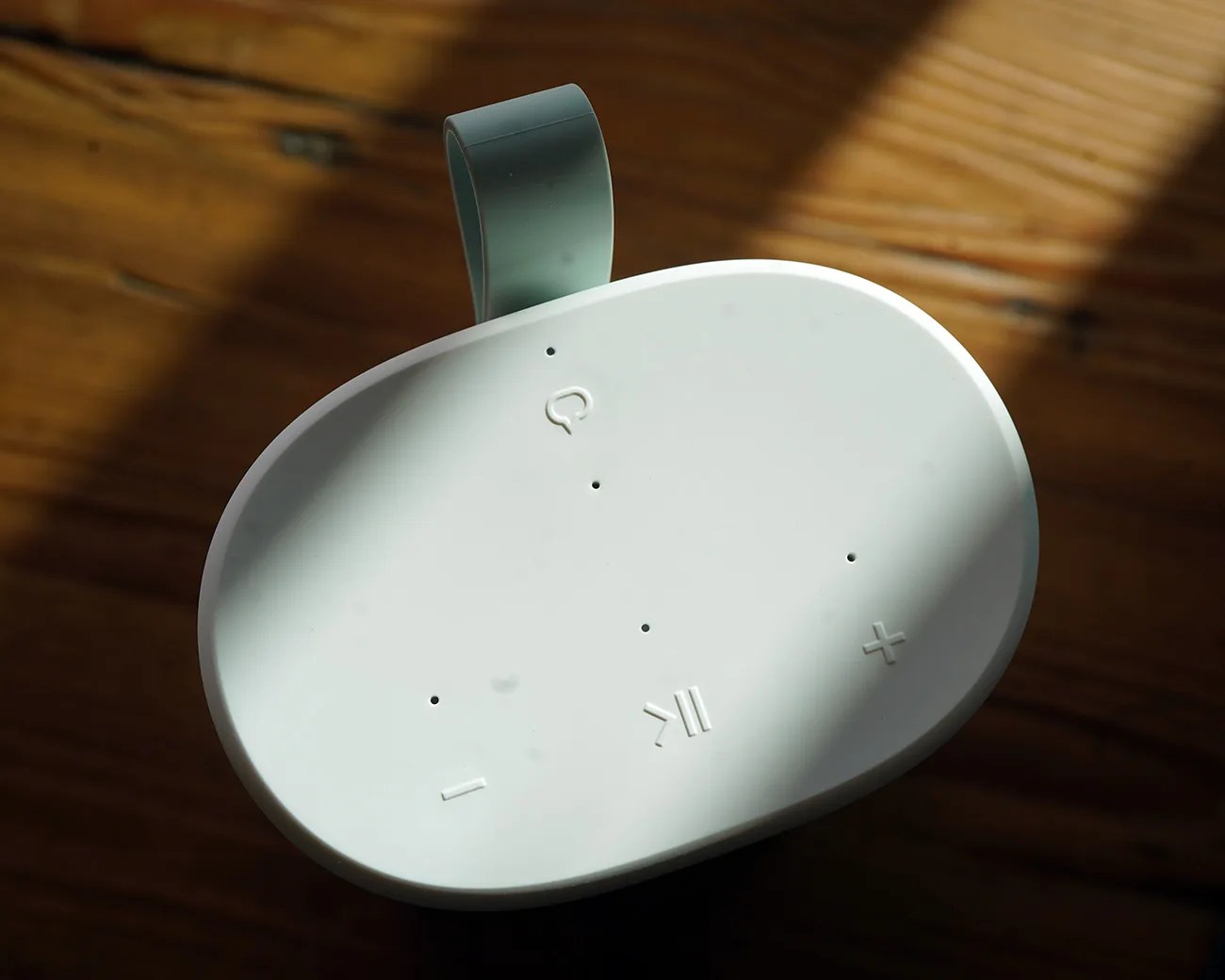
If you have two Play speakers in Bluetooth mode, you can long-press the Play/Pause button on one, and they’ll group together and play the same tune. This is the same re-grouping trick you’ve been able to use on other Sonos speakers, only now no Wi-Fi connection is needed.
Sonos says that you can group up to four speakers this way. With the latest software update, the Play and Move 2 are the only two Sonos speakers that support this capability. (Yes, the Move 2 just gained it.)
I’ve tried this new Bluetooth grouping method with my two Play review units and my Move 2, and it works. It’s quick and effective. But it’s worth noting that, in order to work, all the speakers have to have been previously paired (via Bluetooth) to your phone at some point. It won’t work with a stranger’s Play or Move 2, for example.
While it’s a neat trick, I don’t think I’ll ever use it (outside of my testing, of course). Like the other portable Sonos speakers I own, I’ll use it 99% of the time over Wi-Fi. I’m bringing it from room to room or even outside to the patio while I’m grilling or lounging. That’s when the speaker sounds best. That’s when I use voice commands.
In order to take advantage of this new Bluetooth grouping method, you need to bring multiple Play or Move 2 speakers outside of your home, away from Wi-Fi, and I don’t think many people are going to do that.
A new entry-level king?
It’s probably obvious, but a single Play doesn’t sound as good as the Move 2. But given its price, size and flexibility, the Play has carved out a special niche in the company’s offerings. Not only is it the one portable Sonos speaker I’d recommend for most people, but it makes a good case for being the first Sonos speaker that new buyers should try.
Think about it. It can do almost anything an Era 100 can (aside from being used as home theater surrounds), and much more. Want to use it as a powered smart speaker? Do it. Want to use it as a portable speaker around your home or even outside? You can do that, too.
Availability and pricing
The Sonos Play is available for preorder for $299 and starts shipping March 31st.
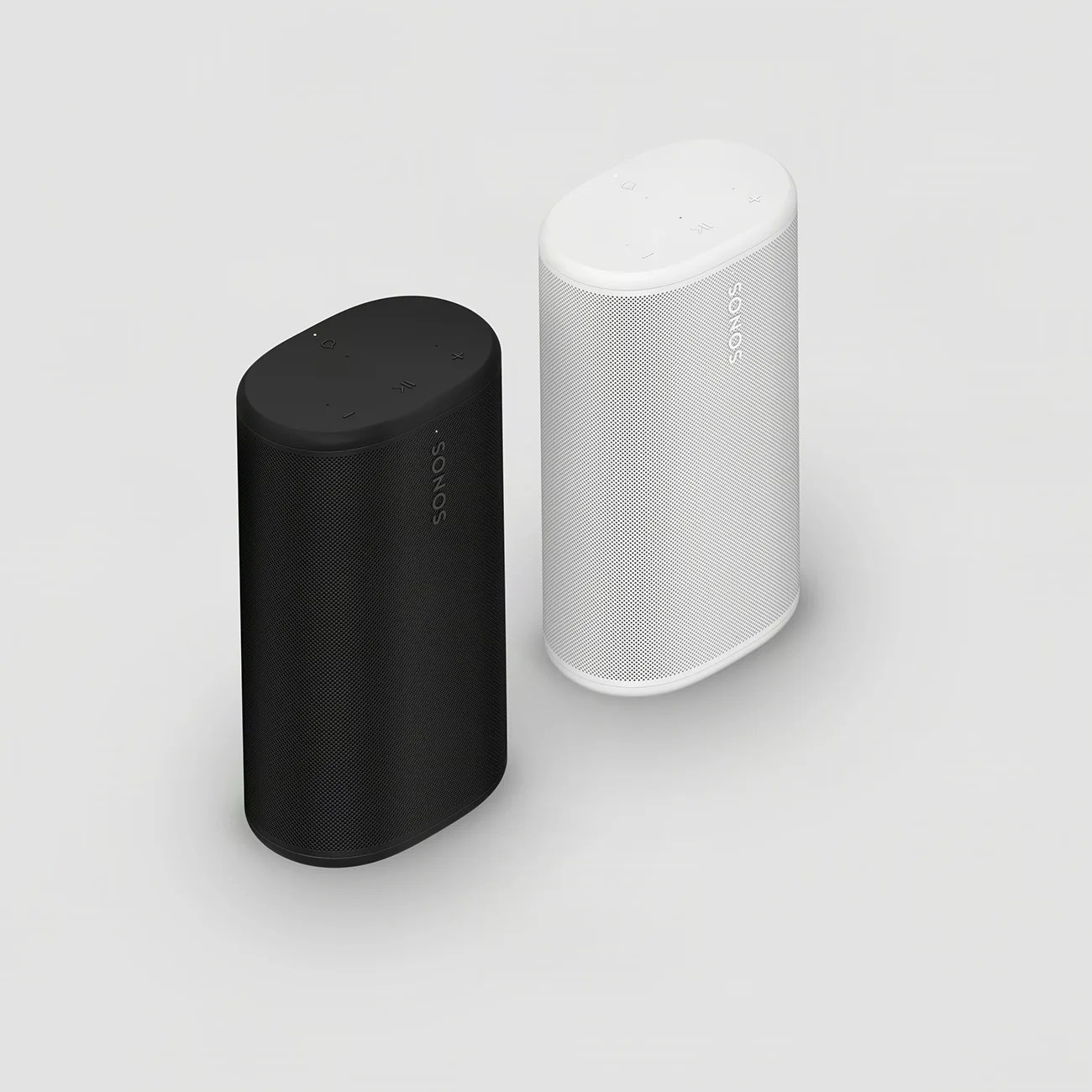
It currently comes in black or white. Given that both the Move 2 and Roam 2 now come in other colors, I’m guessing Sonos will eventually release other options.
 Sonos
SonosSonos Play
Read More

Want to stay up to date on the latest product news and releases? Add Gear Patrol as a preferred source to ensure our independent journalism makes it to the top of your Google search results.