
Home / Tech / Apps

Why This Controversial AI Browser Will Change the Way You Use the Internet

Like it or not, the next watershed moment in how we interact with the world is no longer theoretical.

Website and mobile view of "Haute Journal" showing "The Spring 2026 Trend Report" article with a woman in a floral dress seated in front of orange curtains.Perplexity

If you buy from a link, we may earn a commission. Learn more

Artificial intelligence has been the drumbeat of the decade. It’s lifted markets, bent political debates, and reshaped the tech industry’s self-image into something halfway between inevitability and mania.

GP100: Gear Patrol’s annual roundup of the most important releases collects key watches, cars, outdoor gear and more. Browse the full list or catch up on last year’s winners.

For all the hype, though, AI has rarely appeared in the form of a clear, everyday product that anyone but the most forward-thinking adopters would find valuable to use.

Most people interact with it abstractly — a chatbot here, an autocomplete flourish there — not in the shape of something as tangible as the browser they open fifty times a day.

Comet, the new AI-native browser from Perplexity, launched this summer, is the rare exception. And its arrival makes for one of the more complicated GP100 decisions we’ve ever had to make.

Perplexity hasn’t exactly had a quiet year. The company has faced lawsuits from major publishers alleging mass scraping and outright theft, investigations into how it harvested Reddit user data, and, like most early AI technologies, a long list of examples where its models hallucinated or spread false information.
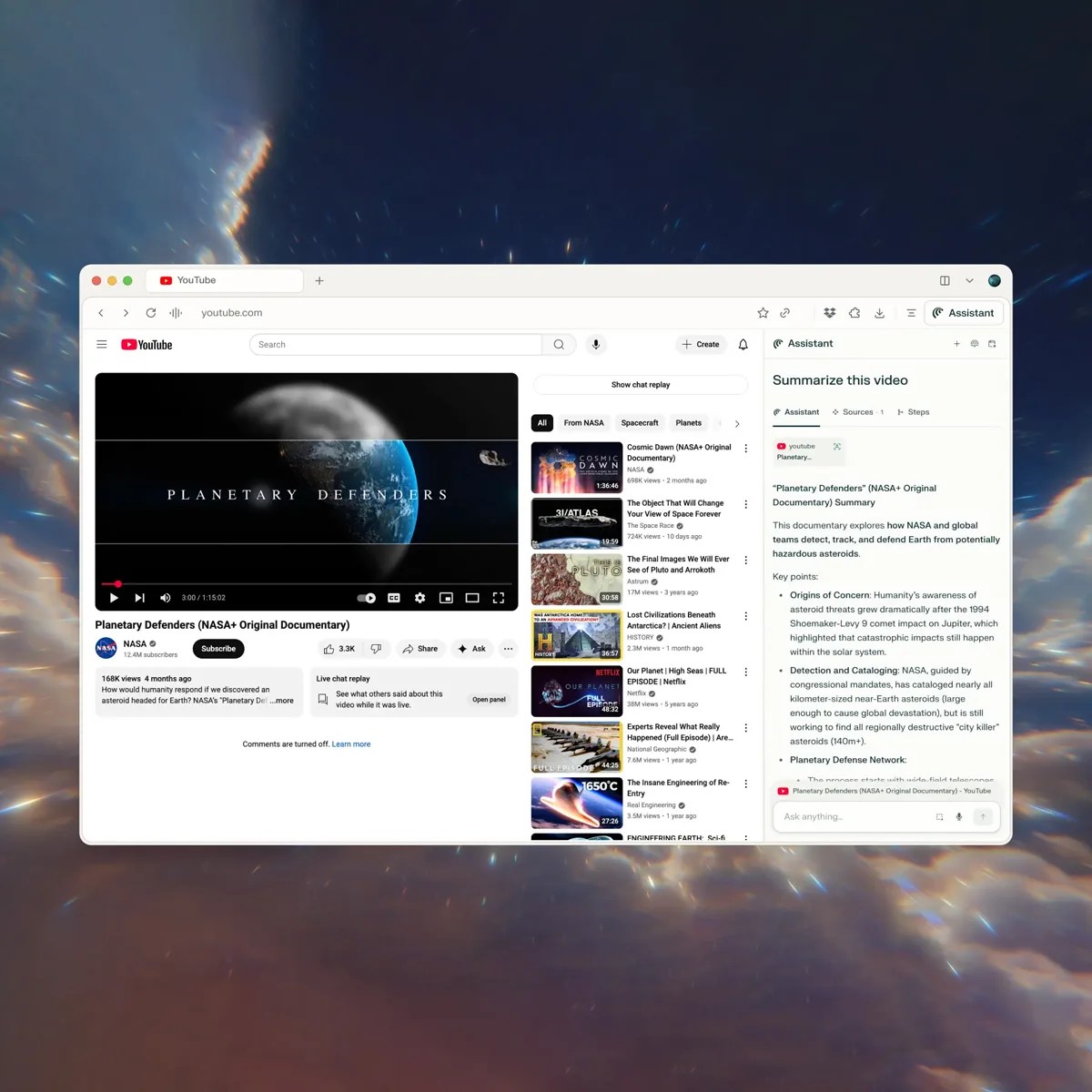
Browser window showing a YouTube video titled "Planetary Defenders (NASA+ Original Documentary)" with an AI assistant summarizing the video on the right side.Perplexity

The Comet browser itself, and in fairness, other AI-equipped competitors that have subsequently followed, has also drawn scrutiny from cybersecurity researchers who warn that autonomous agents inside the browser stack expose fresh attack surfaces and can trigger very real, very expensive mistakes.

Gartner, the influential technology research and advisory company, even took the step of publishing a report on December 1st stating, “Cybersecurity Myst Block AI Browsers for Now,” due to the risks involved.

Comet is all of that. But it’s also something else: the clearest, most concrete demonstration yet of what happens when large-scale language models stop being an add-on to the internet and start becoming the thing that drives your interaction with it.

Instead of search-as-a-box, Comet builds the “agent” into the browsing flow itself. Agent is just AI-speak for a tool that can take actions on a user’s behalf, such as navigating pages, sending emails, summarizing clusters of tabs, building research briefs, filling out forms, booking tickets, and — if you let it — making purchases.

This means that tasks that usually consume minutes or even hours of your day can, to varying degrees, now be handled by someone or, rather, something other than you. That pitch alone is intoxicating, especially for anyone drowning in logistics and digital clutter.

Three large, translucent, curved, glass-like structures floating above Earth in space.Perplexity

Yet each glimpse of power comes with its shadow. A misinterpreted command can cascade into havoc. A convincing hallucination looks a whole lot like truth. And handing over that level of agency to a tool whose inner workings remain largely opaque feels, at times, less like convenience and more like a wager.

Make no mistake: Comet is unfinished, often brittle and still inherently very risky to use at this stage of the game. But it’s also sometimes shockingly capable and exceptionally helpful.

It’s the first browser to compellingly graft AI onto an old paradigm, creating a new paradigm in the process. It asks, what if browsing weren’t a solo activity at all, but a collaboration with a system that could act on your behalf?

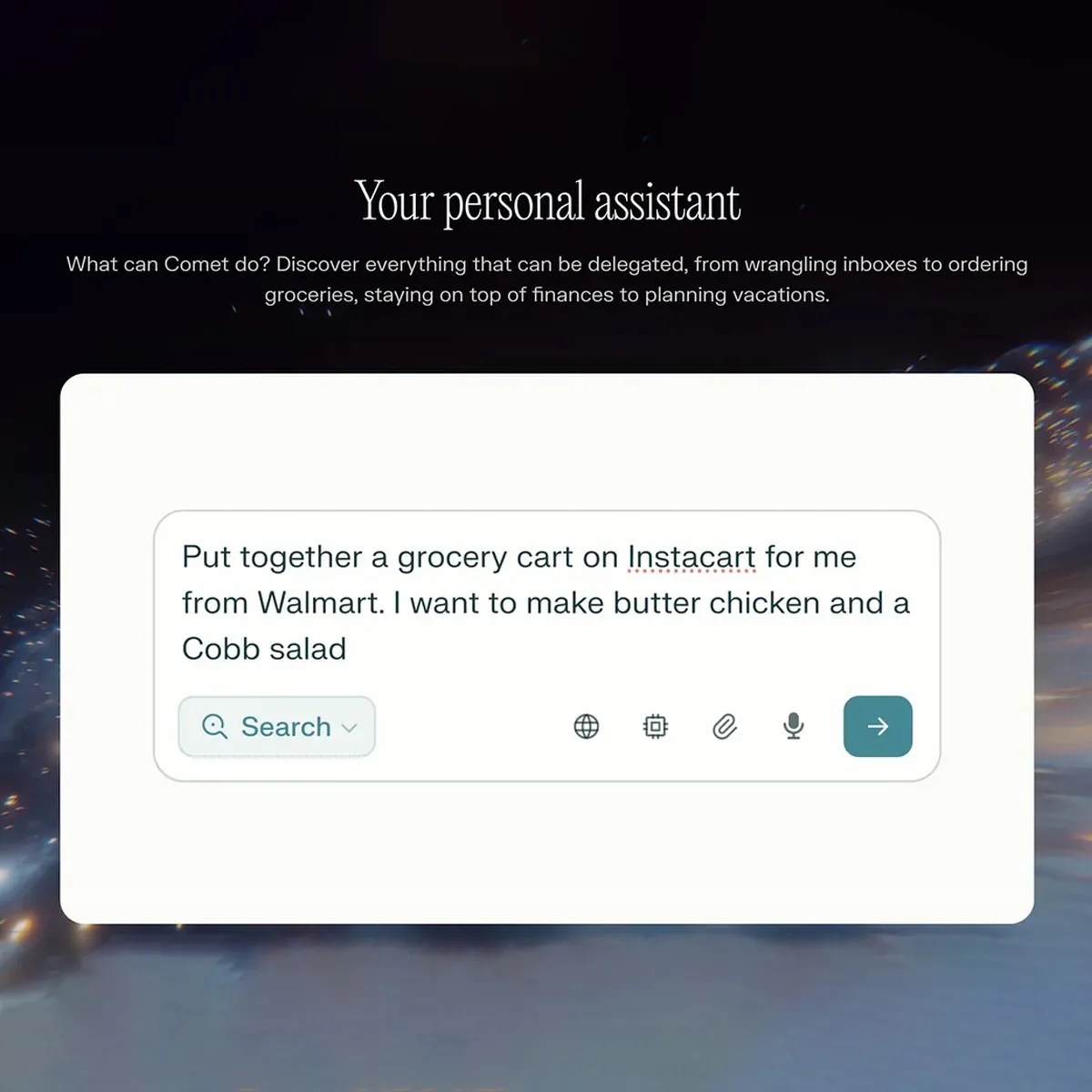
Text box with a request to put together a grocery cart on Instacart from Walmart for butter chicken and Cobb salad, titled "Your personal assistant.Perplexity

The timing matters, too. Consumer browser choice has been all but stagnant for years. Chrome, shaped by its own long antitrust saga, has dominated the market to an extent that’s all too familiar in the world of technology.

The fact is that real, industry-shifting innovation in this category hasn’t come from scrappy outsiders in a generation. Comet breaks that drought.

Whatever its faults — and there are plenty — it’s jolted the incumbents. Google raced to fold similar agentic tools into Chrome and OpenAI – arguably the AI company with the biggest head start – soon scrambled to introduce its own Atlas browser just last month. These rapid reactions from such massive tech players say more about Comet’s potential than any marketing campaign ever could.

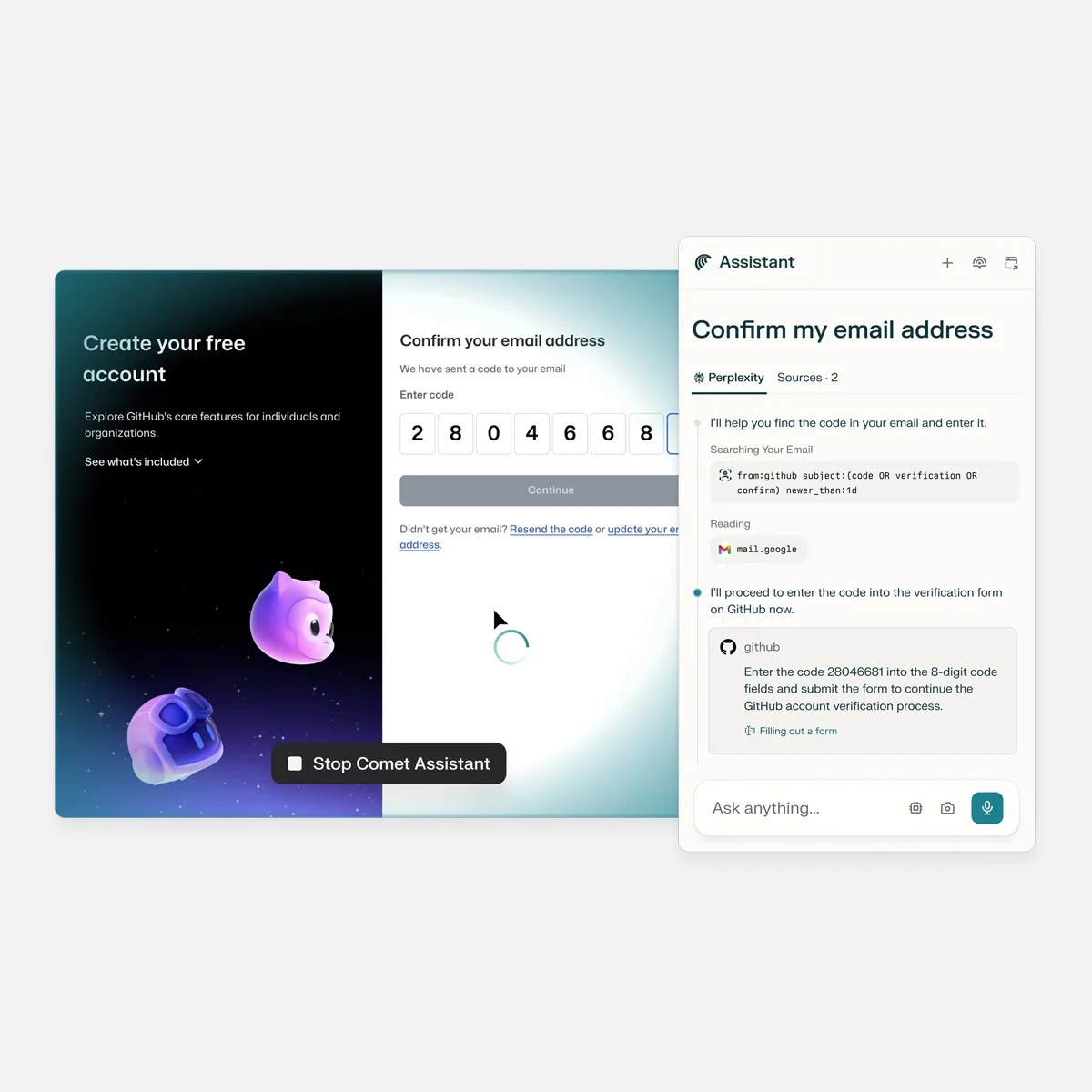
Screenshot of GitHub email verification page with Comet Assistant AI interface showing code retrieval and auto-entry.Perplexity

In a year when AI’s economic impact has flirted with bubble logic and rhetoric often outpaced reality, this browser also stands out for a simpler reason: it’s real.

It’s a working, shipped-to-consumers preview of how interacting with the web is likely to evolve over the next decade — a window into the power, peril and unpredictability that come with machine intelligence becoming a layer between us and the internet. It imagines a future where the web isn’t merely navigated but actively negotiated, with a digital counterpart shaping the experience.

Comet may ultimately be remembered as a transitional artifact — the MySpace before Facebook, the Ask Jeeves before Google, the Napster before Spotify, the BlackBerry before the iPhone. Maybe it flames out; maybe the AI bubble deflates and the world moves on.

But shifts in how people use the internet at this scale don’t show up often, and something always has to go first.

Comet earns its place in the story because it stepped out ahead of the inevitability — a working proof that this next phase of the web isn’t theoretical anymore. It’s already under way.

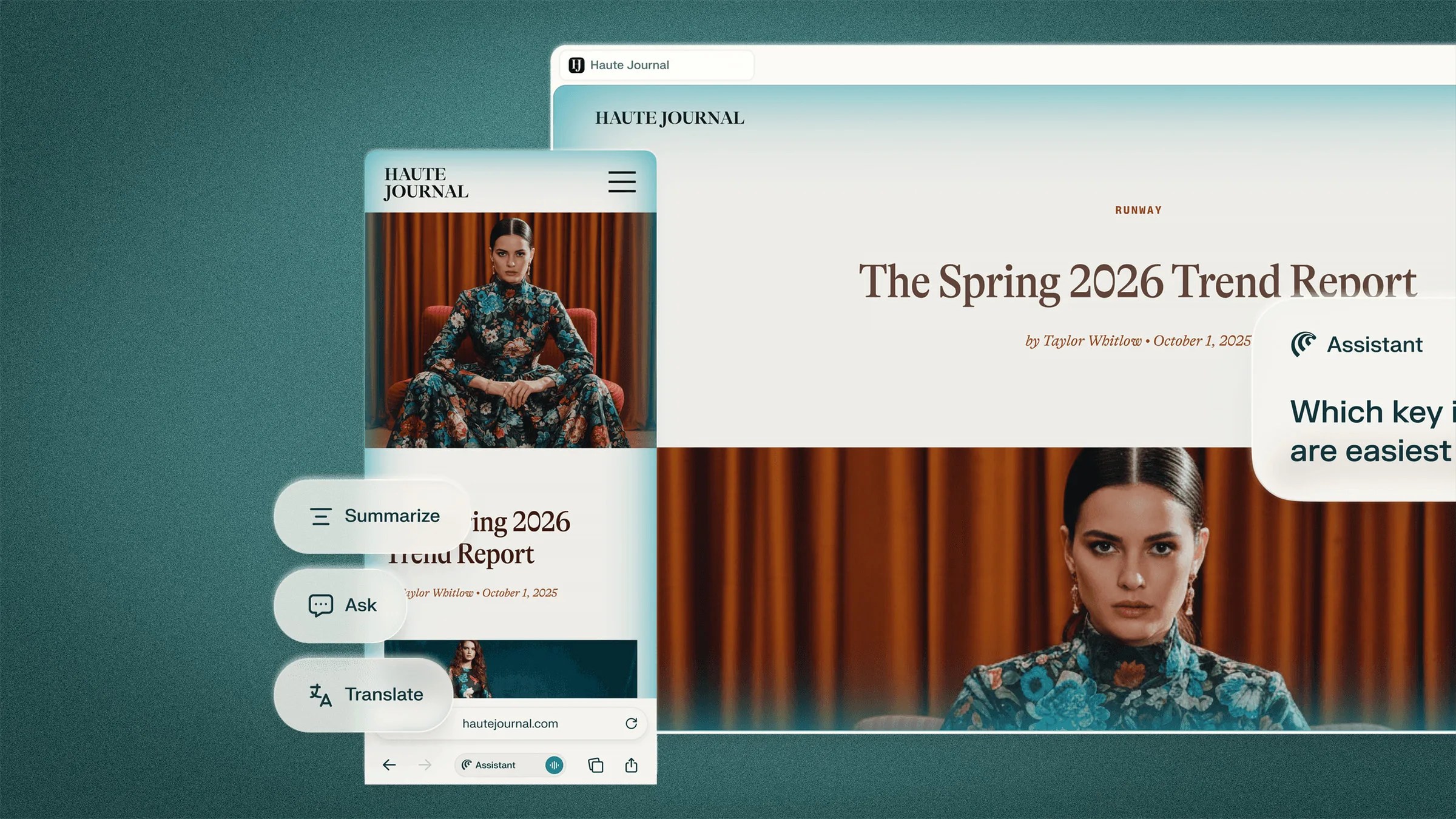
Webpage titled "The Spring 2026 Trend Report" from Haute Journal shown on desktop and mobile with assistant options to summarize, ask, and translate.Perplexity

GP100 Winner

Perplexity Comet Browser

Specs

Platforms Mac, Windows, Android
Cost Free