
A Legendary Watchmaker Has Finally Entered the Ultimate Sports Watch Race

The manufacture that helped create the integrated bracelet sports watch category has finally entered it, with three models that are priced to compete.

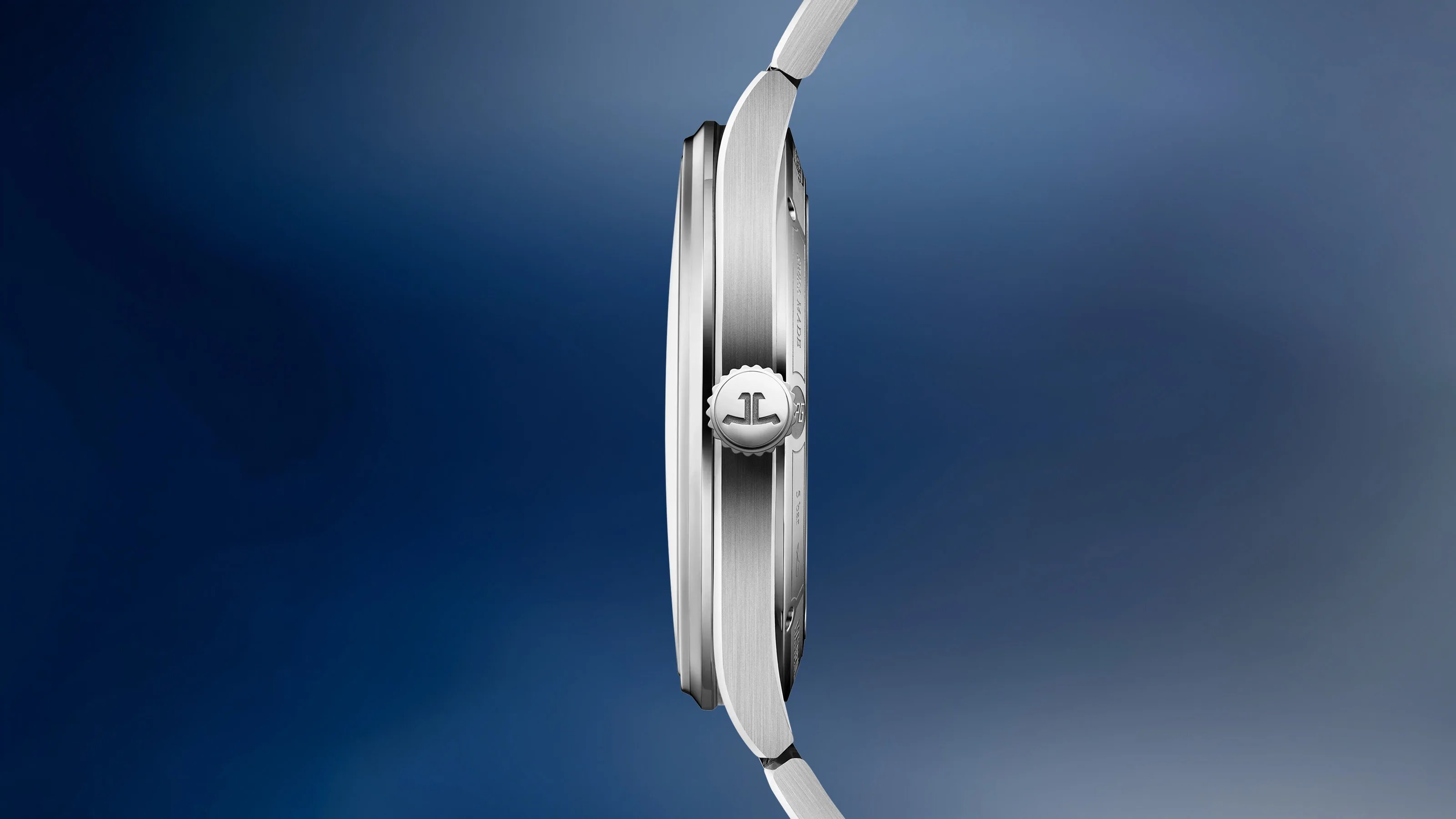
Side view of a slim silver wristwatch case with a ridged crown featuring a logo on a blue gradient background.Jaeger-LeCoultre

If you buy from a link, we may earn a commission. Learn more

Jaeger-LeCoultre’s biggest announcement at Watches & Wonders 2026 wasn’t a new Reverso. It wasn’t a minute repeater or some other technical tour de force destined for a handful of collectors.

It was something the storied Swiss manufacture has arguably never properly done before: a full-fledged integrated bracelet sports watch.

The new Master Control Chronometre line finally puts JLC squarely in the same conversation as the Audemars Piguet Royal Oak, the Patek Philippe Nautilus, and Vacheron Constantin’s 222 and Overseas — watches that have defined the category for the better part of half a century.

Better late than never doesn’t quite cover it. For Jaeger-LeCoultre, this is a long time coming.

A complicated backstory

Stainless steel Jaeger-LeCoultre wristwatch with a textured black dial, Roman numerals, and date display.
In 1973, JLC introduced the Master Mariner Chronometre, a sleek steel watch with a fully integrated metal bracelet that introduced a new style the brand called “relaxed, confident luxury.” It fit the era but never reached the cultural heights of its contemporaries like the Royal Oak or Nautilus.
Jaeger-LeCoultre

JLC has a long history of designing and producing the movements behind some of the world’s most famous watches sold by other brands, which is why it’s known in watch circles as the ‘watchmaker’s watchmaker.’

But there’s a particularly rich, if not deeply ironic, chapter buried in Jaeger-LeCoultre’s history, specifically related to integrated sports watches.

JLC’s ultra-thin calibre 930 — a slender automatic movement just 2.45mm thick — powered both the original Audemars Piguet Royal Oak at its 1972 debut and the Patek Philippe Nautilus in 1976.
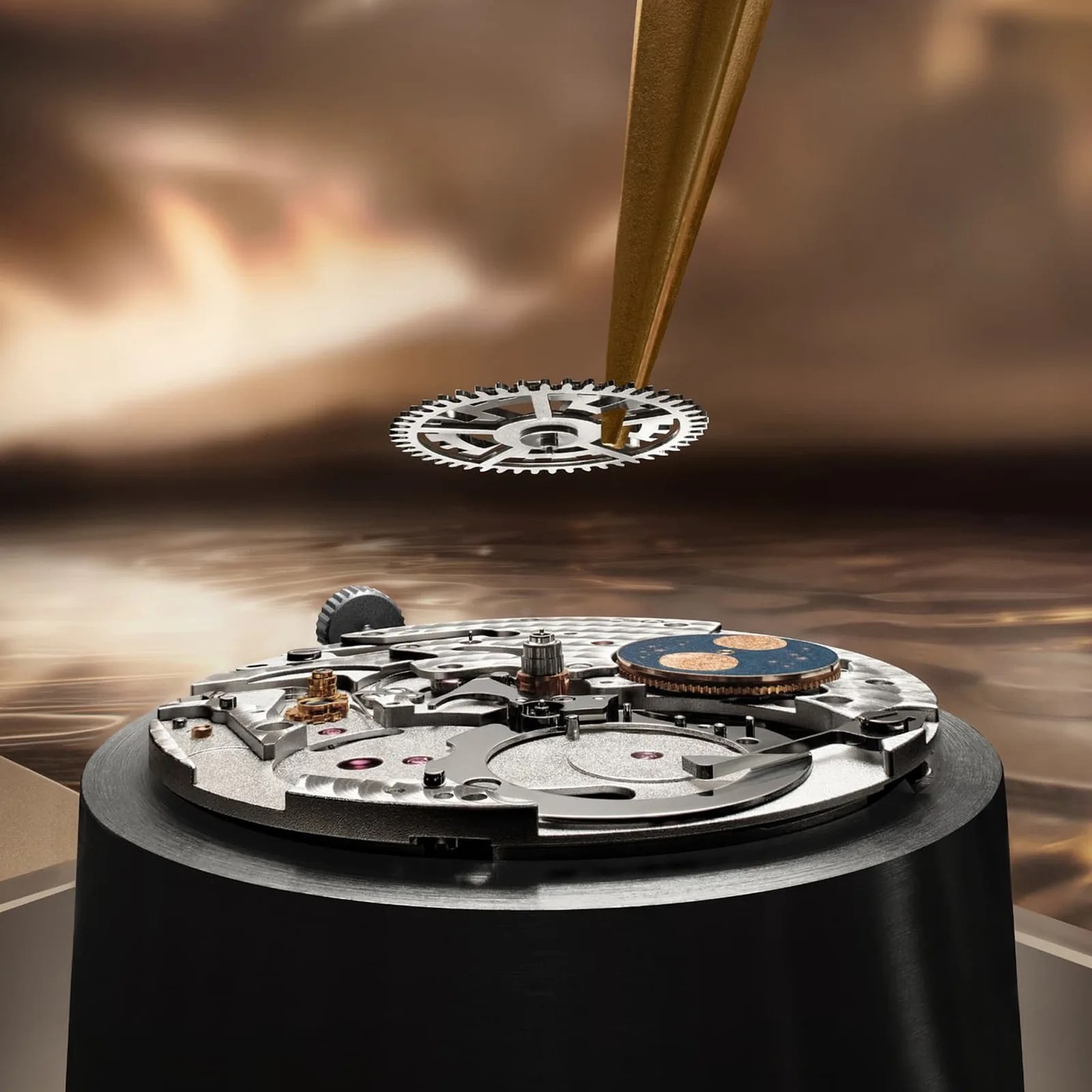
Close-up of a watchmaker's tool holding a small gear above a mechanical watch movement on a black stand.
JLC’s ultra-thin calibre 930 — a slender automatic movement just 2.45mm thick — powered both the original Audemars Piguet Royal Oak at its 1972 debut and the Patek Philippe Nautilus in 1976. But JLC never used the movement in its own watches or introduced an iconic integrated sports watch.
Jaeger-LeCoultre

In other words, the very watches that created the integrated bracelet sports watch category were powered by JLC movements, yet, for some reason, the watchmaker never introduced a clear, heavyweight entrant of its own. And that gap essentially lingered for decades.

Sure, there was one early gesture: in 1973, JLC introduced the Master Mariner Chronometre, a sleek steel watch with a fully integrated metal bracelet that introduced a new style the brand called “relaxed, confident luxury.” It fit the era but never reached the cultural heights of its contemporaries.

The Master Control line itself arrived in 1992 as a flagship collection, reframing JLC’s commitment to precision around its rigorous “1,000 Hours Control” testing standard. That lineage now feeds directly into the new Chronometre collection — and the brand has upgraded its quality benchmark to match.

Finally in the game

Close-up of a Jaeger-LeCoultre stainless steel wristwatch with a blue dial featuring multiple subdials and a moon phase indicator.
The newly revealed Master Control Chronometre collection arrives in three references, all of which fill a gaping hole in JLC’s sports watch line while offering a new source of competition to icons like the Royal Oak, Nautilus, and Overseas.
Jaeger-LeCoultre

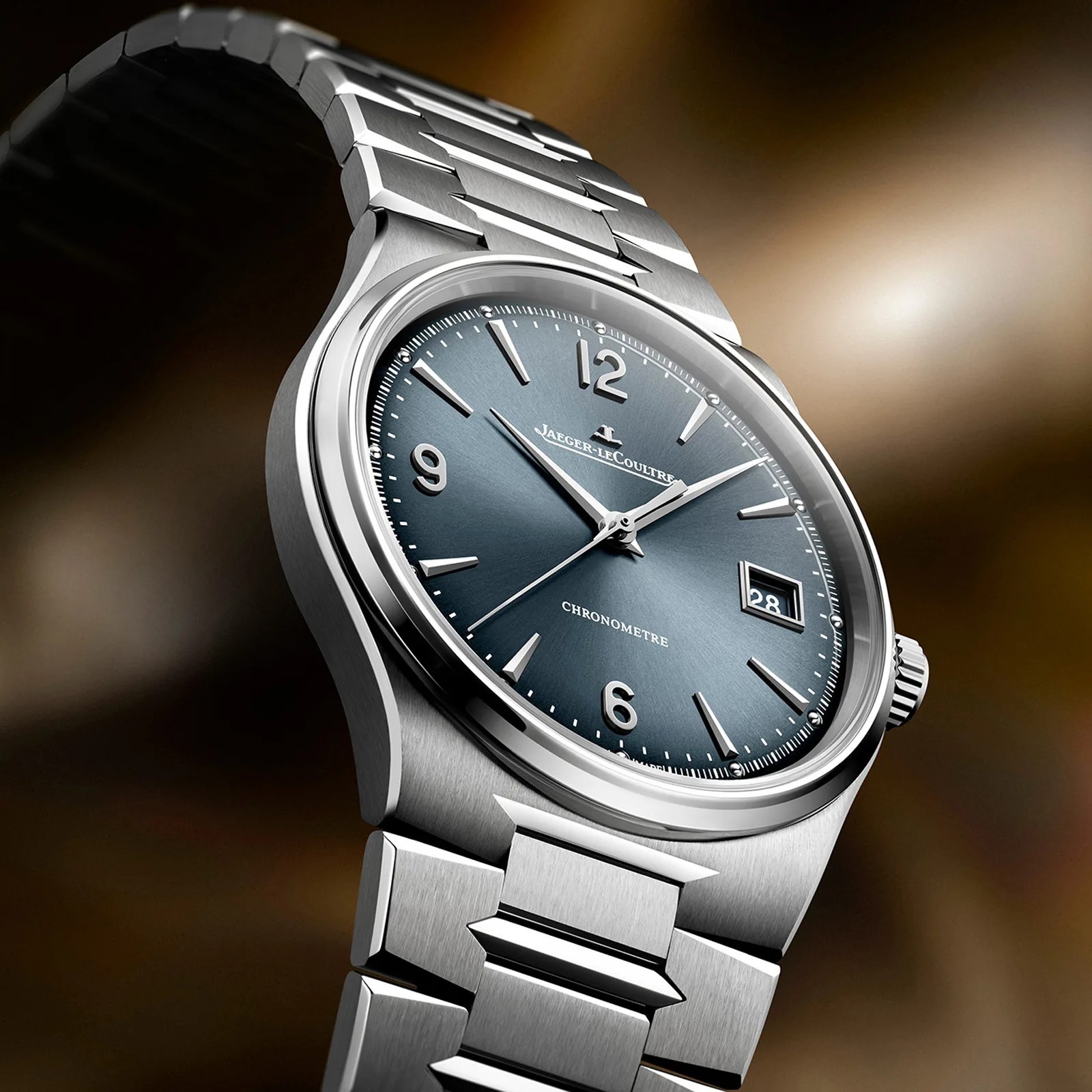
The Master Control Chronometre arrives in three references, all sharing a design language built around slim proportions, an integrated three-row tapered bracelet, and JLC’s signature Dauphine hands and faceted applied indexes.

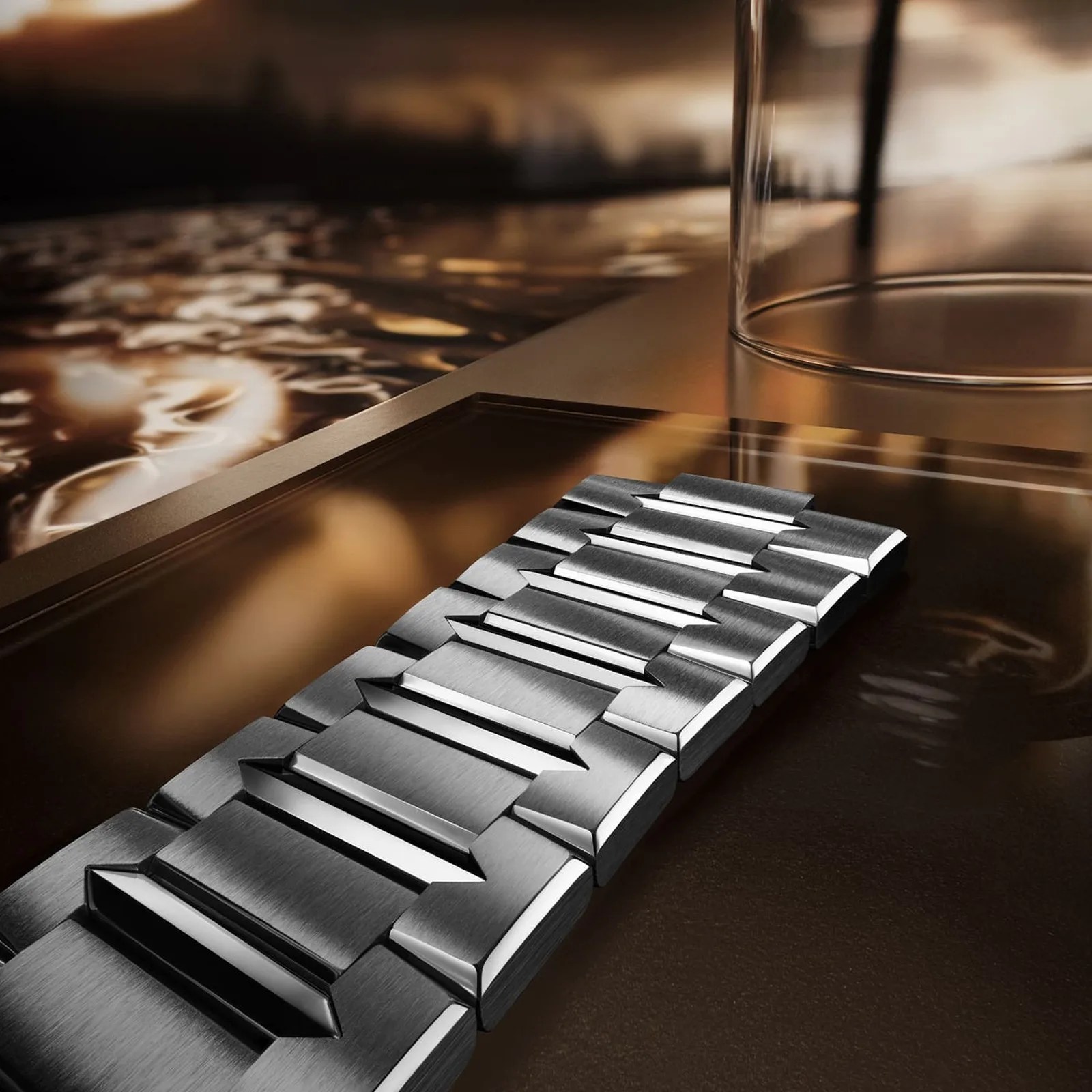
The bracelet is one of the watch’s most impressive details: a fully integrated construction exclusive to the collection, with central links that alternate between flat satin-brushed surfaces and polished triangular-prism links, flanked by outer rows featuring V-shaped bevels.

The angles mirror the geometry of the hands and dial, creating a visual coherence that extends from the dial to the clasp.

Brushed and polished stainless steel watch bracelet links on a reflective bronze surface next to a glass.
The bracelet is one of the watch’s most impressive details: a fully integrated construction exclusive to the collection, with central links that alternate between flat satin-brushed surfaces and polished triangular-prism links, flanked by outer rows featuring V-shaped bevels.
Jaeger-LeCoultre

Given JLC’s epic history of movement making, it’s also no surprise that the manufacture has also capitalized on the occasion to introduce a new movement quality standard, dubbed the HPG (High Precision Guarantee). It replaces JLC’s earlier “1,000 Hours Control” and represents a meaningful evolution in how the brand certifies its watches.

Rather than pure lab testing, the HPG simulates real-world daily wear across a compressed three-day cycle — covering altitude variations (up to the 1,004-meter elevation of JLC’s own manufacture), multi-directional shocks between 25G and 50G, positional testing, and temperature swings from 18 to 35 degrees Celsius.

Close-up of a watch dial held by tweezers above a mechanical watch movement on a workbench.
The Master Control Chronometre Date Power Reserve is the mid-level offering in the new collection. It’s defined by its 39mm case housing the new calibre 738 — a two-subdial layout with a power reserve indicator at 9 o’clock and a pointer date at 3.
Jaeger-LeCoultre

All models are also independently COSC chronometer certified. As Worn & Wound pointed out, the HPG is itself a revival — the designation first appeared on JLC dials in the 1970s for watches featuring the calibre 916, the brand’s pioneering 4Hz movement.

The entry point is the Master Control Chronometre Date, a 38mm three-hander powered by the in-house calibre 899, offering a date at 3 o’clock and 70 hours of power reserve at 8.4mm thin.

A rich-looking, pink gold version is also available, though at a higher price point than any of the three Master Control Chronometre references in steel.

Close-up of a wrist wearing a gold metal bracelet watch with a dark dial and date display, worn with a brown sweater.
The baseline Master Control Chronometer Date is also available in a rich pink gold variant, albeit at a hefty $52,500 price premium, making it more expensive than even the Master Control Chronometre Perpetual Calendar in steel.
Jaeger-LeCoultre

The Master Control Chronometre Date Power Reserve is the next step up in the new watch family. It’s defined by its 39mm case housing the new calibre 738 — a two-subdial layout with a power reserve indicator at 9 o’clock and a pointer date at 3, the red zone of the power reserve indicator adding a subtle visual urgency to the dial.

At the top of the lineup is the Master Control Chronometre Perpetual Calendar: a 39mm, 9.2mm-thick watch stunner with JLC’s calibre 868 managing month, day, date, year, and a moon phase accurate until 2100 — all through a single corrector on the case side. It is also available in both steel and an ultra-premium pink gold iteration.

Competing on value

Rose gold Jaeger-LeCoultre Master Control Chronometre watch back showing intricate mechanical movement.
The new line also introduces a new movement quality standard, dubbed the HPG (High Precision Guarantee). It replaces JLC’s earlier “1,000 Hours Control” and represents a meaningful evolution in how the brand certifies its watches.
Jaeger-LeCoultre

The timing of JLC’s entry into this space makes it all the more compelling.

The brands that have owned the integrated sports watch category for half a century haven’t exactly been standing pat — Audemars Piguet has spent the better part of its 150th anniversary expanding the Royal Oak into new case sizes and complications, including a new 38mm chronograph starting at $43,000 and the jaw-dropping Royal Oak RD#5, a tourbillon chronograph that pushes the icon into genuinely futuristic territory.

Patek Philippe just marked the Nautilus’s 50th anniversary with a platinum midsize edition that starts at above $115,000.

Stainless steel Jaeger-LeCoultre wristwatch with blue dial, silver hour markers, and date window at 3 o'clock.
Compared to other famed integrated sports watch models on the market right now, the Master Control Chronometre looks like one of the more reasonable entry points in a category not known for restraint.
Jaeger-LeCoultre

And Vacheron Constantin just released the Overseas Dual Time Cardinal Points — a follow-up to one of the most coveted limited releases of recent years — at $41,000, as well as a highly limited, ultra-thin platinum version of the traditional Overseas priced at $120,000.

Into all of that, JLC has arrived with a range that stretches, at least in steel, from a date-only model at $14,200 to a perpetual calendar at $45,700, which makes the Master Control Chronometre line look like one of the more reasonable entry points in a category not known for restraint.

Whether it earns the cultural cachet of the watches it’s now competing with will take time. But for a brand that spent decades supplying the engine for its rivals, the Master Control Chronometre is a long-overdue statement — and a genuinely interesting one.

Availability and pricing

The Master Control Chronometre line is now available for pre-order at Jaeger-LeCoultre boutiques and authorized retailers worldwide.

Steel references are the primary entry points; rose gold versions of the Date and Perpetual Calendar are also available for those who want something warmer (and more luxurious).

Want to stay up to date on the latest product news and releases? Add Gear Patrol as a preferred source to ensure our independent journalism makes it to the top of your Google search results.

add as a preferred source on google
,