
Can a Whisky Titan Lure Bourbon Fans to Scotch? This Release Is Banking on It

With alcohol sales in freefall and spirit-maker stocks tanking, Johnnie Walker’s new Scotch feels more like a strategic SOS than a creative experiment.

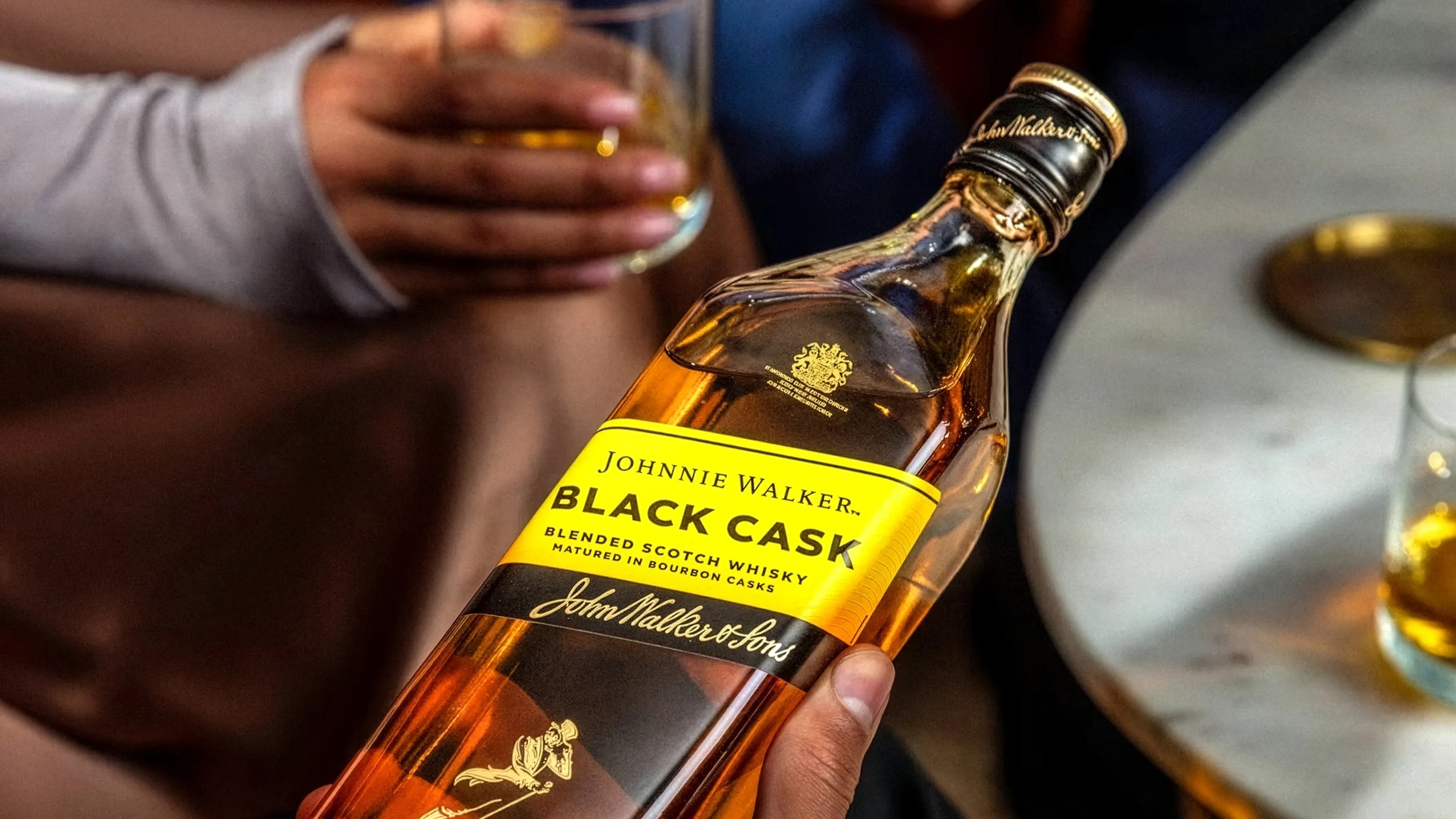
Hand holding a bottle of Johnnie Walker Black Cask blended Scotch whisky near a marble table with a glass of whisky.Johnnie Walker

If you buy from a link, we may earn a commission. Learn more

Johnnie Walker has spent more than 200 years building one of the most recognized names in Scotch whisky. Now, one of the world’s biggest spirits brands is making a bold move — launching a permanent new expression designed to speak directly to the taste preferences of American bourbon drinkers.

The new bottle, called Black Cask, is built around a tweaked aging process that supposedly offers a flavor profile that’s markedly sweeter and softer than what Scotch traditionalists might expect from the brand.

It’s an interesting pivot. But it’s also one that tells a larger story about where the spirits industry finds itself right now — navigating a perfect storm of factors that’s punishing even the biggest players in the game.

Welcome to Power MovesDiving deep into the product and brand moves that can change where a category is headed. Discover more here.

A Black Cask for bleak times
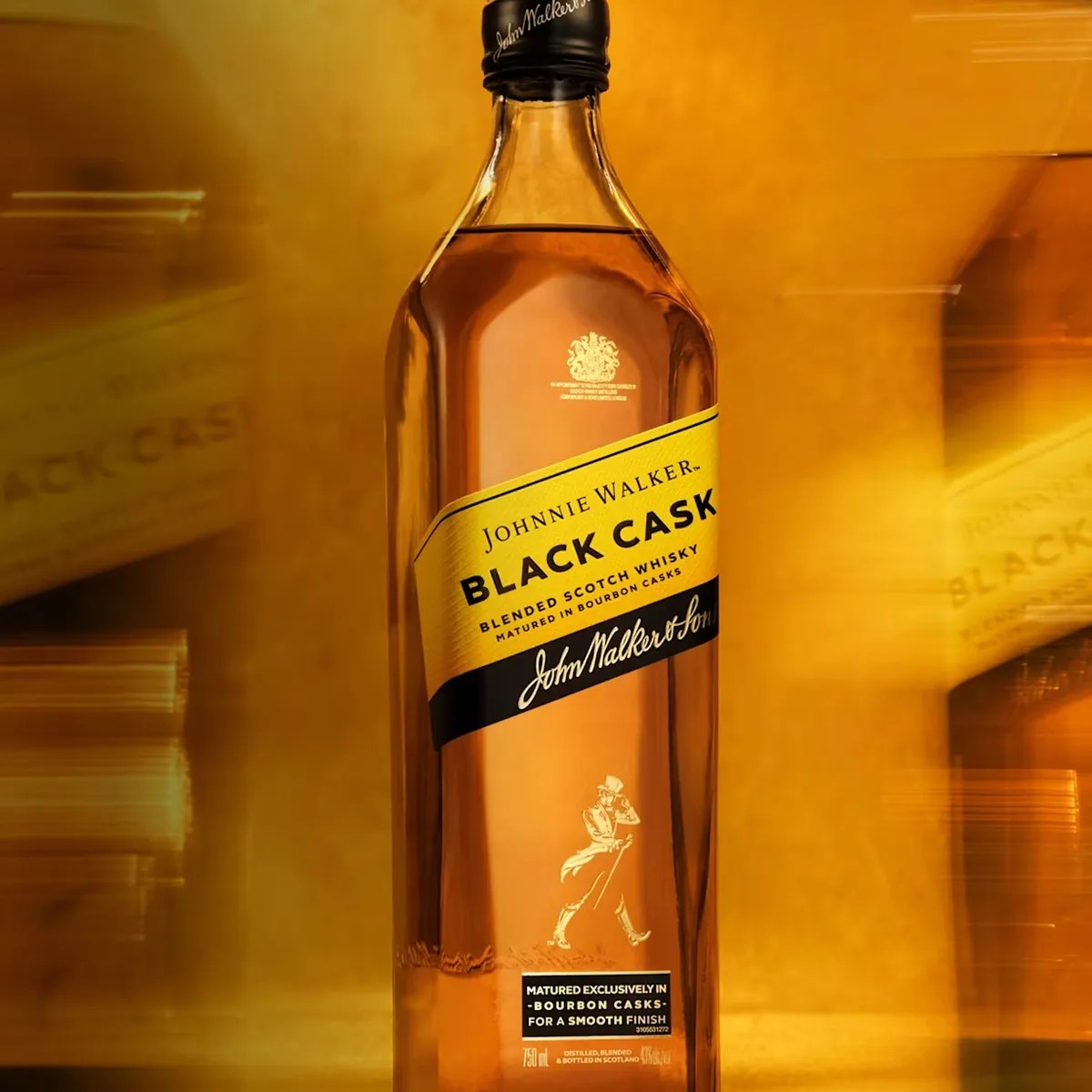
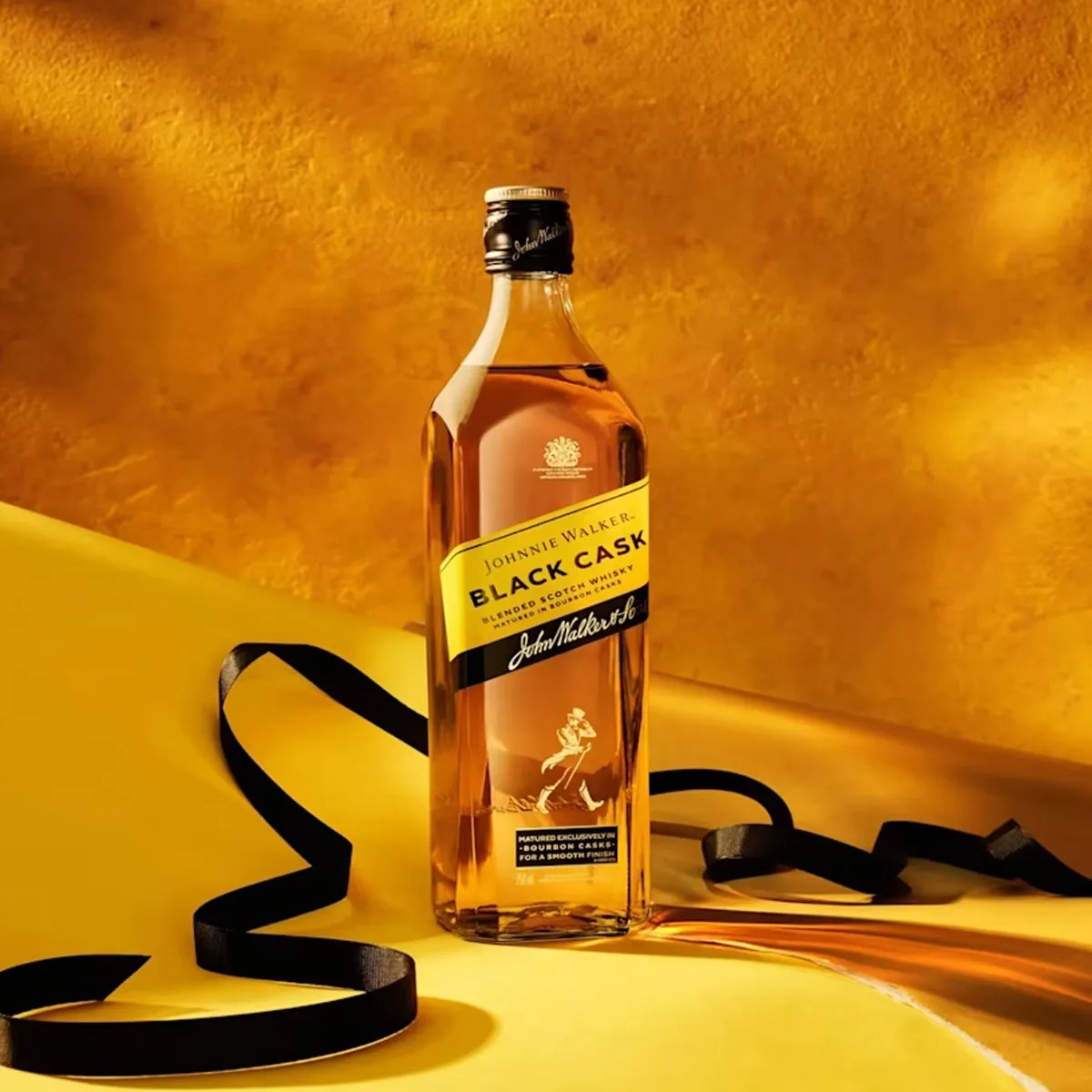
Bottle of Johnnie Walker Black Cask blended Scotch whisky with yellow and black label on a golden background.
Adding a new permanent expression to the Scotch maker’s existing lineup, known widely for its color-labeled entries, is no small matter. In fact, it’s been 15 years since the brand introduced a new permanent blend to the U.S. market. But the release timing and strategy behind Black Cask in particular speak to a wide array of forces reshaping the global spirits market.
Johnnie Walker

The timing of Black Cask’s arrival feels hard to separate from the turbulence unfolding at Diageo, the London-based conglomerate behind Johnnie Walker.

In February 2026, Diageo’s newly installed CEO Sir Dave Lewis — nicknamed “Drastic Dave” for his track record of sweeping cuts at Tesco and Unilever — delivered what one analyst called “awful results” when the company reported its first-half earnings.

The timing of Black Cask’s arrival feels hard to separate from the turbulence unfolding at Diageo, the London-based conglomerate behind Johnnie Walker.


Net sales fell four percent to $10.5 billion, and operating profit slipped 1.2 percent to $3.1 billion. Diageo’s shares plunged nearly 13 percent in a single day — one of the steepest drops the company has seen in years.

Lewis cited weak consumer spending as “by far and away” the company’s biggest challenge, according to Reuters. But he didn’t stop there.

Portrait of a smiling man with short gray hair wearing a white shirt and dark blazer inside a circular frame.
Sir Dave Lewis was named CEO and Executive Director of Diego on January 1, 2026, and was immediately tasked with delivering stark financial news to the market. But this also isn’t his first exposure to leading massive business turnarounds. In fact, he’s earned the nickname “Drastic Dave” for his track record of sweeping cuts at Tesco and Unilever.
Diageo

The rise of weight-loss drugs like Ozempic, which research indicates can reduce the desire for alcohol, as well as the growing availability of legal cannabis, were also mentioned as contributing factors.

In the U.S. and China — two of Diageo’s most critical markets — sales were particularly soft. Lewis said the company was underrepresented in cheaper, mass-market spirits and acknowledged that Diageo had been “really very poor” in some areas of customer service. His plan: cut costs, sell assets, and reposition the portfolio to better reflect where consumer tastes are actually headed.

The percentage of American adults who say they drink alcohol has fallen to 54 percent — the lowest level in Gallup’s 90-year tracking of the question.

These struggles aren’t unique to Diageo. Across the spirits industry, the headwinds are mounting. Suntory, the Japanese spirits giant behind Jim Beam and Maker’s Mark, reported a decline in its alcohol business in 2025, citing a “challenging external environment” and a slowdown in the U.S. and European markets.

The percentage of American adults who say they drink alcohol has fallen to 54 percent — the lowest level in Gallup’s 90-year tracking of the question. Against that backdrop, launching a product designed to appeal to both Scotch and bourbon drinkers feels less like a creative flourish than a business necessity.

A bourbon drinker’s scotch?

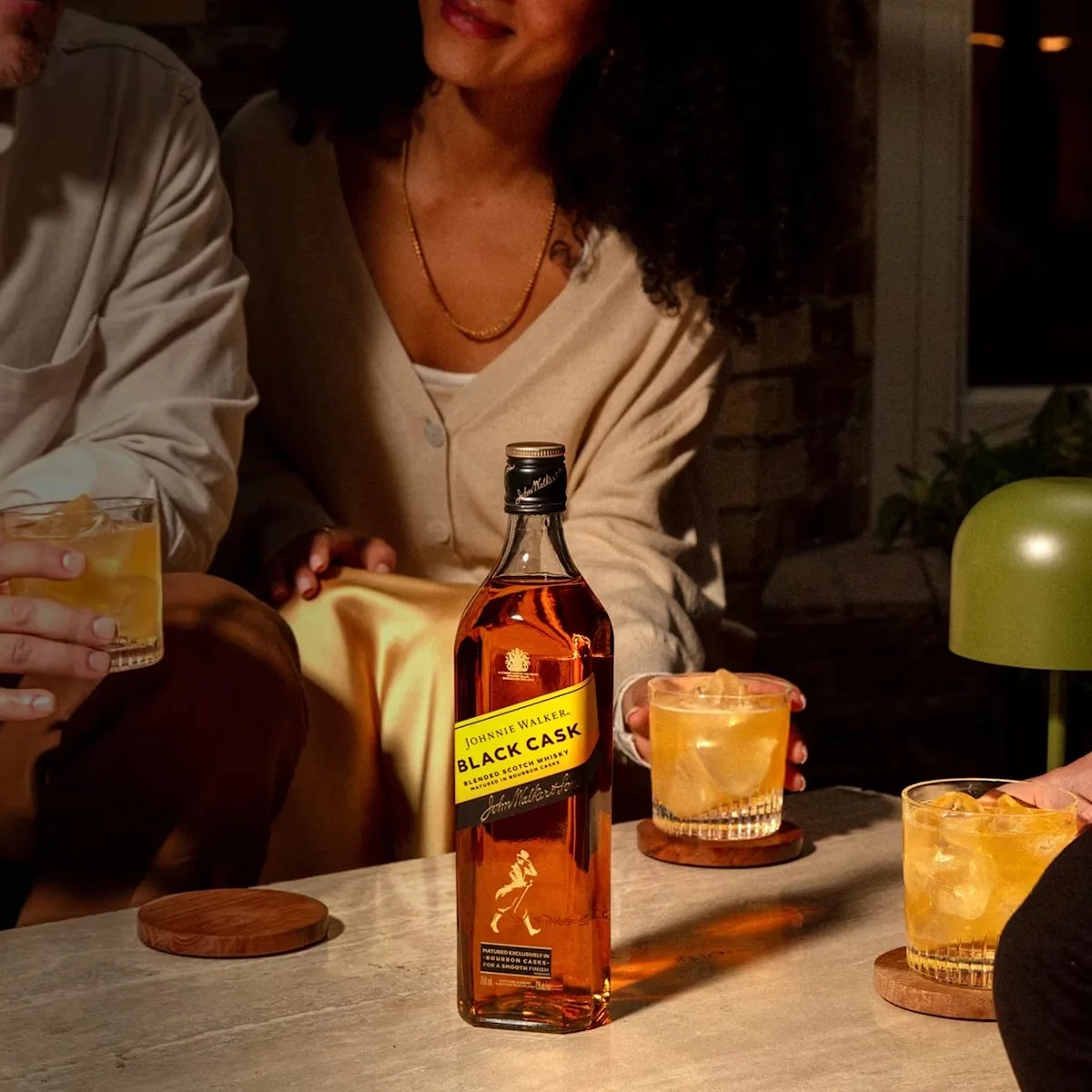
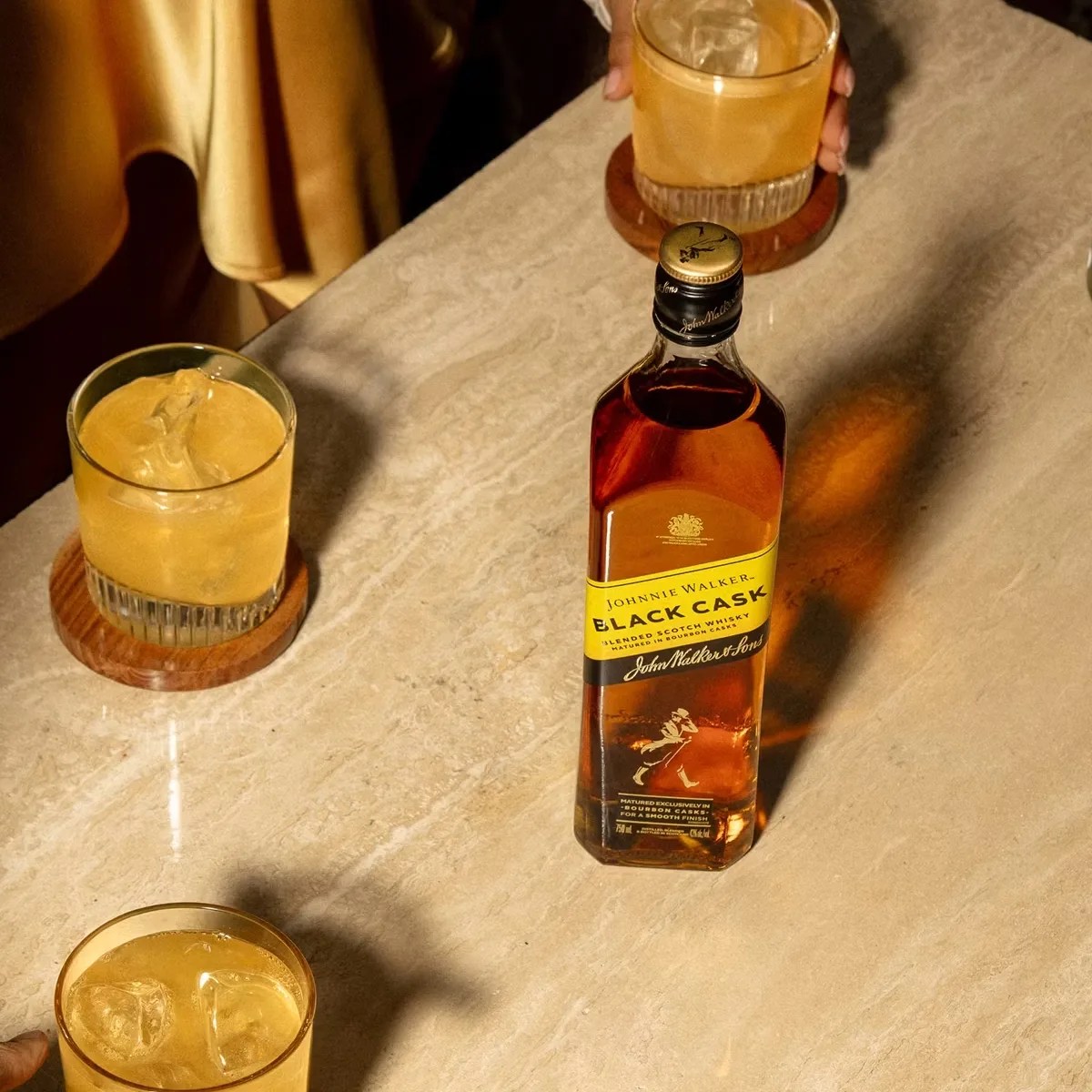
Bottle of Johnnie Walker Black Cask whisky on a marble table with three glasses of whisky on wooden coasters.
According to the brand’s press materials, the aging process is what mainly sets Johnnie Walker Black Cask apart. Every whisky component in the blend is aged exclusively in ex-bourbon barrels. That said, approximately 90% of Scotch is aged in bourbon barrels, so it’s not exactly a novel concept.
Johnnie Walker

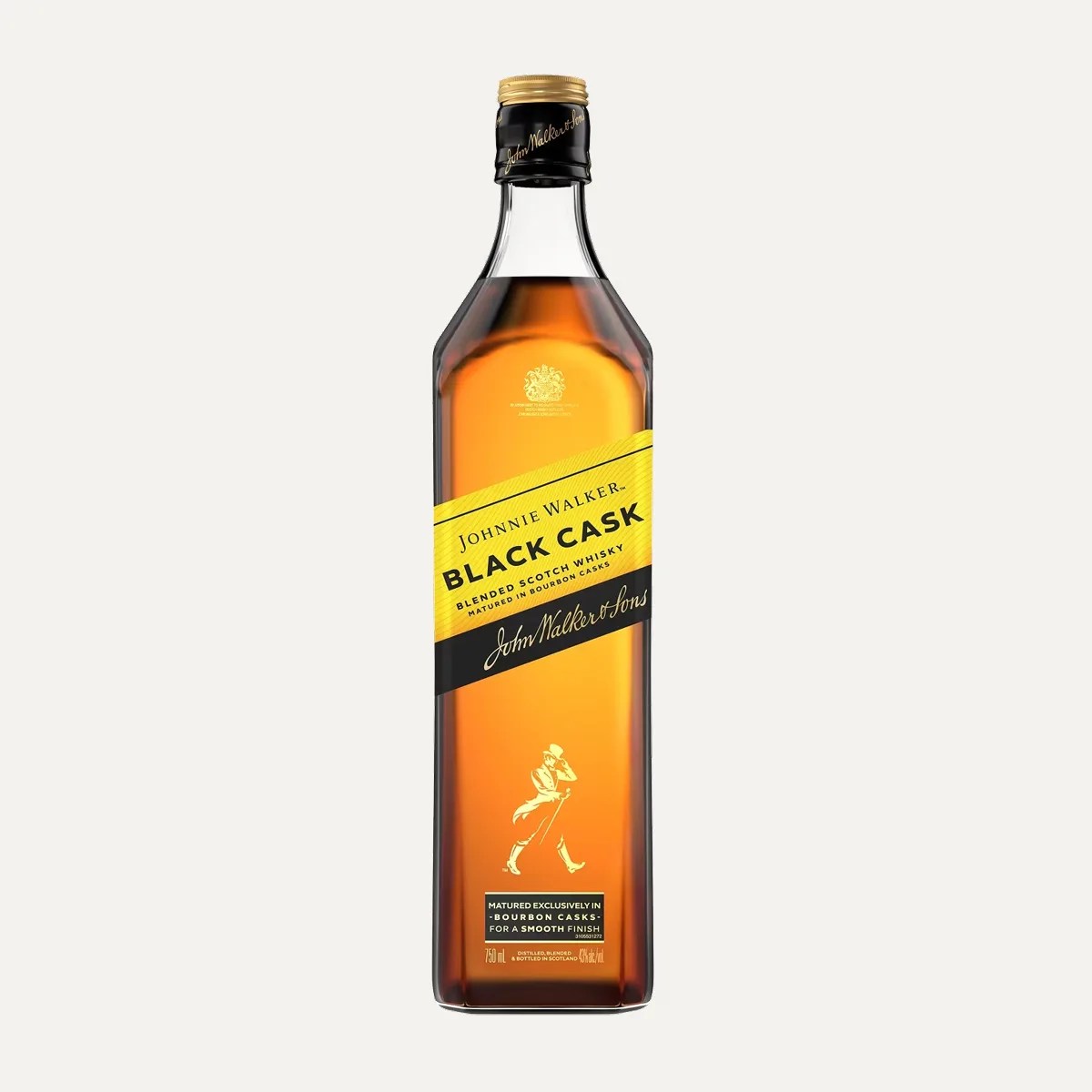
So what exactly is Black Cask? At its core, it’s a blended Scotch whisky built from specially selected whiskies drawn from the heart of Johnnie Walker’s Black Label lineup, sourced from distilleries including Cameronbridge, Glen Elgin, and Roseisle.

Johnnie Walker says that maturation sets this particular bottle apart: every whisky in the blend is aged exclusively in American white oak ex-bourbon barrels, a deliberate choice that produces a noticeably different flavor profile than what most Scotch drinkers would expect.

The result, according to Master Blender Dr. Emma Walker, is a whisky defined by creamy vanilla sweetness, rich caramel depth, gentle baking spice, and smooth oak warmth — notes that should feel familiar to Kentucky bourbon lovers.

The result, according to Master Blender Dr. Emma Walker, is a whisky defined by creamy vanilla sweetness, rich caramel depth, gentle baking spice, and smooth oak warmth — notes that should feel familiar to Kentucky bourbon lovers.

The truth of the matter is that aging Scotch in bourbon barrels isn’t a novel idea. In fact, it’s widely stated that about 90% of Scotch whisky is aged in barrels that were previously used for bourbon.

Bottle of Johnnie Walker Black Cask blended Scotch whisky with a black ribbon on a yellow surface.
Johnnie Walker Black Cask hits shelves beginning March 1, 2026, and will retail for $35.
Johnnie Walker

That’s not to say Johnnie Walker isn’t doing something differently with Black Cask compared to its other offerings. Aging 100% of the spirit in American White oak bourbon barrels might be significantly different than the brand’s typical barrel balance. It’s just not as drastic a production shift as it might sound.

The blend itself is bottled at 43% ABV and is designed to work across a range of drinking occasions — sipped neat, over ice, or in cocktails.

Strength-wise, that puts it slightly above Johnnie Walker Black Label’s 80 proof (40% ABV) – and Jack Daniel’s Black Label Tennessee whisky, which is bottled at 80 Proof (40% ABV), but below popular bourbons like Maker’s Mark, which sits at 90 Proof (45% ABV).

The brand is specifically calling out classic American-style serves like the Old Fashioned and the Gold Rush as natural pairings, in another intentional nod to bourbon country.

Pricing and availability

Bottle of Johnnie Walker Black Cask whisky on a table with three glasses of whisky and ice.Johnnie Walker

Johnnie Walker Black Cask hits shelves beginning March 1, 2026, and will be available wherever fine spirits are sold across the United States.

The suggested retail price is $34.99 for a 750ml bottle.

In terms of entry-level accessibility within the Johnnie Walker lineup, Black Cask clearly sits above Red Label, which generally retails for under $25 right now, but basically matches Black Label, the brand’s flagship 12-year Scotch, which typically retails for $30–40.

This is a bold(ish) bet in bad times, but also a calculated risk for a brand that’s invested so much in promoting itself as the premium king of blended Scotch.

This is a bold(ish) bet in bad times, but also a calculated risk for a brand that’s invested so much in promoting itself as the premium king of blended Scotch.

Whether that bet pays off is far from certain. Winning over bourbon drinkers with a sweeter, barrel-forward Scotch is one thing; convincing Johnnie Walker loyalists that the brand isn’t quietly trading its heritage for market share is another matter entirely.

The fact that it’s a permanent addition to the portfolio at least signals that Diageo is ready to play the long game in the quest to attract new fans, rather than just chasing a one-time sales bump.

Want to stay up to date on the latest product news and releases? Add Gear Patrol as a preferred source to ensure our independent journalism makes it to the top of your Google search results.

add as a preferred source on google
,