
Buckley’s Slick Sprinter Van Taps 3D Printing for a Lighter, More Refined Camper Rig

Buckley has envisioned a new kind of conversion that avoids many of the compromises of more traditional rigs.

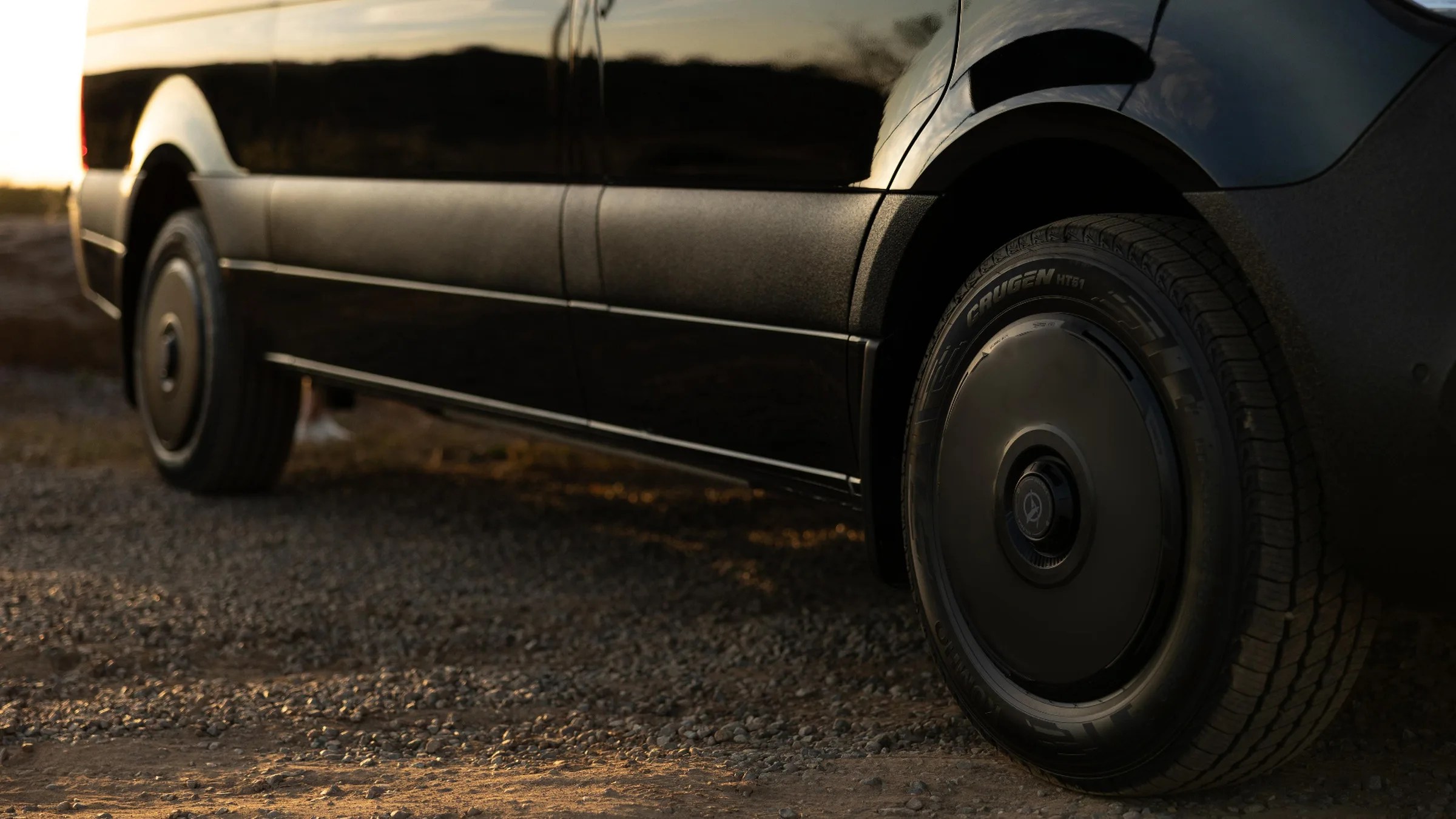
Close-up of a black vehicle's side panel and wheel with a matte black hubcap on a gravel surface at sunset.Buckley

If you buy from a link, we may earn a commission. Learn more

Most van conversions lean on some combination of plywood, aluminum and off-the-shelf cabinetry to transform their cargo spaces into livable abodes. While they’re proven materials that are cheap and easy to source, they do come with compromises. 

Welcome to Power Moves: Diving deep into the product and brand moves that can change where a category is headed. Discover more here.

The most prominent of those are added weight and joinery that eats into the usable volume. Even the most clever folding setups have to make some concessions. Although complex molds might solve for some of these problems, they’re often cost-prohibitive in small runs. 
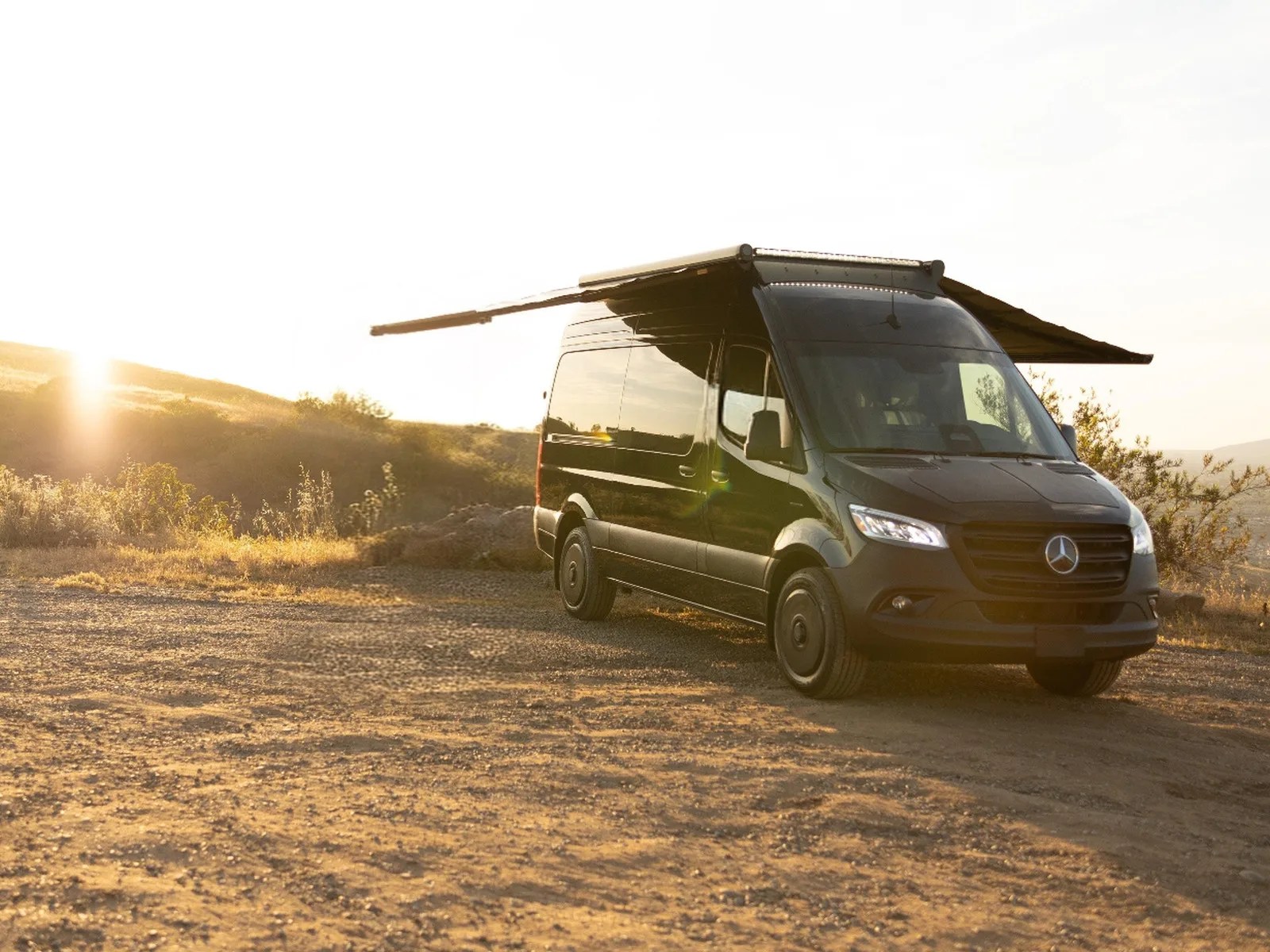
Black Mercedes-Benz camper van with extended side awnings parked on a dirt road at sunset.
Buckley dabbled in more traditional conversions before adopting its unique 3D-printed approach.
Buckley

Keeping this in mind, a California-based outfit named Buckley has completely reinvented its approach to van conversions. By incorporating additive manufacturing, it’s betting that it can sidestep many of the usual constraints.

What actually changes inside

Buckley is the brainchild of founder and owner Brandon Buckley, and it’s the culmination of his own van life experience. Having started by offering more traditional conversions, he’s now pivoted to a new kind of plan that’s made almost entirely of large-scale, industrial 3D-printed fittings.
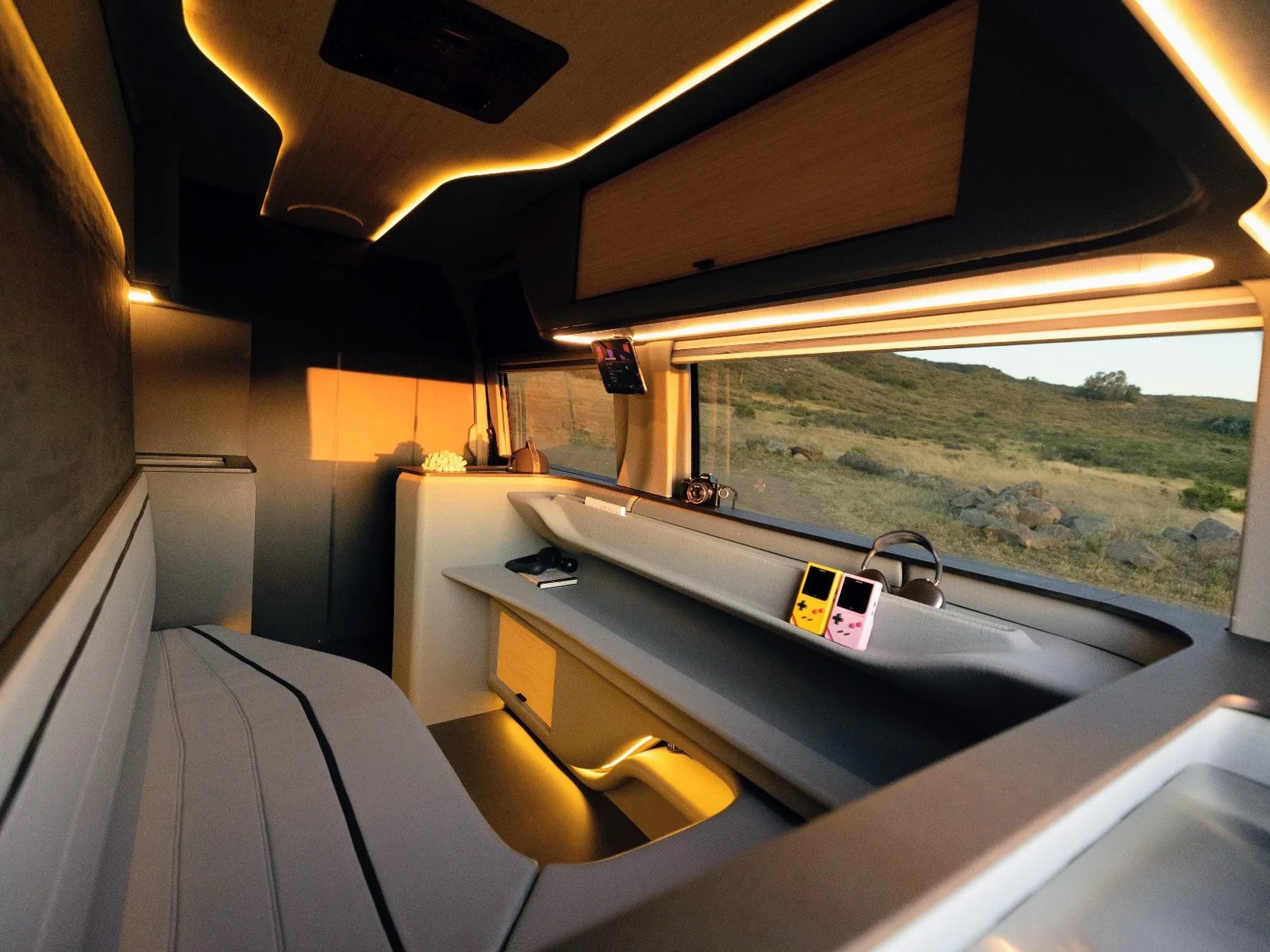
Interior of a modern camper van with gray seating, ambient lighting, and a large window showing a grassy landscape.
The weight savings are claimed to be around 1,500 pounds compared to past builds.
Buckley

That’s for good reason. Along with tighter tolerances, it’s a change that facilitates larger (and fewer) pieces. On the road, this promises a quieter ride with less opportunity for pesky rattles to develop. 

Moreover, it’s a change that allows for significant weight savings. According to Buckley’s walkaround preview, the prototype shaves around 1,500 pounds compared to past builds, and there are still further opportunities for mass reduction waiting on the table.

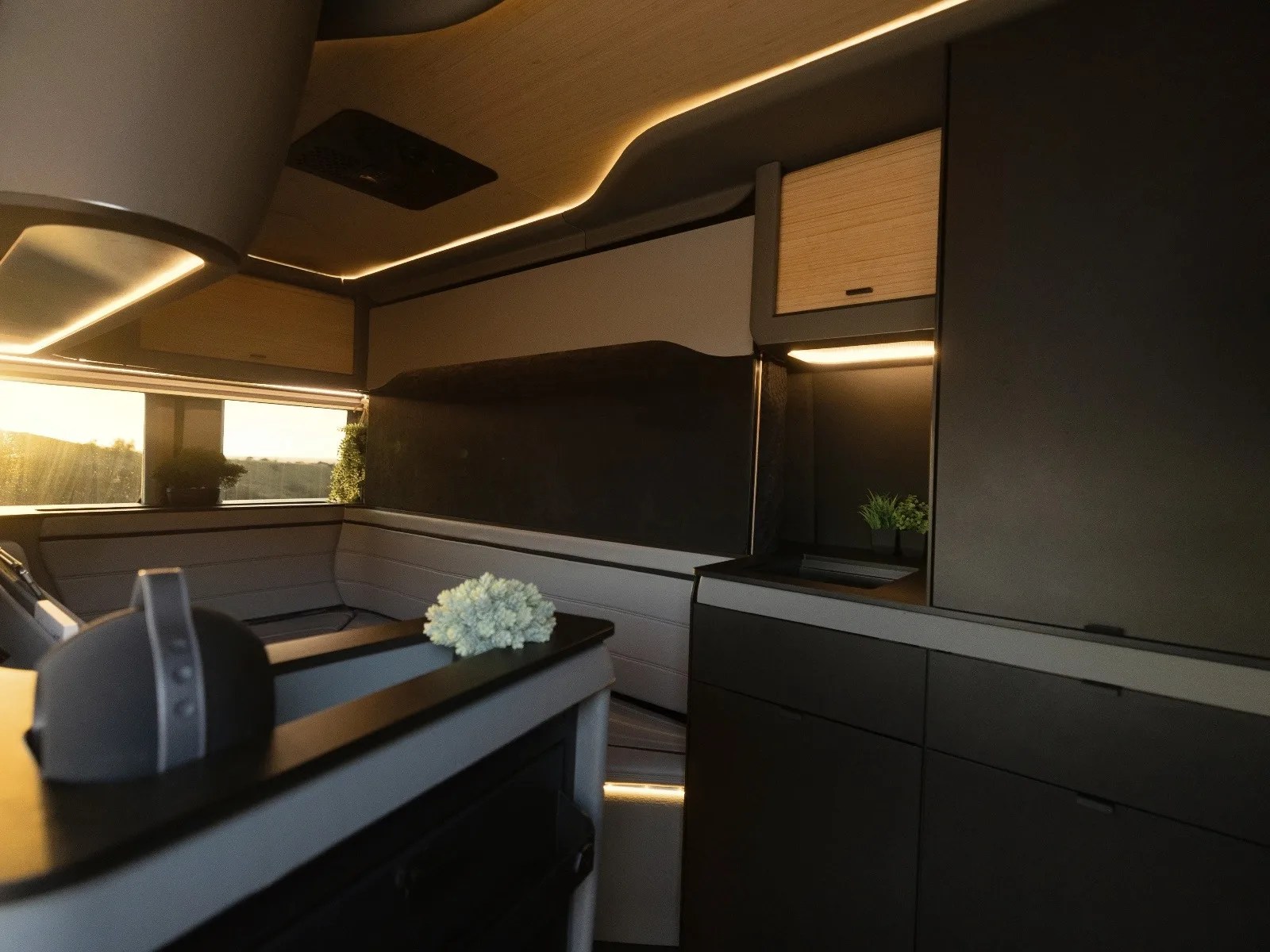
Interior of a modern camper van with black and wood cabinets, gray seating, and soft LED ceiling lighting.
Buckley’s 3D-printed interior allows for forms that would be cost-prohibitive on most van conversions.
Buckley

Of course, the aesthetics are arguably the most immediately striking aspect of the whole thing. Lightweight printed parts can be designed to far more intricate shapes, so they’re not bound by the same constraints as flat sheets. 

As such, the interior flows in a way that’s not only visually refined but also efficient. From the L-shaped couch to the bed and shower, it all makes for a sharp look, and the fit and finish look far more elevated than you might expect of something that starts as filament.

An exercise in mobile efficiency

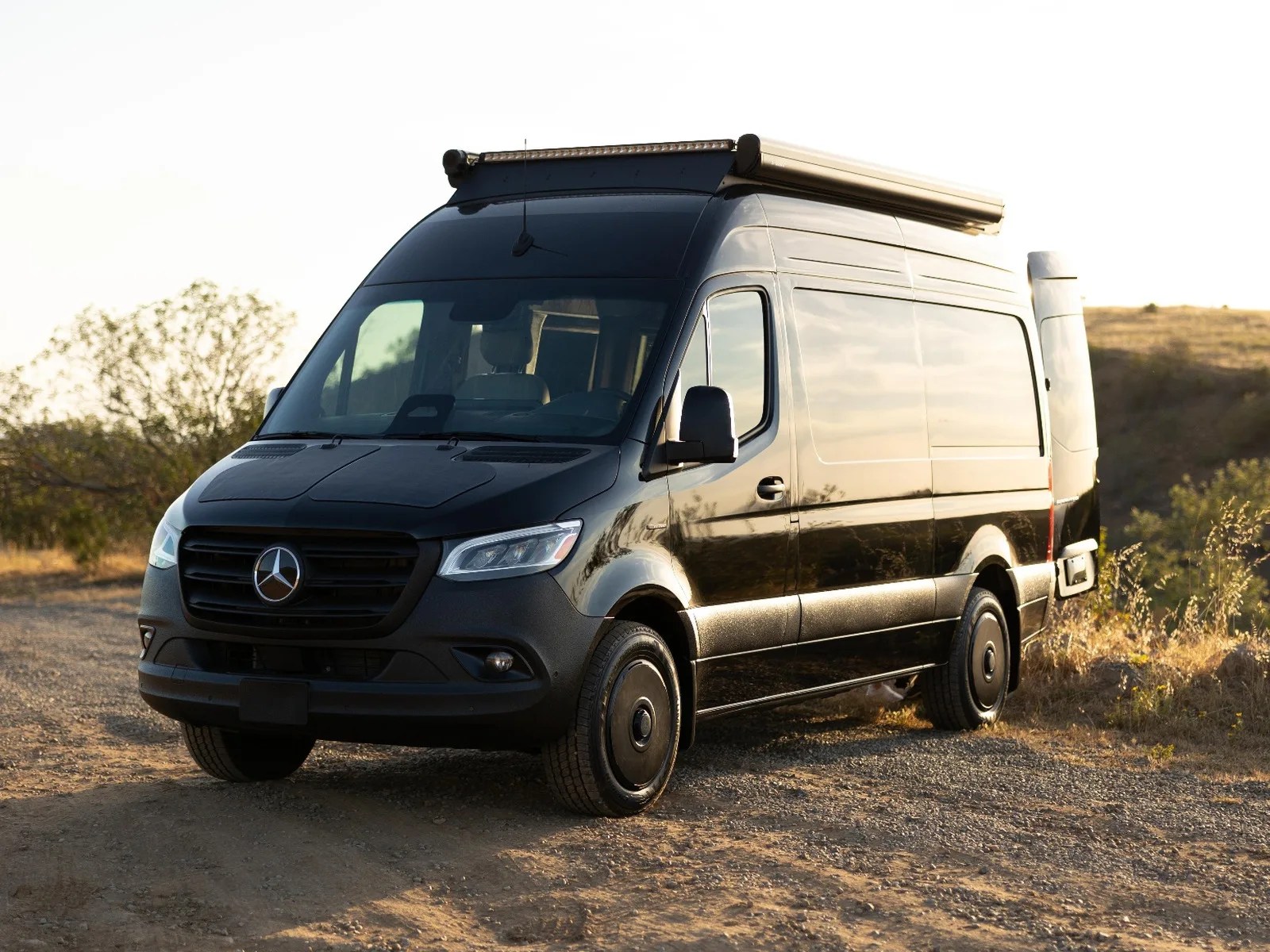
In that same spirit, Buckley has based its build on the Mercedes-Benz eSprinter. Though that means range is limited to around 150 miles on a charge, with the van supporting Level 2 charging, it’s important to bear in mind that the van isn’t really positioned for heavy trail or overlanding use.

Black Mercedes-Benz camper van with roof light bar parked on a dirt road at sunset.
Buckley is offering the build in both all-electric eSprinter and diesel-powered Sprinter configurations.
Buckley

Instead, Buckley is billing it as a stealthy, low-maintenance option for road-going vanlifers and full-time digital nomads. The all-electric platform keeps things simple, and the interior brings the essentials in everything from a 3,000-watt inverter and built-in A/C to a heated floor, onboard freshwater storage and a shower.  

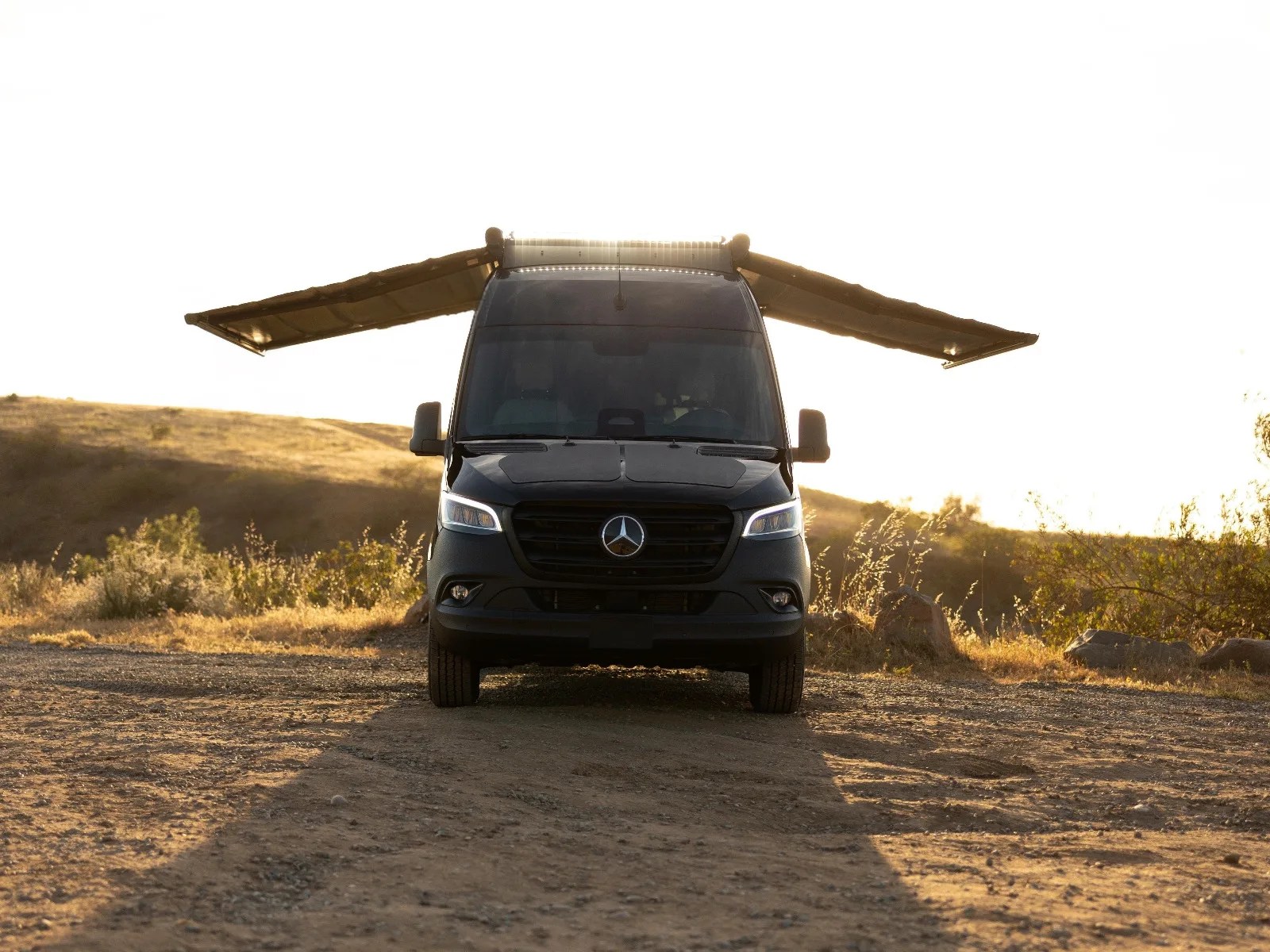
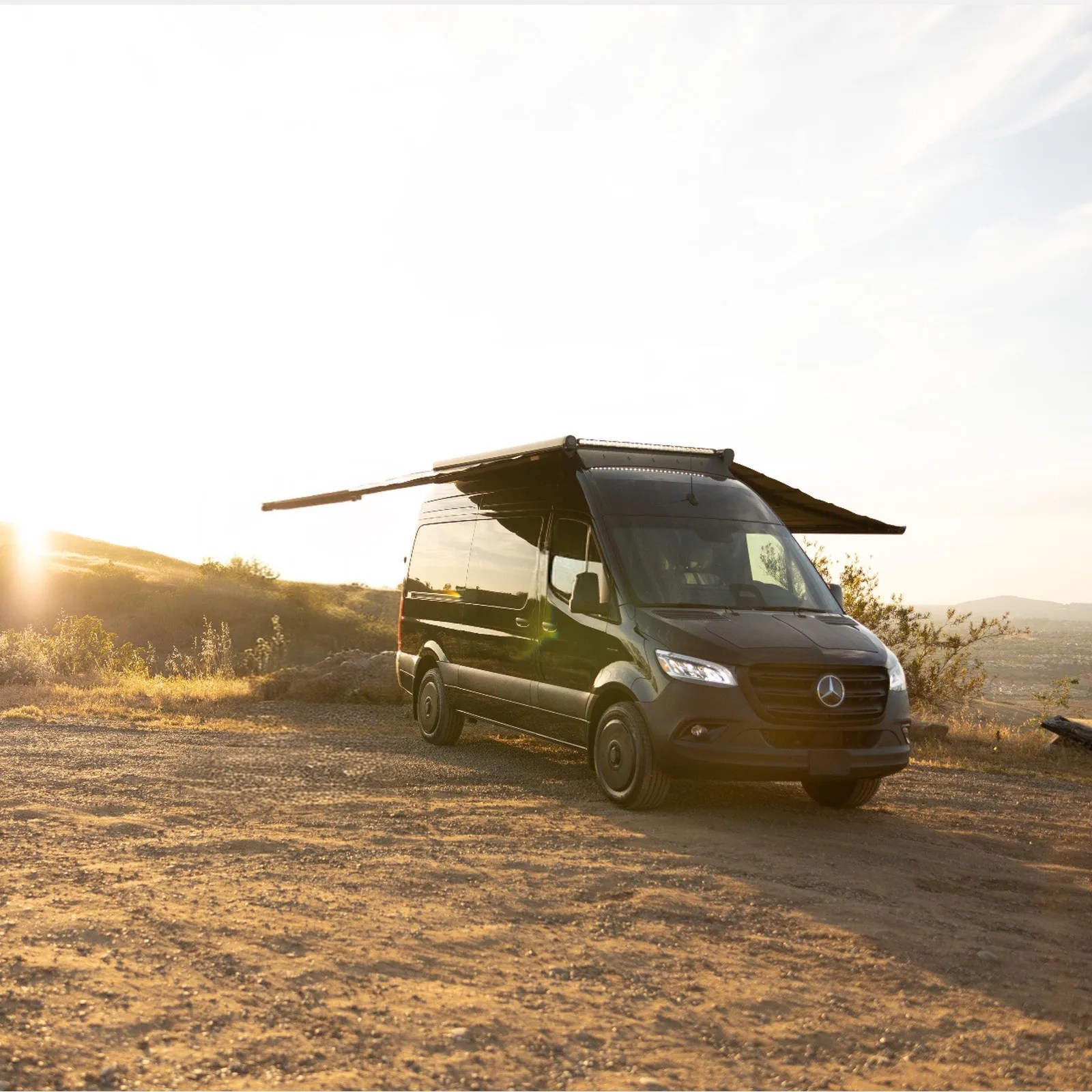
Assuming you need more juice to power your devices (or even top up the van itself), Buckley is also offering a neat add-on in some solar awnings. Along with facilitating outdoor shade, they also contribute to a total of as much as 2,500 watts of solar to charge the rig’s house battery.

Black Mercedes-Benz van with extended side awnings parked on a dirt road at sunset.
The solar awnings support 12V, 24V and 48V systems.
Buckley

Now, assuming you’re not sold on the idea of a fully electric van, Buckley is also offering “regular” Sprinter builds. Grunt comes from a 2.0-liter turbocharged diesel four, so it offers a more traditional powertrain experience that doesn’t invite range anxiety.

Availability and pricing

If you’re interested in reserving a Buckley-built Mercedes-Benz eSprinter or Sprinter, you can put down a deposit for $7,500. Prices for the 144-inch model run from $350,000, while those for the 170-inch model run from $370,000.

Black Mercedes-Benz camper van with extended side awnings parked on a dirt road at sunset.Buckley

Buckley eSprinter Camper Van Conversion